Support

Loschwitz Bridge

About

The Blaues Wunder Bridge, which translates to "Blue Wonder", is one of the most recognizable and picturesque landmarks in Dresden, Germany. This unique steel bridge spans elegantly across the River Elbe, connecting two charming city districts: Loschwitz on the right bank and Blasewitz on the left. Its graceful design and distinctive blue color make it a popular spot for both locals and tourists seeking to see this engineering feat.
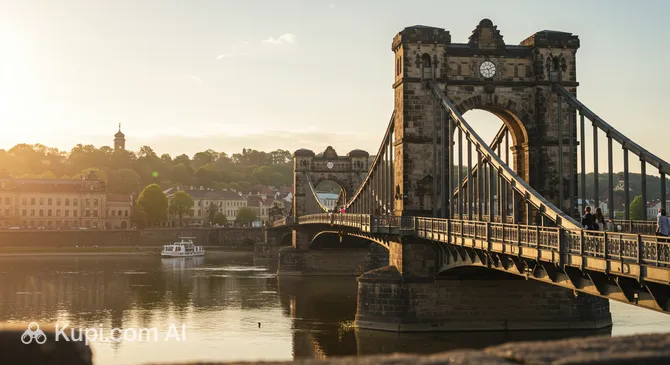
Loschwitz Bridge. Illustration.
Source: Kupi.com AI

Traveler photos:

Built between 1891 and 1893, the Blaues Wunder is structurally a type of suspension bridge but with a remarkable feature. Instead of the usual steel cables or chains, its load-bearing system is constructed using tension members made of riveted flat steel plates. This innovative steel lattice structure, which has no supports in the riverbed, was a true achievement of late 19th-century engineering.

It was thanks to its advanced design and elegant appearance that the bridge earned its unofficial but widely known name—the "Blue Wonder". It was considered a genuine technical marvel of its time and still impresses today with its apparent lightness and strength. A walk across the Blaues Wunder bridge or admiring it from the banks of the Elbe will provide unforgettable impressions and allow you to experience Dresden's rich history of engineering.

Contacts

As the Blaues Wunder Bridge is a public architectural structure, it does not have a dedicated tourist contact service. To reach the bridge, you can use Dresden's public transport heading towards the Loschwitz or Blasewitz districts, which the bridge connects across the River Elbe.

For the latest information on transport routes, as well as any events or traffic restrictions near the bridge, it is recommended to check the official Dresden tourism portal or local tourist information centers.

How to contactContact
AddressLoschwitzer Brücke, 01326 Dresden, Germany
Phone number+49 351 501501
Websitewww.dresden.de

What to Do

The Blaues Wunder Bridge is not just an important transport structure in Dresden, but also a favorite spot for tourists. The main thing to do here is, of course, a leisurely walk across the bridge itself. Crossing the Elbe, you can enjoy the picturesque views that open up from its height and feel the special atmosphere of this historical site.

From the Blaues Wunder, truly impressive panoramas unfold. You can admire the calm flow of the River Elbe, see the historical districts of Dresden spread across both banks, and the city's scenic surroundings. This is a great opportunity to take some memorable shots and appreciate the beauty of the Saxon capital from an unusual perspective.

Near the "Blue Wonder" is another interesting engineering attraction—the Dresden Suspension Railway (Schwebebahn). Many tourists combine a visit to these two sites to get the most out of the city's engineering heritage. This is a great chance to see two unique structures in one walk and diversify your route.

Photography is one of the most popular activities on the Blaues Wunder. Its graceful design and characteristic blue color serve as an excellent subject. The bridge looks particularly impressive in the evening when the lighting is turned on, highlighting its unique silhouette against the night sky. Such photos will be a great reminder of your trip to Dresden.

Getting There

Getting to the famous Blaues Wunder bridge in Dresden is quite simple, as it is conveniently located in the eastern part of the city and well-integrated into the public transport system. The bridge connects the Loschwitz and Blasewitz districts, and public transport is one of the most convenient ways to get here.

If you are starting from the center of Dresden, such as the Altstadt district, you can use trams or buses. Look for routes heading towards Loschwitz or Blasewitz and get off at the stops located in the immediate vicinity of the bridge. It is recommended to check the current route numbers and schedules on the official website of the Dresden transport company or using navigation apps.

For those who want to combine the journey with a scenic trip, a river ferry on the Elbe is an excellent option. This is not just a way to reach the bridge but also an opportunity to see the Blaues Wunder and the surrounding landscapes from the water, adding a special touch to your visit. This option is particularly pleasant in warm weather.

If you prefer to travel by car, the bridge is also accessible. There are parking spaces near the Blaues Wunder, but keep in mind that their number may be limited, especially during peak tourist season or on weekends. Therefore, if you plan to travel by car, it is best to arrive early or consider parking a short distance from the bridge and walking.

Nearest city: Dresden

History & Facts

The history of transport at the site where the Blaues Wunder Bridge now stands dates back centuries. As early as the 15th century, specifically in 1471, a ferry service operated across the Elbe between Loschwitz and Blasewitz, which were then separate settlements near Dresden. However, as time passed, the population grew, and industry developed, it became clear by the mid-19th century that a bridge was vital for proper connection between the banks.

The path to the creation of the "Blue Wonder" was gradual. Various projects were considered from 1870, but it wasn't until 1883, under public pressure, that the Saxon government made the final decision to build. The design was entrusted to the railway construction department of the Ministry of Finance, and in 1885, Professor Claus Köpcke of the Dresden University of Technology led this ambitious project. He became the creator of a suspension bridge design that was unique for its time and had no parallels.

The bridge was built between 1891 and 1893. Initially, it was named the King Albert Bridge, but by 1912, its current, more poetic name—Blaues Wunder, or "Blue Wonder"—was officially adopted. This name perfectly reflected the admiration of its contemporaries: the design included innovative solutions for stabilization against impact loads and resonance, which was a real breakthrough in bridge building for that era.

Time Needed

To see the Blaues Wunder Bridge, it is usually enough to set aside 30 to 60 minutes. This is enough time for a leisurely stroll from one end of the bridge to the other, to enjoy the views of the River Elbe and Dresden's riverside districts, and to take a few memorable photos of this famous piece of engineering.

If you plan a more detailed exploration of the area or want to combine your visit to the "Blue Wonder" with other attractions, such as the nearby Dresden Suspension Railway, you should allow extra time. In this case, the total time for your visit to this area could be about an hour and a half to two hours or even more, depending on your pace and interests.

Working Hours

The Blaues Wunder Bridge is an important transport artery for Dresden and, as a public structure, is open to pedestrians and transport 24 hours a day, year-round, including weekends. Access to the bridge is free, so no advance ticket booking or registration is required.

You can visit the "Blue Wonder" at any time convenient for you. However, to fully enjoy the views and take beautiful photos, it is recommended to walk across the bridge during daylight hours or in the evening when its picturesque lighting is switched on.

Open 24 hours

Nearby

A visit to the Blaues Wunder Bridge will undoubtedly leave a lasting impression, but Dresden offers much more than just one iconic landmark. Exploring the surroundings will allow you to dive deeper into the city's atmosphere, discover its many facets, and see other interesting places located nearby.

A walk to neighboring sites can be a pleasant addition to your itinerary, enriching your trip with new discoveries and providing a more complete picture of Dresden's cultural and historical heritage. Below is a list of some attractions located relatively close to the "Blue Wonder":

NameDistance
Paul Rackwitz – Neue Welt3 km
Team Duell Dresden3.2 km
Dresden Panometer3.4 km
TeamEscape Dresden4.2 km
Georg Arnhold Bath4.4 km
Dresden Zoo4.4 km
German Hygiene Museum4.5 km

Have you reached the end of the page?

So the route has been studied inside and out