Support

Kalochori Lagoon

About

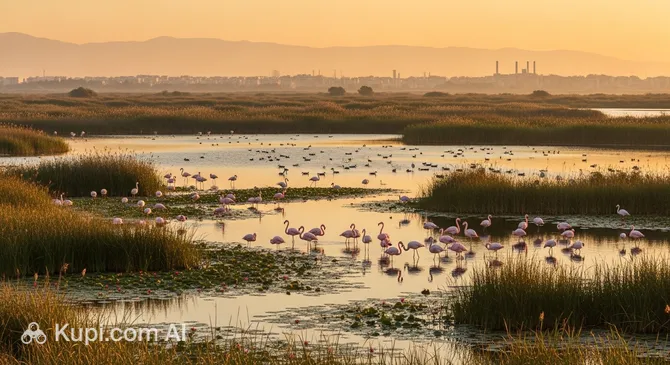
Imagine an amazing place where the industrial silhouettes of port cranes meet the pristine silence of nature. Kalochori Lagoon is a unique coastal wetland located just a few kilometers from the city of Thessaloniki. Serving as the northern gateway to the Axios Delta National Park, this 226-hectare territory is an important sanctuary for wildlife in modern Greece.
\n\n
Kalochori Lagoon
Kalochori Lagoon. Иллюстрация. Источник: Kupi.com AI
\n\n

The pink flamingos are rightfully considered the lagoon's "signature highlight." These graceful birds find food in the shallow bays year-round, creating scenes of incredible beauty against the city skyline. Despite its proximity to the metropolis, the Kalochori ecosystem remains one of the most significant in the region, providing a home for hundreds of species of birds and other living organisms.

\n\n

For the traveler, this is a rare opportunity to see wildlife in its natural form without traveling far from civilization. The lagoon attracts photographers and nature lovers with its unusual combination of landscapes: the calm water surface, salt marshes, and panoramic views of the Thermaic Gulf make it a must-visit spot in the city's outskirts.

Contacts

To plan your visit and obtain up-to-date information, you can use the following contact details:

\n\n\n\n

The lagoon's location is also easy to find on Google Maps, which will help you navigate when traveling by car.

How to contactContact
AddressEchedoro 570 09, Греция
Phone+30 231 079 4368
Websiteaxiosdelta.gr

What to Do

The main activity at the lagoon is, undoubtedly, birdwatching. Equipped with binoculars or a camera with a good zoom, you can spend hours watching the habits of pink flamingos, herons, and other rare feathered inhabitants. The lagoon is a true paradise for nature photography enthusiasts, especially during sunrise or sunset.

\n\n

For those who prefer active recreation, walking paths are laid out along the lagoon. A stroll along them allows you to enjoy the fresh sea breeze and examine the unique flora of the salt marshes. It is an excellent place for quiet solitude or an educational walk for the whole family.

\n\n

To make your visit even more informative, it is recommended to stop by the Axios Delta Information Center located nearby. There, visitors are offered route maps and detailed materials about the ecosystem, which will help you better navigate the area and learn the secrets of how the delta's inhabitants survive so close to a large city.

Getting There

Kalochori Lagoon is located just 8 km north of the city center, making it one of the most accessible natural attractions in the region. A trip by taxi or rented car from the city center takes about 15–20 minutes, depending on traffic conditions.

\n\n

For those who prefer public transport, there are regular bus routes to the settlement of Kalochori. From the final stops in the village, you can reach the lagoon on foot while enjoying the rural scenery. Since the site is located in a coastal area beyond the dense urban development, it is recommended to use GPS navigation (coordinates: 40.6310527, 22.8633119).

\n\n

If you are planning a trip from other areas, follow the signs for the Axios Delta National Park. The road to the lagoon passes through industrial zones, creating an unusual contrast before the calm waters and wild nature open up before you.

Ближайший город: Thessaloniki

History & Facts

Unlike many ancient natural sites in the region, this lagoon is a relatively young formation. It began to take shape only in the mid-1960s. The appearance of the reservoir was the result of soil subsidence caused by intensive groundwater extraction for the needs of the growing city and industry.

\n\n

Interestingly, until 1934, this entire area was a vast marshland. However, after the diversion of the Axios River bed, the landscape changed. Large-scale well drilling in the following decades caused the groundwater level to drop by dozens of meters, and the loose clay soils literally "sank" 3–4 meters below sea level.

\n\n

The lagoon acquired its modern appearance through a combination of natural and anthropogenic factors: seawater and rainwater filled the resulting depression. To protect the nearby village from flooding, a special coastal dam was built in 1976, which finally established the boundaries of this unique wetland.

Time Needed

For a standard introduction to the lagoon's ecosystem and a leisurely stroll along the shore, 2–3 hours is usually sufficient. This time is enough to observe the flamingos and take beautiful photos against the contrasting urban landscape.

\n\n

If you are a birdwatching enthusiast or plan to visit the Axios Delta Information Center and the Museum of Natural History in neighboring Chalastra, you should set aside half a day for the trip. This will allow for a deeper dive into the region's biodiversity and a walk along the recommended ecotourism routes.

Working Hours

The lagoon area is open to the public 24/7, giving guests complete freedom to choose their visit time. There are no entrance gates or strict restrictions; however, for the most vivid impressions, it is worth planning your trip for early morning or pre-sunset hours.

\n\n

It is at dawn and before sunset that birds show the most activity, and the lighting becomes ideal for observation and photography. Before your trip, it is recommended to check the official national park website to confirm the opening hours of the information centers if you plan to visit them.

Круглосуточно

Nearby

Exploring the surroundings of the northern part of the Thermaic Gulf can significantly enrich your trip. Near the natural zones, there are interesting theme parks and family recreation spots that offer a different perspective on the region.

\n\n

Below are some sites you can visit within a 5–10 kilometer radius of the lagoon:

\n\n
NameDistance
One Salonica Outlet Mall5.1 km
Eightball6.2 km
The Pub Thessaloniki6.2 km
Aquarium and Pet Shop Thessaloniki6.3 km
Aristotelous Square6.5 km
Rouga6.5 km
Electra Palace Bar6.6 km

Reached the end of the page?

That means the route is fully explored