Support

Ponte Vecchio

About

Ponte Vecchio, which means "Old Bridge," is the oldest and most recognizable bridge in Florence, the heart of Italy. It spans the Arno River at its narrowest point and is not just a crossing, but a true symbol of the city. Built in 1345, the bridge has miraculously preserved its original appearance to this day, making it a living historical monument.

The main feature of Ponte Vecchio is its unique architecture. Lining both sides of the bridge are ancient houses that have hosted various shops and workshops over the centuries. Originally, butchers traded here, but from the 16th century, they were replaced by jewelers, earning the bridge its second, informal name—the "Golden Bridge". Today, just as centuries ago, the windows of numerous jewelry shops sparkle here.
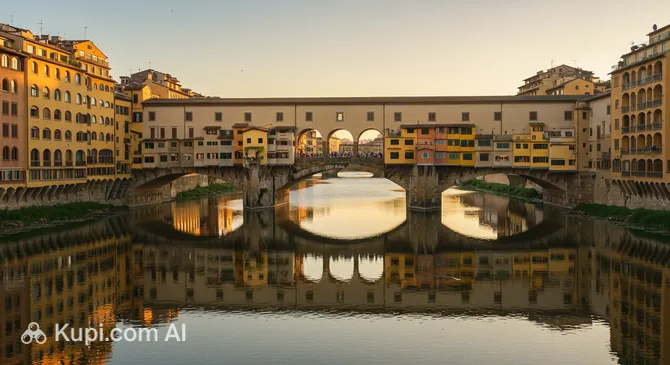
Ponte Vecchio. Illustration.
Source: Kupi.com AI

Traveler photos:

Today, Ponte Vecchio is not just a historical structure, but one of the main attractions for tourists from all over the world. Strolling across the bridge, you can not only admire exquisite jewelry but also enjoy picturesque views of the Arno River and the historic center of Florence from the viewing platforms in its central part. It is a place where history blends harmoniously with the lively atmosphere of a modern city.

Contacts

Ponte Vecchio is a public historical landmark open to visitors 24/7, so there is no single contact phone number or official website. It is located in the very heart of Florence, within walking distance of most key sites such as the Uffizi Gallery, making it most convenient to reach during a stroll through the city. If you are staying in outlying areas, you can use the city buses that stop nearby.

How to contactContact
AddressPonte Vecchio, 50125 Firenze FI, Italy

What to Do

A walk across Ponte Vecchio is an immersion into a unique atmosphere where history and trade have merged. The main activity here is walking slowly from one end of the bridge to the other, peering into the windows of the numerous jewelry shops and workshops. These shops are famous for their exclusive handmade jewelry, and it is because of them that the bridge earned its nickname "Golden." Even if you don't plan on buying anything, looking at the exquisite items is a pleasure in itself.

In the middle of the bridge, the architecture opens up, revealing a space with breathtaking views of the Arno River and Florence's other bridges. This is a popular spot for photos where you can capture city panoramas. The bust of the famous sculptor and goldsmith Benvenuto Cellini is also located here, where tourists like to take pictures. There is a tradition of attaching "love locks" to the railing near the monument as a sign of eternal feelings, though local authorities do try to prevent this.

The atmosphere of the medieval city is often complemented by street musicians, whose melodies create a unique backdrop for your walk. But Ponte Vecchio hides another secret—the famous Vasari Corridor runs above the shops. This covered passageway, built for the Medici family, connects Palazzo Vecchio with Palazzo Pitti, allowing them to walk above the busy crowds. Although the corridor itself is part of a museum complex and visiting it requires separate arrangements, its presence gives the bridge even greater historical value and mystery.

Getting There

Ponte Vecchio is situated in the heart of Florence, making it easily accessible for travelers. The simplest and most pleasant way to reach the bridge is a walk through the city's historic center. It is located just a few minutes' walk from iconic landmarks such as the Uffizi Gallery and Palazzo Pitti, so a visit can easily be included in any tourist itinerary.

If you are staying in outlying areas or prefer not to walk long distances, the bridge is easily reachable by public transport. City buses run through the city and stop near the attraction. You can also always use taxi services or rent a bike to combine your trip with a pleasant ride through the picturesque streets.

Travelers with cars should be particularly careful. Florence's historic center is a limited traffic zone (ZTL — Zona a Traffico Limitato), and entry by private transport is strictly regulated and can result in heavy fines. This zone is active on weekdays from 7:30 AM and has additional summer restrictions on some evenings. To avoid any inconvenience, it is recommended to leave your car in one of the parking lots outside the ZTL, such as the parking areas near Piazzale Michelangelo or the train station, and continue to Ponte Vecchio on foot or by public transport.

Nearest city: Florence

History & Facts

The history of Ponte Vecchio dates back to ancient times, as the first crossing at this site existed as far back as Ancient Rome. However, documentary mentions of the bridge date to 966. Early structures, whether wood or stone, could not withstand the powerful floods of the Arno River and were destroyed multiple times. The bridge we see today was built in 1345, designed by the architect Neri di Fioravanti. Its sturdy and elegant three-arch design proved so successful that the bridge has remained virtually unchanged for centuries.

Initially, in the 15th century, the bridge was a hub of busy trade, home to numerous meat and fish stalls. This made Ponte Vecchio one of the smelliest places in the city, as all waste was dumped directly into the river. Legend has it that the term "bankruptcy" originated here: when a merchant could not pay his debts, guards would break his stall (banco), making him "bancorotto"—literally "broken bench." Everything changed in the 16th century when, by order of Duke Cosimo I Medici, the noisy and foul-smelling shops were replaced by goldsmiths' and jewelers' workshops, giving the bridge its modern, prestigious look.

One of the most remarkable facts about the bridge is its miraculous survival during World War II. During the retreat from Florence in 1944, German troops blew up all the bridges, but Ponte Vecchio remained intact. According to one version, it was saved by a special order from Hitler, who was impressed by the bridge's beauty during his visit. Another version credits local Resistance fighters for saving it. Above the rows of shops sits another unique structure—the Vasari Corridor. This covered passageway was built in 1565 so the ruling Medici family could move safely and discreetly between their residence at Palazzo Pitti and their workplace at Palazzo Vecchio without mixing with the crowds on the street.

Time Needed

For a quick stroll across Ponte Vecchio and to soak in its atmosphere, 30 to 60 minutes is usually enough. During this time, you will have enough time to walk leisurely from one bank to the other, take several memorable photos at the central observation points overlooking the Arno River, and simply enjoy this historic site. This is sufficient to feel its unique spirit.

If you plan a more thoughtful visit, it's worth allowing up to an hour and a half or even more. This time will be needed for those who want to do more than just window-shop and wish to step into some of the jewelry shops the bridge is famous for. Additionally, Ponte Vecchio is a popular spot for street musicians and artists, and you might want to linger to listen to the music or watch them work. Ultimately, it is a place where it is pleasant not to rush, and how much time you spend here depends entirely on your mood and interests.

Working Hours

One of the main advantages of Ponte Vecchio is its full accessibility. As the bridge is a public space, it is open for walks 24 hours a day, year-round, allowing you to enjoy its views at any time. To simply walk across the bridge, no tickets or reservations are required.

If your goal is to visit the famous jewelry shops and stalls that line the bridge, you should plan your visit for daytime. They generally operate from 10:00 AM to 7:00 PM, but this schedule can vary. For example, during the summer season, working hours are often extended, and on certain days of the week, shops may close for a lunch break.

Nearby

After visiting Ponte Vecchio, don’t be in a hurry to leave, as its surroundings are a true open-air museum. Florence is a city made for walking, and many of its greatest treasures are literally just a few steps from the famous bridge. Exploring the nearby attractions will allow you to dive deeper into Renaissance history and culture and gain a more complete impression of this amazing place.

Just a few minutes of leisurely walking will bring you to world-famous galleries, historic squares, or monumental palaces. This proximity makes Ponte Vecchio the perfect starting point for exploring the heart of the city. Below is a list of interesting sites located in the immediate vicinity of the bridge.

NameDistance
Loggia dei Lanzi0.2 km
Rooster Cafe Firenze0.2 km
Uffizi Gallery0.2 km
The Old Stove Irish Pub0.2 km
Palazzo Vecchio0.3 km
Piazza della Signoria0.3 km
Pitti Palace0.4 km

Have you reached the end of the page?

So the route has been studied inside and out