Support

Merano

About

Merano is a true Alpine oasis, nestled in the heart of South Tyrol. This city wonderfully combines Austrian restraint with Mediterranean lightness, creating a unique atmosphere for relaxation. Located in the north of Italy, Merano is famous for its unique microclimate: here, surrounded by majestic mountain peaks, fir trees coexist with palm trees, and the number of sunny days reaches three hundred a year.

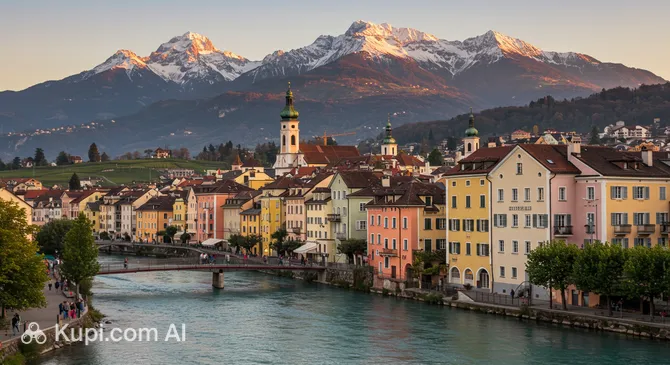
With a population of about 40,000, the city is an important regional center while maintaining a sense of cozy tranquility. The rich history of Merano as a climatic health resort began in the 19th century when the European aristocracy flocked here for health and inspiration. Medieval streets, ancient city gates, and elegant belle époque buildings are harmoniously interwoven in the city's architecture.

Merano. Illustration.
Source: Kupi.com AI

Travelers are drawn to the opportunity to combine relaxed leisure with active exploration of the surroundings. The city's hallmarks are its famous modern thermal complexes and the picturesque Tappeiner Promenade — one of the most beautiful walking trails in the Alps. Culture enthusiasts will appreciate the medieval castles, while gourmets will find it impossible to resist traditional Tyrolean cuisine.

Merano is a place where it is easy to forget the bustle of the city and restore your strength. Whether you are looking for wellness treatments, cultural discoveries, or simply beautiful views, this sunny corner in the Adige and Passirio river valley is sure to provide vivid impressions.

Weather Overview

Thanks to its unique geographical location, this resort enjoys a mild microclimate that is rare for the Alps. The city is reliably protected from cold northern winds by high mountain ranges, creating conditions close to sub-Mediterranean. This is why you can see a striking contrast on the streets: palm trees, oleanders, and cypresses growing against a backdrop of snow-capped peaks.

Summer in the city is usually warm and sunny without exhausting heat, which is ideal for long walks. Winters here are much milder than in the high mountains: temperatures rarely drop to extremes, and snow in the city itself is not very frequent. Nevertheless, before packing your bags, it is recommended to check the predicted weather in Merano for your travel dates.

Many travelers consider the best time to visit to be spring, when the valley is bathed in blooming apple orchards, or early autumn. During these times, a comfortable temperature sets in, allowing you to enjoy the nature of South Tyrol in all its glory.

Average monthly temperature

Average monthly precipitation

Interesting Facts

Beyond its reputation as a spa resort and its picturesque landscapes, Merano holds many surprising stories hidden behind the facades of old buildings and in the shaded alleys of its parks. This city is full of vivid contrasts and curious details that make getting to know it even more exciting.

  • It was Empress Elisabeth of Austria, better known as Sissi, who turned the city into a fashionable 19th-century European resort. She was charmed by the local scenery and healing air, regularly choosing the magnificent Trauttmansdorff Castle for her visits, which is now open to anyone wishing to touch the history of the royal family.

  • In the Middle Ages, Merano held the status of the capital of the entire County of Tyrol, as evidenced by the majestic Tyrol Castle towering over the valley. This historical legacy of the Austrian Empire remains alive today: the city is officially bilingual, and you are just as likely to hear Italian as German on the streets.

  • Merano is rightfully called a "garden city," as Alpine flora and Mediterranean exoticism coexist here in a surprising way. A brilliant confirmation of this is the Trauttmansdorff Gardens, where over 80 species of plants from all over the world are gathered on sunny terraces, allowing guests to take a true botanical journey across different continents.

  • Legend has it that the city's name dates back to the ancient Celtic word "mara," meaning "river," highlighting the fateful role of waterways in the region's life. Locals also love to tell the tale of how a joyful celebration honoring the blooming gardens once helped "save" the harvest, marking the beginning of the annual apple festival tradition.

How to Get There

When planning a trip to this picturesque corner of South Tyrol, it is wise to consider the logistics in advance. The city is surrounded by mountains, and the route often involves a transfer by train or car. You can find out more about how to get to Merano by studying all available transport combinations; below, we will look at the main hubs most convenient for reaching the resort.

Merano does not have its own airport, so travelers usually fly into neighboring cities. The closest is Bolzano (BZO), located just 27 km away. It is a small regional airport, and a trip from there by taxi or transfer takes about 30 minutes, making it the fastest option if you can find a suitable flight.

An excellent alternative is Innsbruck Airport (INN) in Austria, located about 67 km to the north. The drive from there through the scenic Brenner Pass takes just over an hour. Also very popular is Verona Villafranca Airport (VRN). It is 143 km from the resort, but thanks to the convenient autobahn, the journey by car takes a comfortable 1.5–2 hours. This airport handles significantly more international flights than neighboring regional hubs.

To compare options, here is a summary of the nearest airports:

AirportPassenger trafficDistance
Bolzano106 62927 km
Innsbruck Airport862 20267 km
Treviso Airport3 mln139 km
Verona Villafranca Airport3.7 mln143 km
Altenrhein Airport84 100151 km

Rail travel is another popular way to reach the region. Merano has its own station, but long-distance trips often require transfers. A key transport hub is Verona Porta Nuova Railway Station, located about 139 km away. Trains run regularly from here toward Bolzano, where you can transfer to a local train to the resort. The drive from Verona station takes about 1.5–2 hours.

From the north, Innsbruck Hbf Railway Station is a convenient entry point. The distance to Merano is about 68 km. The journey by car or bus from this station takes approximately 1 hour and 15 minutes, allowing you to enjoy beautiful views of the Alps along the way.

Below are the nearest major railway stations:

StationPassenger trafficDistance
Innsbruck Railway Station14.1 mln68 km
Verona Porta Nuova Station25 mln139 km
Rosenheim Bus Station7.3 mln150 km
Padova Centrale Station18.5 mln150 km
Venezia Mestre Railway Station31 mln156 km

Main Attractions

The sights of Merano are a harmonious blend of imperial history and natural splendor. The city is compact, so many iconic spots can be explored on foot while enjoying the atmosphere of ancient streets and blooming parks. Here, everyone will find something to their liking, from medieval castles to unique botanical collections.

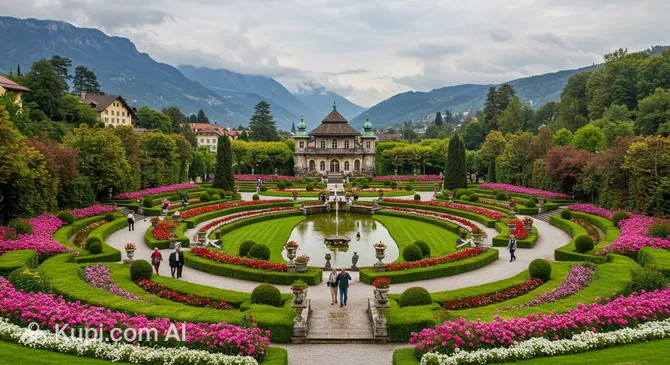
The absolute jewel of the region is the Trauttmansdorff Gardens. This vast botanical garden, spread like an amphitheater on a sunny slope, is recognized as one of the most beautiful in the world. It features over 80 natural landscapes, from the forests of South Tyrol to Mediterranean olive groves and exotic terraces. A walk along the winding paths offers not only aesthetic pleasure but also breathtaking views of the valley from various observation decks.

Trauttmansdorff Gardens. Illustration.
Source: Kupi.com AI

Traveler photos:

In the heart of the historic center stands St. Nicholas Church — a magnificent example of 14th–15th-century Tyrolean Gothic. Its 83-meter bell tower serves as the city's main landmark. Tourists are attracted not only by the church's monumental appearance but also by the ancient frescoes and stained-glass windows preserved inside, which tell biblical stories through the language of medieval art.

History buffs should visit the Prince's Castle (Castello Principesco), located right in the city center. Unlike many inaccessible fortresses, this residence of Archduke Sigismund of Austria looks elegant and cozy. Today, it houses a museum where you can see original furniture, ancient weapons, musical instruments, and everyday objects that allow you to immerse yourself in the atmosphere of the late Middle Ages.

For those who prefer active walks with panoramic views, the Tappeiner Promenade is a must-see. This famous trail passes above the city's rooftops and is considered one of the most beautiful high-altitude promenades in Europe. Thanks to its southern exposure, it enjoys a special microclimate: walking among pines, agaves, and eucalyptus trees, you can admire the stunning panorama of Merano and the surrounding mountains.

Local Cuisine

Merano's cuisine is a vibrant reflection of its geographic location, where Austrian heartiness and Italian refinement coexist harmoniously on a single plate. The city's gastronomic scene is a fascinating symbiosis: here, hearty Tyrolean dumplings are prepared with the same mastery as perfect pasta al dente. The main secret of local chefs lies in using the freshest Alpine products: from aromatic mountain cheeses and game to mushrooms and herbs.

Among the dishes that are a must-try, Spätzle leads the way — tender homemade dumplings often served with spinach or a creamy cheese sauce. No less popular is the classic Tyrolean schnitzel. For dessert, be sure to order the famous strudel: in Merano, it is made from local apples, as the city is literally surrounded by endless fruit orchards. In the markets, you can find dozens of varieties of this fruit, which has become one of the symbols of the region.

The drink culture here is incredibly advanced and is an important part of social leisure. It is customary to accompany a meal with a glass of local wine: look for the rich red Lagrein or the aromatic white Gewürztraminer. In the evening, the city comes alive thanks to the aperitif tradition. If you want to feel the atmosphere of true Tyrolean fun, visit the Forst Beer Garden, where traditional snacks and fresh pretzels are served with your drinks. Lovers of digestifs will enjoy homemade liqueurs made from Alpine herbs.

The choice of places for lunch or dinner in Merano is vast: from street stalls with fresh pastries to elegant establishments. For example, Restaurant Terme Merano offers guests refined dishes in a modern and relaxed setting. A special time for gourmets is October, when the city hosts the large-scale Wine and Gastronomy Festival, allowing you to meet the region's best artisans and sample unique seasonal delicacies.

Travel Tips

Preparing for a trip to this Alpine corner does not require complex logistics, but knowing local nuances will make your stay much more comfortable. We have gathered a list of practical recommendations to help you quickly adapt to the rhythm of life in South Tyrol and avoid typical tourist mistakes.

  1. Clothing and Gear. Mountain weather is changeable: even if the sun shines brightly during the day, the temperature can drop noticeably in the evening. The best choice is to dress in layers ("onion style"). Be sure to bring comfortable flat-soled shoes: you'll need them for both the cobblestones in the historic center and strolls along the famous promenades. When visiting cathedrals, shoulders and knees should be covered.

  2. Transport and Guest Cards. The historic city center is compact and entirely pedestrianized. For trips to the surroundings, there is a well-developed bus network. Check with your hotel about the MeranCard (or Guest Pass) — it is often provided to guests free of charge and allows free use of the region's public transport, as well as entry to museums.

  3. Finance and Payment. The official currency is the Euro. Bank cards are accepted almost everywhere, from restaurants to boutiques. However, if you plan to head into the mountains and eat at small Alpine huts (Hütte), be sure to carry cash — terminals might not work there. Tipping is generally not mandatory, but rounding up the bill is considered good etiquette.

  4. Health and Water. You don't need to buy bottled water: the city has many public fountains with pure drinking water coming straight from mountain glaciers. Just bring a reusable bottle. Pharmacies are easy to find by the Farmacia or Apotheke sign (green cross); they are well-stocked, and the safety level in the city is very high.

  5. Language and Communication. Merano is a bilingual city. Both German and Italian are used frequently here. Locals will be pleasantly surprised if you greet them with "Grüß Gott" (German) or "Buongiorno" (Italian). English is widely spoken in the tourism sector, so communication problems are unlikely.

  6. Local Etiquette. Punctuality and politeness are valued here. It is customary to greet those present when entering a shop or an elevator. In thermal complexes and saunas, strictly observe the silence zones and hygiene rules (in some sauna areas, it is customary to be without swimwear; follow the signs).

  7. What to Avoid. Don't forget about the "siesta." Many shops (except for large supermarkets) close for a lunch break from approximately 12:30 PM to 3:00 PM, and they may not open at all on Sundays. Don't leave important purchases for the middle of the day or your last weekend.

  8. Socket Lifehack. In older buildings and some hotels, you may encounter Italian standard sockets (three thin pins in a row, Type L), while newer ones use standard European ones (Type F). A universal adapter won't take up much space in your suitcase but could be very helpful.

Merano is a city that encourages taking things slow and enjoying the moment. By following these simple tips, you can focus on the main thing: the beauty of the Alpine landscapes, the taste of Tyrolean dishes, and the unique atmosphere of comfort that reigns in these streets.

Entertainment & Nightlife

The nightlife in Merano perfectly matches the spirit of this elegant resort: you won't find noisy metropolitan raves here, but you can enjoy the dolce vita atmosphere at its best. An evening in the city traditionally begins with the aperitif ritual. After 6:00 PM, locals and tourists fill the outdoor terraces in the historic center, especially around the Portici (Lauben) street and Piazza del Grano. A glass of sparkling Prosecco or a "Hugo" cocktail is the perfect start to soaking in the evening atmosphere.

The main activity is concentrated around the Kurhaus and on the banks of the Passirio River. Stylish wine bars and lounge areas are located here, often featuring live music ranging from jazz to classics. The crowd in Merano prefers a smart casual style. If you are looking for a place that combines modern design with a relaxed setting, it is worth stopping by the Restaurant Terme Merano. This venue, located next to the famous thermal baths, is excellent for dinner or an evening cocktail in a refined atmosphere.

For those who prefer more lively and casual fun, the Forst Beer Garden is the center of attraction. In the evenings, a boisterous and friendly atmosphere prevails: guests sit at long tables, enjoying fresh beer from the local brewery and traditional snacks. It’s a great place to make new friends and feel the authentic Tyrolean spirit.

A unique feature of the summer season is the "Garden Nights" (World Music Festival). During this time, the famous Trauttmansdorff Gardens transform into an open-air concert venue. The stage is set right in the middle of a lily pond, and the audience enjoys world-class music surrounded by illuminated exotic plants. Tickets for these events should be booked in advance as they are extremely popular.

Practical Tips for Night Owls:

  • Opening Hours: Most bars close around 1:00 AM, and restaurants take last orders for the kitchen until 10:00–10:30 PM. There are few nightclubs in the center that stay open until morning; life tends to quiet down relatively early.
  • Safety: Merano is an exceptionally safe city. You can comfortably walk through the center and along the promenades at any time of day or night.
  • Transport: Night buses are rare. If you stay out late, it is better to call a taxi (numbers can be found at taxi stands or you can ask the bar staff to call one for you). The historic center is easily explored on foot.

During the day, the city's entertainment program is equally rich. Culture lovers can visit the Puccini City Theater, which delights with its Art Nouveau interiors, or stop by the unique Women's Museum. For shopping and family fun, the modern ALGO Shopping Center is ideal, offering a cinema and entertainment zones in addition to stores. Competitive spirits are drawn to the Merano Hippodrome, where thrilling horse races, including the famous Merano Grand Prix, are regularly held.

Parks & Museums

Merano is often called the "garden city," and it carries this title deservedly. Here, nature and art are in constant dialogue: subtropical vegetation frames ancient walls, and museums are located in majestic castles rather than boring buildings. For the traveler, this is a unique chance to combine fresh-air strolls with immersion into the rich history of the County of Tyrol.

The region's primary green treasure is undoubtedly the Trauttmansdorff Gardens. This is not just a park, but a true botanical theater where plants from all over the world are gathered on sunny slopes. Here you can walk through the "Forest of Love," see olive groves and Japanese gardens. The beauty of this place lies in its changing scenery: every season the gardens look different, offering guests the bright colors of tulips in spring or golden foliage in autumn.

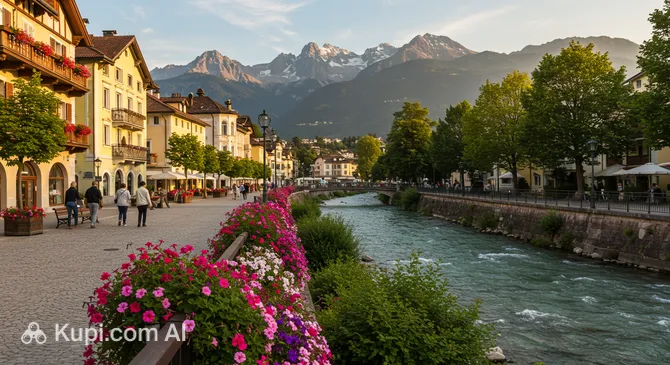
For those who prefer leisurely walks by the water, the Passirio Promenade is the perfect spot. It stretches along the river right in the city center and is divided into the Winter and Summer Promenades. It’s a great place to relax in the shade of trees, listen to the rush of the mountain river, and admire the elegant architecture of the Kurhaus from a unique perspective. Just above the city lies the famous Tappeiner Promenade — one of Europe's longest high-altitude walkways, where Alpine views blend with the scents of Mediterranean herbs.

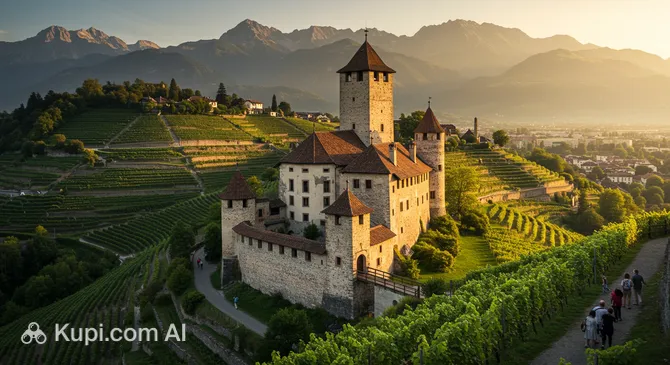
Merano's cultural life is inextricably linked to its castles. The most significant historical site is Tyrol Castle, which gave its name to the entire region. Today, it houses the Museum of Cultural and Regional History. The exhibition covers the period from the early Middle Ages to the present day, detailing the formation of Tyrol. The castle itself impresses with its massive walls, Romanesque portals, and marble sculptures.

Tyrol Castle. Illustration.
Source: Kupi.com AI

Traveler photos:

Another unique museum space is the Touriseum, located within the Trauttmansdorff Castle complex. It is the first museum in the Alpine region dedicated entirely to the history of tourism. The interactive and witty exhibition shows how travel has changed over the last 200 years: from the first stagecoaches and aristocratic visits to modern mass tourism. It is a fascinating look at how Merano evolved into a popular resort.

In the heart of the old town lies the Prince's Castle. Unlike defensive fortresses, this residence of Archduke Sigismund was built for comfortable living. Visiting the museum is like traveling through time: original tiled stoves, ancient furniture, and musical instruments remain, allowing you to imagine the life of the 15th–16th century nobility.

If you're looking for something less touristy, take a stroll along the Gilf Promenade (Gilfpromenade). This is a secluded path in a gorge where a turbulent river carves its way through the rocks. Here you'll find the "Poetry Trail" with benches decorated with verses by modern and classical authors — the perfect spot for those seeking inspiration and silence away from the city bustle.

Getting Around

The transport system in Merano is distinguished by high efficiency, punctuality, and comfort, characteristic of the entire South Tyrol region. The city is quite compact, and it is most pleasant to move around the historic center on foot, as many zones are closed to cars. However, if you need to reach remote areas, the Trauttmansdorff Gardens, or neighboring villages, public transport is an excellent aid.

The primary form of city transport is buses, operated by the SASA company. They run frequently and strictly according to schedule. The route network covers the entire city and the immediate surroundings. The most important stops are at the railway station and in the center, for example, at Piazza Teatro. The buses are modern, clean, and equipped with information displays, making navigation easy for tourists.

Railway connection is an important part of the transport infrastructure. Merano Station connects the city with the regional capital, Bolzano, as well as the picturesque Val Venosta valley. Local regional trains are not just a way to get around, but an opportunity to enjoy panoramic views of apple orchards and mountains through the large carriage windows.

For paying fares, there are several convenient options. Most tourists staying in city hotels receive a special guest card — the MeranCard (or GuestCard). It is provided free of charge when checking into partner accommodation and grants unlimited travel on all public buses and regional trains throughout South Tyrol, as well as entry to many museums. This is the most cost-effective and convenient option for travelers.

If you don't have a guest card, you can purchase single tickets (biglietto singolo) or rechargeable cards (Wertkarte) at station vending machines, tobacco shops (Tabacchi), or via the südtirolmobil mobile app. It is important to remember: the ticket must be validated (stamped) when entering the bus or on the platform before boarding the train. Validators are usually blue or orange. Fines for fare evasion or unvalidated tickets are quite high here.

Special mention should go to Merano's unique "transport" — cable cars and chairlifts. They connect the city center with mountain peaks. Be sure to use the vintage single-seater chairlift (Seggiovia) that leads from the city center directly to the village of Tirolo. It is a retro-style attraction that literally allows you to float above the vineyards. For more serious ascents, for example, to the "Merano 2000" hiking and recreation area, a large modern cable car is used.

Among alternative ways to get around, bicycles are extremely popular. The city has a developed network of bike paths, and rental points (such as Bici Alto Adige) allow you to pick up a bike in one town and return it in another. Given the terrain, many tourists opt for e-bikes. Taxis in Merano are expensive, and hailing a car on the street is not common — you need to find them at special stands (at the station or in the center) or call them by phone. Taxi apps do not work as actively here as in larger metropolises.
Accommodation

Where to stay:

Merano, with its centuries-old status as a resort town (Kurstadt), offers travelers an exceptional choice of accommodation. The culture of hospitality has been refined here over centuries, so a high level of service can be found in both luxury historic grand hotels and small family-run pensions. The range of housing covers everything from budget hostels and campsites to exclusive world-class wellness resorts.

When choosing a place to stay, it's worth considering the desired atmosphere, as each area of the city has its own character:

  • Historic Center. Living in the heart of the city, near the medieval lanes and St. Nicholas Church, means being within walking distance of the main shops, restaurants, and attractions. This is the ideal choice for those who do not plan to rent a car.
  • Maia Alta (Obermais). This is an aristocratic district of villas and parks, located slightly above the center. Peace and quiet prevail here, and hotels often feature their own large gardens and swimming pools. It offers beautiful views of the city.
  • Riverside Area. Hotels located along the river, for example, near the picturesque Passirio Promenade, combine the convenience of a central location with a resort-like relaxation and proximity to the thermal complex.
Passer Promenade. Illustration.
Source: Kupi.com AI

Traveler photos:

The region's particular pride is its wellness hotels. Since Merano is known for its healing climate, many hotels (especially in the 4-star category and above) are equipped with their own modern spa areas, saunas, and pools (infinity pools with mountain views are not uncommon here). For those seeking an authentic experience, agritourism estates (Agriturismo) in the surrounding area are an excellent option. Staying on a working farm among apple orchards and vineyards allows you to immerse yourself in local life while enjoying homemade breakfasts made from farm products.

Prices and Booking:

The price range is wide: budget accommodation in guesthouses (Garni) can cost 60–90 euros per night, mid-range hotels from 120 to 180 euros, and luxury segment stays start from 250 euros and up. You can book accommodation through popular online platforms or directly on hotel websites, which sometimes yields additional bonuses.

Tip for Travelers: Merano is popular year-round, but during "high season" — when the gardens bloom (April-May), during harvest (September-October), and for the famous Christmas Markets (December) — the demand for housing is enormous. It is recommended to book rooms 2–3 months before your trip. Also, check upon check-in if a guest card (MeranCard) is included in the price, as it can significantly save your budget on transport and museums.

Nearby Cities

For those who want to explore the surrounding area, Merano serves as an excellent starting point for day trips to several interesting nearby locations. Just half an hour away is Bolzano — the administrative center of South Tyrol, where Italian expression meets Austrian order. Here, be sure to visit the Archaeological Museum to see the famous "Ötzi" mummy and stroll through the elegant Waltherplatz.

If you head a bit further south, you will reach Trento. This city with a rich history impresses with its Renaissance architecture, the majestic Buonconsiglio Castle, and the cutting-edge MUSE science museum. Also worth noting is Rovereto, which will be a real discovery for culture lovers thanks to the MART modern art museum and the Venetian castle overlooking the city.

CityPopulationDistance
Lana12 2866 km
Bolzano107 31724 km
Laives17 95431 km
Klausen5 00032 km
Soelden3 10035 km

These nearby destinations offer a more complete picture of the region's diverse culture and landscapes, perfectly complementing a holiday in the resort city of Merano.

Shopping & Souvenirs

Shopping:

Shopping in Merano is a fascinating journey where Italian style meets Alpine reliability and tradition. The city offers a unique experience: you can find high-fashion boutiques and jewelry salons alongside cozy shops selling artisanal crafts. The specialty of local shopping lies in the atmosphere — many stores are located in ancient medieval buildings, turning a simple shopping trip into a cultural stroll.

The heart of the city's commercial life is the famous Via dei Portici (or Laubengasse in German). This is a long gallery of arcades built back in the 13th century. Thanks to its architectural features, it is comfortable to walk here in any weather: the arches protect you from the summer heat and autumn rain. Under the vaults of the Portici hide stores of famous international brands, sports equipment (highly relevant for the region), shoe boutiques, and traditional Tyrolean shops. Running parallel to it is Corso della Libertà (Freiheitsstraße), which also hosts many clothing stores and cafes.

While Merano is valued for its historic shopping streets, there are also modern spaces for purchases. The largest complex in the vicinity is the ALGO Shopping Center, located on the border of Merano and Lagundo. This is a large-scale mall with a wide selection of mass-market brands, electronics, and home goods. Those who don't want to leave the city center should visit the Stadt Centrum — a compact shopping gallery convenient for quick purchases.

Merano's markets deserve special attention, as this is where you can feel the true flavor of South Tyrol. The week's main event is the Big Friday Market, which takes place near the train station (Prader Square). They sell everything here: from fresh farm products to clothing and leather goods. For gourmets, there is a farmers' market on via Galilei on Saturdays, where local farmers offer seasonal vegetables, fruits, and homemade preserves.

When choosing souvenirs, pay attention to the region's gastronomic specialties. From Merano, you should definitely bring back:

  • Tyrolean Speck — a dry-cured ham with a unique flavor.
  • Local wines and grappa — especially the Lagrein and Gewürztraminer varieties.
  • Apple products — from dried apple rings to apple cider vinegar and apple-based cosmetics.
  • Items made of felt and boiled wool — such as cozy slippers or hats, which are famous for their warmth and durability.

When planning your shopping time, it's important to remember the local daily routine. Most shops in the center (except for large supermarket chains and malls) close for a lunch break (siesta) from about 12:30/1:00 PM to 3:00/3:30 PM. On Sundays and public holidays, many outlets are closed, although this rule is often relaxed during peak tourist season and before Christmas.

Regarding payment, credit cards (Visa, Mastercard) are accepted almost everywhere. However, it's better to have cash euros on hand for markets and small kiosks. Tourists from non-EU countries can take advantage of the Tax Free system when purchasing goods over a certain amount in stores marked with a special sign (usually Global Blue or Planet). Don't forget to ask for the special form at the checkout and present your passport.

Reached the end of the page?

That means the route is fully explored