Support

Herculaneum Archaeological Park

About

The Herculaneum Archaeological Park is a unique open-air museum located on the site of the ancient Roman city of Herculaneum. Much like the famous Pompeii, this city was tragically buried under a layer of volcanic ash and mud as a result of the eruption of Mount Vesuvius in AD 79. Today, the ruins of Herculaneum are located on the coast of the Bay of Naples, next to the modern town of Ercolano, near Naples, Italy.
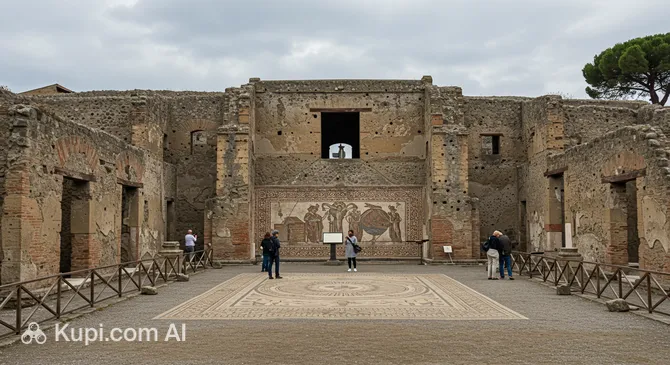
Herculaneum Archaeological Park. Illustration.
Source: Kupi.com AI

Traveler photos:

This archaeological park is rightfully included in the UNESCO World Heritage list and is considered one of the most significant and well-preserved ancient monuments in Italy. Thanks to the special preservation conditions under volcanic materials, many buildings, household items, and even organic materials such as wood and fabrics have survived to this day in surprisingly good condition, making Herculaneum especially valuable for researchers and visitors alike.

Walking through the ancient streets of the Herculaneum Archaeological Park, you can see the ruins of residential houses, some of which have retained their two-story structure, public baths (thermae) with their complex heating systems, and the remains of a theater and a basilica. Of particular interest are the beautifully preserved mosaics, frescoes, and everyday objects that allow you to vividly imagine the life of the ancient Romans moments before the catastrophe. This place offers a deep immersion into the history and culture of the Roman Empire.

Contacts

For the most up-to-date information on opening hours, ticket prices, and available tours at the Herculaneum Archaeological Park, it is recommended to consult the official tourist resources of Naples and the Campania region, or check the information stands directly on-site. Information is often updated, so a quick check before your visit is a good idea.

As this is a large archaeological site, direct telephone or email contacts for general inquiries may be unavailable or overwhelmed. You can reach the park from Naples via the Circumvesuviana suburban trains (Sorrento direction, Ercolano Scavi stop) and then walk a short distance following the signs.

How to contactContact
AddressCorso Resina, 187, 80056 Ercolano NA, Italy
Phone number+39 081 010 6490
Websiteercolano.cultura.gov.it

What to Do

Visiting the Herculaneum Archaeological Park is a true journey through time. You can walk along ancient cobbled streets, looking into remarkably well-preserved houses and public buildings. Imagine the life that bustled within these walls almost two thousand years ago! Be sure to notice the thermae (ancient Roman baths), the remains of the theater, and the forum, which were the center of the city's public life. Descending several meters below the level of the modern city, you will literally find yourself in the ancient world, creating a unique sensation of immersion in history.

Of particular interest to visitors are the famous residential houses, each with its own unique history and architectural features. Highlights include the House of Telephus, the House of the Deer, known for its sculptures, the House of Neptune and Amphitrite with its magnificent mosaic, as well as the House of Argus and the House of the Wooden Partition, which demonstrates the rare preservation of wooden elements. In one of the luxurious villas, a unique library was even discovered with charred but partially preserved Greek papyrus scrolls, indicating the high cultural level of Herculaneum's inhabitants.

Although many valuable finds from Herculaneum, including exquisite frescoes, detailed mosaics, and various household items, are now on display at the National Archaeological Museum of Naples, you can also see original works of art and decorative elements directly within the park. This allows for a better understanding of the daily life, tastes, and beliefs of the people who inhabited this prosperous city before its tragic end. Exploring the ruins of Herculaneum provides an opportunity to touch frozen history and appreciate the skill of ancient Roman builders and artists.

Getting There

The Herculaneum Archaeological Park is conveniently located about 10 kilometers southeast of central Naples, making it easily accessible for visitors. The most popular and economical way to get here is by using the Circumvesuviana suburban train. This rail line connects Naples with Sorrento and other coastal towns. You should take a train heading toward Sorrento and get off at the Ercolano Scavi station. From the station, it is only about a 10-minute leisurely walk to the entrance of the archaeological complex, following the signs.

If you prefer more flexibility or are traveling by private car, the Herculaneum Archaeological Park is also easy to reach. From Naples, take the A3 motorway (Napoli-Salerno) and take the Ercolano exit. There are parking spaces near the park, though they can be busy during the high season. Alternatively, you can always use taxi services from Naples or nearby towns, providing a comfortable ride directly to the park entrance.

Many tourists planning to explore the rich historical heritage of the Campania region combine a visit to Herculaneum with a trip to the famous Pompeii and Mount Vesuvius, as these sites are relatively close to each other. In this case, renting a car can be a particularly convenient option, offering freedom of movement. There are also organized tours from Naples that often include transfers and visits to several attractions, including Herculaneum.

Nearest city: Naples

History & Facts

The history of Herculaneum dates back to ancient times. The city was founded in the late 6th century BC by the Italic Oscan tribe. Thanks to its strategic location by the sea, it soon came under the influence of the Greeks, who actively used it as a port. In the 4th century BC, Herculaneum was captured by the Samnites, and by the 1st century BC, it became part of the powerful Roman Republic, receiving the honorary status of a municipium. During the Roman period, the city flourished, becoming a popular resort destination that attracted wealthy Romans with its villas and picturesque views of the Bay of Naples.

A tragic fate befell the thriving Herculaneum in the autumn of AD 79, when the famous eruption of Mount Vesuvius occurred. Unlike neighboring Pompeii, which was buried mainly under ash, Herculaneum was entombed under a multi-meter layer of hot pyroclastic flows—a kind of volcanic mud. This seemingly destructive factor played a key role in the amazing preservation of the city. Buildings, household items, and even organic materials such as wood and fabrics were preserved for millennia, providing priceless evidence of ancient Roman life.

Forgotten for centuries, Herculaneum was accidentally rediscovered by the world only in 1709 during the digging of a well. This chance discovery marked the beginning of systematic archaeological excavations, which have continued from the 18th century to the present day, revealing the secrets of the ancient city. Today, the Herculaneum Archaeological Park is one of the most important monuments of Roman civilization, allowing visitors to literally step into the past and see life as it was almost two thousand years ago. Research here is ongoing, and every new find adds detail to the portrait of this amazing place located near Naples in Italy.

Time Needed

To get a general overview of the Herculaneum Archaeological Park and see its main attractions, most visitors will need about 2–3 hours. This is usually enough time for a leisurely stroll through the ancient streets, peek into the best-preserved houses and public buildings, and feel the atmosphere of this unique place.

If you are a big fan of history and archaeology or want to explore every corner of the ancient city in more detail—examining mosaics, frescoes, and architectural features—you should plan for more time. In this case, a deep immersion into the history of the Herculaneum Archaeological Park may require half a day or even more. This will allow you to visit all accessible areas without rushing and fully enjoy this amazing journey into the past.

Working Hours

Opening hours of the Herculaneum Archaeological Park may change depending on the time of year. Generally, the park is open to visitors daily, from morning until evening. It is important to remember that last entry is usually an hour before the official closing of the complex. As the schedule is subject to seasonal changes, it is highly recommended to check the current opening hours on the official website of the Herculaneum Archaeological Park or other official tourist sources in Naples before planning your visit.

While the park usually operates year-round, information regarding the need for advance ticket booking or tour registration is also best checked on the official website. This will help you avoid inconvenience and plan your visit in the best way possible, especially during peak tourist seasons. Checking information in advance ensures you have the latest data and can fully enjoy this unique historical site.

8:30 – 18:00

Nearby

A visit to the Herculaneum Archaeological Park will undoubtedly be a highlight of your trip to Naples. However, to make your experience even more complete and multifaceted, it's worth paying attention to other interesting places nearby. Exploring the surroundings will allow you to dive deeper into the atmosphere of the Campania region and discover new facets of its rich history and culture.

Near Herculaneum, you'll find both historical monuments and modern entertainment to suit all tastes. From the majestic Vesuvius to the cozy corners of Naples, everyone will find something they like, adding unforgettable moments to their journey. Below is a list of some attractions that are easily accessible from the park:

NameDistance
Granatello Marina Nightclub1 km
Pietrarsa National Railway Museum2.8 km
Vesuviuslandia4.2 km
Valle dell'Orso6.2 km
Mount Vesuvius National Park7.2 km
Sfogliatelle Attanasio8.4 km
Liberty City Fun8.5 km

Have you reached the end of the page?

So the route has been studied inside and out