Support

Porta a Lucca

About

Strolling through the northern part of the historic center, you will certainly encounter Porta a Lucca—majestic city gates that for centuries served as an important entry point to the city of Pisa. This architectural monument, located in the beautiful country of Italy, is an integral part of the ancient fortifications.
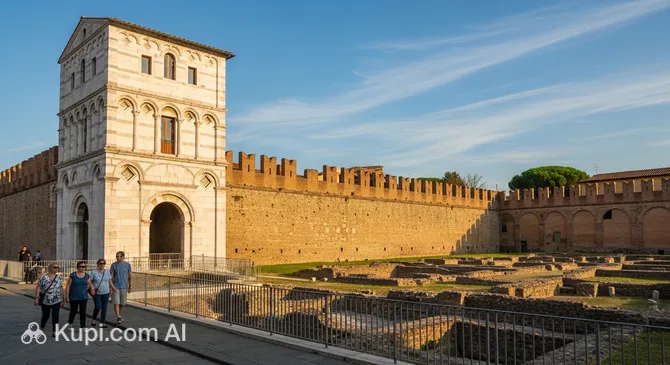
Porta a Lucca
Porta a Lucca. Иллюстрация. Источник: Kupi.com AI

These gates represent a harmonious blend of Romanesque and Renaissance styles. Built from characteristic gray sandstone, they are integrated into the overall system of fortress walls, the evolution of which began as far back as the Roman period. Today, it is not just a historical site but an important element of the city skyline, leading towards neighboring Lucca.

Porta a Lucca is located on Largo Parlascio square and serves as a kind of portal connecting modern city blocks with centuries of history. The high rating of this attraction among travelers confirms its significance as one of the most interesting and well-preserved fragments of the city's defensive belt.

Contacts

Finding the attraction is easy, as it is located on one of the city's busy squares. For your convenience, precise location details are provided below.

How to contactContact
AddressLargo Parlascio, 56127 Pisa PI, Италия

What to Do

A visit to Porta a Lucca offers an excellent opportunity for a leisurely exploration of medieval fortifications. Here, it is worth carefully examining the masonry details made of gray sandstone and appreciating the massiveness of the structures that protected the city for centuries. This is an ideal location for photo sessions against the authentic urban backdrop of Largo Parlascio square.

From the gate, it is convenient to start a walking route to the city's main symbols, including the famous tower, which can be reached in literally a few minutes. Along the way, you will find cozy shops and eateries where you can enjoy traditional dishes such as pasta or Tuscan panzanella while soaking in the atmosphere of old Europe.

For active travelers, a cycling trip is a great option. You can rent a bike and ride along preserved sections of the fortress wall, studying the bastions and curtains. The calm rhythm of this area is perfect for taking a break from sightseeing and simply watching city life unfold in the shadow of ancient stones.

Getting There

The attraction is located in the northern part of the city center on Largo Parlascio. If you are arriving at Galileo Galilei Airport, the most convenient way is to take the LAM Rossa bus to the Square of Miracles, from where it is about a 10-minute walk to the gate.

From the Pisa Centrale railway station, the walk takes approximately 15–20 minutes. This is an excellent way to see the city from the inside, passing by ancient palazzos and cozy squares. You can also use a local taxi or rent a bike, which is very popular in this area.

If you are traveling from neighboring Lucca, the journey by car via the SS12 highway or by regional train will take no more than 25 minutes. Keep in mind that parking directly at the gate may be limited due to the historic nature of the area, so public transport or walking remain the most preferred options.

Ближайший город: Pisa

History & Facts

The history of Porta a Lucca is inextricably linked to the development of the region's defensive system. The first city walls here were built during the Roman era, but the main defensive ring, to which the gate belongs, took shape between the 11th and 13th centuries. In the 16th century, it underwent significant reconstruction, receiving a classical pediment decorated with coats of arms and niches where statues of lions once stood.

Interestingly, the appearance of this gate largely echoes the architecture of the fortifications in Lucca, highlighting the close cultural and historical ties between the two rival cities. Pisa's walls served not only as defense against enemy raids but also as a vital barrier against the destructive floods that occurred here in the past due to river overflows.

During the Renaissance, the fortifications evolved, acquiring features typical of advanced military engineering of the time: new towers, bastions, and hidden corridors (posterns) were added. Later, in the 19th century, at the initiative of Elisa Bonaparte, the architectural appearance of the surrounding areas continued to change, and some sections of the walls were transformed into the picturesque walking paths that have been preserved to this day.

Time Needed

For a standard visit to Porta a Lucca to study the architectural masonry details and take commemorative photos, 30–45 minutes is sufficient for most tourists. This is a site that is easy to include in a general walking plan through the northern part of the historic center.

If you plan to combine your visit with a break at one of the nearby cafes or wish to continue along the pedestrian routes toward the Square of Miracles, you should set aside about an hour. This time is quite enough to enjoy the area's tranquil atmosphere and examine the details of the ancient fortifications without rushing.

Working Hours

Since Porta a Lucca is part of the historic city walls and is located in an open public space, it is accessible for viewing 24/7. You can admire this architectural monument in bright daylight as well as in the evening, when the gates look particularly mysterious under the city lights.

No special visiting schedule or entrance tickets are required for an external viewing of the site. However, to get up-to-date information on possible cultural events or organized tours along the city walls, visitors are recommended to check the city's official tourism website.

Nearby

Exploring the surroundings of this historic location can significantly enrich your travel experience. Major architectural treasures are concentrated nearby, allowing for a deeper dive into the atmosphere of the Tuscan past.

NameDistance
Gelato Dipendente0.2 km
Church of Saint Catherine of Alexandria0.3 km
Leaning Tower of Pisa0.4 km
Museum of the Opera del Duomo0.4 km
L'Ostellino0.4 km
Knights' Square0.4 km
Orto and Botanical Museum0.5 km

Reached the end of the page?

That means the route is fully explored