Support

Chikugo

About

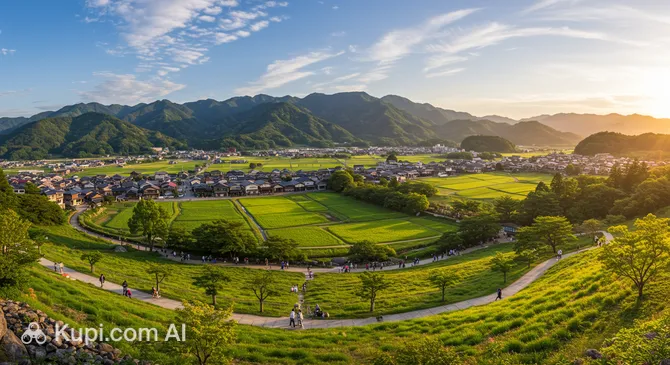
Chikugo is a cozy city located in Fukuoka Prefecture on the island of Kyushu, Japan. It seems designed for leisurely strolls and a deep immersion into an authentic Japanese atmosphere. The city is spread across a picturesque plain, surrounded by green rice fields and calm river valleys, making it an ideal destination for those looking to take a break from the hustle and bustle of major metropolises and experience real provincial life.

Chikugo. Illustration.
Source: Kupi.com AI

With a population of about 48,800 people, Chikugo retains the charm of a small town where every corner is steeped in history and tradition. Despite its modest size, the city plays an important role in the region's life: major transport arteries intersect here, and the local railway station is known for its convenience for travelers. The atmosphere of Chikugo is surprisingly harmonious: it is easy to feel like a part of the slow-paced local life, enjoy the beauty of nature, and the coziness of ancient streets.

Chikugo will especially appeal to fans of quiet relaxation, culinary discoveries, and those seeking inspiration in Japanese traditions and hospitality. This is a wonderful opportunity to get to know another side of the Land of the Rising Sun, far from the noise of big cities but full of its own unique charm.

You can find more interesting facts on the history of the city of Chikugo page.

Weather Overview

The weather in Chikugo has clearly defined seasons. Summer, especially in July and August, is warm and humid, with average temperatures around 26-27°C, and maximum values can reach 29-31°C. July is also the rainiest month with about 12 mm of precipitation and around 21 rainy days. Winters, by contrast, are cool and relatively dry. In January and December, the average temperature fluctuates around 5-7°C, with minimum temperatures dropping to 2-3°C. Precipitation in winter months is minimal, around 2 mm.

Spring and autumn offer pleasant transitional conditions. In March and April, temperatures gradually rise from 10°C to 15°C, and in September and October, they comfortably decrease from summer peaks to 18-24°C. In general, expect a warm, humid summer with occasional rains and cool, relatively dry winters. To learn more about the climate conditions and plan your trip in the best way, check out the detailed information on the Chikugo Climate page.

Average monthly temperature

Average monthly precipitation

Interesting Facts

Beyond its picturesque landscapes and calm atmosphere, Chikugo holds many fascinating stories and unique features that make it a truly special place for the curious traveler. Here are just a few lesser-known facts that will help you see this city from a new perspective:

  • Did you know that the history of Chikugo dates back to ancient times? As early as the Edo period, this region was an important center for rice cultivation and bustling trade. Even today, in some parts of the city, you can find ancient temples and shrines, as well as traditional Japanese houses with characteristic tiled roofs and well-kept gardens, seemingly transporting you into the past.

  • Every year, Chikugo hosts the colorful Gion Matsuri festival, which attracts many spectators. According to local legend, this vibrant celebration with traditional dances and music was created not just for entertainment, but also to appease spirits and bring good luck to agriculture, highlighting the city's deep connection to its agrarian heritage.

  • Chikugo is famous for its crafts, and these are not just words. The production of unique items from bamboo and wood, as well as traditional Japanese fans, still flourishes here. Many masters carefully preserve and use ancient techniques passed down from generation to generation, creating true works of art.

  • Local landscapes have inspired generations of creative people. The names of famous figures in Japanese culture, including poets and artists who drew inspiration from the beauty of this land, are associated with Chikugo. The city's residents are proud of their rich history and are happy to share lesser-known stories and legends about their town with tourists, adding a touch of magic to every visit.

How to Get There

When planning a trip to Chikugo, located in Fukuoka Prefecture, it is important to think through your route in advance. Although Chikugo itself does not have its own international airport or a major railway hub, the region's transport infrastructure offers convenient options for travelers.

The main way to get to Chikugo for most international and many domestic tourists is to fly to one of the nearest airports. There is no airport in Chikugo itself. The most convenient options are:

Saga Airport (IATA: HSG), located in the city of Saga, is the closest to Chikugo – only about 19.9 km away. It is a regional airport, and the journey from it to Chikugo by taxi or bus takes approximately 50 minutes. Despite being smaller than other airports in the region, its proximity makes it an attractive option.

Another popular option is Fukuoka Airport (IATA: FUK). It is a very large international airport located in the city of Fukuoka, about 41.7 km from Chikugo. From here, you can reach Chikugo in about 1 hour and 25 minutes by car or by using a combination of public transport. Due to the high number of flights, this is often the most convenient choice for international travelers.

Also worth considering is Kumamoto Airport (IATA: KMJ), located in the city of Kumamoto at a distance of about 53.1 km. This is also a major airport serving many destinations. The trip from Kumamoto Airport to Chikugo will take approximately 1 hour and 40 minutes.

For clarity, here is a summary of the main airports you can use for a trip to Chikugo:

AirportPassenger trafficDistance
Saga Airport600 58220 km
Fukuoka Airport24.9 mln42 km
Kumamoto Airport2.9 mln53 km
Nagasaki Airport3.1 mln64 km
Kitakyushu Airport1.6 mln86 km

Regarding rail connections, it is important to note that Japan is famous for its advanced and efficient railway system. For traveling to Chikugo by train, it is recommended to research Shinkansen high-speed train routes, as well as regional and local lines that pass through major transport hubs in Fukuoka Prefecture. Such hubs could be, for example, stations in the cities of Fukuoka or Kurume, from where you can reach Chikugo by local transport.

For the most up-to-date information on schedules, routes, and ticket purchases, it is strongly recommended to visit the official websites of Japanese railway operators, such as JR Kyushu or Nishitetsu (Nishi-Nippon Railroad), which serve the Kyushu region and Fukuoka Prefecture.

Main Attractions

The city of Chikugo, located in Fukuoka Prefecture, offers its guests several interesting sites that reflect the culture and nature of the region. Despite its relatively small size, Chikugo can surprise travelers with unique shrines and spaces for relaxation.

One of the most famous and unusual attractions is the Koiki Shrine (Koiki Jinja). It is the only sanctuary in Japan dedicated to the deity of love, Koi-no-Mikoto. The shrine attracts many visitors, especially young people and couples wishing to pray for luck in love and marriage. The shrine grounds are decorated with hearts, and the talismans and ema (wooden prayer plaques) are also designed with a romantic theme. This place is interesting for its unique specialization and charming atmosphere.

Located near or on the same grounds as the Koiki Shrine is the Mizuta Tenmangu Shrine. This is a more traditional Shinto sanctuary dedicated to Sugawara no Michizane, the deity of learning and calligraphy. Visitors often combine a visit to both shrines. Mizuta Tenmangu offers a more peaceful and classic Japanese sanctuary atmosphere where you can appreciate the architecture and tranquility.

For connoisseurs of art and culture, the Kyushu Geibunkan will be of great interest. This is a cultural center and museum designed by the famous architect Kengo Kuma. It hosts various exhibitions dedicated to both traditional and contemporary art, as well as crafts of the Kyushu region. The building itself is an architectural landmark, harmoniously integrated into the surrounding landscape. It is an excellent place to get acquainted with the cultural heritage of Fukuoka Prefecture and the entire island of Kyushu.

If you are looking for a place to relax in nature, Chikugo Regional Park is an excellent choice. This is a vast park with various areas for active recreation and relaxation: there are sports fields, children's play areas, walking paths, and beautiful gardens. The park is especially popular among families with children and those who want to enjoy nature without traveling far from the city. Depending on the season, you can see various plants in bloom here.

Local Cuisine

The gastronomy of Chikugo is a true immersion into the world of the freshest local products. The city is famous for its rice, grown literally in its outskirts, as well as fish and vegetables supplied by local farmers. One of the main delicacies you should definitely try is unagi-no-kabayaki – tender grilled eel served on a bed of aromatic rice. This dish is considered a signature of the Kyushu region and attracts gourmets with its rich flavor.

Another iconic Chikugo dish that reflects the city's culinary traditions is chikuzen-ni. It is an appetizing stew made from chicken and various root vegetables, simmered in a special sauce. This dish is not only delicious but also carries deep cultural meaning, symbolizing hospitality and family traditions. It is often prepared for major holidays and for honored guests, emphasizing its special significance in local cuisine.

Strolling through the streets of Chikugo, you will surely notice small, cozy shops offering traditional pastries, various rice flour sweets such as mochi with red bean filling, and seasonal fruits. Among drinks, refreshing options based on green tea are popular. Connoisseurs of Japanese traditions should also look out for local sake, which is often featured at gastronomic events.

Food culture in Chikugo is characterized by an emphasis on the freshness and seasonality of ingredients. Locals and tourists can enjoy authentic dishes in small family restaurants as well as by trying street food. A special atmosphere is created by the gastronomic festivals regularly held in the city. These events are a wonderful opportunity not only to taste culinary delights but also to meet producers, participate in workshops on preparing Japanese delicacies, and fully experience the taste and spirit of the true Japanese countryside.

Travel Tips

Welcome to Chikugo! To make your journey through this charming corner of Japan as comfortable and pleasant as possible, we have prepared some practical tips. We hope they help you navigate better and enjoy every moment of your stay.

  1. Clothing and Essentials:

    The climate in Chikugo, like throughout Fukuoka Prefecture, is temperate with four distinct seasons. In summer (June-August), choose light, breathable clothing; don't forget an umbrella or raincoat, especially in June-July (the "tsuyu" rainy season). In spring (March-May) and autumn (September-November), layered clothing and a light jacket will be useful. In winter (December-February), dress warmly: a coat, hat, scarf, and gloves will be appropriate. A key element of your wardrobe is comfortable walking shoes. For electrical appliances, bring an adapter (Japan uses Type A and B sockets, 100V voltage). When visiting temples and shrines, show respect by choosing modest clothing; be prepared to remove your shoes before entering certain areas.

  2. Transport:

    It is convenient to get around Chikugo by local buses; study their routes in advance. For trips to neighboring cities and around Fukuoka Prefecture, use the trains – the JR Kagoshima Main Line passes through the city (Chikugo-Funagoya Station). Taxis are available but can be quite expensive. Renting a car may be justified if you plan to actively explore the surroundings (remember that traffic in Japan is on the left, and you will need an international driving permit). A bicycle is an excellent option for a leisurely exploration of the city and its picturesque outskirts.

  3. Finances:

    The local currency is the Japanese Yen (JPY, ¥). It is best to exchange currency at the airport upon arrival or at banks in major cities, as exchange opportunities in Chikugo may be limited. Credit and debit cards are accepted in many hotels, large shops, and restaurants, but cash is still very important, especially in small establishments, at markets, and for paying for some types of transport. It is recommended to always have some cash on you. ATMs that accept international cards can be found in 7-Eleven branches (Seven Bank) and Japan Post offices. Tipping is not customary in Japan – good service is considered the norm.

  4. Health and Safety:

    Japan, including Chikugo, is a very safe country with a low crime rate. Pharmacies (look for the "薬" - kusuri sign) offer a wide selection of medications, but pharmacists do not always speak English. Carry a list of necessary medications with their international names. 24-hour pharmacies are rare. It is strongly recommended to take out travel medical insurance before your trip. If medical help is needed, hotel staff can assist you or direct you to a suitable facility. Follow standard precautions: keep an eye on your belongings and be attentive in crowded places.

  5. Communication:

    The official language is Japanese. English is not widely spoken, especially among the older generation and in smaller towns like Chikugo. Learn a few basic phrases in Japanese: "konnichiwa" (hello), "arigato" (thank you), "sumimasen" (excuse me/sorry). For connectivity, consider buying a local SIM card or renting a pocket Wi-Fi router – this is a very popular and convenient solution. Free Wi-Fi is available in some hotels, cafes, and convenience stores (konbini). Translation apps and navigation programs like Google Maps will be useful.

  6. Local Etiquette:

    Japanese people are very polite and value respectful behavior. A greeting is usually accompanied by a bow; for foreigners, a slight nod of the head is sufficient. In public places, especially on transport, try to be quiet and avoid talking loudly on the phone. It is customary to remove shoes before entering homes, some temples, traditional restaurants, and inns (ryokans). It is not customary to eat or drink while walking on the street (except in designated areas or during festivals). Patience and politeness will help you build rapport with local residents.

  7. What to Avoid:

    To avoid offending locals and awkward situations, try not to: stick your chopsticks vertically into a bowl of rice (this is associated with funeral rituals) or talk loudly on the phone in public transport or other quiet places. It is also not customary to point at people or objects with a single finger – it is better to use an open palm.

  8. Chikugo Specialties:

    Chikugo is famous for the annual Chikugo River Fireworks Festival, one of the largest in Western Japan (usually held in late August). The city is also known for its charming Koibumi-dori ("Love Letter Street"). If your visit coincides with the festival or you have time, be sure to stroll down this street. Additionally, the Chikugo region is known for traditional crafts such as Kurume Kasuri textiles – look out for local products as souvenirs.

We hope these tips make your stay in Chikugo even more rewarding and memorable. Enjoy the unique atmosphere, culture, and hospitality of this beautiful city!

Entertainment & Nightlife

Chikugo, a cozy city in Fukuoka Prefecture, offers its guests a quiet and authentic nightlife experience, far from the noise of major metropolises. Here you won't find massive nightclubs or districts entirely dedicated to entertainment until dawn, but you can enjoy the pleasant atmosphere of local establishments where you can relax after a busy day.

Evening entertainment in Chikugo is mainly centered around small bars, traditional Japanese drinking establishments called izakayas, and restaurants offering local cuisine. While there are no dedicated "bar streets" like in large cities, cozy venues can be found scattered throughout the city center, especially near the railway station. The atmosphere in such places is usually friendly and conducive to conversation, with the main crowd being local residents.

In an izakaya, you can not only drink sake or local beer but also try a variety of snacks. Many restaurants also stay open until late evening, allowing you to enjoy dinner in a leisurely setting. As for nightclubs or major concert venues, the choice in Chikugo is limited; for a more active club life, it's worth heading to the neighboring, larger city of Fukuoka. However, you can find karaoke bars in Chikugo, a popular form of entertainment in Japan for groups of friends.

Most establishments start to come alive towards the evening, after 6:00 PM or 7:00 PM, and operate until midnight or slightly later, especially on weekends. The dress code is usually casual and informal. Prices in local bars and restaurants are generally moderate. For getting around the city at night, it is most convenient to use a taxi, as public transport may have a limited schedule in the late hours. It is recommended to have cash on hand, although more and more places are accepting credit cards.

Chikugo, like most cities in Japan, is a very safe place for night walks. However, basic precautions should always be observed. If you need a taxi, you can call one by phone (ask for help at your hotel or restaurant) or find one at special taxi stands. Local residents are usually very helpful and ready to assist if you have any questions.

Since information about specific establishments, such as bars or nightclubs, can change frequently, especially in small towns, we recommend consulting current local sources for the freshest recommendations. Your hotel staff, tourist information centers, or popular online maps and review sites will help you find the best places for evening relaxation in Chikugo that match your preferences.

During the day, Chikugo also offers interesting options for leisure. Guests can visit local parks, such as Chikugo Regional Park, known for its floral displays and relaxation spaces. Local temples and shrines are also worth noting, as they introduce visitors to the culture and history of the region. For a wider selection of museums, theaters, and large shopping centers, consider a trip to the nearby city of Fukuoka.

Overall, nightlife in Chikugo is an opportunity to immerse yourself in the calm and hospitable atmosphere of the Japanese province, enjoying high-quality food and drinks in the company of locals, which will be a pleasant addition to your journey through Japan.
Parks & Museums

Chikugo, a cozy city in Fukuoka Prefecture, offers its guests a pleasant combination of green relaxation zones and interesting sites that allow you to touch local culture and history. Here you can find both quiet corners of nature and spaces for cultural enrichment, perfect for curious travelers.

One of the main places for walking and outdoor recreation in Chikugo is Chikugo Regional Park (Chikugo Koiki Koen). This spacious park will likely delight visitors with well-maintained paths, possibly sports fields and picnic areas, as well as beautiful seasonal flowers and trees, making it a wonderful choice for family vacations and leisurely walks. A peaceful atmosphere and traditional Japanese beauty can be found on the grounds of local sanctuaries. For example, Mizuta Tenmangu Shrine and the especially famous Koinoki Shrine, dedicated to the deities of love and marriage, offer not only spiritual seclusion but also picturesque gardens that are prime examples of Japanese landscape design.

For those interested in art and culture, a significant point on the city map is the Kyushu Geibunkan. This is a modern cultural and art center that likely serves as a venue for a variety of exhibitions – from traditional Japanese art to the works of contemporary masters. A visit to Kyushu Geibunkan can provide insight into the creative potential of the Fukuoka region. Additionally, one might find small private galleries or museums in the city dedicated to, for example, local history, ceramics, or other crafts characteristic of this part of Japan.

From an architectural and historical perspective, the mentioned shrines, such as Mizuta Tenmangu and Koinoki, are of great interest. Their structures, gates, lanterns, and other elements reflect centuries-old traditions of Japanese building and religious practice. Careful study of architectural details and surroundings allows for a deeper understanding of the cultural heritage of Chikugo and the entire country.

To get authentic impressions of Chikugo, we recommend not limiting yourself to just the famous sights. Stroll through the residential streets to see the daily lives of citizens, or visit a local market if one is available – this is a great opportunity to try fresh products and specialties. Also, if your trip coincides with one of the local holidays or festivals, such as those held at the Koinoki Shrine, be sure to take part – it will provide bright emotions and allow you to better feel the city's atmosphere.

Getting Around

Getting around Chikugo and its surroundings is possible via public transport, which primarily consists of buses and trains. The system is quite convenient for tourists, although not as extensive as in major metropolises.

The main form of public transport within Chikugo is the bus. They run on various routes, connecting key areas of the city and nearby settlements. Schedules and routes can usually be found at bus stops or on the websites of local transport companies. Bus fares are most often paid in cash upon boarding or exiting; it's best to have the exact amount ready in advance. In some cases, local transport cards or universal IC cards common in Japan (e.g., SUGOCA, Nimoca) may be accepted, but this should be checked for specific routes.

For traveling longer distances and connecting with other cities in Fukuoka Prefecture and beyond, trains are convenient. The JR Kyushu railway lines pass through Chikugo; for instance, Hainuzuka Station is an important transport hub. Train tickets can be purchased at station ticket offices or vending machines. The trains are known for their punctuality and comfort.

The fare payment system in Chikugo is quite standard. For buses, it is generally cash to the driver. For trains, tickets are bought before boarding for a specific trip, or you can use rechargeable IC cards, which significantly simplify the process of payment and transfers. The fare depends on the distance. Information on tariffs and types of passes is best obtained at stations or tourist information centers.

Public transport in Chikugo typically starts early in the morning and finishes late in the evening. However, the frequency of service may decrease in the evening hours and on weekends. It is recommended to check the schedule in advance, especially if you plan late trips. Bus tickets are usually bought or paid for directly in the cabin, while train tickets are bought at the station before boarding via machines or at the ticket office. IC cards are validated at the entrance and exit through turnstiles at railway stations or via special readers on buses.

In addition to public transport, other modes of travel are available in Chikugo. Taxis can be found at stations or called by phone; this is a convenient, though more expensive, option. For a leisurely exploration of the city and its picturesque surroundings, bicycle rental is an excellent choice – rental points can be found at stations or in tourist areas. Given the size of Chikugo, many central areas can also be easily explored on foot.

There are no unique historical modes of transport, like ancient subways or cable cars, in Chikugo. The city's transport system is functional and oriented toward meeting the daily needs of residents and guests.

Accommodation

In the city of Chikugo, travelers will find various accommodation options to suit different preferences and budgets. The choice ranges from traditional Japanese inns (ryokans), offering a unique cultural experience and immersion into local life, to more familiar European-style hotels. You can also consider renting apartments or guesthouses, which is particularly convenient for families or those planning a long stay.

When choosing a place to stay in Chikugo, pay attention to areas located near major transport hubs or attractions of interest. This will ensure ease of movement around the city and its surroundings. Although Chikugo is not a massive metropolis, having convenient access to railway stations or bus stops can significantly simplify your travel and exploration of the region.

The price range for housing in Chikugo is quite wide, allowing you to find an option for both the budget traveler and those seeking mid-range hotels with a good set of services. While there may be a limited selection of large hotel chains or world-class luxury resorts in Chikugo, the city offers many cozy local hotels, traditional ryokans, and guesthouses where comfortable and hospitable accommodation awaits you. To guarantee the best choice, especially during peak tourist season or local festivals, it is recommended to book your accommodation in advance. For finding suitable options and comparing prices, it is convenient to use popular online booking platforms, where you can also read current offers and reviews from other travelers.

Nearby Cities

For those looking to explore the surrounding area, Chikugo serves as an excellent starting point for day trips to several interesting nearby locations:

CityPopulationDistance
Yame60 1965 km
Hirokawa19 8016 km
Yanagawa64 12011 km
Kurume302 85812 km
Miyaki25 38613 km

These nearby destinations provide a glimpse into the diverse culture and landscapes of the region. Each trip promises new discoveries and impressions, complementing your journey to Japan.

Shopping & Souvenirs

Shopping in Chikugo offers an introduction to local goods and traditional crafts rather than massive shopping centers with global brands. The city and its surroundings are famous for the production of high-quality fabrics, specifically the famous kasuri dyeing technique. Here you can find authentic products that will serve as a wonderful reminder of your trip to Japan.

Primary shopping opportunities in Chikugo are concentrated around the central streets and small shopping arcades (shotengai), where local shops, souvenir stalls, and grocery stores are located. Walking along these streets allows you to dive into the city's daily life and find unique items. It's also worth paying attention to the shops at craft workshops if you are interested in traditional products.

Large multi-story shopping malls common in metropolises may be few in Chikugo. However, you can find supermarkets and small department stores offering everyday goods, clothing, and food. For more extensive shopping with a wide selection of brands, a trip to larger cities in Fukuoka Prefecture may be necessary.

While there may not be large tourist markets in Chikugo, look out for local food markets where you can buy fresh fruit, vegetables, and other regional delicacies. Occasionally, fairs or seasonal sales are held where local producers present their goods, including handicrafts.

As souvenirs from Chikugo and the region, consider bringing back items made from Kurume kasuri fabric – these could be kimonos, clothing, bags, scarves, or small accessories. Local ceramics, traditional Japanese sweets (wagashi), and green tea from the neighboring Yame region are also popular. Don't forget small souvenirs with local symbols.

Most shops in Chikugo usually operate from 10:00 AM or 11:00 AM until 7:00 PM or 8:00 PM. Small family shops may have their own schedules. Both cash (Japanese yen) and credit cards are accepted, especially in larger stores. However, at small markets or in tiny shops, it is preferable to have cash on hand.

For foreign tourists in Japan, a Tax Free system applies to purchases above a certain amount in shops with the appropriate designation. This usually applies to non-food items. Check the conditions and the possibility of Tax Free processing directly at the shop before making a purchase. You will need to present your passport.

Reached the end of the page?

That means the route is fully explored