Support

Fujikawaguchiko

About

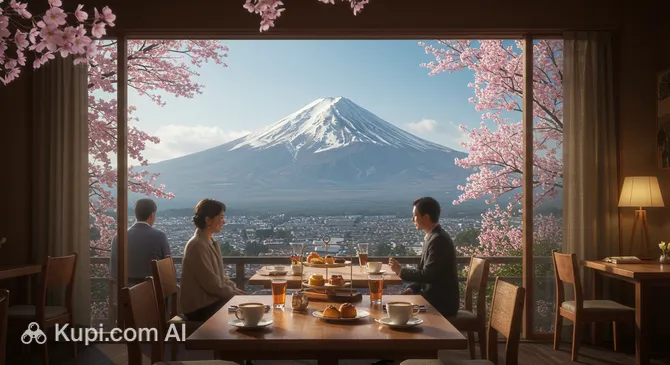
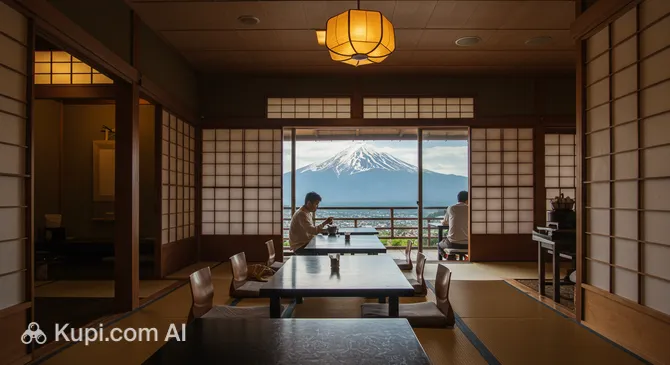
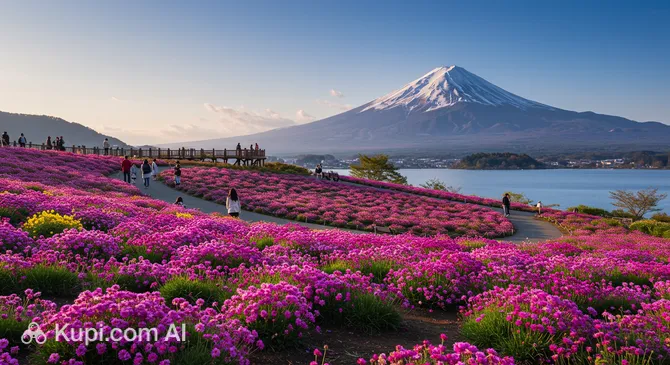
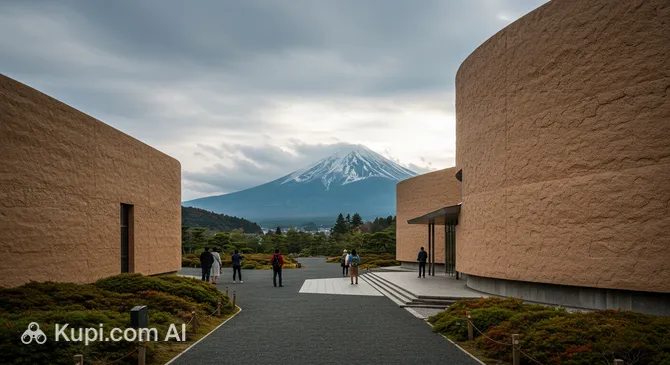
Fujikawaguchiko is a charming town at the foot of the majestic Mount Fuji and one of the most popular travel destinations in Japan. Located in Yamanashi Prefecture, this town attracts travelers from all over the world with its breathtaking landscapes, tranquil atmosphere, and proximity to the famous volcano. Fujikawaguchiko serves as the gateway to the Fuji Five Lakes region, offering a unique blend of natural beauty and cultural experiences.
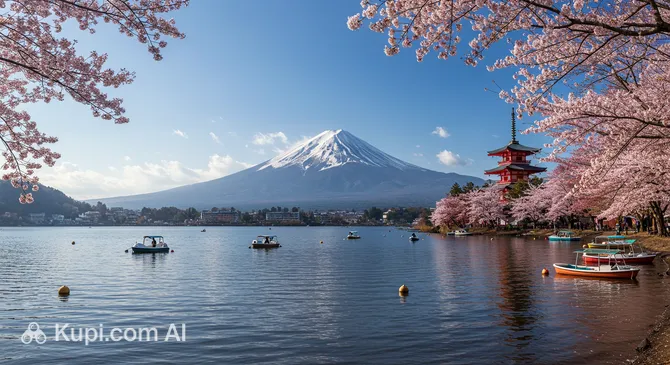
Fujikawaguchiko. Illustration.
Source: Kupi.com AI

The town sits on the northern shore of Lake Kawaguchiko, the most accessible of the Fuji Five Lakes. The climate here is temperate with four distinct seasons: warm summers, colorful autumns, mild winters with occasional snowfall, and blossoming springs. Fujikawaguchiko has a population of about 25,500, giving it a cozy small-town feel despite its popularity with tourists. From here, you can enjoy some of the best views of Mount Fuji, especially on clear days when its symmetrical cone is reflected in the calm waters of the lake.

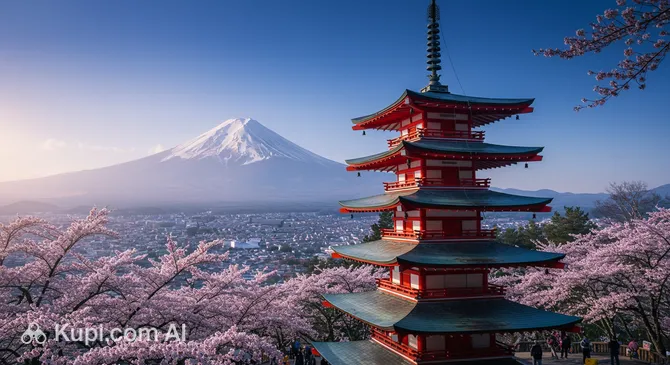
Key attractions in Fujikawaguchiko include Lake Kawaguchiko itself, where you can take a boat cruise or simply enjoy the views from the waterfront. Nearby is the famous Chureito Pagoda, which offers the iconic view of Mount Fuji framed by a bright red pagoda—particularly stunning during cherry blossom season or when the autumn leaves change. Additionally, the region is famous for its onsens (hot springs), many of which offer baths with views of Mount Fuji, creating an unforgettable experience.

Fujikawaguchiko is the perfect destination for those who want to enjoy the majesty of nature, explore Japanese culture, and, of course, see the legendary Mount Fuji in all its glory. A visit to this town will leave you with vivid memories and a desire to return.

You can find more interesting facts on the Fujikawaguchiko history page.
Weather Overview

The weather in Fujikawaguchiko is characterized by distinct seasons, allowing for a variety of landscapes throughout the year. Winters are quite cold, with average January temperatures around 1.4°C and minimum values dropping below freezing. Summer, by contrast, is warm and humid: the average August temperature reaches 23.8°C, and July and August are the rainiest months with the highest number of wet days.

Spring (March–May) brings gradual warming, with average temperatures rising from 6.4°C to 15.0°C and moderate rainfall. Autumn (September–November) delights with comfortable coolness, as temperatures drop from 20.3°C to 8.9°C, although October can still be quite rainy. In general, expect warm summers with periodic rain and cold, relatively dry winters, although snowfall is not uncommon. To plan your trip in the best possible way, we recommend checking more detailed information about the Fujikawaguchiko climate.

Average monthly temperature

Average monthly precipitation

Interesting Facts

Beyond its world-famous views of Mount Fuji, Fujikawaguchiko holds many curious details and unexpected stories. Here are just a few little-known facts that will add some flair to your trip:

Chureito Pagoda. Illustration.
Source: Kupi.com AI

Traveler photos:

  • A symbol of peace, not antiquity: The famous Chureito Pagoda, which provides the postcard-perfect view of Fuji, was actually built relatively recently—in 1963. It was erected as a peace memorial to commemorate the region's residents who died in wars, rather than as an ancient shrine.

  • Trains of the future at the foot of Fuji: Not far from the town, in Yamanashi Prefecture, lies the Yamanashi Prefectural Maglev Exhibition Center. Here you can see tests of ultra-high-speed magnetic levitation trains, which are a technological marvel of modern Japan, creating a striking contrast with the eternal stillness of Mount Fuji.

  • The amazing acoustics of Aokigahara Forest: The dense Aokigahara Forest, also known as "Jukai" (the Sea of Trees), is located at the northwestern base of Fuji. Its unique feature is not just the density of the trees, but the fact that the porous volcanic soil and the abundance of trees effectively absorb sound, creating an unusually quiet, almost ringing atmosphere.

  • Chasing "Diamond Fuji": At certain times of the year, usually at sunrise or sunset, a rare and spectacular phenomenon called "Diamond Fuji" can be observed from the Fuji Five Lakes area. This is the moment when the sun aligns perfectly with the peak of the mountain, and its rays create a dazzling glow that looks like a sparkling diamond. Many photographers and tourists come here specifically to capture this magical moment.

  • Town by the "Lake of the River Mouth": The name of Lake Kawaguchiko (河口湖), which gave the town its name, literally translates to "lake of the river mouth." It is the most popular and easily accessible of the Fuji Five Lakes, having the longest shoreline and serving as the center of tourist activity in the region.

How to Get There

Getting to Fujikawaguchiko, the charming town at the foot of Mount Fuji, is possible in several ways. The majority of tourists arrive via the international airports serving Tokyo, which offer convenient transport links to Fujikawaguchiko.

Fujikawaguchiko itself does not have its own airport. The nearest major air hubs are in Tokyo. One of the most convenient options is Haneda Airport (HND), located in Tokyo approximately 93 km from Fujikawaguchiko. It is one of the world's largest airports, offering many domestic and international flights. A trip from here by car or direct bus to Fujikawaguchiko takes approximately 2.5-3 hours. Another major international hub is Narita International Airport (NRT), which also serves Tokyo. It is located further away, about 151 km from Fujikawaguchiko. Travel time from Narita is around 4-4.5 hours. Both airports are the primary air gateways to Japan for many travelers.

You may also consider Shizuoka Airport (FSZ), located in Shizuoka City, about 94 km from Fujikawaguchiko. This is a smaller airport compared to those in Tokyo, but it can be convenient for some regional or specific international flights. The journey from here to Fujikawaguchiko also takes about 2.5-3 hours.

For your convenience, here is a summary of the main airports used to reach Fujikawaguchiko:

AirportPassenger trafficDistance
Haneda Airport85.7 mln93 km
Shizuoka Airport691 27494 km
Matsumoto Airport112 618106 km
Narita International Airport40.8 mln151 km
Ibaraki Airport776 063168 km

After arriving at one of the mentioned airports, the most common and convenient way to reach Fujikawaguchiko is by direct bus. They depart regularly from Haneda and Narita airports, as well as from major Tokyo transport hubs like Shinjuku or Shibuya stations. The bus ride usually takes 2 to 3 hours depending on the departure point and traffic. Alternatively, you can rent a car, which provides more freedom to explore the scenic Fuji Five Lakes region. Although Fujikawaguchiko has the Kawaguchiko railway station (served by the Fujikyuko Line), there is no direct Shinkansen or airport express service; a transfer is usually required, for example at Otsuki Station, if you prefer to travel by rail.

Main Attractions

Fujikawaguchiko offers its guests many amazing places, from breathtaking natural views to unique cultural sites and entertainment. Here are some of the top attractions that should definitely be on your itinerary:

One of the most photographed and iconic landmarks is the Chureito Pagoda. This bright red five-story pagoda, located on a hillside in Arakurayama Sengen Park, offers a classic view of Mount Fuji that is particularly stunning in spring during the cherry blossom season or in autumn when the slopes turn crimson. The pagoda was built in 1963 as a peace memorial, and the climb of nearly 400 steps is rewarded with a truly unforgettable panorama.

Chureito Pagoda. Illustration.
Source: Kupi.com AI

Traveler photos:

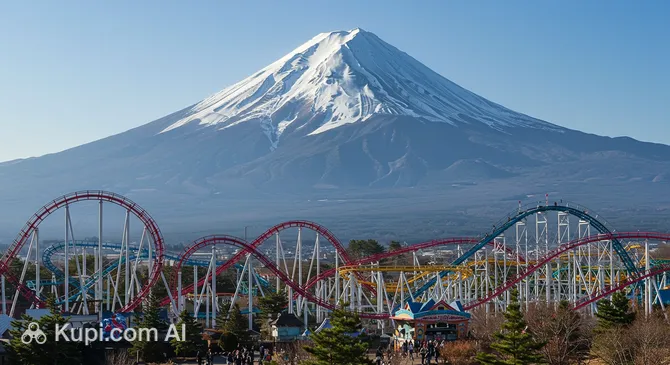
For thrill-seekers and families, Fuji-Q Highland is a must-visit. This famous amusement park is known for its record-breaking roller coasters, including rides with the steepest drop angles and dizzying speeds. In addition to extreme rides, the park offers themed zones, attractions for children, and, of course, stunning views of Mount Fuji right from some of the coasters.

Fuji-Q Highland. Illustration.
Source: Kupi.com AI

Traveler photos:

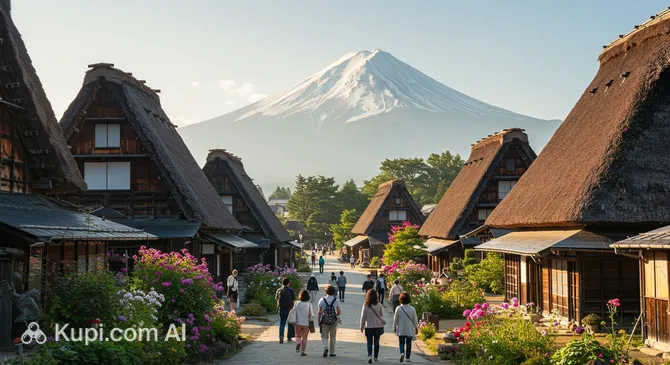
If you want to immerse yourself in the atmosphere of traditional Japan, visit Saiko Iyashi-no-Sato Nenba. This open-air museum is a reconstructed village with more than 20 traditional thatched-roof houses located on the shores of the scenic Lake Saiko. Here you can not only see how Japanese people lived in the past but also take part in various traditional craft workshops such as pottery, washi paper making, or weaving.

Saiko Iyashi-no-Sato Nenba. Illustration.
Source: Kupi.com AI

Traveler photos:

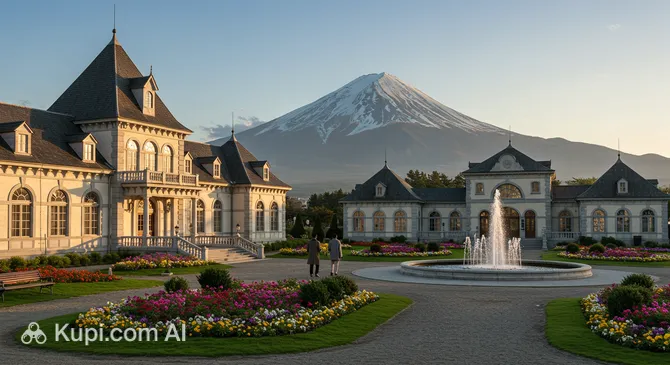
A unique place that will enchant both adults and children is the Kawaguchiko Music Forest Museum. This theme park and museum is dedicated to automatic musical instruments, including antique music boxes, mechanical organs, and barrel organs. Guests can enjoy concerts by these amazing instruments, stroll through beautiful European-style gardens with views of Fuji, and soak up the fairytale atmosphere.

Kawaguchiko Music Forest Museum. Illustration.
Source: Kupi.com AI

Traveler photos:

Local Cuisine

The cuisine of Fujikawaguchiko is a delightful immersion into the gastronomic traditions of Yamanashi Prefecture, known for its hearty dishes and the use of the freshest local ingredients. Located at the foot of majestic Mount Fuji and surrounded by clean lakes, the town offers a unique combination of flavors that every traveler will remember.

The main regional specialty that you must try is hoto (ほうとう). This is a thick soup with wide, flat wheat noodles stewed with seasonal vegetables like kabocha squash, mushrooms, and daikon, often with meat (such as pork) in a rich miso-based broth. This dish is not only incredibly tasty but also very filling, making it perfect for warming up after a walk in the fresh air.

Another iconic dish characteristic of this area is Yoshida udon (吉田のうどん). These udon noodles are known for their particular hardness and chewy texture. They are usually served in a fragrant broth made of soy sauce and miso, with toppings like stewed horse meat (basashi), cabbage, and the spicy suritane sauce. Although Yoshida udon is considered the signature dish of the neighboring city of Fujiyoshida, it is easily found in the restaurants of Fujikawaguchiko as well.

In addition to these two pillars of local cuisine, it is worth trying the fresh freshwater fish from the region's lakes, such as trout. Yamanashi Prefecture is also one of Japan's leading wine-producing regions, so don't miss the chance to try local wines, especially those made from the indigenous Koshu grape variety. For non-alcoholic drinks, besides traditional green tea, juices made from local fruits are popular. Locals and tourists prefer dining in small family restaurants specializing in hoto or udon, as well as in establishments within ryokans (traditional Japanese inns), which often serve exquisite kaiseki style dinners. To discover a variety of local products and delicacies, you can visit, for example, the Asagiri Food Park, which features farm goods and prepared dishes.

Asagiri Food Park. Illustration.
Source: Kupi.com AI

Traveler photos:

Overall, the Fujikawaguchiko food scene charms with its authenticity, emphasizing natural, seasonal ingredients and simple but incredibly tasty dishes that reflect the rural spirit of the region. It is a cuisine that warms, satisfies, and offers a true taste of local culture, often accompanied by breathtaking views of Mount Fuji or Lake Kawaguchiko.

Travel Tips

Planning a trip to Fujikawaguchiko to enjoy views of the majestic Fuji and the beauty of the Five Lakes region? These practical tips will help make your journey as comfortable and unforgettable as possible, because good preparation is the key to a great experience in Japan!

  1. Clothing for the season and useful items: The climate in Fujikawaguchiko is clearly divided into seasons. In summer (June-August), bring light clothing, but don't forget a raincoat—it's the wet season. In spring (March-May) and autumn (September-November), the weather is changeable, so layering is your best friend. In winter (December-February), expect cold and snow, so warm clothes, a hat, gloves, and waterproof shoes are mandatory. At any time of year, comfortable shoes for long walks will come in handy. Don't forget an adapter for electrical appliances (Japan uses type A and B plugs, with 100V voltage). When visiting temples and shrines (such as the Chureito Pagoda, which is part of the Arakura Sengen Shrine), try to dress modestly (shoulders and knees should be covered) and remember that it is customary to remove your shoes before entering some buildings and traditional establishments, so clean socks are a good idea.

  2. Getting around the town and surroundings: The main way for tourists to get around Fujikawaguchiko is the specialized sightseeing buses (e.g., Kawaguchiko Sightseeing Bus – Red, Green, Blue lines), which run to the main attractions around Lake Kawaguchiko and neighboring lakes. Kawaguchiko railway station (Fujikyuko Line) is also available. Taxis exist but are quite expensive. Renting a car can be a good option if you plan to explore the Five Lakes region more freely, especially remote corners. Remember the left-hand traffic and the need for an International Driving Permit.

  3. Money and payments: The official currency is the Japanese yen (JPY). While credit cards are accepted in many hotels, large shops, and restaurants, always have enough cash with you, especially for smaller establishments, markets, and paying for bus fares. It's better to exchange currency at the airport upon arrival or in banks in major cities; there may be fewer options in Fujikawaguchiko itself. ATMs that accept international cards can most often be found at post offices (Japan Post Bank) and 7-Eleven stores (Seven Bank). Tipping in Japan is not customary and may cause confusion.

  4. Health and safety: Fujikawaguchiko is a very safe place, as is Japan in general. Pharmacies (called "kusuri", 薬 in Japanese) are available, but explaining yourself in English can be difficult, so it's best to bring a basic set of medicines with you. Be sure to take out travel medical insurance before your trip. When walking in nature, be wary of wild animals. Bear in mind that Mount Fuji is an active volcano (though dormant); if you plan to climb (only during the official season!), keep an eye on up-to-date information. Also, remember the possibility of earthquakes.

  5. Language and connectivity: The official language is Japanese. In tourist areas, staff often speak basic English, but outside of them, it is rare. Learn a few simple phrases: "konnichiwa" (hello), "arigato" (thank you), "sumimasen" (excuse me/sorry). For constant internet access, consider buying a travel SIM card or renting a pocket Wi-Fi router—this can be done at the airport or ordered online in advance. Free Wi-Fi is available in many hotels and some public places. Navigation apps (like Google Maps) work great for route planning, and offline maps and translation apps can also be helpful.

  6. Respect for local traditions: Japanese people highly value politeness and respect for rules. Greet people with a slight bow (o-jigi). On public transport, try to be quiet and not talk on the phone. Eating and drinking on the go in the street is not common (except in designated areas or during festivals). Remove your shoes before entering private homes, ryokans (traditional inns), temples, and some restaurants. It is customary to take your trash with you, as street bins are scarce.

  7. Taboos and undesirable behavior: Never stick your chopsticks vertically into a bowl of rice—this is associated with funeral rites. Do not point your finger at people or objects; it is considered rude. Blowing your nose loudly in public is also not common. Avoid taking photos of people without their explicit permission, especially in temples or situations that could be seen as an invasion of privacy.

  8. Hunting for the perfect view of Fuji: Mount Fuji is temperamental and often hides behind clouds. The best time for viewing is early morning when the air is clearest, or on clear days after rain. Follow the weather forecast and be prepared to get up early. Many hotels and ryokans in Fujikawaguchiko offer rooms with a view of Fuji—this can be a real highlight of your trip. Also, find out about seasonal festivals, such as the Shibazakura Festival (moss phlox bloom) in spring or the autumn leaves festival—they add a special flavor but require advance planning for accommodation and transport.

We hope these tips help you better prepare for your trip to Fujikawaguchiko and fully enjoy the hospitality of Japan and the incredible landscapes of this unique corner. We wish you bright impressions and clear skies for perfect photos of Mount Fuji!

Entertainment & Nightlife

Fujikawaguchiko, known for its stunning views of Mount Fuji and peaceful nature, offers guests quiet and cozy evenings rather than the bustling nightlife of a metropolis. However, you can still find pleasant ways to spend time after sunset while enjoying the local atmosphere and hospitality of Japan.

Evening entertainment in Fujikawaguchiko is mainly centered around gastronomy. Numerous restaurants and traditional Japanese izakaya pubs offer a chance to taste local cuisine and relax after a busy day. You can find establishments for every taste—from family-run restaurants serving the famous hoto noodles to more refined spots. For example, for a pleasant dinner, you might consider the Fujiyoshida Coffee Shop or the Sanrokuen restaurant, where you can enjoy local specialties in a cozy setting. Many restaurants, especially those located along Lake Kawaguchiko or near major hotels, stay open until late evening, allowing for a leisurely meal.

Fujiyoshida Coffeehouse. Illustration.
Source: Kupi.com AI

Traveler photos:

As for bars, in Fujikawaguchiko, you are more likely to find small, cozy spots where you can have a glass of sake or local beer rather than noisy nightclubs. Some hotels also have their own bars with a pleasant atmosphere and perhaps views of the lake or mountains at night. The crowd is usually a mix of tourists and locals. The dress code in most places is quite casual. Establishments typically stay open until midnight or slightly later, especially on weekends.

Sanrokuen. Illustration.
Source: Kupi.com AI

Traveler photos:

The main points of evening activity are concentrated around Kawaguchiko Station and along the lakefront, where hotels and restaurants are clustered. At night, it is most convenient to get around by taxi, as public transport stops running relatively early. Taxis can be called through your hotel reception or found at taxi stands. Fujikawaguchiko, like Japan in general, is a very safe place, so night walks in well-lit areas are usually not a cause for concern. Average prices in restaurants and bars are moderate, comparable to other tourist cities in Japan.

While nightlife in Fujikawaguchiko is not its main attraction, the town offers many daytime leisure options. These include the thrilling Fuji-Q Highland amusement park and numerous museums, such as the charming Kawaguchiko Music Forest Museum or the educational Yamanashi Prefectural Maglev Exhibition Center. Thus, after an active day of sightseeing, an evening in Fujikawaguchiko provides a pleasant and relaxing conclusion.

Parks & Museums

Fujikawaguchiko is not only about breathtaking views of Mount Fuji but also a place rich in natural beauty and cultural treasures. The town and its surroundings offer tourists magnificent parks for connecting with nature and interesting museums that reveal unique aspects of Japanese culture and history.

Among the green oases of the region, a special place is held by the vast Fuji-Hakone-Izu National Park, of which Fujikawaguchiko is a part. This park offers countless opportunities for hiking and admiring volcanic landscapes and lakes. A more local but no less charming green zone is Oishi Park, located on the northern shore of Lake Kawaguchiko. It is famous for its seasonal flower fields, especially lavender in summer and kochia in autumn, providing a classic backdrop for views of Mount Fuji. It is an ideal spot for photographers and nature lovers. Another iconic park is Arakurayama Sengen Park, known worldwide for the Chureito Pagoda located on its grounds. After climbing the steps, you will be rewarded with one of the most iconic views in Japan.

Oishi Park. Illustration.
Source: Kupi.com AI

Traveler photos:

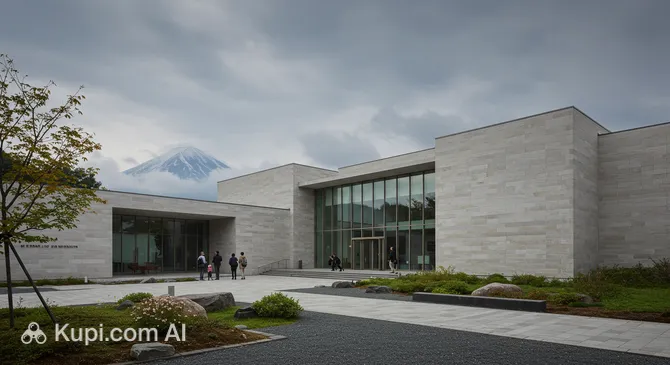
The cultural program in Fujikawaguchiko is also very rich. One of the most impressive sites is the Itchiku Kubota Art Museum, dedicated to the unique silk-dyeing technique for kimono revived by master Itchiku Kubota. The exhibition of stunning kimonos, each a work of art, and the museum's beautiful garden with views of Fuji will leave no one indifferent. Equally interesting is the Kawaguchiko Music Forest Museum, where you can immerse yourself in the world of antique music boxes and mechanical organs, stroll through a European-style garden, and enjoy live concerts. For those interested in technology, the Yamanashi Prefectural Maglev Exhibition Center is a must-visit, where you can learn about the magnetic levitation trains of the future and even see them being tested.

Kubota Itchiku Art Museum. Illustration.
Source: Kupi.com AI

Traveler photos:

Yamanashi Prefectural Maglev Exhibition Center. Illustration.
Source: Kupi.com AI

Traveler photos:

The region's historical heritage is represented not only by the Chureito Pagoda but also by ancient shrines. Special attention should be given to the Kitaguchi Hongu Fuji Sengen Shrine, which historically served as one of the main starting points for pilgrims ascending Mount Fuji. This place, with its powerful atmosphere and ancient cedars, allows you to touch the spiritual traditions of Japan.

For those seeking authentic experiences, we suggest not limiting yourself to the most popular spots. In autumn, be sure to walk through the Kawaguchiko Maple Corridor (Momiji Kairo)—a tunnel of bright red and gold maple leaves that creates a magical atmosphere. For more solitary contemplation of Fuji, head to less-known observation points on the shores of the other Fuji Five Lakes, such as Lake Shoji or Lake Motosu.

Getting Around

Getting around Fujikawaguchiko and its scenic surroundings is quite convenient thanks to a well-organized public transport system geared primarily towards tourists. Although the town is small, there are several effective ways to reach major attractions and enjoy the beauty of the Fuji Five Lakes region.

The main form of public transport in Fujikawaguchiko is buses. Particularly popular with tourists are the Sightseeing Buses, which run on several routes, usually designated by colors (e.g., Red, Green, and Blue lines). These buses cover most of the key attractions around Lake Kawaguchiko and other nearby lakes like Saiko. There are also regular local buses connecting different parts of the town and neighboring communities. There are no subways, trams, or trolleybuses in Fujikawaguchiko.

Railway communication is represented by Kawaguchiko Station, which is the terminus of the private Fujikyuko Line. This line connects Fujikawaguchiko with Otsuki City, where you can transfer to JR trains going to Tokyo and other major cities in Japan. Fujikyuko Line trains often have themed designs and offer scenic views along the way.

One of the features of the transport system is the Mt. Fuji Panoramic Ropeway (formerly known as the Kachi Kachi Ropeway). It takes passengers to an observation deck on Mount Tenjo, which offers breathtaking panoramic views of Lake Kawaguchiko and Mount Fuji. This is more of a tourist attraction than a means of daily travel, but it is very popular.

Regarding payment, on buses and Fujikyuko Line trains, you can use the rechargeable IC cards popular in Japan, such as Suica or Pasmo. This is very convenient as it eliminates the need to buy a cash ticket every time. For sightseeing buses, day passes are often available, allowing unlimited use of specific bus routes for one or two days. This can be a very economical option if you plan to visit many sites. Single-trip tickets and passes can be purchased at Kawaguchiko Station, at tourist information centers, or directly from the bus driver (small change is advisable). Approximate prices for single trips start from a few hundred yen, while day passes can cost around 1,500–2,000 yen.

Practical tips for tourists: Bus and train schedules are usually available at stations and tourist centers. Public transport in Fujikawaguchiko runs regularly but not 24 hours a day; the last trips usually depart in the evening, so plan your late travels in advance. When entering a bus (often through the rear door), you should either tap your IC card on the reader or take a ticket (if paying by zone). When exiting (through the front door), tap your card again or pay the driver, showing the ticket, or present your pass.

Among alternative ways to get around, taxis are popular and can be found at stands near Kawaguchiko Station or called by phone. However, this is a more expensive option. For more freedom to explore the Five Lakes region, many tourists prefer car rentals. Along Lake Kawaguchiko, bicycle rentals are also popular, allowing you to enjoy the views at your own pace. Car sharing is less common in this small town.

Accommodation

In Fujikawaguchiko, travelers will find a wide range of accommodation options to suit various preferences and budgets. From traditional Japanese ryokans with onsen hot springs and breathtaking views of Mount Fuji to modern full-service hotels. More budget-friendly options are also available, such as cozy guest houses (minshuku), backpacker hostels, and short-term rental apartments offering more independence.

The most popular areas for tourists to stay are around Lake Kawaguchiko, which offers magnificent panoramas of Fuji and is home to many restaurants and souvenir shops. The area near Kawaguchiko Station is convenient due to its easy access to transport hubs—buses and trains—making travel around the region easier. For those planning to visit the famous amusement park, staying near Fuji-Q Highland is a good choice.

Traditional Japanese ryokans are particularly popular, many of which offer not only an authentic living experience but also rooms with a direct view of Mount Fuji. Some ryokans and hotels also feature their own onsens (hot springs), including outdoor baths (rotenburo) where you can relax while contemplating the majestic landscape. The choice of quality accommodation in Fujikawaguchiko is quite broad, ranging from luxury resorts to cozy family-run establishments.

When planning your trip, especially during peak seasons like cherry blossom time (spring), the autumn leaf-viewing period (momiji), or summer holidays, it is highly recommended to book your accommodation in advance. Prices can vary significantly depending on the season, type of accommodation, the presence of a Fuji view, and the amenities offered. Booking can be done through popular international online platforms, directly on hotel websites, or through Japanese travel agencies. The price range covers everything from budget options at a few thousand yen per night to more expensive offerings in high-end hotels and premium ryokans.

Nearby Cities

For those who want to explore the surrounding area, Fujikawaguchiko serves as an excellent starting point for day trips to several interesting nearby locations:

For instance, you can visit the city of Fuji, located just 15 km away, to enjoy alternative views of the famous mountain and perhaps learn about local features. Another attractive destination is Kofu, the capital of Yamanashi Prefecture, known for its historical landmarks such as the Kofu Castle ruins and as the region's winemaking center, where you can sample local wines.

CityPopulationDistance
Fujiyoshida46 6595 km
Tsuru30 19315 km
Fuji243 73915 km
Fuefuki67 39620 km
Otsuki22 35621 km

These nearby destinations offer insight into the diverse culture and landscapes of Japan. A trip to any of these cities will enrich your journey with new impressions and allow for a deeper acquaintance with Yamanashi Prefecture and its surroundings.

Shopping & Souvenirs

Shopping in Fujikawaguchiko is more of a pleasant addition to contemplating Mount Fuji and exploring natural beauties rather than an end in itself. The town is not known for large shopping centers or designer boutiques like the metropolises of Japan. Instead, you will find charming little shops offering local souvenirs, handmade goods, Yamanashi region products, and, of course, all kinds of merchandise featuring Mount Fuji.

Main shopping opportunities are concentrated in the area around Kawaguchiko Station and along the Lake Kawaguchiko waterfront, where most hotels and tourist sites are located. Here you can find many souvenir stalls and small shops. There are no specialized shopping streets like in large cities, but while walking along the main tourist routes, you will surely come across interesting places to shop.

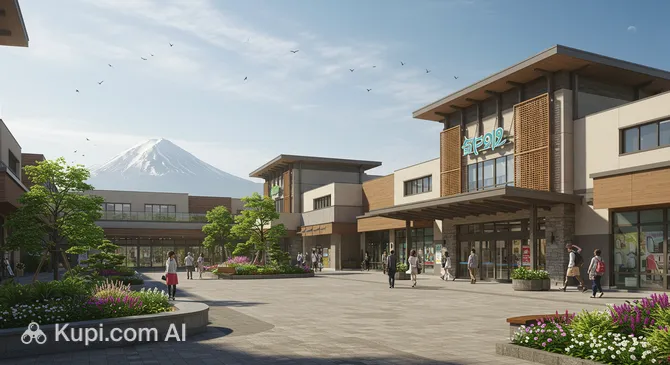
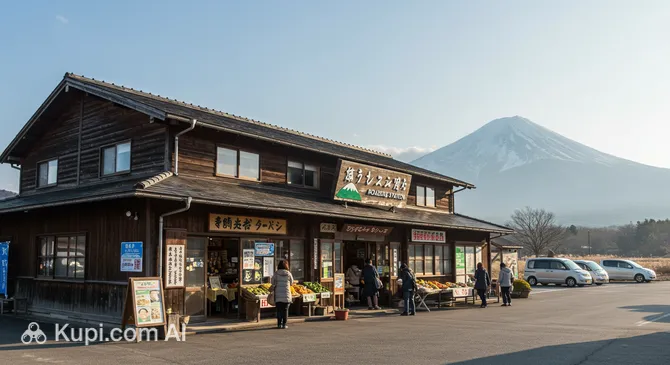
While there are no giant malls in Fujikawaguchiko, you can visit places like the Asagiri Food Park, which features a wide selection of local delicacies, farm products, and gastronomic souvenirs. It is also worth paying attention to roadside stations, such as the Asagiri Kogen Roadside Station. Such complexes often include shops with local goods, fresh produce, and souvenirs, offering an authentic shopping experience.

Asagiri Kogen Roadside Station. Illustration.
Source: Kupi.com AI

Traveler photos:

There are few traditional markets in the European sense that operate daily in Fujikawaguchiko. The focus is on shops at tourist sites, small private boutiques, and specialized stores selling, for example, local wine or sweets. Occasionally, seasonal fairs or farmers' markets may be held where you can buy fresh produce and items from local artisans.

As souvenirs from Fujikawaguchiko, tourists most often bring back:

  • Items depicting Mount Fuji: from postcards, magnets, and keychains to T-shirts, ceramics, and art prints.
  • Local products: the famous hoto noodles in dry form, wine from Yamanashi Prefecture (especially Koshu wine), traditional Japanese wagashi sweets, and tsukemono pickles.
  • Handicrafts: sometimes you can find wooden items, textiles with traditional patterns, or small locally produced ceramics.
  • Souvenirs from visited attractions, such as the Kawaguchiko Music Forest Museum or the Itchiku Kubota Art Museum.

Most shops in Fujikawaguchiko are open approximately from 10:00 or 11:00 AM to 6:00 or 7:00 PM. Small shops may have shorter working hours or a day off (often mid-week). In tourist areas and large stores, credit cards are usually accepted, but it is always useful to have cash with you, especially for purchases in small shops or from occasional vendors.

For foreign tourists in Japan, a Tax-Free system is in place. Look for the corresponding logo in shops. When purchasing goods for a certain amount (usually over 5,000 yen in a single receipt at one store) and presenting your passport, you can receive a consumption tax refund. Check the conditions directly in the store, as not all retail outlets participate in this program.

Reached the end of the page?

That means the route is fully explored