Support

Otsuki

About

Otsuki is a small yet remarkably atmospheric town, snugly nestled in Yamanashi Prefecture, about an hour's drive from Tokyo. The city is surrounded by picturesque mountains and dense forests, and on clear days, it offers stunning views of the famous Mount Fuji. Otsuki's geographic location makes it an excellent starting point for traveling around the Chubu region and exploring the natural beauty of central Japan.

With a population of about 22,000, Otsuki maintains an atmosphere of peace and tranquility. The city is not overcrowded with tourists, allowing you to experience authentic Japanese provincial life. Here, you will find clean streets, friendly residents, and many authentic establishments where you can get in touch with the local culture.
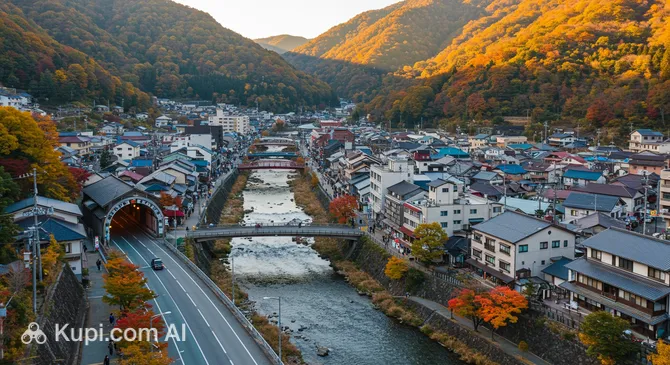
Otsuki. Illustration.
Source: Kupi.com AI

One of the main attractions of Otsuki is, undoubtedly, the breathtaking views of Mount Fuji, which can be seen from various points in the city and its surroundings. Furthermore, Otsuki is often called the "gateway to Japan" for those seeking to escape the noisy metropolises and immerse themselves in the atmosphere of traditional Japanese comfort. The city is ideal for nature lovers and hiking enthusiasts who enjoy scenic mountain trails.

Otsuki harmoniously combines ancient traditions with modern conveniences, making it an excellent choice for exploring Japan off the beaten path. If you are looking for a slow-paced, meditative journey and want to see another side of the Land of the Rising Sun, Otsuki will warmly welcome you.

You can find more interesting facts on the history of Otsuki page.

Weather Overview

The weather in Otsuki is characterized by a noticeable change of seasons, offering diverse climatic conditions throughout the year. Summer here is warm, and the hottest month is August, with an average temperature of around 23.3°C. Winters, by contrast, are quite cold; in January, the average temperature drops to 0.6°C. Precipitation is unevenly distributed: the highest amount, about 9 mm, usually falls in July, which is also characterized by a large number of rainy days. Overall, expect a warm summer with occasional rain and cold, relatively drier winters. To get more detailed information about the weather and plan your trip in the best possible way, you can visit the Otsuki Climate page.

Average monthly temperature

Average monthly precipitation

Interesting Facts

In addition to its picturesque landscapes and rich history, Otsuki holds many surprising details and traditions that make it a truly unique place. Here are a few interesting facts that will help you look at this city from a new perspective:

  • Historically, Otsuki played a key role as an important transport hub connecting Tokyo with the western regions of Japan. Ancient trade routes passed through the city, which is why you can still find old inns and traditional tea houses here that preserve the atmosphere of past eras.

  • Otsuki is famous for its distinctive festivals. The autumn procession is particularly colorful, featuring dances and the use of traditional tanuki masks — mythical raccoon dogs that, according to folk beliefs, bring luck and prosperity. This vibrant tradition dates back more than 400 years and unites all the city's residents.

  • There are many Buddhist and Shinto temples and shrines located in the vicinity of Otsuki. Among them, the Enryaku-ji Temple on Mount Hiei stands out, where you can encounter "marathon monks" — ascetics who perform multi-day pilgrimages around holy sites, demonstrating incredible endurance and strength of spirit.

  • Many ancient legends and tales about gods and demons are associated with the city of Otsuki, which local residents believe protect these lands. Mystic rites and festivals are still held in local shrines today, carefully preserving centuries-old traditions and customs.

How to Get There

Getting to Otsuki can be done in several ways, but there is no direct air connection to the city, as Otsuki does not have its own airport. Travelers are usually recommended to fly into one of the major international airports serving Tokyo and continue their journey from there by train, bus, or car.

The main and most convenient option for most international flights is Haneda Airport (HND), located in Tokyo. It is one of the busiest airports in the world, offering many domestic and international destinations. The distance from Haneda to Otsuki is approximately 76 km. A trip by car or using a combination of trains (for example, to Shinjuku Station in Tokyo and then by express train to Otsuki) usually takes about 2 to 2.5 hours.

Another major international aviation hub is Narita International Airport (NRT), also located in the metropolitan region but somewhat further from Otsuki. The distance from Narita to Otsuki is about 132 km. The journey from here can take approximately 3.5 to 4 hours, depending on the chosen route and mode of transport (for example, the Narita Express to Tokyo, followed by a transfer to a train to Otsuki).

In addition to air travel, Otsuki is well-connected to other parts of Japan by the rail network. Trains, including express services on the JR Chuo Line, regularly run from Tokyo (for example, from Shinjuku or Tokyo stations) and other major cities. For those who prefer traveling by car, high-quality highways such as the Chuo Expressway lead to Otsuki.

For clarity, here is a summary of the main airports through which you can reach Otsuki:

AirportPassenger trafficDistance
Haneda Airport85.7 mln76 km
Matsumoto Airport112 618111 km
Shizuoka Airport691 274114 km
Narita International Airport40.8 mln132 km
Ibaraki Airport776 063147 km

Main Attractions

Otsuki, cozily located in Yamanashi Prefecture, offers travelers a charming blend of natural beauty and rich historical heritage. Despite its modest size compared to Japanese metropolises, the city holds several noteworthy places that are certainly worth including in your itinerary.

One of the most iconic landmarks in Otsuki is undoubtedly the Saruhashi Bridge (猿橋). It is one of Japan's three famous "unique bridges" and is renowned for its unusual cantilever construction without central supports, elegantly spanning the deep gorge of the Katsura River. Legend has it that its shape was inspired by monkeys creating a living bridge. This incredibly photogenic spot attracts both engineering enthusiasts and nature lovers, especially in autumn when the foliage turns crimson and gold.

For those who prefer active recreation and are interested in history, Mount Iwadono (岩殿山) will be a true discovery. In the past, Iwadono Castle stood at its summit, playing an important strategic role in medieval Japan. Today, visitors can explore the ruins of ancient fortifications and enjoy breathtaking panoramic views of the city of Otsuki, the surrounding mountain ranges, and—on a clear day—even the majestic Mount Fuji. Various hiking trails make the ascent accessible to tourists of different fitness levels.

The Katsura River (桂川) itself, which flows picturesquely through the city, is no less attractive. Its banks are an ideal place for peaceful walks, fishing, or a picnic in the fresh air. The river is an important part of the local landscape and cultural life. To dive deeper into the history and traditions of the region, you can visit the Otsuki City Local Museum (大月市郷土資料館), where exhibits tell the story of the city's past, its development, and prominent figures.

These and other attractions make Otsuki a wonderful choice for travelers seeking authentic Japanese landscapes, tranquility, and the opportunity to touch the country's rich history away from the hustle and bustle of major tourist centers.

Local Cuisine

The gastronomic scene in Otsuki is a true immersion into the world of fresh, seasonal products gifted by the generous nature of the Yamanashi region. The foundation of local cuisine consists of dishes made from seasonal vegetables and wild mountain herbs, as well as the freshest fish caught in clean rivers. Local chefs approach cooking with love, preserving the natural taste and benefits of the ingredients, which makes every dish particularly rich.

Be sure to try traditional udon and soba noodles prepared according to old recipes, as well as simple yet exquisite miso-based soups – a true hallmark of the region. Gourmets will enjoy delicacies made from wild venison and boar, as well as aromatic dishes featuring mountain mushrooms and the freshest local tofu. Don't miss the chance to taste the famous Japanese pickles (tsukemono), which are prepared here according to family recipes passed down through generations, giving them a unique flavor.

Among the drinks, you should certainly pay attention to the various types of Japanese tea that can be found at local markets. It perfectly complements any meal. Fans of stronger drinks can appreciate the local sake, which harmonizes perfectly with traditional dishes.

You can get acquainted with the culinary traditions of Otsuki in cozy local restaurants serving authentic dishes. Stop by the farmers' markets – they are a real treasure trove of fresh vegetables, fruits, homemade sweets, and, of course, the aforementioned tea. Street stalls will delight you with quick and tasty snacks, such as onigiri rice balls or sweet pastries with bean paste. If your trip coincides with one of the gastronomic festivals, don't miss the chance to try the region's best dishes, participate in workshops on making traditional noodles, and even learn about the art of the Japanese tea ceremony.

The cuisine of Otsuki attracts tourists with its authenticity, close connection to nature, and the opportunity to discover the unique flavors of the real Japan. This is a culinary journey where simplicity meets sophistication, and every ingredient tells the story of Yamanashi's fertile land.

Travel Tips

Welcome to Otsuki! To make your journey to this charming city in Yamanashi Prefecture as comfortable and enjoyable as possible, we have prepared some practical tips. They will help you better navigate and enjoy every moment of your stay.

  1. Seasonal Clothing and Gear:

    The climate in Otsuki, as in all of Yamanashi Prefecture, is characterized by four distinct seasons: summers here are warm and humid, spring and autumn are mild and pleasant, and winter can be cool, sometimes with snow, especially in mountainous areas. Layering your clothing will be your best choice. Be sure to bring comfortable shoes, as Otsuki and its surroundings are ideal for walking and exploring natural beauty. Don't forget a power adapter: Japan uses type A and B sockets, and the mains voltage is 100V. When visiting temples and shrines, show respect for local traditions by choosing modest clothing that covers your shoulders and knees.

  2. Getting Around the City:

    The main modes of transport in Otsuki and for trips to the surrounding area are local trains (the important JR Chuo line passes through Otsuki Station) and buses. Taxis are available but can be quite expensive; specialized apps for calling them are less common here than in major metropolises. Renting a car can be a good option if you plan to actively explore the scenic corners of Yamanashi Prefecture. It is important to remember that driving in Japan is on the left, and you will need an international driving permit to drive.

  3. Financial Matters:

    The official currency of the country is the Japanese Yen (JPY). We recommend exchanging currency at the airport upon arrival or at branches of major banks; finding an exchange office directly in Otsuki can be difficult. Credit cards are accepted in many hotels, shops, and restaurants, but it is always useful to have some cash with you, especially for payment in small establishments, at markets, or when buying tickets for local transport. ATMs that accept international cards can usually be found in post offices and 7-Eleven convenience stores. Tipping is not customary in Japan – quality service is already included in the price, and an attempt to tip may be perceived as a misunderstanding.

  4. Health and Safety:

    Pharmacies (look for the sign "薬" - kusuri) are available in Otsuki, but be prepared for the fact that most medicine instructions will be in Japanese. Basic over-the-counter medications are available. Japan in general, and Otsuki in particular, is considered a very safe place with a low crime rate. Nevertheless, do not neglect standard precautions. Having travel medical insurance is strongly recommended in case of unforeseen health situations.

  5. Communication and Connection:

    The official language is Japanese. English proficiency among the local population, especially outside major tourist centers, may be limited. Knowing a few basic Japanese phrases such as "Konnichiwa" (Hello), "Arigato" (Thank you), and "Sumimasen" (Excuse me/Sorry) will be very helpful and will elicit a friendly response. For ease of communication and navigation, we recommend renting a pocket Wi-Fi router or purchasing a local SIM card upon arrival in the country. Free Wi-Fi is not available everywhere. Google Maps and translation apps will be useful.

  6. Local Etiquette – Respect Traditions:

    The traditional Japanese greeting is a bow, the depth of which depends on the degree of formality; for tourists, a slight nod of the head is often sufficient. In public places, especially on transport, try to keep quiet and not talk loudly. An important part of Japanese etiquette is removing your shoes when entering private homes, some temples, traditional restaurants, and ryokans (Japanese-style inns).

  7. What to Avoid:

    Do not stick your chopsticks vertically into a bowl of rice – this action is associated with funeral rites and is considered bad form. Also, try not to talk loudly on your mobile phone on public transport and in other enclosed public spaces to avoid disturbing others.

  8. Special Tip for Otsuki:

    The city of Otsuki is known for its proximity to nature and is a wonderful starting point for visiting the famous Saruhashi ("Monkey Bridge"), which is considered one of the three most unusual historical bridges in Japan. Don't miss the opportunity to enjoy the scenic local landscapes and perhaps try traditional houtou noodles – a hearty dish popular in Yamanashi Prefecture.

We hope these tips help you better prepare for your trip to Otsuki and get the most enjoyment out of discovering this cozy and interesting corner of Japan. We wish you an unforgettable journey!

Entertainment & Nightlife

Otsuki, being a town of about 22,000 people, offers its own more intimate and authentic take on entertainment and nightlife, distinct from the bustle of major metropolises. Here, you won't find noisy districts with dozens of nightclubs, but you can enjoy a quiet evening in a traditional Japanese atmosphere.

Evening entertainment in Otsuki is mainly centered around gastronomic experiences and cozy social gatherings. The main points of attraction are traditional Japanese pubs – izakaya. In these establishments, you can not only try a variety of drinks, including local sake and beer, but also order delicious Japanese dishes. The atmosphere in an izakaya is usually very relaxed and friendly, encouraging conversation. In addition to izakayas, you can find small local bars and restaurants in the city that operate during the evening hours. Some establishments may offer karaoke – a popular pastime in Japan. You shouldn't expect large nightclubs or concert venues with world stars in Otsuki; the nightlife here is calmer and oriented toward local residents and those who appreciate quiet relaxation. Most activity is usually concentrated around the central Otsuki railway station and adjacent streets.

When planning your evening leisure, keep in mind that many establishments in small towns like Otsuki may close earlier than in large tourist centers. The dress code in most places is casual, and no special preparation is required. As for prices, they are generally moderate, especially compared to the capital. The most convenient way to get back to your hotel late at night is by taxi, as public transport may run less frequently or stop operating.

Otsuki, like most cities in Japan, is a very safe place for walking at any time of day. However, standard precautions, especially if you are traveling alone, are never out of place. You can ask the staff at the establishment where you are relaxing or at your hotel to call a taxi for you.

Since current data on specific bars, clubs, or night restaurants in Otsuki with direct booking options or links through our system is currently limited, we recommend exploring locally, walking along the central streets in the evening, or asking for advice from local residents or your hotel staff. They will surely be able to suggest popular and noteworthy establishments.

During the day, Otsuki and its surroundings in the scenic Yamanashi Prefecture offer opportunities for a more tranquil holiday. You can enjoy the beautiful nature, take hikes through local parks, or visit small temples and shrines that reflect the region's rich culture. Large theaters, museums with world-class collections, or major amusement parks should not be expected in the city itself; the focus here is on natural beauty and getting acquainted with local flavor.

Parks & Museums

The city of Otsuki, located in Yamanashi Prefecture, invites travelers to enjoy a harmonious blend of picturesque natural landscapes and to get acquainted with local cultural heritage. There are interesting places here both for fans of active outdoor recreation and for those interested in history.

One of the main natural attractions of Otsuki is Mount Iwadono (Iwadono). This is not just a beautiful mountain, but also a place with a rich history where a castle once stood. Today, people come here to hike the scenic trails, enjoy panoramic views of the surroundings, and touch the past while exploring the remains of ancient fortifications. It is a great place for those seeking connection with nature and impressive landscapes.

Equally famous is the Saruhashi Bridge (Saruhashi), or "Monkey Bridge." This is one of Japan's three most unusual bridges, known for its unique cantilever construction without supports in the river. The bridge itself is an architectural marvel, and the surrounding area along the Katsura River is a scenic zone ideal for walking and admiring nature. It is particularly beautiful here in autumn when the foliage turns vibrant colors.

For a more secluded retreat in nature, you can visit Hamaiba Pond (Hamaiba Pond). This is a quiet and peaceful place where you can enjoy the silence, watch birds, and simply take a break from the city bustle surrounded by greenery.

To gain a deeper understanding of the region's history and culture, it is worth stopping by the Otsuki City Local Museum (Otsuki City Local Museum). It houses exhibits that tell the story of Otsuki's past, its traditions, the daily life of local residents, as well as famous landmarks like the Saruhashi Bridge and Mount Iwadono. The museum offers a fascinating immersion into local identity and will be interesting to anyone who wants to learn more about life in this corner of Japan.

In addition to official museums, Otsuki's cultural heritage can be felt by visiting local temples and shrines, which are often not only spiritual centers but also guardians of history and traditional art. A walk through the city can reveal small but charming historical corners.

For a complete impression of Otsuki, don't limit yourself to just the well-known sights. Take a walk along the picturesque Katsura River, and peek into small local shops where you can find unique souvenirs or handmade items. It is also worth paying attention to seasonal festivals if your trip coincides with one of them – this is a wonderful opportunity to see local traditions in all their glory.

Getting Around

When planning your travel around Otsuki and its surroundings, you will find that the city is an important transport hub, especially for travelers heading toward Mount Fuji. The transport system is primarily based on trains and buses, supplemented by taxis.

Rail transport is your main ally in Otsuki. Otsuki Station serves two key lines:

  • JR Chuo Main Line: This Japan Railways (JR) line connects Otsuki with major cities such as Tokyo (Shinjuku Station) to the east and Kofu and Matsumoto to the west. It is ideal for intercity travel.

  • Fujikyuko Line: A private railway line that starts at Otsuki Station and leads directly to the popular Fuji Five Lakes tourist area, including Kawaguchiko Station. This is the main route for those wishing to see the famous mountain and its surroundings. Please note that standard JR Passes are usually not valid on this private line, although there are specific tourist passes available for it.

Buses in Otsuki provide connections within the city and to nearby areas not reached by trains. Local bus routes, often operated by Fujikyu Bus, link the railway station with various parts of the city. This is a convenient way to reach local attractions or residential neighborhoods.

The fare payment system is fairly standard for the region. The main methods of payment are:

  • IC Cards: Prepaid transport cards such as Suica, Pasmo, and other regional equivalents (e.g., ICOCA) are widely accepted on JR lines, the Fujikyuko Line, and most buses. This is the most convenient way: simply tap your card on the reader at the entrance and exit.

  • Cash: You can always pay your fare in cash. Train tickets are purchased from vending machines at stations or at ticket offices. In buses, payment is usually made to the driver upon exiting. Often, when entering a bus (especially on longer routes), you need to take a ticket with a zone number (整理券 - seirikiken), and when exiting, pay the amount indicated on the electronic display next to your zone number.

  • Passes: Various tourist passes are available for the Fujikyuko Line, which can be advantageous when actively exploring the Five Lakes area. There are separate regional and nationwide passes for JR lines.

Here are a few practical tips for tourists:

  • Buying Tickets: Purchase train tickets from vending machines (many have an English interface) or at station ticket offices. On buses, pay the driver directly.

  • Operating Hours: Public transport in Otsuki usually operates from early morning (around 5:00-6:00) until late evening (around 23:00-00:00). However, intervals between services, especially for buses and trains on the Fujikyuko Line, can be longer than in metropolises. Always check the current schedule, especially if you plan to travel early in the morning or late in the evening.

  • Navigating Stations: Otsuki Station is well-organized, and signs are usually available in English, especially on platforms serving the Fujikyuko Line.

As an alternative to public transport in Otsuki, you might consider:

  • Taxis: Taxi stands are usually located at the railway station. This is a convenient but more expensive option, suitable for short trips around the city or if you have a lot of luggage.

  • Bicycle Rental: Although bicycle rental may not be as common directly in Otsuki as it is in the resort areas near Lake Kawaguchiko, it may be available. Exploring the surroundings by bike can be a pleasant experience.

A key feature of the Otsuki transport system is its role as an important transfer point for travelers heading to Mount Fuji and the picturesque lakes at its foot via the Fujikyuko Line.

Accommodation

When planning a trip to Otsuki, you will find various accommodation options to suit different preferences and budgets. The city offers both traditional Japanese inns (ryokans), where you can gain a deeper understanding of the local culture, and more familiar hotels and guesthouses. The range varies from budget options for savvy travelers to comfortable mid-range hotels.

For the convenience of moving around Otsuki and its surroundings, as well as for easy access to transport hubs, many tourists prefer to stay in areas located near Otsuki Railway Station. Places from which it is easy to reach the natural attractions and hiking trails for which Yamanashi Prefecture is famous are also popular.

Although there are no specific hotel examples in the current data for Otsuki, you can easily find suitable options on well-known online booking platforms. There, you can read reviews, compare prices, and choose a hotel or ryokan that meets your expectations. Pay attention to the location and offered amenities.

Regarding prices, you can find both budget options and mid-range accommodation in Otsuki. It is most convenient to book accommodation through popular international or Japanese travel portals. Additionally, some hotels and ryokans offer direct booking through their websites.

Booking Tip: To guarantee the best choice and most favorable prices, especially if your trip falls during the peak tourist season (such as the spring cherry blossom season or autumn foliage viewing) or during local festivals, it is recommended to book your accommodation well in advance.

Nearby Cities

For those looking to explore the surrounding area, Otsuki serves as an excellent starting point for day trips to several interesting nearby locations.

For example, you can head to Kofu, the capital of Yamanashi Prefecture, known for its rich history associated with the Takeda clan, the picturesque Shosenkyo Gorge, and regional winemaking. The city of Fuji, located at the foot of the famous mountain, is a great base for those wishing to admire the majestic volcano or explore its surroundings. It is also worth visiting Hachioji, a large city in western Tokyo, which offers both urban amenities and access to nature, including the popular Mount Takao, an excellent spot for hiking with spectacular views.

CityPopulationDistance
Tsuru30 1937 km
Uenohara22 55715 km
Fujiyoshida46 65918 km
Fujikawaguchiko25 49521 km
Koshu29 01722 km

These nearby destinations provide insight into the diverse culture and landscapes of the region.

Shopping & Souvenirs

Shopping in Otsuki is more of an opportunity to get to know the local flavor and purchase authentic goods than a hunt for global brands. The city is not famous for huge shopping centers, but here you can find small shops offering products from the Yamanashi region and traditional Japanese items. The main emphasis is on the quality and uniqueness of local goods.

Most shops in Otsuki are concentrated along the central streets and in the area around the railway station. Here you will find small family-run shops, souvenir stores, and outlets selling local delicacies. A walk through these streets will allow you to feel the atmosphere of the city and perhaps make some interesting finds.

In Otsuki, you are unlikely to find the large multi-story shopping complexes common in big metropolises. Instead, you may come across small shopping arcades or local department stores that carry an assortment of daily necessities as well as some souvenirs and gifts.

While there may not be permanent large markets in Otsuki, local farmers' or craft fairs are sometimes held here, especially on weekends or holidays. At such events, you can purchase fresh seasonal products, homemade preserves, and unique handmade items. It is worth checking for information about such events upon arrival in the city.

Local delicacies from Otsuki and Yamanashi Prefecture are worth bringing home as memories. Look for fresh seasonal fruits, especially the famous grapes and peaches, as well as jams and sweets based on them. Yamanashi Prefecture is one of Japan's main wine-producing regions, so a bottle of local wine makes an excellent souvenir. Traditional Japanese sweets (wagashi), local pickles (tsukemono), and perhaps ingredients for making the regional dish "houtou" noodles are also popular. For non-edible souvenirs, you can look for textile products, ceramics, or small items featuring Mount Fuji motifs, which majestically towers over the region.

Most shops in Otsuki are usually open from 10:00 or 11:00 AM to 6:00 or 7:00 PM. Small private shops may have their own schedules and a closing day (often Wednesday or Thursday). As for payment, although credit cards are accepted in many places, especially in larger stores, it is recommended to always carry some cash, as it may be the only method of payment in small shops and markets.

Tourists in Japan can take advantage of the tax refund system (Tax Free) when shopping at stores with the appropriate designation. Usually, you need to make a purchase of a certain amount (most often from 5,000 yen) in one store within a single day. You will need your passport to process the tax refund. There may not be many such shops in Otsuki, but it is worth looking out for "Tax-Free Shop" signs.

Reached the end of the page?

That means the route is fully explored