Support

Isahaya

About

Isahaya is a charming city nestled on the island of Kyushu, in the heart of Nagasaki Prefecture. Thanks to its favorable geographical location between picturesque hills and river estuaries, surrounded by interesting cities like Nagasaki, Omura, and Unzen, Isahaya serves as an excellent starting point for exploring the southwestern part of Japan.

With a population of about 133–139 thousand people and an area of over 320 km², Isahaya harmoniously combines the coziness of a provincial town with developed infrastructure. The Hommyo River flows through the city, giving its landscapes a special freshness. Here, you can feel the true Japanese pace of life—slow and steady, yet open to everything new. Isahaya plays an important role in the region, serving as a significant transport hub and cultural center.
Isahaya. Illustration.
Source: Kupi.com AI

The atmosphere of Isahaya is an amazing blend of tradition and modernity. The city attracts travelers with its authenticity and the opportunity to truly experience Japanese everyday life. Here, you can escape the hustle and bustle of megacities, enjoying leisurely strolls through picturesque parks and ancient bridges. Guests will discover amazing corners of Japanese culture and, of course, experience unique local dishes that are hard to find anywhere else.

If you are looking for a place for a peaceful holiday, inspiration, and new gastronomic experiences, Isahaya will warmly open its doors to you. This city will give you a sense of authentic Japan and leave you with warm memories.

You can find more interesting facts on the history of Isahaya city page
Weather Overview

The weather in Isahaya is characterized by warm and humid summers, as well as cool and drier winters. The average annual temperature varies widely: from an average of 7.5°C in January to 28.0°C in August. The highest amount of precipitation falls in the summer months, especially in July, when about 12 mm of precipitation and approximately 20 rainy days are recorded. In winter, for example in January and December, the amount of precipitation is significantly less (about 2 mm) with 9 rainy days.

Spring brings gradual warming: in March the average temperature is 11.8°C, and by May it reaches 19.5°C, while the amount of precipitation also increases. In autumn, the temperature gradually decreases: from 25.2°C in September to 14.8°C in November, and the number of rainy days also decreases. Expect warm summers with periodic rains and cool, relatively dry winters. For more detailed information, you can check the detailed forecast: Isahaya Climate.

Average monthly temperature

Average monthly precipitation

Interesting Facts

In addition to its famous attractions, the city of Isahaya holds many amazing stories and features that make it truly unique. Here are just a few of them:

Isahaya Megane Bridge. Illustration.
Source: Kupi.com AI

Traveler photos:

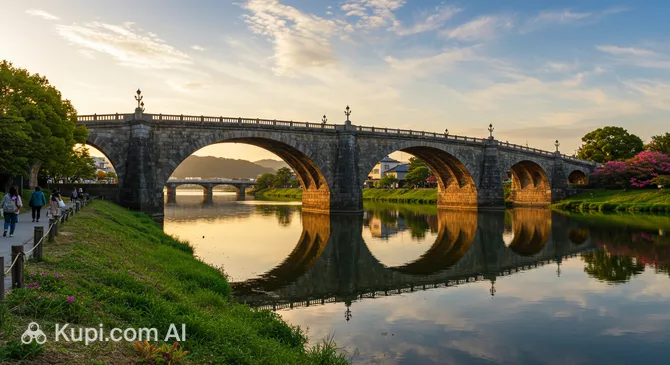
  • In the very heart of the city, in Isahaya Park, is the famous double-arched stone Megane Bridge. Built in 1839, it originally crossed the Honmyogawa River but was carefully moved to its current location in 1960. Interestingly, this bridge is almost twice as large as its famous namesake in Nagasaki, reaching a height of about 50 meters.

  • Since 2022, Isahaya has become an important hub on the new Nishi-Kyushu Shinkansen high-speed train line. This has significantly simplified transport connections, making the city even more accessible for travelers wishing to explore the island of Kyushu.

  • Isahaya City Park, a popular vacation spot, is located on the site where a castle once stood. Although only ruins remain of the castle itself, they serve as a reminder of Isahaya's rich historical past and allow you to touch the atmosphere of medieval Japan.

  • Isahaya is famous for its vibrant festivals, and one of the most beloved is the spring cherry blossom festival. During this time, Isahaya City Park is transformed, enveloped in a delicate pink cloud of flowering trees, under which locals and tourists have picnics.

How to Get There

Isahaya is a city that is easy to reach thanks to the well-developed transport network of the Kyushu region. Travelers can choose the best route by using one of the nearby airports serving both domestic and international flights.

The most convenient option for arrival is Nagasaki Airport (NGS). It is located in the city of Nagasaki, only 15.4 km from Isahaya. This is a modern transport hub with average passenger traffic, receiving many flights. A taxi or bus ride to the center of Isahaya takes very little time. Due to its proximity to the city, this option allows you to save significant time on transfers.

For those looking for more flight options, an excellent alternative is Fukuoka Airport (FUK), located in the city of Fukuoka. This is a major international hub located 90.3 km from Isahaya. The journey from here will take more time, but the wide selection of flights makes this route popular among tourists. You can also consider Saga Airport (HSG), which is about 41 km from the destination, or Kumamoto Airport (KMJ), located at a distance of 75 km.

For clarity, here is a summary of the main airports you can use to reach the city:

AirportPassenger trafficDistance
Nagasaki Airport3.1 mln15 km
Saga Airport600 58241 km
Amakusa73 06541 km
Kumamoto Airport2.9 mln75 km
Fukuoka Airport24.9 mln90 km

Main Attractions

The city of Isahaya, located in Nagasaki Prefecture, offers its guests several interesting places to better understand its history and culture, as well as to enjoy nature and outdoor activities. Among them, unique architectural structures, peaceful shrines, and modern park areas stand out.

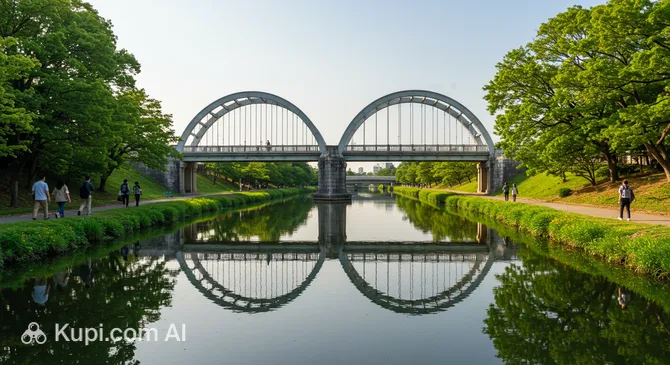
One of the most iconic landmarks in the city is the Megane Bridge in Isahaya. This elegant stone arch bridge, whose name translates as "Spectacles Bridge" due to the characteristic shape of its two arches reflecting in the water, was built in 1839. It is considered an important cultural asset and a fine example of the engineering of its time. A walk across or near the bridge offers picturesque views and allows you to touch the city's history.

Isahaya Megane Bridge. Illustration.
Source: Kupi.com AI

Traveler photos:

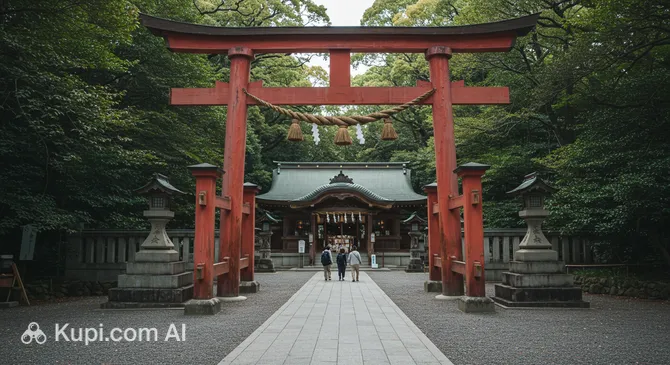
For those interested in the spiritual side of Japanese culture, Isahaya Shrine is a must-visit. This Shinto shrine is an important religious center for local residents. Visitors can appreciate the traditional architecture, peaceful atmosphere, and perhaps catch one of the local festivals or rituals. It is a great place for a quiet walk and getting to know Japanese traditions.

Isahaya Shrine. Illustration.
Source: Kupi.com AI

Traveler photos:

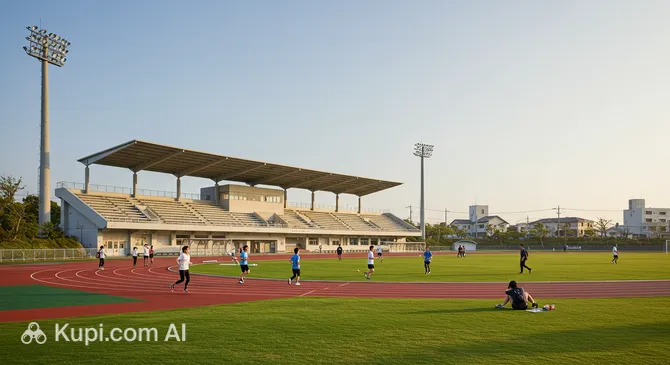
Outdoor enthusiasts should check out the Nagasaki Prefectural Sports Park. This large park offers various opportunities for sports and outdoor recreation. It features a stadium, sports fields, jogging tracks, and spacious green areas, perfect for picnics or leisurely walks. The park attracts both locals and tourists wanting to spend time actively or just relax away from the city noise.

Nagasaki Prefectural General Athletic Park. Illustration.
Source: Kupi.com AI

Traveler photos:

Local Cuisine

The gastronomic scene in Isahaya is a true immersion into the authentic tastes of the Kyushu region. Thanks to its proximity to the sea, the city is famous for the freshest seafood, which is the basis of many local dishes. If you want not just to see Japan, but to experience its taste, Isahaya will be a real discovery for you.

Be sure to try dishes made from freshly caught fish, such as sashimi of local varieties, as well as grilled shellfish and shrimp. Eel is particularly popular and is prepared here in many ways. But the city's main culinary hallmark is "Isahaya udon" – a special type of noodle known for its soft texture and rich broth flavor. It is often served with seasonal vegetables and seafood, and the recipe is carefully passed down from generation to generation.

Sweet lovers should look out for traditional Japanese desserts – wagashi. In Isahaya, they are prepared according to special recipes using rice flour, azuki bean paste, and fresh fruit. Many original sweets can be found at local markets and street stalls. As for drinks, besides traditional green tea, it's worth trying local sake or shochu. Sometimes, unique drinks produced only in this region can be found at food festivals.

Locals and tourists usually enjoy food in the city's numerous restaurants, which serve both traditional dishes and modern interpretations. Street food and markets are great places to try local delicacies, especially sweets, and immerse yourself in the daily life of Isahaya. The city also periodically hosts gastronomic festivals, where farmers and chefs present their best products. This is a wonderful opportunity to get acquainted with culinary traditions and try fresh vegetables, fish, and those unique local drinks.

Travel Tips

Planning a trip to Isahaya? Wonderful! This cozy city in Nagasaki Prefecture will charm you with its atmosphere and nature. To ensure your trip goes smoothly and leaves only pleasant impressions, we have prepared some practical tips.

  1. Clothing and items by season:

    The climate in Isahaya is subtropical, with humid, hot summers and mild winters. In summer (June-August), choose light, breathable clothing. In spring and autumn, layering will be useful – T-shirts, sweaters, and a light jacket. In winter, a warm jacket is sufficient. Be sure to bring comfortable walking shoes. Don't forget a universal adapter (in Japan, Type A and B sockets are used, voltage 100V). When visiting temples and shrines, it is advisable to wear clothing that covers your shoulders and knees as a sign of respect.

  2. Moving around the city:

    In Isahaya, it is convenient to use local buses and trains (JR Kyushu and Shimabara Railway). For more remote trips around Nagasaki Prefecture, you can consider renting a car (an international driving permit is required, driving is on the left). Taxis are available but can be expensive. In the city center, many things are accessible on foot.

  3. Financial matters:

    The local currency is the Japanese yen (JPY, ¥). It's best to exchange currency at the airport upon arrival or at banks. ATMs that accept international cards can most often be found at post offices (Japan Post Bank) and 7-Eleven stores. Credit cards are accepted in many hotels and large stores, but always have cash with you for small establishments, markets, and temples. Tipping is not practiced in Japan – good service is considered the norm.

  4. Health and safety:

    Isahaya, like Japan in general, is a very safe place. Pharmacies (薬局 - yakkyoku or ドラッグストア - doraggusutoa) are easy to find, but staff do not always speak English. It is strongly recommended to take out travel medical insurance. In emergencies, call 119 (ambulance, fire service). Standard precautions, as with any trip, are always good to follow.

  5. Language and connection:

    The official language is Japanese. English is not as widely spoken, especially outside tourist centers. Learn a few basic phrases: "Konnichiwa" (Hello), "Arigato" (Thank you), "Sumimasen" (Excuse me/Sorry). For constant internet access, it's recommended to rent a pocket Wi-Fi router or buy a local SIM card. Useful apps: Google Maps (for navigation and transport schedules), HyperDia (for trains).

  6. Local etiquette:

    Japanese people are very polite and value respect for traditions. When greeting, it is customary to bow slightly. In public places, especially in transport, try not to make noise. Remove your shoes when entering homes, some temples, and traditional restaurants (ryokans). Do not eat or drink on the go in the street, unless in specially designated areas. Follow queues.

  7. What to avoid:

    Never stick chopsticks vertically into a bowl of rice – this is associated with funeral rituals. Also, avoid loud phone conversations on public transport. It is not customary to point at people with your finger.

  8. A special tip for Isahaya:

    Be sure to try the local eel (unagi) – it is the culinary pride of Isahaya. If your trip falls in spring (usually April-May), don't miss the chance to see the stunning azalea blossoms in Isahaya Park, which is famous for them.

We hope these tips help you better prepare for your trip and enjoy every moment of your stay in Isahaya. We wish you an unforgettable journey!

Entertainment & Nightlife

Isahaya, cozy and located in Nagasaki Prefecture, offers its guests not only picturesque daytime views but also the opportunity to spend a pleasant evening. Although the nightlife here might not be as vibrant as in Japan's megacities, you will still find places to relax after a busy day.

The main evening activity in Isahaya, as in many Japanese cities of this size, is concentrated around the central districts and near the railway station. Here, you will find traditional Japanese drinking establishments – izakaya, where you can not only drink sake or beer but also order a variety of snacks. The atmosphere in such places is usually very friendly and conducive to socializing, with a primarily local crowd. Karaoke bars are also popular for having fun with friends. Some restaurants stay open until late in the evening, offering dinners in a quiet setting.

Regarding dance clubs, the choice in Isahaya may be limited. Nightlife here is more focused on quiet relaxation and socializing. Establishments usually operate until midnight or slightly later, especially on weekends. There is no specific dress code in most places; a neat casual style is welcomed. Prices in Isahaya's bars and restaurants are generally moderate.

To get around the city at night, it is most convenient to use taxis. Japan is generally considered a very safe country, and Isahaya is no exception, so night walks along well-lit central streets usually don't cause concern. However, basic precautions should always be taken.

Isahaya Megane Bridge. Illustration.
Source: Kupi.com AI

Traveler photos:

During the day, Isahaya offers other types of leisure. You can visit historical and cultural sites, such as the famous Megane Bridge in Isahaya, which is a symbol of the city, or the peaceful Isahaya Shrine. For lovers of active recreation and nature, the Nagasaki Prefectural Sports Park is a great choice for a walk or sports. Although there are no specific bars or nightclubs in the list provided, we recommend exploring the areas around Isahaya Station in the evening – that is where you are most likely to find a cozy spot for your evening relaxation.

Isahaya Shrine. Illustration.
Source: Kupi.com AI

Traveler photos:

Parks & Museums

Isahaya offers its guests both pleasant green areas for outdoor relaxation and interesting sites reflecting the region's rich cultural and historical heritage.

One of the main places for recreation and activity in Isahaya is the Nagasaki Prefectural Sports Park. This extensive park offers a variety of opportunities for sports and family fun. You can find sports fields, walking paths, and spacious lawns ideal for a picnic or quiet contemplation of nature. The park attracts both locals and tourists with its well-maintained and multifunctional nature.

Nagasaki Prefectural General Athletic Park. Illustration.
Source: Kupi.com AI

Traveler photos:

In addition to this large park, other cozy squares and green corners can be found in and around the city, providing a pleasant place to spend time enjoying the peace and fresh air.

Although Isahaya may not be famous for a large number of traditional museums, the city carefully preserves its history and culture through other significant sites. A key architectural and historical symbol of the city is the Megane Bridge in Isahaya. This stone arch bridge, whose name translates as "Spectacles Bridge" due to the reflection of the arches in the water resembling glasses, is one of the oldest and most beautiful bridges of its type. A walk to the bridge and its surroundings will allow you to touch the city's history and take great photos.

Isahaya Megane Bridge. Illustration.
Source: Kupi.com AI

Traveler photos:

Another important place reflecting spiritual life and traditions is Isahaya Shrine. This Shinto shrine serves as a place of worship and for various rituals and festivals. Visiting the shrine provides an opportunity to get acquainted with local beliefs and architectural traditions, as well as to enjoy a peaceful atmosphere.

Isahaya Shrine. Illustration.
Source: Kupi.com AI

Traveler photos:

To dive deeper into the atmosphere of Isahaya, don't limit yourself only to famous landmarks. Explore the small streets, look into local shops, and you might discover charming little temples or gardens not listed in tourist guides but preserving the spirit of old Japan.

Getting Around

Getting around the city of Isahaya and its surroundings is quite convenient thanks to a well-developed public transport system. The core of the transport network consists of trains and buses, which provide both internal transport and connections to other settlements.

The city's main transport hub is Isahaya Station. Lines of JR Kyushu (such as the Nagasaki Main Line and Omura Line) pass through it, connecting Isahaya with Nagasaki, Sasebo, and other major cities in the region. Additionally, trains of the private railway company Shimabara Railway (Shimatetsu) depart from here, traveling along the picturesque Shimabara Peninsula. Trains run regularly, but you should check the schedule in advance, especially if you plan to travel late at night or early in the morning.

The bus network in Isahaya is also well-developed. Local buses operated by companies like Nagasaki Kenei Bus and Shimatetsu Bus run through the city and suburbs, reaching areas that trains do not. Buses are a great option for short trips within the city. Stops are usually clearly marked, but the schedule on them may be in Japanese only, so it is useful to have online maps or route planner apps at hand.

For payment on trains and buses, contactless IC cards such as SUGOCA (from JR Kyushu), Nimoca, Suica, or Pasmo are widely used. These cards can be purchased and topped up at machines at major stations. They significantly simplify the payment process: just tap the card on the reader at the turnstile or on the bus. Of course, you can also buy single tickets. On trains, tickets are purchased from machines at stations before boarding. On buses, payment is usually made upon exiting; when entering through the back door, you need to take a ticket with the zone number (if you don't have an IC card), and when exiting, pay the driver the amount shown on the display opposite your zone number. It is recommended to have small change for payment on the bus, although some buses are equipped with bill exchange machines.

Practical tips for tourists: JR train tickets can be bought at ticket offices or machines at stations. For Shimatetsu trains, tickets are also purchased at stations. IC cards are universal for most types of transport throughout Japan and are the most convenient way to pay. Public transport hours are usually from early morning (about 6:00 AM) to late evening (until approximately 11:00 PM – midnight), but can vary depending on the route and day of the week. There is usually no night transport. Use route planners like Google Maps, Jorudan, or Navitime to check schedules, costs, and optimal routes.

Among alternative ways to get around Isahaya and its surroundings, you can consider taxis. They are available at stations and in busy parts of the city, but they are a more expensive option. For exploring the surrounding areas, such as the Shimabara Peninsula or the Unzen-Amakusa National Park, renting a car can be convenient. Bicycle rental may be available at some tourist spots or hotels for leisurely rides around the city.

Accommodation

In the city of Isahaya, travelers will find various accommodation options to suit different preferences and budgets. Choices include modern hotels offering comfort and familiar service, as well as potentially more traditional Japanese guesthouses where you can dive deeper into the local culture. Short-term rental apartments may also be available, suitable for families or those who prefer more independence during their trip.

When choosing a place to stay in Isahaya, you should pay attention to areas located near major transport hubs, such as the city's railway station, which will ensure ease of movement around the city and its surroundings. Central districts are also often popular with tourists due to their proximity to shops, restaurants, and key city landmarks. While the information provided doesn't include specific hotel examples, cities of this type usually offer both standard hotels of various classes and small family-run establishments.

To ensure the best accommodation option, especially during the peak tourist season or during local festivals, it is recommended to book accommodation in advance. The price range varies from more budget-friendly options to mid-range and high-end hotels. Most hotels and guesthouses in Isahaya can be booked through popular international online travel platforms or, in some cases, directly on the hotels' own websites.

Nearby Cities

For those who want to explore the surrounding area, Isahaya serves as an excellent starting point for day trips to several interesting nearby places.

For example, Omura, located just 11 km away, is known for its picturesque parks and proximity to the airport, while the historic city of Nagasaki, located 19 km away, offers an immersion into Japan's rich past and unique culture. A full list of nearby destinations is presented in the table below:

CityPopulationDistance
Omura95 61911 km
Unzen41 01813 km
Togitsu29 02519 km
Nagasaki404 65619 km
Ureshino25 59329 km

These nearby destinations provide insight into the diverse culture and landscapes of the region, complementing the experience of visiting Isahaya.

Shopping & Souvenirs

Shopping in Isahaya offers a pleasant introduction to local goods and Japanese flavor, even though the city is not a major fashion or electronics hub. Here you will find both small family-run shops and chain supermarkets offering daily necessities. Isahaya is especially famous for its eel (unagi) products and some local agricultural goods.

The main shopping spots in Isahaya are generally concentrated around the central railway station and the adjacent streets. Here you can find a variety of shops, from grocery stores to souvenir shops and small clothing boutiques. A walk through these areas will allow you to feel the city's atmosphere and find something interesting.

While Isahaya may not have the giant multi-story shopping malls characteristic of megacities, you will likely find several local department stores or shopping complexes offering a wide range of goods – from clothing and cosmetics to household items. Such stores are often located near transport hubs.

Regarding markets, in Isahaya, as in many Japanese cities, you can look for local morning markets (asaichi), where farmers sell fresh vegetables, fruits, seafood, and other local delicacies. This is a great place to try seasonal products and dive into the daily life of the citizens. Small market rows can also be found near popular tourist spots.

Isahaya Megane Bridge. Illustration.
Source: Kupi.com AI

Traveler photos:

As souvenirs from Isahaya, you should pay attention to products related to the local delicacy – eel (unagi). These can be ready-made dishes in vacuum packaging, as well as various sauces and seasonings. Items by local artisans, if available, and traditional Japanese sweets are also popular. Don't forget souvenirs depicting iconic places like the Megane Bridge or Isahaya Shrine, where small kiosks with memorabilia can often be found.

Shops in Isahaya are usually open from 10:00 or 11:00 AM to 7:00 or 8:00 PM. Large department stores and shops in shopping centers may stay open longer. Some small private shops may have a closing day in the middle of the week. Regarding payment, credit cards (Visa, MasterCard, JCB) are accepted in most large stores. However, cash is still very important, especially in small shops, at markets, and in some restaurants. Local transport IC cards may also be accepted in some places.

For foreign tourists in Japan, there is a Tax Free system. In stores participating in this program (they usually have a "Japan Tax-Free Shop" sign), when purchasing goods for an amount over 5,000 yen (excluding tax), you can apply for a consumption tax refund. To do this, you must present your passport at the checkout at the time of purchase.

Reached the end of the page?

That means the route is fully explored