Support

Komoro

About

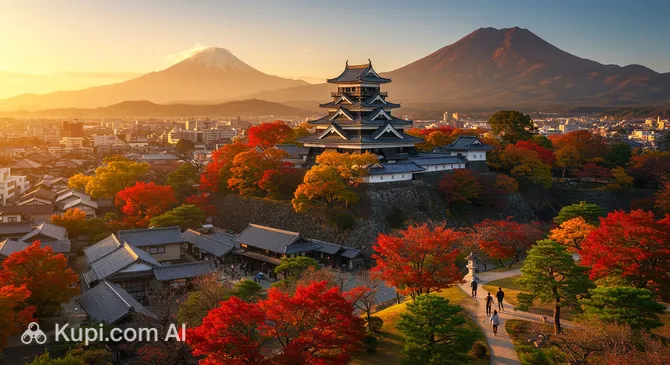
Komoro is a charming and cozy city that looks as if it stepped off the pages of old Japanese prints. Located in the picturesque foothills of Nagano Prefecture, in the heart of Honshu island, it offers travelers a unique opportunity to immerse themselves in the atmosphere of authentic Japan, far from the hustle and bustle of megacities. The city stretches along the banks of the Chikuma River, surrounded by green hills and terraced rice fields, creating a scene of peace and harmony with nature.

Komoro. Illustration.
Source: Kupi.com AI

With a population of about 41,000, Komoro retains the spirit of a small, welcoming town where every corner breathes history and tranquility. Despite its important administrative role in the region, it remains a truly "homey" place. The atmosphere here is surprisingly relaxed: instead of urban haste, you will find quiet parks, ancient streets, and cozy shops where you can leisurely enjoy a cup of local tea.

One of the main gems of Komoro is its famous Komoro Castle (Kaikoen). It is not just a historical monument preserving the spirit of samurai times, but also a beautiful place for walks, especially in spring during the cherry blossom season. Beyond the castle, the city attracts visitors with its picturesque surroundings, ideal for hiking, and the chance to get acquainted with traditional Japanese life.

If you are looking for a place to rest your soul, touch history, and enjoy the beauty of Japanese nature, Komoro will be a real discovery for you. This city is an ideal choice for those who value harmony, authenticity, and a calm, thoughtful vacation.

You can find more interesting facts on the history of Komoro page.

Weather Overview

The weather in Komoro has a pronounced seasonality. Summer, especially in July and August, is warm here, with average temperatures reaching +23.3°C (maxing out at +27.3°C in August), and it is the wettest period of the year with the highest rainfall (up to 8 mm in July) and rainy days (up to 23 days in July and August). Winters are cold, with the average temperature in January dropping to -1.2°C (minimum to -4.7°C), and the amount of precipitation decreases significantly, for example, in December only about 2 mm falls. Spring and autumn are transition seasons with moderate temperatures and rainfall. Expect a warm summer with occasional rain and cold winters with less precipitation. For more detailed information, see the Komoro climate.

Average monthly temperature

Average monthly precipitation

Interesting Facts

In addition to its famous landmarks, the city of Komoro hides many surprising stories and features that make it truly unique. Ready to learn some interesting secrets of this charming corner of Japan?

  • Did you know that Komoro Castle, founded in 1554, is one of the few in Japan located below the level of the city itself? Due to this unique feature, it is sometimes called "the pit castle." Its Otemon and Sannomon gates are recognized as Important Cultural Properties of the country.

  • Komoro has left a notable mark on Japanese literature. The city served as a source of inspiration for many creators, and the famous writer Shimazaki Toson, one of the classics of Japanese literature, lived here and dedicated many lines to Komoro in his works.

  • In spring, Kaikoen Park, which sprawls around the castle ruins, turns into a true kingdom of cherry blossoms. It is not just a park, but one of the favorite spots for hanami—the traditional Japanese custom of viewing cherry blossoms, where locals and visitors gather under the trees for picnics.

  • Old traditions are still carefully preserved in Komoro. Every year, colorful festivals are held here, allowing you to dive into the atmosphere of the past: you can witness theatrical processions, see traditional dances, and even costumes from the Edo period.

How to Get There

There are several ways to reach the city of Komoro in Nagano Prefecture, though flying to one of the nearest airports is the most convenient option for most tourists. The closest airport to Komoro is Matsumoto Airport (MMJ), located in Matsumoto, approximately 49 km away. This is a small regional airport. A trip from Matsumoto Airport to Komoro by taxi or rental car takes about 1.5 hours.

For international flights, the main option is the large international Haneda Airport (HND) in Tokyo. It is located about 150 km from Komoro, and a journey from there by public transport (such as a combination of train and bus) or car can take around 4 hours. Another airport to consider is Toyama Airport (TOY), located in the city of Toyama, about 117 km from Komoro. This is also a small airport, and a transfer to Komoro from there will take about 3-3.5 hours. Upon arrival at one of these airports, you can continue your journey to Komoro by train, bus, or taxi, depending on the chosen airport and your preferences.

For clarity, here is a summary of the main airports through which you can reach Komoro:

AirportPassenger trafficDistance
Matsumoto Airport112 61849 km
Toyama Airport736 740117 km
Haneda Airport85.7 mln149 km
Noto Airport207 427169 km
Shizuoka Airport691 274171 km

Main Attractions

The city of Komoro, nestled in the picturesque Nagano Prefecture, offers its guests many interesting sites where history harmoniously intertwines with culture and natural beauty. When planning a trip to this charming corner of Japan, be sure to include several key attractions in your itinerary that will provide you with unforgettable impressions.

One of the most iconic attractions is Komoro Castle and Kaikoen Park. The uniqueness of this castle lies in its unusual location—it is built below the level of the surrounding city, earning it the nickname "the pit castle." Today, impressive stone walls and gates remain of the castle's former grandeur, surrounded by the beautiful Kaikoen Park. The park is especially popular in spring during the cherry blossom season and in autumn when the maples turn vibrant shades of crimson and gold. The grounds also house a small zoo and a museum, making it a wonderful place for leisurely strolls and family vacations.

For those seeking spiritual peace and beautiful views, a visit to Nunobiki Kannon Temple (Shakuson-ji) is a must. This ancient Buddhist temple is picturesquely situated on a mountainside, offering breathtaking panoramic views of the valley below. The temple is known not only for its exquisite traditional architecture and calm, contemplative atmosphere but also for an old legend about a cow that supposedly led a devout woman to it. The ascent to the temple itself is a pleasant walk in the heart of nature.

Fans of Japanese literature will find it interesting to visit the Toson Shimazaki Memorial Hall. This museum is dedicated to the life and work of the prominent Japanese writer Toson Shimazaki, who spent a significant part of his life in Komoro, a period that greatly influenced his works. Here, visitors can see the writer's personal belongings, manuscripts, and first editions of his books, as well as learn more about his contribution to Japanese literature and how Komoro inspired him.

Another noteworthy site is the Komoro Kogen Art Museum. Located on an elevation, the museum offers not only the chance to see works by local and Japanese artists but also to enjoy magnificent views of the surrounding landscapes, including the majestic Mount Asama. The museum's exhibition is regularly updated, presenting various genres and trends in art. It is an excellent place for those who want to combine cultural enrichment with the contemplation of the region's natural beauty.

Local Cuisine

The culinary scene in Komoro is a true immersion into the traditions of the Nagano region, where freshness of products and purity of flavor are highly valued. The culinary signature of the city is undoubtedly soba buckwheat noodles. Thanks to the pure mountain water and fresh buckwheat, local soba is considered among the best in Japan. It is often served simply to emphasize its natural taste, or with seasonal vegetables, wild mushrooms, and a savory dipping sauce.

Besides soba, while in Komoro, it is worth trying dishes made from fresh river fish caught in the waters of the Chikuma River. Local cuisine is also famous for various pickles (tsukemono) and fermented products, which are an integral part of a Japanese meal and give dishes depth of flavor. In general, Komoro's cuisine is characterized by simplicity and refinement, where the main focus is on the quality of the raw ingredients.

Those with a sweet tooth will enjoy the local desserts. At street markets and in confectioneries, you can find traditional buns with bean paste (anko), as well as seasonal treats, such as those made from chestnuts, which are grown here with special care. As for drinks, besides traditional Japanese green tea, it is worth trying the local sake, which perfectly complements any dish. Non-alcoholic drinks often include various fruit juices and lemonades based on local berries and fruits.

Locals prefer to eat in small family restaurants that serve authentic dishes prepared according to old recipes. Tourists can also enjoy food at street markets, where fresh vegetables, fruits, and ready-made snacks can be found. Komoro is known for its gastronomic festivals held throughout the year. These festivals are a great opportunity to try various local specialties, learn about culinary traditions, and even participate in workshops, such as soba-making classes.

Travel Tips

Planning a trip to the charming city of Komoro? To ensure your journey through this corner of Japan goes smoothly and leaves only pleasant impressions, we have prepared some practical tips. This information will help you better prepare for the specifics of local life.

  1. Clothing and Essentials: The climate in Komoro, as in all of Nagano Prefecture, has a pronounced seasonality. In summer (June-August), it is warm and humid, so bring light clothing made of natural fabrics. In winter (December-February), it can be cold and snowy, so you will need warm clothes, including a hat, gloves, and waterproof shoes. Spring and autumn are pleasant times with moderate temperatures, ideal for layered clothing. Be sure to bring comfortable shoes, as you will be doing a lot of walking, especially if you plan to visit Kaikoen Park or explore the surroundings. Don't forget an adapter for electrical appliances (Japan uses Type A and B sockets, 100V voltage). When visiting temples and shrines, choose modest clothing that covers shoulders and knees.
  2. Transport: In Komoro itself, it is most convenient to get around on foot, especially in the central part and park areas. For longer trips, you can use local buses, though their schedule may not always be convenient for tourists who do not know Japanese. Taxis are available but can be quite expensive. If you plan to actively explore Nagano Prefecture, renting a car can be a good option; however, note that you will need an international driving permit, and traffic in Japan is left-hand. For intercity travel in Japan, consider the Japan Rail Pass if it fits your itinerary.
  3. Finances: The local currency is the Japanese yen (JPY). Although credit cards (Visa, Mastercard) are accepted in many hotels, large shops, and restaurants, having cash is highly recommended, especially for smaller establishments, local markets, and when paying for some types of transport. You can exchange currency at airports, banks, or specialized exchange offices. ATMs that accept international cards can most often be found at post offices (Japan Post Bank) and 7-Eleven convenience stores. Tipping in Japan is not customary and can be perceived as impolite.
  4. Health and Safety: Komoro, and Japan as a whole, is considered a very safe place. Pharmacies (薬局 - yakkyoku) exist, but most medications are sold by prescription, and staff rarely speak English. Bring a necessary set of medicines with you. Tap water is safe to drink. In case of emergency medical assistance, call 119. Standard precautions, such as watching your belongings, are always relevant.
  5. Communication: The official language is Japanese. The level of English proficiency among the local population may not be high, especially outside of tourist centers. Learn a few basic phrases in Japanese: "konnichiwa" (hello), "arigato" (thank you), "sumimasen" (excuse me/sorry). This is very much appreciated by the locals. For internet access, consider buying a local SIM card or renting a portable Wi-Fi router—this can be done at the airport or large electronics stores. Free Wi-Fi is available but not everywhere.
  6. Local Etiquette: Japanese people are very polite and value respect for traditions. A greeting is usually accompanied by a bow. In public places, especially on transport, try not to talk loudly on the phone. Remove your shoes before entering homes, some temples, and traditional restaurants (usually there is a special shelf or designated spot for this). Avoid eating or drinking while walking on the street, unless it is a place specifically designated for it (e.g., food festivals).
  7. What to Avoid: Never stick your chopsticks vertically into a bowl of rice—this is associated with funeral rituals. Do not pass food from your chopsticks to another person's (chopstick to chopstick); this is also part of burial rites. Do not point your finger at people.
  8. Additional Tip: Komoro is famous for its Kaikoen Park, which is especially beautiful during the cherry blossom season in spring and the autumn foliage. Check the blooming dates in advance if your trip is in spring to catch this magnificent sight. Also, Nagano Prefecture is known for its apples and other fruits—be sure to try local seasonal delicacies.

We hope these tips help you feel more confident and enjoy every moment of your stay in Komoro. We wish you an unforgettable journey!

Entertainment & Nightlife

Komoro, a charming city in Nagano Prefecture, offers its guests a calm and authentic experience of Japan, including evening entertainment. While you won't find noisy districts with neon signs like in Tokyo, Komoro is capable of offering cozy options for evening leisure filled with local flavor.

Nightlife in Komoro is mainly centered around traditional Japanese drinking establishments and small bars. The atmosphere here is generally relaxed and friendly, encouraging conversation and a pleasant evening. Instead of large nightclubs, look for izakayas – Japanese pubs where you can not only order drinks (sake, beer, shochu) but also try a variety of local snacks, often seasonal. Prices in such places are usually moderate. Karaoke bars are also popular in Japan, and in Komoro, you can find spots to have fun with a group while singing your favorite songs; their pricing is also generally affordable.

Main evening establishments are usually located near the Komoro railway station or on central shopping streets. Operating hours may be more limited compared to large cities, so it's better to check them in advance; usually, they stay open until late evening but not all night. The dress code in most places is quite casual – neat everyday clothes will be perfectly appropriate. To feel the local flavor, come to an izakaya after 7:00 PM - 8:00 PM when the locals gather.

Although Komoro is not famous for world-renowned loud nightclubs, it is here that you can immerse yourself in the authentic atmosphere of a Japanese evening. The charm of night Komoro lies in independently discovering small, cozy local bars and izakayas. To find such places, we recommend walking along the streets near the Komoro railway station or exploring the central shopping arcades. Look for the traditional red lanterns (chochin) that often decorate the entrance to an izakaya, or listen for the sounds of karaoke drifting from the windows. It is in such seemingly unremarkable places that you can feel the true spirit of the city and chat with its residents. If you prefer more specific leads, fresh recommendations about currently popular spots can always be obtained at the Komoro tourist information centers or from your hotel staff.

Regarding safety, Komoro, like most cities in Japan, is a very safe place for evening and night walks. However, basic precautions should always be observed. For getting around at night, you can use taxi services; their stands are usually at the station, or you can ask the staff at your venue to call a car. Public transport runs less frequently at night or stops altogether, so plan your route in advance.

During the day, Komoro offers other types of entertainment. Guests can visit the historical Komoro Castle Kaikoen Park, known for its stone walls and beautiful views, especially during the cherry blossom season or when the autumn leaves are turning. Art lovers can find small local galleries or museums reflecting the region's culture. The city is also surrounded by the beautiful nature of Nagano Prefecture, providing opportunities for walks and enjoying picturesque landscapes.

Parks & Museums

The city of Komoro offers its guests a harmonious combination of picturesque green spaces for relaxation and a rich cultural heritage that can be explored through its museums and historical monuments. Besides the widely known attractions, there are more secluded spots that allow for a deeper immersion into the atmosphere of this charming corner of Japan.

The main green heart of the city is undoubtedly Kaikoen Park, located on the site of the historical ruins of Komoro Castle. While its grandeur and history deserve a separate mention, it's worth noting that besides walking through the historical grounds, you can also find a small zoo and entertainment for children here. However, for those seeking a more calm and contemplative rest, Manyo Park will be a real discovery. This park, whose name is often associated with the oldest anthology of Japanese poetry, "Manyoshu," offers a completely different atmosphere. Shady paths and perhaps small ponds and stones engraved with verses (if any) create ideal conditions for leisurely strolls and immersion into the world of classical Japanese culture. It is a wonderful place to enjoy silence and the beauty of nature, especially in spring and autumn when the park is painted in delicate or vibrant colors.

In the sphere of cultural enrichment, besides the well-known Toson Shimazaki Memorial Museum dedicated to the life and work of the great writer, Komoro offers other interesting venues. The Komoro Kogen Art Museum deserves special attention. This museum often presents works by artists from the Shinshu region, inspired by the magnificent natural landscapes of the surroundings, including views of the Japanese Alps. Here you can see both traditional and modern art, and the museum building itself and the panoramas from its windows can be an additional source of aesthetic pleasure. The museum may also host interesting temporary exhibitions, making each visit unique in its own way.

The majestic ruins of Komoro Castle and its impressive gates, such as Otemon, serve as a powerful historical backdrop for the entire city. Exploring them allows you to touch the feudal past of Japan, but the cultural fabric of Komoro is woven from more than just these grand monuments.

For those seeking authentic experiences and wishing to deviate slightly from standard tourist routes, consider a visit to Nunobiki Kannon temple. This picturesque temple, secluded on a hillside, offers not only spiritual peace but also magnificent views of the surrounding nature. The climb to it can be a pleasant walk, and the reward will be a sense of tranquility and the opportunity to see Komoro from a different, less-explored side. Also, don't miss the chance to look into small craft workshops or local galleries, where you can find unique handmade items and a piece of the soul of local masters.

Getting Around

When planning your travels around Komoro, you will find that the public transport system is quite convenient for tourists, although it differs from the scale of major metropolises. The transport network is based on local buses and the railway connection that links Komoro with other settlements in the region.

Buses are the main type of public transport for moving directly within the city and its immediate surroundings. The route network covers major districts and attractions. Payment is usually made in cash directly to the driver upon exiting. Some buses may accept IC cards common in Japan (such as Suica or Pasmo), which significantly simplifies the payment process—you just need to tap the card against the reader when entering and exiting. If you pay in cash and the bus operates on a zone system (common on suburban routes), you need to take a ticket with a zone number (整理券 - seiriken) upon entry, and when exiting, pay the amount shown on the display next to your zone number.

Railway transport in Komoro is represented by a station served by the Shinano Railway lines and the scenic JR Koumi Line, known as one of the highest railway lines in Japan. Trains are convenient for trips to neighboring cities and for accessing certain tourist sites located along these lines. Train tickets are purchased from machines at stations or at ticket offices. IC cards are also widely accepted on railway lines.

It is important for tourists to know a few practical points. Bus tickets (if not using an IC card) are effectively paid for upon exiting, while train tickets are bought before boarding at the station. Watch the schedule closely, especially for buses, as intervals can be significant, particularly in the evening and on weekends. Public transport usually starts operating early in the morning and ends late in the evening, but the last services may be earlier than in large cities.

In addition to public transport, alternative ways of getting around are available in Komoro. Taxis can be found at stands near the railway station or called by phone. This is a convenient, though more expensive option, especially for groups or when traveling with luggage. For exploring the city and its surroundings during the warmer months, you might consider bicycle rental—this will allow you to enjoy the views at your own pace. Rental points can be found near tourist information centers or the station.

Accommodation

When planning a trip to Komoro, you will find a fairly wide range of accommodation options to suit various preferences and budgets. In the city, you can find everything from economical choices like guesthouses or hostels to mid-range hotels offering a good balance of price and quality. For those seeking a more authentic experience, traditional Japanese inns (ryokans) may be available, as well as apartment rentals for more independent stays.

When choosing a place to stay in Komoro, it is worth looking at areas that provide convenient access to major transport hubs, such as the railway station, and to the city's key attractions. Central districts or locations near picturesque parks and historical sites are usually popular with tourists. This will allow you to easily explore the city and its surroundings.

Komoro features various hotels, from small family-run establishments to larger hotels. While it is best to check specific names of famous hotels through travel portals when planning your trip, you will be able to find options that meet your expectations for comfort level and range of services.

Regarding booking, it is recommended to arrange accommodation in advance, especially if your trip coincides with peak tourist seasons (such as the cherry blossom period or autumn festivals). The most common booking methods are popular international online platforms and aggregators, as well as direct booking through official hotel websites. This will allow you to compare prices and choose the most suitable option.

The price range for accommodation in Komoro varies: you can find budget options as well as mid-range and higher-end offers. The choice will depend on your personal preferences, level of comfort, and planned travel budget.

Nearby Cities

For those who wish to explore the surrounding area, Komoro serves as an excellent starting point for day trips to several interesting nearby locations:

CityPopulationDistance
Miyota15 4947 km
Tomi29 2139 km
Saku98 29210 km
Karuizawa19 64816 km
Ueda152 94818 km

Among the closest cities, Ueda stands out, famous for its historical Ueda Castle, which played an important role in Japanese history. A trip to Nagano will allow you to visit the majestic Zenko-ji Temple, one of the most revered Buddhist temples in Japan. And in Matsumoto, the famous Matsumoto Castle awaits you, also known as the "Crow Castle" due to its black color, which is one of the country's national treasures.

These nearby destinations provide insight into the diverse culture and landscapes of the region. A trip to any of these cities will give you new experiences and complement your journey through Japan.

Shopping & Souvenirs

Komoro, located in the picturesque Nagano Prefecture, offers tourists shopping opportunities focused primarily on local products, unique souvenirs, and items reflecting the rich culture and natural gifts of the region. The city is not famous for huge shopping centers with global brands, but it is here that you can find authentic Japanese goods, fresh farm products, and charming handicrafts. Special attention should be paid to shops offering products made from Nagano's famous apples, as well as souvenirs related to the history of the majestic Komoro Castle.

Main shopping spots in Komoro are usually concentrated around the Komoro railway station, as well as along the central streets leading to key attractions such as Kaikoen Park, where Komoro Castle is located. Walking along these streets, you will find many small shops, cozy souvenir stalls, and local grocery stores. This is a great opportunity not only to make purchases but also to dive deeper into the atmosphere of this welcoming city.

In Komoro, as in many small towns in Japan, the choice of large modern shopping centers may be limited. Instead of giant malls, small shopping complexes or individual department stores offering a range of daily necessities, locally produced clothing, and, of course, souvenirs are more common. If your goal is large-scale shopping with visits to many brand stores, you might consider a trip to larger cities in Nagano Prefecture.

While there may not be large, widely known markets that operate daily in Komoro, it is worth paying attention to seasonal fairs or small local markets. Here, farmers often sell very fresh vegetables, fruits (especially the famous Nagano apples and grapes the prefecture is known for), and other local delicacies. Visiting such a market is an excellent opportunity to try and buy authentic products of the region. Information about such fairs is best checked on-site, for example, at the city's tourist information center.

When planning which souvenirs to bring from Komoro and Nagano Prefecture, consider the following options:

  • Local products: Nagano's famous apples and various products made from them (juices, jams, cider, sweets), traditional miso paste, soba buckwheat noodles, pickled vegetables (especially nozawana-zuke), and products with added wasabi.
  • Sake: Nagano Prefecture is known for its high-quality sake. In local shops, you can find products from small family breweries, which make an excellent gift.
  • Traditional crafts: woodwork, ceramics, textiles. Look for items with local symbols or those made in traditional Japanese style.
  • Souvenirs related to Komoro Castle: postcards, magnets, keychains, small castle models, or items with its image will be a pleasant reminder of your visit to this historical landmark.
  • Oyaki: traditional Japanese dumplings made from buckwheat or wheat flour with various fillings (vegetables, beans), popular in Nagano. Some types can be purchased in vacuum packaging, which is convenient for transport.

Most shops in Komoro are usually open to visitors from 10:00 AM or 11:00 AM until 7:00 PM or 8:00 PM. Small family shops may have more flexible hours, sometimes closing for lunch or a bit earlier than established times. Large stores and supermarkets generally stay open longer. As for payment methods, credit cards (Visa, Mastercard) are accepted in many shops, especially those catering to tourists, as well as in department stores. However, in small private shops and local markets, cash may be preferred. Therefore, it is recommended to always carry some Japanese yen for convenience.

Tourists shopping in Japan can take advantage of the Tax-Free system. This option is available in shops that have the appropriate license and "Japan Tax-Free Shop" sign. Generally, to qualify for a tax refund, you must make a purchase exceeding 5,000 yen (excluding tax) on a single receipt, in one store, on one day. You will need to present your passport for processing. Conditions may vary slightly between stores, so it is recommended to check details directly with the staff before making a purchase.
Reached the end of the page?

That means the route is fully explored