Support

Minobu

About

Minobu is a true oasis of peace and tranquility, nestled in the picturesque mountains of southern Yamanashi Prefecture in Japan, near the border with Shizuoka. The town stretches across hills and forests where the peaks seem to float in the clouds, and the Fujigawa River winds leisurely at its foot. Minobu is not a bustling metropolis, but rather a small world where every corner is steeped in ancient spirit and a deep respect for nature.

With a population of approximately 10,440 people, Minobu serves as an administrative center known for its unique religious and cultural heritage. The atmosphere of the town seems designed for escaping the urban hustle: here, it is easy to feel harmony with nature and enjoy magnificent views of the mountains, dense forests, and ancient villages.
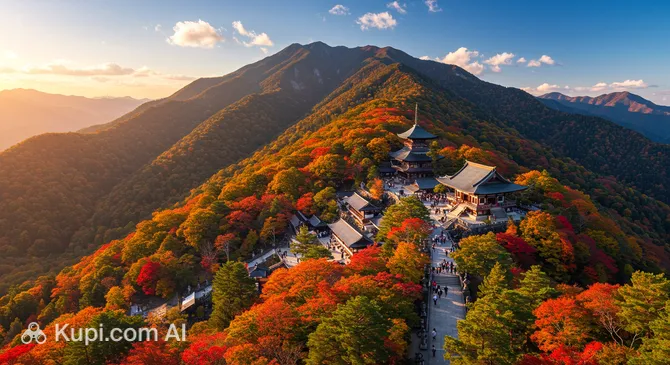
Minobu. Illustration.
Source: Kupi.com AI

The main pride and key attraction of Minobu is the Kuon-ji Buddhist temple complex, considered one of the most significant in the country. For centuries, pilgrims have flocked here to climb the famous steep stone staircase to the main hall and experience a sense of spiritual elevation. Beyond Kuon-ji, the town itself offers an immersion into authentic Japanese life: you can stay in traditional ryokan inns and sample local cuisine.

Minobu is perfect for those seeking a slower pace of life where the past and present are harmoniously interwoven. The amazing tranquility, the hospitality of the locals, and the beauty of the surrounding nature make a journey to this corner of Japan truly warm and memorable. If you want to discover another, more peaceful side of the Land of the Rising Sun, Minobu is waiting for you.

You can find more interesting facts on the Minobu city history page.

Weather Overview

When planning a trip to Minobu, it is worth considering the distinct seasonal nature of the climate. Expect warm and humid summers: from June to August, average temperatures range between 17.5°C - 22.7°C, and the number of rainy days is at its peak. Winters here are cool and drier, with average temperatures from December to February ranging from -0.2°C to 1.9°C. Spring and autumn offer pleasant transitional weather. You can find more detailed information on what to expect from the weather in different months on the Minobu Climate page.

Average monthly temperature

Average monthly precipitation

Interesting Facts

Beyond its famous shrines, Minobu hides many fascinating stories and details that make it a truly special place. Here are just a few of them:

  • It was in Minobu, on the mountain of the same name, that the famous Buddhist monk Nichiren founded the head temple of his school in the 13th century and spent his final years. This site remains a center of pilgrimage for his followers from all over the world.

  • The climb to the main hall of Minobusan Kuon-ji Temple is not just a walk, but a real challenge and a symbol of spiritual ascent. To reach it, one must overcome 287 steep stone steps, known as the "steps of enlightenment."

  • A unique weeping cherry tree grows on the slopes of Mount Minobu, and its age exceeds 400 years. Every spring, this ancient tree transforms into a magnificent pink cloud, attracting lovers of beauty. According to legends, poetry evenings were once held under this cherry tree.

  • The ancient village of Akasawa is preserved in the vicinity of Minobu. It once served as a haven for numerous pilgrims, offering them lodging in traditional ryokans. Today, walking through its quiet streets in the evening, you can hear the calls of wild deer, giving this place a special, almost fairytale atmosphere.

How to Get There

A journey to Minobu is an immersion into the picturesque mountainous terrain of Yamanashi Prefecture. Since the town is located away from major metropolises, the road here can become an adventure in itself, allowing you to enjoy views of the Japanese countryside. You can find detailed routes and travel maps on the how to get to Minobu page, and below we look at the main transport hubs through which tourists enter this region.

Minobu itself does not have an airport, so travelers usually fly into major air hubs in neighboring prefectures or Tokyo and then transfer to a train or bus. One of the most popular options for international tourists is Haneda (HND), located in Tokyo. It is approximately 121 km from Minobu. The journey from here by car or taxi will take about 3.5 hours; however, most tourists prefer comfortable trains traveling through Shizuoka or Kofu.

Geographically closest to the town is Shizuoka Airport (FSZ), located in Shizuoka City, about 78 km from Minobu. This is a convenient option for domestic flights or flights from some Asian countries. A taxi or rental car trip from here will take about 2.5 hours. Despite its proximity, transport links may be less frequent than from the capital's airports.

It is also worth considering Chubu Centrair International Airport (NGO) in Nagoya if your route passes through this region. It is 163 km from Minobu, and the drive takes over 4 hours, but the rail connection via Shizuoka Station makes this route quite accessible.

For clarity, here is a summary of the main airports:

AirportPassenger trafficDistance
Shizuoka Airport691 27478 km
Matsumoto Airport112 61891 km
Haneda Airport85.7 mln122 km
Nagoya Airport735 000140 km
Chubu Centrair International Airport12.3 mln164 km

The railway is one of the most scenic ways to get to Minobu. The town is served by the JR Minobu Line, which connects the cities of Fuji (Shizuoka Prefecture) and Kofu (Yamanashi Prefecture). The main station in the town is Minobu Station. You can comfortably reach it on the "Limited Express Fujikawa" from Shizuoka Station (where Shinkansen bullet trains stop) or from Kofu Station. The train ride will allow you to admire views of Mount Fuji and the Fujigawa River directly from the carriage window.

Main Attractions

Minobu, snugly located in Yamanashi Prefecture, is one of the most important spiritual centers of Japan. This town attracts pilgrims and tourists with its peaceful atmosphere and deep connection to the history of Buddhism. The main attractions of Minobu are centered around the sacred mountain and the legacy of Nichiren, the founder of one of the influential Buddhist schools.

The heart and soul of Minobu is undoubtedly Kuon-ji Temple. It is the head temple of the Nichiren-shu school of Buddhism, founded by Nichiren himself in the 13th century. The majestic temple complex is spread across the picturesque slopes of Mount Minobu and impresses with its traditional architecture, centuries-old cedars, and a special aura of sanctity. Tourists come here to touch centuries of history, admire the impressive temple buildings, including the monumental Sanmon Gate, and perhaps witness one of the Buddhist services. Special mention should be given to the famous ascent of 287 stone steps known as the "steps of enlightenment" (Bodai-tei), leading to the temple's main halls.

Mount Minobu, on whose slopes Kuon-ji Temple is located, is an outstanding attraction in its own right. Reaching an altitude of 1,153 meters, it is revered as a sacred site. For those who wish to enjoy breathtaking panoramic views without a tiring climb, the Minobusan Ropeway is available. It smoothly carries visitors to the mountain's summit, which on clear days offers a stunning view of the surrounding mountain ranges, green valleys, and even the majestic cone of Mount Fuji. At the summit, there is also the small but significant Okuno-in Shishinkaku Temple, which is closely linked to the life of Nichiren.

Located within the extensive grounds of Kuon-ji Temple is the Mausoleum of Nichiren Shonin—the resting place of the school's founder, which serves as a key pilgrimage site for his followers. To dive deeper into the rich history and culture of this unique place, it is recommended to visit the Minobusan Treasure Museum. Its exhibits feature priceless artifacts, ancient manuscripts, and works of religious art directly related to Nichiren and the centuries-old history of Kuon-ji Temple. This is a wonderful opportunity to learn more about the life, teachings, and legacy of this prominent religious figure of Japan.

Local Cuisine

The gastronomic world of Minobu is a wonderful blend of simplicity and sophistication, where the starring role is played by the freshest products gathered from local farms and clean mountain rivers. The cuisine of this region is famous for its authenticity and deep connection with nature, offering travelers a true taste of traditional Japan.

Be sure to try the famous Minobu-soba—buckwheat noodles prepared according to ancient recipes using crystal-clear water from mountain springs. They are usually served with seasonal vegetables and aromatic homemade sauces, creating a unique flavor combination. Another local delicacy that cannot be ignored is yuba, the delicate "skin" formed from soy milk. Yuba is added to soups and appetizers, served both cold and hot, and its mild, rich flavor wins you over from the first bite.

In addition to these iconic dishes, Minobu's cuisine will delight gourmets with dishes made from freshly caught river fish, wild mountain herbs, and fragrant mushrooms gathered in the surrounding forests. Among the drinks, local sake is noteworthy, especially popular during spring cherry blossom festivals, as well as various types of Japanese tea that perfectly complement any meal.

The food culture in Minobu is closely linked to traditions of hospitality. In many ryokans (traditional Japanese inns), guests are offered exquisite kaiseki dinners—this is a whole art form of serving multiple miniature dishes, each reflecting the seasonality and richness of local products. Visit the farmers' markets to find fresh vegetables, fruits, homemade pickles, and sweets, as well as to chat with the locals. The town also regularly hosts food festivals where you can taste both traditional treats and modern culinary interpretations.

Travel Tips

Welcome to Minobu! This charming town in Yamanashi Prefecture, surrounded by mountains and known for its spiritual sites, will give you an unforgettable experience. To ensure your trip goes smoothly and leaves only pleasant memories, we have prepared some practical tips.

  1. Clothing and Essentials: The climate in Minobu, and in Japan in general, is characterized by four seasons. In summer (June-August), it is hot and humid, so choose light, breathable clothing. In winter (December-February), it can be cold, sometimes with snow, so warm clothes are essential. Spring and autumn are the most comfortable seasons with moderate temperatures. Be sure to bring comfortable shoes, as you will be walking a lot, especially if you plan to visit the temples on Mount Minobu. For visiting temples like Kuon-ji, choose modest clothing that covers the shoulders and knees. Don't forget an adapter for electronics (Type A in Japan, 100V voltage).
  2. Transport: Minobu is a small town, and the main form of public transport here is buses. Schedules may not be very frequent, so plan your movements in advance. Taxis are available but can be expensive. If you plan to explore the surrounding Yamanashi Prefecture, renting a car can be a good option, but keep in mind that driving in Japan is on the left and you will need an international driving permit.
  3. Finance: The national currency is the Japanese Yen (JPY). It is recommended to exchange some money in advance or upon arrival at the airport. In Minobu, as in many small towns in Japan, cash is preferred, although credit cards are accepted in some hotels and large stores. International cards may not always work in local ATMs, but ATMs in 7-Eleven stores or at the post office usually accept foreign cards. Tipping is not practiced in Japan and may be perceived as an insult. An approximate daily budget (excluding accommodation) might be 5,000-8,000 yen.
  4. Health and Safety: Minobu, like all of Japan, is considered a very safe place. However, standard precautions still apply: keep an eye on your belongings. Pharmacies (薬, kusuri) exist, but the staff may not speak English, so it is useful to have a small first-aid kit or a translation app. For serious medical assistance, contact a local hospital; having travel insurance is mandatory.
  5. Communication: The primary language is Japanese. In tourist spots like Kuon-ji Temple, there may be information in English, but overall, the level of English proficiency among the local population is not high. Learn a few basic phrases in Japanese: "Konnichiwa" (hello), "Arigato" (thank you), "Sumimasen" (excuse me/sorry). For connectivity, it is recommended to purchase a local SIM card or rent a pocket Wi-Fi router. Free Wi-Fi may be available in hotels and some public places.
  6. Local Etiquette: Japanese people are very polite and value respectful behavior. A greeting is usually accompanied by a bow. In temples and some homes, it is customary to remove your shoes before entering. Maintain silence in public places, especially on transport and in temples. Do not eat or drink while walking on the street unless it is in a designated area.
  7. What to Avoid: Never stick your chopsticks vertically into a bowl of rice—this resembles a funeral ritual. Do not point at people with your finger. Avoid loud phone conversations in public places, especially on transport.
  8. Extra Tip: Minobu is a place with deep Buddhist traditions, centered around Kuon-ji Temple on Mount Minobu. Show respect to religious sites and customs. Climbing the mountain can be physically demanding, but the views and atmosphere are well worth it. Check the schedule of temple services if you wish to attend—this can be a unique experience.

We hope these tips help you better prepare for your trip and enjoy every moment of your stay in wonderful Minobu. Have a pleasant journey!

Entertainment & Nightlife

Minobu, known for its tranquility and spiritual atmosphere surrounding Mount Minobu and Kuon-ji Temple, offers a different kind of evening experience compared to the major metropolises of Japan. You won't find noisy nightclubs or sprawling districts pulsing with neon lights until morning here. Instead, evening in Minobu encourages peaceful relaxation and immersion into the local culture.

The foundation of evening life in Minobu consists of cozy local restaurants and traditional Japanese pubs known as izakaya. In these establishments, you can enjoy local cuisine such as hoto (wide noodles with vegetables) or river fish dishes, and sample various types of sake or shochu in a relaxed setting. The atmosphere is usually very friendly and welcoming; locals and the few tourists seeking an authentic experience gather here. Some restaurants may offer dinners with beautiful views if they are suitably located, for example, overlooking the mountains or the Fujigawa River.

Most establishments in Minobu generally stay open until late evening but close earlier than in large cities—typically around 22:00 or 23:00. The dress code is casual and informal almost everywhere. Prices in local restaurants and izakayas are usually moderate, making dinner affordable. The best time to find a place for dinner or an evening drink is the early evening, starting from 18:00-19:00. Regarding locations, individual establishments can be found near major tourist routes, around Minobu Station, or along the main streets of the settlement, but do not expect dedicated "bar streets" or concentrated nightlife districts.

Minobu, like most small towns in Japan, is a very safe place for evening strolls. The streets are well-lit in the central parts, and the atmosphere is overall calm. However, usual precautions should always be observed. Public transport, such as local buses, may run less frequently in the evening or stop early. For traveling longer distances or returning to your hotel late at night, it is better to check the schedule in advance or consider calling a taxi. Taxis can be ordered through your hotel or found at stands near the station.

While Minobu may not have famous nightlife spots with big names like Tokyo or Osaka, its charm lies in discovering small, often family-run places where you can truly feel the local flavor. If you are looking for specific recommendations, it's best to ask for advice at your hotel or from locals—they can suggest popular izakayas or restaurants with good food. Concert venues or large night markets characteristic of big cities are unlikely to be found here; evening entertainment is focused on quiet conversation and enjoying food and drinks.

During the day, Minobu offers a rich program for travelers. The main magnet is, of course, the majestic Kuon-ji Temple, the head temple of the Nichiren Buddhist school, and the picturesque Mount Minobu, which can be reached via a ropeway offering spectacular views. The surroundings are also famous for their natural beauty, especially during the cherry blossom season in spring or the vibrant colors of autumn. For those interested in culture, small local museums telling the history of the region, Buddhism, and the life of Nichiren Shonin may be of interest.

Parks & Museums

Minobu, located in Yamanashi Prefecture, invites travelers to immerse themselves in an atmosphere of peaceful nature and deep spiritual heritage. Known as the center of the Nichiren school of Buddhism, this town offers a unique combination of majestic mountain landscapes and a rich history reflected in its temples and cultural sites.

One of the main natural attractions is Mount Minobu (Minobu-san). It is not just a picturesque peak but also a sacred place, with the famous Kuon-ji Temple spread across its slopes. Tourists can hike up the mountain along pilgrimage trails, enjoying views of cedar forests, or take the Minobusan Ropeway, which offers breathtaking panoramas of the surroundings, including, on clear days, a view of Mount Fuji. At the summit, there are also several small temples and observation decks. Not far from Minobu rises another significant peak—Mount Shichimen (Shichimen-san), which is also a pilgrimage site and attracts nature lovers with its trails and spiritual atmosphere.

The heart of Minobu's cultural life is undoubtedly Kuon-ji Temple, the head temple of the Nichiren Buddhist school. This extensive temple complex, founded in the 13th century by Nichiren Shonin himself, is striking in its architecture and scale. Visitors can explore numerous pavilions, including the Soshi-do main hall, where important relics are kept, and the impressive 287-step "steps of enlightenment" (Bodai-tei). The temple is surrounded by a magnificent garden and ancient cedars, creating an atmosphere of peace and solitude. On the temple grounds or in its immediate vicinity, you can often find the Minobusan Treasure Museum, which exhibits valuable artifacts related to the history of the temple and the life of Nichiren, including ancient manuscripts, works of art, and the personal belongings of the school's founder. This is a must-visit for those who want to better understand the cultural and religious significance of Minobu.

For an authentic experience, consider attending a morning service at Kuon-ji Temple to feel its spiritual atmosphere. It is also worth walking along the lesser-known trails around Mount Minobu, where you can find secluded spots and enjoy the silence away from the main tourist routes.

Getting Around

Public transport in Minobu corresponds to the size of this small town and is primarily oriented toward serving local residents and tourists visiting its shrines. There is no extensive network of subways or trams as in major metropolises, but the existing options allow for reasonably comfortable travel between main points.

The primary form of public transport in Minobu is buses. They connect the railway station with various areas of the town, including the foot of Mount Minobu and other key sites. Routes and schedules should be checked in advance, as the frequency of service can be low, especially on weekdays or outside the tourist season. One of the unique transport features is the Minobusan Ropeway, which takes visitors to the summit of Mount Minobu to Kuon-ji Temple and observation decks offering breathtaking views. This is not so much urban transport as it is a tourist attraction, but it plays an important role in moving around the main sight.

The fare payment system on buses is generally simple. Most often, payment is made in cash when exiting the bus (sometimes when entering). Take a ticket when you enter (if the system involves zone-based fares), and the board near the driver will indicate the cost of your trip. Some regional buses may accept nationwide transport IC cards (like Suica or Pasmo), but it is better to have cash on hand, especially for local routes. Tickets for the ropeway are purchased at the ticket offices at the lower or upper stations.

Tourists are advised to plan their movements in advance by checking bus schedules at stops or on tourist information stands. Buses usually run during the daytime, from early morning until evening; night routes are generally non-existent. Ticket validation on the bus occurs by paying the driver or, if using an IC card, by tapping it against the reader.

As an alternative to public transport, taxis are available in Minobu. They can be found at the railway station or called by phone. Given the town's compactness, a taxi can be a convenient option for short trips or when carrying luggage. For more flexible exploration of the Yamanashi Prefecture surroundings, you might consider renting a car in larger neighboring cities. For leisurely strolls through Minobu itself and its immediate vicinity, a bicycle might be suitable if you can find a rental point.

Accommodation

In the town of Minobu, travelers will find a variety of accommodation options to suit different preferences and budgets. You can stay in traditional Japanese ryokan inns, which offer a unique experience with tatami, futons, and local cuisine, as well as in more conventional hotels. Given the spiritual significance of Minobu related to Kuon-ji Temple, some pilgrims and tourists may also consider staying in shukubo (temple lodgings), which allows for a deeper immersion into the atmosphere of the place.

When choosing a place to stay in Minobu, it is worth looking at areas located near the main attractions, such as Mount Minobu and the Kuon-ji temple complex. This will provide convenient access to the shrines and scenic hiking trails. Some accommodations may offer beautiful views of the surrounding mountains and nature.

The price range for housing in Minobu varies from more budget-friendly options to mid-range hotels and full-board ryokans. It is recommended to book accommodation in advance, especially if your trip coincides with peak tourist season or major religious festivals. For searching and booking, it is convenient to use popular online platforms or, in the case of some traditional ryokans, contact them directly.

Nearby Cities

For those who want to explore the surrounding area, Minobu serves as an excellent starting point for day trips to several interesting nearby locations:

Fuji: Located at the foot of the famous mountain, this city offers spectacular views of Mount Fuji and is the gateway to numerous natural attractions, including lakes and waterfalls. It is an ideal spot for hiking and photography enthusiasts.

Kofu: The capital of Yamanashi Prefecture, Kofu attracts visitors with its rich history related to the Takeda clan. Here, you can visit the ruins of Kofu Castle, Takeda Shrine, and the picturesque Shosenkyo Gorge, as well as sample local wines.

Gotemba: This city is known not only for its magnificent views of Mount Fuji but also for the popular Gotemba Premium Outlets. It is also a convenient starting point for some of the climbing trails up Fuji and for the safari park.

Kai: The city of Kai, also in Yamanashi Prefecture, offers a peaceful retreat in nature. It may be of interest for its local temples, hot springs, and opportunities to explore Japan's rural life.

Minami-Alps: Named after the Southern Japanese Alps, this city is a paradise for outdoor enthusiasts. Here, you can enjoy hiking trails of varying difficulty, mountaineering, and stunning mountain landscapes.

CityPopulationDistance
Fujikawa14 00411 km
Ichikawamisato14 45812 km
Minami Alps69 64216 km
Kai75 33722 km
Kofu187 14424 km

These nearby destinations provide insight into the diverse culture and landscapes of the region. A trip to any of these cities will offer new experiences and complement your journey through Japan.

Shopping & Souvenirs

Shopping in Minobu offers a unique experience, distinct from the hustle and bustle of major metropolises. The town is not famous for huge shopping centers, but here you can find authentic Japanese goods, especially those related to its rich spiritual history and local crafts. The main focus is on souvenirs, traditional items, and locally produced goods.

The main shopping opportunities are concentrated along the streets leading to the famous Kuon-ji Temple and in small shops in the town center. Here you will find stalls selling Buddhist-related items, local delicacies, and handmade crafts. These are not so much busy shopping avenues as they are cozy streets with small family-run stores.

There are no large modern shopping centers in the conventional sense in Minobu. Shopping here has a more traditional and intimate character, focused on unique local products rather than mass-market brands.

Instead of large organized markets, you may come across small shops or stalls, especially near tourist sites, selling fresh local produce, seasonal vegetables and fruits, and handmade items. Occasionally, small fairs may be held to coincide with local festivals or events.

From Minobu, it is worth bringing back souvenirs that reflect its special atmosphere. Items related to Buddhism are popular: prayer beads (juzu), incense, and small figurines. Also look out for local sweets, such as yuba-manju (buns filled with soy milk skin) and other traditional Japanese confectionery. You can also find products from local artisans, such as ceramics or textiles.

Most small shops in Minobu usually operate from 9:00-10:00 AM to 5:00-6:00 PM. Some may be closed on a specific day of the week, often Wednesday or Thursday. Cash is preferred in small shops, although some tourist shops may accept credit cards. It is always useful to carry some Japanese yen with you.

In Japan, there is a Tax Free system for foreign tourists on many goods when purchasing a certain amount in participating stores. Look for the "Japan Tax-free Shop" sign. Usually, you need to present your passport to process the tax refund, and the purchase must be made in a single store for an amount over 5,000 yen (excluding tax). Check the conditions directly in the stores.

Reached the end of the page?

That means the route is fully explored