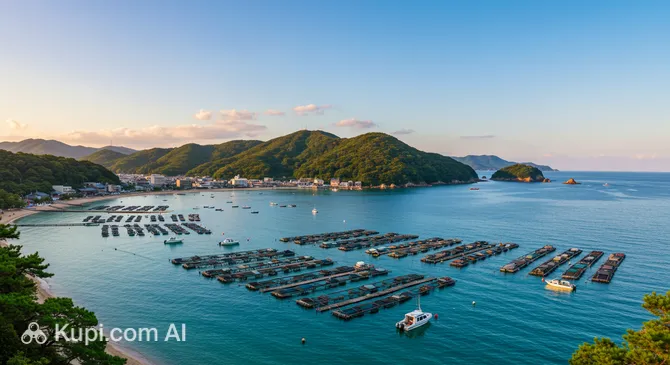
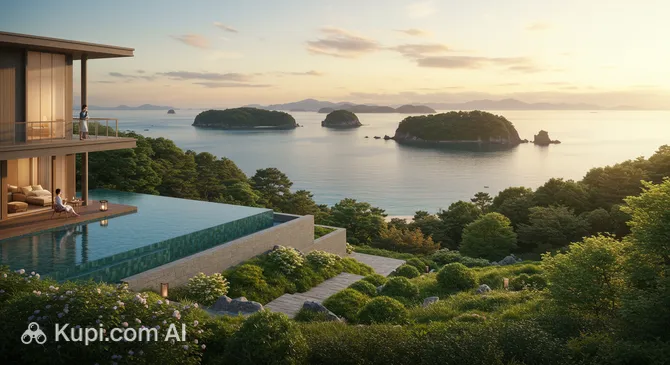
Shima is a charming city nestled on the picturesque peninsula of the same name in Mie Prefecture, on the shores of the Pacific Ocean. This corner of Japan is famous for its peaceful atmosphere and close connection to nature, as a significant part of it is included in the Ise-Shima National Park, where dense forests meet a jagged coastline and cozy bays.
With a population of about 45,000 people, the city lives at a leisurely pace, offering its guests a mild marine climate and crystal-clear air. Tranquility and a variety of experiences combine here in a wonderful way, making Shima an attractive destination for those looking to escape the hustle and bustle of city life.
Shima. Illustration.
Source: Kupi.com AI
Shima attracts travelers not only with its natural beauty. The city is known as one of the centers of the Japanese pearl industry, where you can learn about the pearl cultivation process and purchase unique jewelry. Additionally, it is home to ancient Shinto shrines and Buddhist temples, historic lighthouses, and numerous observation decks offering breathtaking views of the ocean.
Shima is an ideal place for those seeking harmony, wishing to enjoy leisurely walks along secluded beaches, immerse themselves in Japanese culture and history, or simply relax the soul surrounded by magnificent nature. Visit Shima to discover this amazing corner of the Land of the Rising Sun.
In the city of Shima, there is a noticeable change of seasons, which is reflected in temperature indicators and the amount of precipitation. Summer here is warm, and winter is cool. The hottest months are July and August, when the average temperature reaches 26.8°C - 28.1°C, and maximum values can rise to 29.1°C - 30.5°C. The coldest months are January and December, with an average temperature of about 7.1°C - 9.1°C and minimum values dropping to 4.5°C - 6.5°C.
Precipitation in Shima is distributed unevenly throughout the year. The highest amount of precipitation, about 10 mm, falls in June and October. However, the peak of rainy days occurs in the summer months: in July and August, there are 18 each, and in September—19. June with 16 rainy days and October with 15 are also quite humid, but they are inferior to the peak summer months in this indicator. Winter months, such as January and December, are characterized by the least amount of precipitation (2 mm) and the lowest number of rainy days (about 6). In general, expect a warm summer with occasional rain and cool, relatively dry winters. For more detailed information, you can study the Shima climate.
Average monthly temperature
Average monthly precipitation
Interesting Facts
Beyond its famous resorts and picturesque views, Shima holds many surprising stories and unique features. Here are just a few interesting facts that will help you see this Japanese city from a new perspective:
Yokoyama Observation Deck. Illustration.
Source: Kupi.com AI
Traveler photos:
Shima is the true birthplace of the famous Japanese pearl. It was here, in the picturesque Ago Bay, that Kokichi Mikimoto successfully produced the world's first cultured pearls. Today, visitors to the city can visit themed museums and even see the traditional harvesting process by ama divers.
The Shima Peninsula has been considered a sacred place since ancient times. It is home to some of the oldest Shinto shrines in Japan, including the famous Ise Grand Shrine, dedicated to the sun goddess Amaterasu. This site has been a place of pilgrimage for Japanese people for over two millennia.
Shima is home to a unique theme park – Shima Spain Village. This is an unexpected corner of Europe in the heart of Japan, where visitors can immerse themselves in the atmosphere of Spanish festivals, enjoy the architecture, and try Spanish cuisine.
The local lighthouses, Anorisaki and Daiosaki, are true symbols of Shima's maritime romance. Their majestic snow-white towers, rising above the rocky coastline, offer breathtaking views. There is a belief that in the past, sailors offered prayers for a safe return home at these lighthouses.
How to Get There
A journey to the Shima Peninsula is an immersion into a world of picturesque bays and pearl-fishing traditions. To plan the perfect route, we recommend exploring all the ways to get to Shima, including trains and car routes.
There is no airport in the city of Shima itself, so travelers usually fly into one of the major air hubs in neighboring prefectures. The most convenient option is Chubu Centrair International Airport (NGO), located in Nagoya. It is about 59 km from Shima in a straight line (across Ise Bay), but the land route takes longer. A trip by taxi or rental car can take about 2 hours, however, many tourists prefer a high-speed ferry to the city of Tsu, followed by a transfer to a train or bus.
Another popular option for international flights is Kansai International Airport (KIX) in Osaka. It is located significantly further away, about 146 km from Shima. This is a major hub with a huge number of flights. A car trip from here will take about 4 hours, so most guests choose the convenient rail connection via Osaka.
For clarity, here is a summary of the region's main airports:
Rail travel is the most popular and comfortable way to reach Shima. The region is served by the private Kintetsu Railway company. Direct express trains, including the famous panoramic "Shimakaze" train, run from Nagoya, Osaka, and Kyoto. The final stop for most tourists is Kashikojima Station, located in the heart of the resort area. Travel time from Nagoya by express train is about 2 hours, and from Osaka, it is about 2.5 hours.
Main Attractions
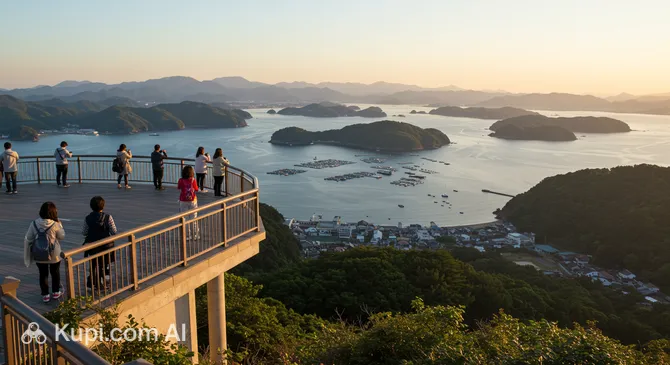
One of the main gems of Shima that is definitely worth a visit is the Yokoyama Observation Deck. It offers breathtaking panoramic views of Ago Bay, dotted with numerous uniquely shaped islands. This spot is particularly popular among photographers and nature lovers, as it is the perfect place to fully appreciate the beauty of the unique rias coastline, especially during sunset. The deck is part of the Ise-Shima National Park, highlighting its natural value.
Yokoyama Observation Deck. Illustration.
Source: Kupi.com AI
Traveler photos:
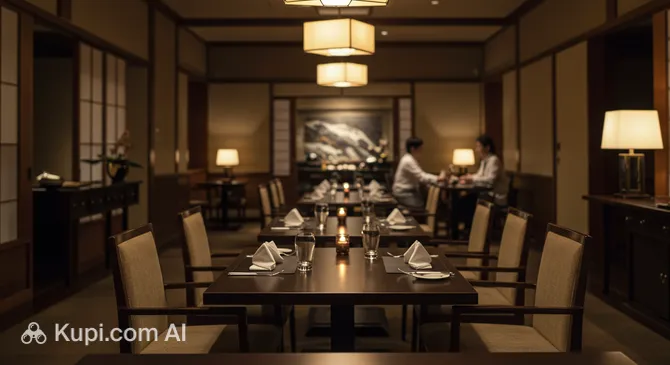
For connoisseurs of history and an exquisite atmosphere, the Shima Kanko Hotel The Classic is an interesting destination. This hotel, and particularly its famous restaurant, is known not only for its elegance and excellent cuisine serving the freshest local seafood but also for hosting the G7 summit in 2016. Visiting this place is an opportunity to touch history and enjoy world-class service.
Shima Kanko Hotel The Classic. Illustration.
Source: Kupi.com AI
Traveler photos:
If you are looking for a luxurious getaway with magnificent views, consider the Shima Bayside Terrace. This resort hotel offers its guests not only comfortable accommodation but also stunning landscapes of Ago Bay, which can be admired directly from the terraces or rooms. The hotel is often decorated in a Mediterranean style, adding a special charm and creating the atmosphere of a secluded European resort on the Japanese coast.
Local Cuisine
The gastronomy of Shima is a true immersion into the world of the freshest seafood for which this region of Japan is so famous. Local cuisine will delight gourmets with a variety of flavors and high-quality ingredients, primarily, of course, seafood. Travelers will find both traditional dishes and modern culinary interpretations here.
You should definitely try the famous Shima lobster (ise-ebi)—it is a true delicacy served in various forms, from sashimi to grilled. No less worthy of attention are the freshest oysters, sea urchins, and abalone. A unique feature of the local cuisine is dishes made from cultured pearl oysters. Local chefs masterfully combine seafood with seasonal vegetables, creating culinary masterpieces that impress not only with their taste but also with their exquisite presentation. At markets and street stalls, you can enjoy sushi made from fresh tuna, various grilled seafood, as well as aromatic fish broths and fried squid.
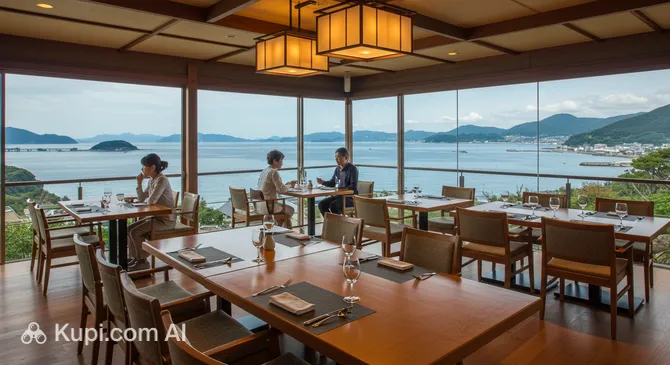
The dining culture in Shima is diverse. Exquisite seafood dishes can be sampled in traditional Japanese inns—ryokans—as well as in specialized restaurants. For example, at Shima Kanko Hotel The Classic or The Bay Suites Restaurant, you can fully appreciate the skill of local chefs. Street food is also popular: you can always find something tasty and authentic on the waterfronts and at markets. Locals, like tourists, value the freshness of products, so fish markets are an important part of the city's gastronomic life.
The Bay Suites Restaurant. Illustration.
Source: Kupi.com AI
Traveler photos:
Regarding drinks, you should pay attention to traditional sake, which perfectly complements seafood dishes. Among non-alcoholic drinks, green tea and various lemonades are popular. Don't forget to try local Japanese sweets, such as mochi (rice dough cakes) and dango (rice flour balls on a skewer), which are often sold at street stalls and during festivals.
The gastronomic scene in Shima attracts tourists with its emphasis on the freshest local products and the ability to turn them into true culinary works of art. The city regularly hosts gastronomic festivals where you can get to know the region's culinary traditions better, try rare delicacies, and even participate in workshops. A trip to Shima is a great opportunity to enjoy the taste of the sea in all its glory.
Travel Tips
Welcome to Shima! To make your trip to this picturesque corner of Japan—known for its beautiful bays and the nature of Ise-Shima National Park—as comfortable and pleasant as possible, we have prepared some practical tips. They will help you navigate better and enjoy every moment of your stay.
Clothing and essentials:
The climate in Shima is humid subtropical. In summer (June-August), it is hot and humid, so choose light, breathable clothing. In spring (March-May) and autumn (September-November), the weather is pleasant, but evenings can be cool—layered clothing will come in handy. Winter (December-February) is relatively mild, but a warm jacket and sweater won't hurt. Be sure to bring comfortable shoes for walking on nature trails and visiting temples. Don't forget sunscreen, a hat, and repellent, especially if you plan to spend a lot of time on the coast. For visiting Shinto shrines and Buddhist temples, choose modest clothing that covers shoulders and knees. You will also need an adapter for electrical appliances (in Japan, Type A and B sockets are used, voltage is 100V).
Transport around the city and surroundings:
Shima is a region with several settlements and many natural attractions scattered along the coast. Public transport is represented by local buses and the Kintetsu railway line, which connects Shima with other cities in Mie Prefecture. However, for the most complete exploration of the region, especially Ise-Shima National Park and the picturesque Ago Bay, renting a car is highly recommended. This will give you freedom of movement and access to remote corners. Remember that an international driving permit is required to rent a car. Taxis are available but can be an expensive pleasure for long distances.
Finances – currency, cards, tipping:
The local currency is the Japanese Yen (JPY, ¥). It is best to exchange currency at the airport upon arrival or at major banks in large cities; in Shima itself, exchange options may be limited. Credit cards (Visa, Mastercard) are accepted in many hotels, large shops, and restaurants, but always have enough cash with you, as small establishments, local markets, and some types of transport may only accept cash. ATMs that accept international cards can be found in post offices (Japan Post Bank) and 7-Eleven stores. Tipping in Japan is not practiced and may be perceived as an insult—good service is already included in the bill.
Health and safety:
Shima, like all of Japan, is a very safe place for tourists. Pharmacies (look for the sign \"薬\" - kusuri) are available, but pharmacists may not speak English, so it's better to have a basic set of medicines with you. If you need medical help, contact local clinics or hospitals; it is recommended to have travel insurance with good coverage. There are no specific "unsafe" areas in Shima, but always follow general precautions: keep an eye on your belongings, especially in crowded places. If you plan hiking or water activities, consider the weather conditions and listen to local recommendations.
Communication and internet:
The official language is Japanese. The level of English proficiency among the local population, especially outside tourist sites, may not be high. Learn a few basic Japanese phrases: \"konnichiwa\" (hello), \"arigato\" (thank you), \"sumimasen\" (excuse me/sorry). For stable internet access, it is recommended to purchase a travel SIM card or rent a pocket Wi-Fi router at the airport. Free Wi-Fi is available in some hotels and tourist information centers. Apps like Google Maps and Google Translate will be useful.
Local etiquette and traditions:
Japanese people are very polite and value respect for traditions. When greeting someone, a slight bow is appropriate. In public places, especially on transport, try to speak quietly and not disturb others. When visiting temples and shrines, behave with restraint. It is important to remove your shoes when entering traditional Japanese houses (ryokans, minshuku), some temples, and restaurants with tatami mats. Do not eat or drink while walking on the street—it is considered impolite. Follow the rules for using chopsticks (for example, do not stick them vertically into rice).
What to avoid:
Avoid loud conversations and noisy behavior in public places, especially on trains, buses, and temple grounds. This can be perceived as a sign of disrespect. It is also not customary to point at people or objects with one finger; if you need to show something, use a polite gesture with your whole palm.
Special tip for Shima:
Be sure to explore Ago Bay, known for its picturesque islands and pearl farms. Consider a bay cruise or visiting one of the farms where you can learn about the pearl cultivation process. Shima is also famous for its seafood, especially oysters and Ise-ebi (Japanese lobster)—don't miss the chance to try local delicacies.
We hope these tips help you plan an unforgettable trip to Shima. Enjoy the beauty of Japanese nature, the hospitality of the locals, and the unique atmosphere of this region!
Entertainment & Nightlife
Evening and nightlife in Shima offers a more peaceful and sophisticated experience rather than the loud parties until dawn characteristic of megacities. Here, the focus shifts to high-quality dinners, a relaxing atmosphere, and the opportunity to enjoy a quiet evening in beautiful surroundings. Instead of lively districts with night clubs, you will find elegant restaurants and bars, mostly concentrated within hotels and resort complexes.
The atmosphere of Shima at night disposes one toward unhurried conversation and gastronomic pleasures. The crowd here is generally respectable, appreciating comfort and a high level of service. In most establishments, the dress code ranges from casual to smart casual, especially in high-end restaurants. Many restaurants operate until late evening, but peak activity usually occurs during dinner time. For a more authentic experience, you can look for local izakaya (Japanese pubs), where you can try local drinks and snacks in a more informal setting.
Shima Kanko Hotel The Classic. Illustration.
Source: Kupi.com AI
Traveler photos:
Among the establishments where you can spend a pleasant evening, the restaurants at famous hotels are worth noting. For example, Shima Kanko Hotel The Classic is famous for its cuisine and history, offering guests sophisticated dishes. Another wonderful option for dinner is The Bay Suites Restaurant, known for its service and views. Resort hotels, such as Shima Bayside Terrace, also often have their own bars and restaurants where you can relax after an eventful day.
When planning your evening leisure in Shima, it is best to check the opening hours of the places you are interested in beforehand and, if necessary, book a table, especially in popular restaurants. The average bill will depend on the level of the establishment, but in general, you should expect prices to be above average, especially in hotel restaurants. For getting around at night, a taxi is the most convenient option; it can be ordered through your hotel's reception. Shima is considered a very safe city, so evening walks in tourist areas are usually comfortable, though standard precautions should always be observed.
During the day, Shima offers many other entertainments. The city and its surroundings are rich in natural beauty and cultural sites. Be sure to visit the Yokoyama Observation Deck, which offers breathtaking panoramic views of Ago Bay. You can also explore Ise-Shima National Park, enjoy boat trips, or learn about the local culture associated with pearl harvesting.
Parks & Museums
The city of Shima, located in the picturesque Mie Prefecture, invites travelers to enjoy a harmonious combination of the magnificent natural landscapes of Ise-Shima National Park and a unique cultural heritage connected to the sea and Japanese traditions.
Parks and Natural Areas of Shima
A significant part of the city and its surroundings is included in the Ise-Shima National Park. This is an extensive area with a rugged coastline, many islands, lush greenery, and magnificent opportunities for hiking and nature watching. One of the best viewpoints is the Yokoyama Observation Deck. It offers breathtaking panoramic views of Ago Bay, known for its pearl farms and picturesque islands. This place is ideal for photography and quiet contemplation.
Yokoyama Observation Deck. Illustration.
Source: Kupi.com AI
Traveler photos:
Beach lovers should visit Goza Shirahama Beach, known for its white sand and clear water. It is a wonderful place for swimming, sunbathing, and relaxing during the warmer months. Additionally, the Shima coastline offers many secluded coves and rocky capes, perfect for exploration.
Museums and Cultural Heritage
While Shima is not famous for large museum complexes, there are unique opportunities to get to know the local culture. It is definitely worth learning more about pearl fishing, which is the region's hallmark. Although the famous Mikimoto Pearl Museum is located on the neighboring island of Toba (easily accessible from Shima), Shima itself also has exhibitions and shops dedicated to the art of pearl cultivation.
To gain a deeper understanding of the region's history and lifestyle, you can visit the Shima City Isobe Local Museum. The museum's exhibits tell the story of the area's development, traditional crafts, and the lives of the local population over the centuries. Also worth noting is the culture of the Ama divers—women who traditionally harvest seafood and pearls by diving without scuba gear. In some areas, you can visit their huts (Amagoya) or learn more about this unique heritage.
Historical and Architectural Sights
Among the significant historical sites, the Izawanomiya Shrine stands out, one of the important Shinto shrines in the region, offering visitors an atmosphere of peace and spirituality. Also of interest are picturesque lighthouses, such as the Daiosaki Lighthouse and the Anorisaki Lighthouse. They not only serve a navigational function but also act as excellent observation platforms offering impressive views of the ocean and the coast.
Authentic Experiences and Tips
For a full immersion into Shima's atmosphere, head to one of the small fishing villages along the coast. Here you can try the freshest seafood in local restaurants and observe the daily life of fishermen. Don't miss the chance to taste local delicacies, especially Ise-ebi lobsters and other seafood for which this region is so famous.
Getting Around
When planning a trip to Shima, it is important to think in advance about how you will move around the city and its surroundings. Public transport here is mainly represented by buses and trains, which provide convenient connections both within the city and with other settlements in the region.
The core of Shima's transport system consists of trains from the Kintetsu Railway company. Kashikojima Station is an important transport hub, with trains departing to major cities such as Nagoya and Osaka, as well as across the Ise-Shima Peninsula. Local buses run for travel within the city itself and to some tourist sites not covered by the railway. The route network is quite developed, but the schedule, especially in remote areas, may not be as frequent as in megacities. There is no metro, trams, or trolleybuses in Shima.
The fare payment system in Japan is fairly unified. Transport IC cards, popular nationwide such as ICOCA (regional for this part of Japan), Suica, or Pasmo, are accepted on Kintetsu trains and many buses. These rechargeable cards significantly simplify payment: just tap the card against the reader at the entrance and exit. You can buy or top up an IC card at machines in railway stations. You can also always pay for travel with cash. For trains, tickets are bought at station machines before boarding. On buses, the system may differ: sometimes you need to take a ticket with a stop number upon entering (整理券 - seiriken) and pay the driver upon exiting according to the fare grid displayed on the screen; in other cases, there may be a flat fare. There are also tourist passes, such as the Kintetsu Rail Pass, which can be beneficial if you plan to travel extensively around the region on this company's trains.
Tourists are advised to study routes and schedules in advance, especially for buses. Information can be found at stations, in tourist information centers, or on transport company websites (an English version is often available). Kintetsu trains run regularly, but it's worth checking the time of the last train if you're planning evening trips. Buses usually start running in the morning and finish in the evening; night service is generally absent. When using IC cards, don't forget to tap them against the validator both when entering and exiting so the correct amount is deducted.
As an alternative to public transport, taxis are available in Shima. They can be found at stands near railway stations or called by phone. Taxis in Japan are comfortable but quite expensive. Bicycle rentals can be convenient for exploring the picturesque surroundings and coastal zones—rental points are sometimes found near stations or in tourist areas. If you plan to travel actively through Ise-Shima National Park and the surrounding areas, consider renting a car, which will provide greater freedom of movement.
A feature of Shima's transport system is its orientation towards tourists visiting Ise-Shima National Park and the many coastal attractions. For example, the famous "Shimakaze" panoramic express by Kintetsu runs to Kashikojima Station in Shima, offering increased comfort and magnificent views from the windows. Also, special tourist bus routes operate in the Ise-Toba-Shima region, such as the "CAN Bus," providing convenient access to major attractions including the "Shima Spain Village" theme park and the Toba Aquarium (although the aquarium itself is not in Shima, it is accessible via the region's overall transport network).
Accommodation
In the city of Shima, which attracts tourists with its picturesque landscapes and calm atmosphere, there is a diverse selection of accommodation options that can satisfy the needs of both budget travelers and those looking for a luxury holiday. Guests can choose between traditional Japanese ryokans, modern hotels, cozy guest houses, and apartments for short-term rental.
When choosing a place to stay, it is worth paying attention to areas located near the coast or major transport hubs, which will provide easy access to beaches, attractions, and restaurants. Many hotels and ryokans offer beautiful views of Ago Bay or the Pacific Ocean. One example of comfortable accommodation is Shima Bayside Terrace, offering guests a high level of service and a convenient location.
Shima Bayside Terrace. Illustration.
Source: Kupi.com AI
Traveler photos:
The price range varies from budget options to luxury hotels. It is recommended to book accommodation in advance, especially if your trip coincides with the peak tourist season (for example, during the cherry blossom season or summer holidays), to ensure the best choice and prices. Most accommodation options are easy to find and book through popular online platforms, although some traditional ryokans may offer bookings directly through their websites or by phone.
Nearby Cities
For those who want to explore the surrounding area, Shima serves as an excellent starting point for day trips to several interesting nearby locations:
These nearby destinations offer insight into the region's diverse culture and landscapes. For example, a trip to Ise allows you to visit the famous Ise Grand Shrine complex, one of the most sacred sites in Shintoism. Matsusaka is known for its high-quality beef and historical districts, while Tsu, the capital of Mie Prefecture, offers a mix of modern amenities and cultural attractions.
Shopping & Souvenirs
Shima, a charming coastal city in Mie Prefecture, offers unique local goods and souvenirs reflecting its maritime character and natural beauty rather than large-scale, metropolitan-style shopping. The city and the surrounding Ise-Shima region are particularly famous for high-quality pearls and fresh seafood.
In Shima, there are no clearly defined major shopping streets comparable to those found in large cities in Japan. However, small shops selling local products, souvenirs, and daily necessities can be found in areas popular with tourists, as well as near railway stations and port zones. Souvenir shops are often located at hotels and tourist sites.
You likely won't find large modern shopping malls in Shima. Shopping here is more local in nature. Some hotels, such as the Shima Bayside Terrace or Shima Kanko Hotel The Classic, may have their own shops with souvenirs and essential items.
Shima Bayside Terrace. Illustration.
Source: Kupi.com AI
Traveler photos:
Although Shima is a coastal city, there are no famous large tourist markets here. However, you may come across small local shops or sections in supermarkets selling fresh seafood and local agricultural products. For an authentic experience, you can ask locals about small morning markets, if any exist.
The main souvenir from Shima is certainly pearls. Ago Bay, of which Shima is a part, is the birthplace of cultured pearls, so you can find pearl jewelry for every taste and budget here. Also popular are:
Seafood: dried or canned local delicacies, such as abalone (awabi), sea urchins (uni), or seaweed.
Local sweets: often made using regional ingredients.
Local crafts: ceramics or textiles, if available in the region.
Souvenirs related to Ise-Shima National Park.
Most shops in Shima, as in Japan as a whole, open around 10:00-11:00 and close at 19:00-20:00. Small family shops may have their own schedules. Major hotels and some shops accept credit cards (Visa, Mastercard, JCB), but it is always useful to have some cash on hand, especially for purchases in small shops or at occasional markets.
Tourists in Japan can take advantage of the Tax-Free system when making purchases over a certain amount in participating shops. Look for the \"Japan Tax-Free Shop\" sign. Usually, you will need your passport to process the tax refund. This service may be available in some Shima shops selling souvenirs or other goods for tourists.