Support

Toba

About

Toba is a charming coastal city in Japan, nestled in Mie Prefecture on the eastern coast of the scenic peninsula. The city is washed by the azure waters of Ise Bay, and its panorama is adorned with numerous islands and green hills, creating a unique atmosphere of peace and harmony with nature. Toba seems tailor-made for leisurely strolls, sea adventures, and exploring the country's rich maritime culture.

With a population of about 17,000, Toba retains the spirit of a small but distinctive town. It plays a significant role in the region as a recognized center of the pearl industry and a popular destination for marine tourism. Here, traditional Japanese quarters, modern museums, and colorful fishing villages that have preserved their authentic look blend in a wonderful way. The city is known for its friendly atmosphere, devoid of the hustle and bustle of megacities, where every guest feels welcome.
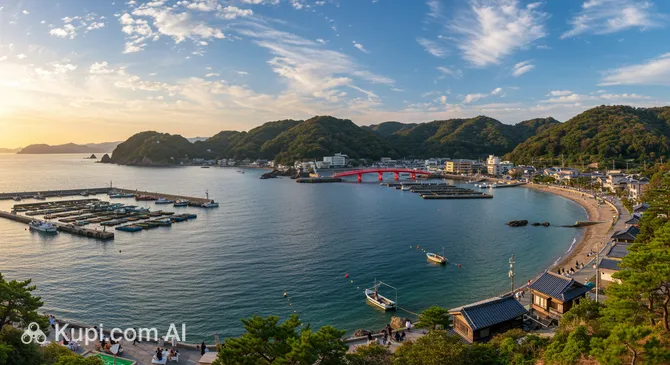
Toba. Illustration.
Source: Kupi.com AI

Toba offers its visitors many unique experiences. One of the main highlights is its famous pearl industry—here you can learn everything about pearl cultivation and even watch the Ama divers at work. No less attractive is the Toba Aquarium, one of the largest in Japan, where you can get acquainted with an amazing variety of marine life, including dolphins and sea otters. Additionally, unforgettable memories are guaranteed from boat trips and island cruises across Ise Bay, which offer breathtaking views of the coastline.

If you are looking for a place to relax your soul, immerse yourself in a unique culture, and enjoy the beauty of nature, Toba is an ideal choice. This city offers much more than just a beach holiday—it's an opportunity to discover maritime Japan, filled with fresh breezes, salty air, and warm hospitality. Come to Toba to find an activity to your liking and take home vibrant memories!

You can find more interesting facts on the history of Toba page.
Weather Overview

The climate in Toba is characterized by warm and humid summers, as well as mild, drier winters. The hottest months are July and August, when average temperatures stay around 26-28°C, with maximum values reaching up to 30.5°C. In winter, for example in January, the average temperature is about 7.1°C, with minimums around 4.5°C. The highest amount of rainfall and rainy days occurs between June and October. Overall, in Toba, you can expect a warm summer with occasional rain and cool, relatively dry winters. For more detailed information on weather conditions, please visit the Toba Climate page.

Average monthly temperature

Average monthly precipitation

Interesting Facts

Beyond its picturesque views and hospitality, Toba holds many surprising stories and unique features that make this city truly special. Here are just a few interesting facts that will help you look at Toba from a new perspective:

  • The World's Cradle of Cultured Pearls: It was here in Toba, in 1893, that Kokichi Mikimoto first successfully grew a perfect semi-spherical pearl, giving birth to an entire industry. His legacy can still be seen today on the famous Mikimoto Pearl Island, which houses a museum dedicated to this invention.

  • Home of the Legendary "Ama" Divers: Toba is one of the few regions in Japan where the ancient tradition of "Ama" still survives. These are brave female divers who, without scuba gear or other special equipment, harvest pearls, seaweed, and various shellfish from the seabed. This unique craft has been passed down from generation to generation for over a thousand years, and in Toba, you can not only see them at work but also visit special huts where the "Ama" prepare their fresh catch.

  • One of the Largest Aquariums in the Country: The city is home to the Toba Aquarium, known for its impressive collection of over 1,200 species of marine life from all over the world. It is one of the few places in Japan where you can see rare dugongs, as well as observe dolphins, penguins, and other amazing sea creatures.

  • The Sacred "Wedded Rocks" and Healing Springs: Not far from Toba are the famous Meoto Iwa rocks (often called the "Wedded Rocks"). These two rocks, connected by a sacred "shimenawa" straw rope, symbolize the marriage union of Japan's creator deities and are a popular spot for watching the sunrise. Additionally, the surroundings of Toba are famous for their hot springs, offering relaxation after a busy day.

How to Get There

When planning a trip to this picturesque coastal corner, it is useful to know all the ways to get to the city in advance. Toba is located on the Shima Peninsula, and although the city itself does not have its own airport, Japan's well-developed transport network makes it easy to reach from major metropolises.

The most convenient option for travelers is Chubu Centrair International Airport (NGO), located in Nagoya, approximately 42 km across the bay from Toba. This is the nearest major aviation hub. From the airport, you can reach Toba by high-speed boat to the city of Tsu and then transfer to a bus or train, or take a train through Nagoya. The entire journey usually takes about 2–2.5 hours. The airport serves many international and domestic flights and is considered one of the best in the region.

Another popular option, especially for those planning to visit the Kansai region, is Kansai International Airport (KIX) in Osaka. It is located about 147 km from Toba. From this airport, the journey to Toba will take about 3–3.5 hours by train with transfers (usually through Osaka or Tennoji). Kansai is a major hub with a huge number of flights from all over the world.

For clarity, here is a summary of the main airports through which you can plan your route:

AirportPassenger trafficDistance
Chubu Centrair International Airport12.3 mln42 km
Nagoya Airport735 00086 km
Shizuoka Airport691 274128 km
Itami Airport14.8 mln133 km
Kansai International Airport30.6 mln147 km

The railway is one of the most comfortable ways to get to Toba. The city's main gateway is Toba Station, which is served by two main operators: JR (Japan Railways) and the private Kintetsu Railway. Kintetsu lines are particularly popular among tourists due to their comfortable express trains running from Nagoya (travel time about 1.5 hours) and Osaka (about 2 hours). The train ride allows you to enjoy scenic views of the coast and the Mie Prefecture countryside.

Main Attractions

Toba, a charming coastal city in Mie Prefecture, offers tourists many fascinating sites related to the sea and its treasures. One of the city's main gems is the Toba Aquarium. It is one of Japan's largest aquariums, famous for its impressive collection of marine life, including rare dugongs and finless porpoises. Visitors can explore 12 different zones, each recreating a unique marine environment, making the visit educational and unforgettable for all ages.

Equally famous is Mikimoto Pearl Island, considered the birthplace of cultured pearls. It was here that Kokichi Mikimoto first succeeded in growing perfect pearls. On the island, you can visit a museum dedicated to the history of pearls and Mikimoto's life, watch fascinating demonstrations by Ama divers who traditionally harvested pearls, and, of course, purchase exquisite pearl jewelry. This place immerses you in the history and beauty of one of the sea's most precious gifts.

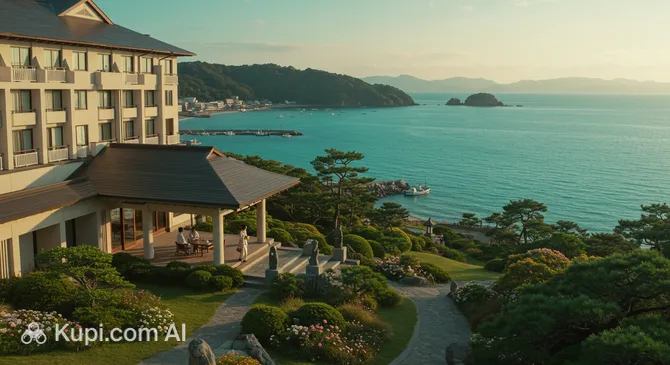
For a comfortable stay and to enjoy the scenic views of Toba Bay, many travelers choose the Toba Resort Hotel. This hotel offers not only high-class accommodation and service but also serves as an excellent starting point for exploring all the wonders of the region. Its location allows guests to admire breathtaking seascapes and easily reach the main attractions.

Toba Resort Hotel. Illustration.
Source: Kupi.com AI

Traveler photos:

To gain a deeper understanding of the region's maritime culture, it is worth visiting the Sea-Folk Museum. This museum is dedicated to the rich history of fishing and seafaring in Ise Bay and the traditions of the Ama divers. The exhibits include about 60,000 items, among which are real fishing boats, tools, and household objects that tell the story of the local residents' close connection with the sea over centuries. This is a unique opportunity to touch the authentic culture and heritage of Japan.

Local Cuisine

The gastronomy of Toba is a true immersion into the world of the freshest seafood. The main pride of the local cuisine is undoubtedly oysters, lobsters, and scallops, which are often cooked over an open fire here to preserve their natural flavor. Be sure to try the aromatic seafood miso soup or succulent grilled lobster—these dishes will let you experience the true taste of the region.

A special place in Toba's culinary palette is occupied by the famous pearl oyster, served in a variety of ways: from raw, emphasizing its delicate taste, to baked with savory teriyaki sauce. Don't miss the unique seaweed dishes, which are an important part of Japanese cuisine. Meat lovers will appreciate the local beef, which rivals more famous varieties in flavor. For a snack, you can find unusual treats like lobster-flavored chips or crackers.

The dining culture in Toba is diverse and authentic. Numerous fisherman's diners line the coast, where dishes are prepared according to old recipes, offering guests seasonal delicacies such as dried fish, marinated seafood, and homemade pickles. Fresh vegetables, fruits, and, of course, seafood can be found at local farmers' markets, where they are delivered straight from the morning catch. Many of the city's restaurants take pride in their seafood dishes, and you can sample them at places like the Toba Resort Hotel, which frequently serves local specialties.

Toba Resort Hotel. Illustration.
Source: Kupi.com AI

Traveler photos:

Traditional Japanese drinks such as sake or refreshing green tea pair perfectly with these magnificent seafood dishes, helping to fully reveal the flavor of local delicacies. The city is also famous for its gastronomic festivals dedicated to oysters, lobsters, and pearl-themed treats. This is an excellent opportunity not only to try the freshest food but also to get acquainted with local culinary traditions in a friendly atmosphere.

Travel Tips

Welcome to the charming coastal city of Toba! To make your journey through this corner of Japan as comfortable and memorable as possible, we have prepared some practical tips to help you better navigate and enjoy every moment.

  1. Clothing and Essentials:

    Toba has a humid subtropical climate. In summer (June-August), it is hot and humid, so choose light, breathable clothing. Don't forget a hat and sunscreen. Spring and autumn offer pleasant weather ideal for walking—layered clothing will come in handy. Winters are mild, but warm clothes will be needed. A key element of your wardrobe is comfortable shoes for walking around the city and its surroundings. Bring an umbrella or raincoat, especially if your trip coincides with the rainy season (usually June-July). For electronics, you will need an adapter (Japan uses Type A and B sockets, voltage 100V). When visiting temples and shrines, choose modest clothing that covers shoulders and knees.

  2. City Transport:

    Getting around Toba and its surroundings is convenient via local trains (Kintetsu line) and buses. The city itself is quite compact, and many attractions, such as the Toba Aquarium or Mikimoto Pearl Island, can be reached on foot. Taxis are available but can be expensive. Renting a car can be useful if you plan to explore Mie Prefecture more broadly, but for the city itself, it is not essential. Remember that Japan has left-hand traffic, and an international driving permit is required to rent a car.

  3. Finances:

    The local currency is the Japanese Yen (JPY, ¥). It is recommended to exchange some money in advance or upon arrival at major airports. Finding exchange offices in Toba itself can be more difficult. Credit cards are accepted in many hotels, large shops, and tourist sites, but cash is absolutely necessary for small restaurants, local shops, markets, and paying entry fees. ATMs that accept international cards can be found in post offices (Japan Post Bank) and convenience stores (e.g., 7-Eleven). Ensure your card is suitable for use abroad. Tipping is not customary in Japan; good service is included in the price.

  4. Health and Safety:

    Japan is one of the safest countries in the world, and Toba is no exception. However, standard precautions, such as watching your belongings in crowded places, are always relevant. Pharmacies (薬局, kusuriya) exist, but the staff may not always speak English, so carry a list of necessary medications or use a translator. Travel insurance covering medical expenses is highly recommended. Being a coastal city, Toba is in a seismically active zone; familiarize yourself with earthquake and tsunami procedures at your hotel.

  5. Communication:

    The official language is Japanese. The level of English proficiency among the local population may be limited, especially outside tourist centers. However, staff at hotels and major attractions can usually communicate in basic English. Learn a few simple phrases: "Konnichiwa" (hello), "Arigato" (thank you), "Sumimasen" (excuse me/sorry). For communication convenience, consider buying a tourist SIM card or renting a pocket Wi-Fi router at the airport. Free Wi-Fi is available in some hotels and public places, but do not rely on it completely. Translation apps and Google Maps can be very useful.

  6. Local Etiquette:

    Japanese people value politeness and respect for others. A slight bow is a common form of greeting. In public places, especially on transport, try not to talk loudly on the phone or make noise. Remove your shoes when entering Japanese homes, some temples, traditional restaurants, and ryokans (Japanese-style inns). When using chopsticks, do not stick them vertically into rice or pass food with chopsticks to another person—this is considered bad manners.

  7. What to Avoid:

    Try not to eat or drink while walking on the street unless it is a designated area (e.g., during festivals). Also, avoid pointing at people or objects with one finger; it is better to use your whole palm. Japan is very serious about cleanliness, so do not litter—if you can't find a bin, carry your trash with you to your hotel or the nearest container.

  8. Special Tip for Toba:

    Toba is famous for its pearls and Ama divers. Be sure to visit Mikimoto Pearl Island to learn the history of cultured pearls, and if possible, watch an Ama diver demonstration—it is a unique cultural experience. Don't miss the chance to try the freshest local seafood, especially the oysters for which the region is also famous.

We hope these tips make your stay in Toba even more pleasant and worry-free. Enjoy the beauty of this seaside city, its rich culture, and the hospitality of the local residents!

Entertainment & Nightlife

Toba, a charming coastal city in Mie Prefecture, offers its guests a predominantly quiet and relaxing evening experience rather than the boisterous nightlife characteristic of megacities. Here, you won't find bustling districts with dozens of nightclubs, but you can enjoy a pleasant time in a cozy atmosphere, savoring local cuisine and hospitality.

Evening entertainment in Toba is mainly centered around restaurants serving the freshest seafood and traditional Japanese izakaya bars. Many establishments offer magnificent views of the bay, creating a romantic setting for dinner. Regarding prices, a seafood dinner can cost an amount comparable to average prices across Japan for such venues, while cozy izakayas offer more budget-friendly options for drinks and snacks. Overall, evening entertainment prices in Toba can be described as moderate, especially compared to the country's major metropolises. While specialized nightclubs or large concert venues are rare here, some hotels and resort complexes may offer evening programs or lounge bars to their guests and visitors. For instance, in places like the Toba Resort Hotel, you can expect a restaurant or bar where you can spend the evening.

The evening atmosphere in Toba is generally very calm and conducive to relaxation. The crowd here consists of tourists enjoying the region's nature and culture, as well as local residents. The dress code in most establishments is casual. As for practical advice, it's better to arrive for dinner not too late, as many small restaurants may close earlier than in big cities. Traveling at night is most convenient by taxi, as public transport may have a limited schedule in the late hours.

Toba is considered a safe city, and evening walks along the lit central streets and the waterfront usually do not cause concern. Nevertheless, it is always worth following standard precautions. You can ask your hotel or restaurant to call a taxi for you.

During the day, Toba offers many exciting activities. The city is famous for its magnificent Toba Aquarium, one of the largest in Japan, as well as Mikimoto Pearl Island, where you can learn all about pearl harvesting. Boat trips across the picturesque Ise Bay and visits to the nearby Ise Jingu Shrine are also popular.

Overall, Toba's nightlife isn't about dancing until dawn and loud music; it's about peace, delicious food, and the chance to enjoy the beauty of a coastal city in a tranquil setting. It's an ideal place for those seeking relaxation after a busy day of exploration.

Parks & Museums

The city of Toba invites its guests to enjoy both picturesque natural spots and educational cultural sites. Here you can find peace in nature's embrace and immerse yourself in the rich history and traditions of the region.

One of the main natural gems surrounding Toba is Ise-Shima National Park. Although the city of Toba itself is part of this vast park, its coastal areas are particularly attractive. Tourists can enjoy stunning views of Toba Bay with its numerous islands, walk along scenic trails, or simply relax on one of the small beaches. This area is ideal for those seeking the tranquility and beauty of seascapes.

For history and culture enthusiasts, Toba offers several iconic locations. A visit to Mikimoto Pearl Island is a must. This is not just a museum, but an entire complex dedicated to the history of pearl cultivation, founded by Kokichi Mikimoto, the first person in the world to succeed in growing a perfect round pearl. Here you can learn all about the pearl creation process, see demonstrations by Ama divers, and, of course, admire magnificent jewelry. Another landmark is the Toba Aquarium, one of the largest and most famous aquariums in Japan. It is divided into several zones representing different marine ecosystems and is famous for its collection of marine mammals, including dugongs. This is a wonderful place for family vacations and exploring the underwater world.

In terms of historical sites, the ruins of Toba Castle are worth mentioning. Although little remains of the castle itself, its location offers beautiful views of the city and the bay, allowing you to touch the region's past. The culture of the Ama divers is also an integral part of Toba. In some places, you can see their traditional performances or visit small exhibits dedicated to their unique way of life.

For more authentic experiences, try exploring the small fishing villages around Toba, where you can observe the daily lives of local residents and taste the freshest seafood in local restaurants. Also, look out for less well-known observation decks that offer breathtaking panoramas of the jagged coastline.

Getting Around

Getting around Toba and its surroundings is quite convenient thanks to a well-developed public transport system that includes buses, trains, and marine vessels. Although the city itself is compact, the transport network allows for easy access to major attractions and neighboring towns.

The main types of public transport in Toba are buses and trains. Local bus routes connect different parts of the city and popular tourist spots. Of particular note is the "CAN Bus" tourist bus, which runs through the Ise-Shima region, linking Toba with important sites such as the Ise Shrines and other attractions. Railway service is primarily provided by the Kintetsu company. Toba Station is a major hub from which you can travel to Nagoya, Osaka, and Kyoto. Kintetsu trains are comfortable and run on schedule. Given Toba's coastal location and the presence of nearby islands like Mikimoto Pearl Island, ferries and excursion boats also play an important role in the transport system, offering both transportation and sightseeing services.

The fare payment system in Toba is quite flexible. Bus fares can usually be paid in cash directly to the driver upon boarding or exiting (depending on the system). At railway stations, tickets are purchased from vending machines or ticket offices. For convenience and savings, many tourists and locals use rechargeable IC transport cards (e.g., Suica, Pasmo, ICOCA), which are accepted on Kintetsu trains and increasingly on buses. These cards allow you to pay the fare with a simple tap on a reader. For tourists planning to travel extensively in the region, special passes like the Kintetsu Rail Pass, which covers specific zones, may be beneficial. Fares depend on the distance traveled.

Tourists are advised to plan their routes in advance, especially if several transfers are involved. Bus and train schedules are usually available at stations and stops, as well as online. Train tickets can be bought at stations from vending machines (many of which have an English interface) or at ticket counters. On buses, cash payment is made upon entry (sometimes upon exit); it is advisable to have small change. IC cards must be tapped on a validator when entering and exiting stations or on the bus. Public transport usually operates from early morning until late evening, but the frequency of trips may decrease in the evening hours and on less popular routes.

Besides public transport, other ways of getting around are available in Toba. Taxis can be found at stations and major hotels; this is a convenient but more expensive option. For those who prefer more independence, especially when exploring Ise-Shima National Park, car rental is a good fit. There is also the possibility to rent a bicycle in the city, which can be a pleasant way to see the coastal areas and nearby attractions at a leisurely pace.

Accommodation

In the city of Toba, tourists will find a variety of accommodation options to suit different preferences and budgets. The range of housing includes traditional Japanese ryokan inns, offering a unique cultural experience, as well as modern hotels ranging from mid-range to more luxurious options. Guesthouses and apartments are also available for those seeking more privacy or planning a long-term stay.

When choosing a place to stay, it is worth paying attention to areas located near major attractions, such as the Toba Aquarium or Mikimoto Pearl Island, as well as those offering scenic views of the bay. Many hotels and ryokans in Toba pride themselves on their onsens (hot springs), which can be a pleasant addition to your holiday.

Among the accommodation options, for example, is the Toba Resort Hotel, which offers comfortable conditions for vacationers. Overall, you can find both well-known chain hotels and small family-run inns in the city, each possessing its own charm.

Regarding the price range, Toba features options from relatively budget-friendly to luxury. It is recommended to book accommodation in advance, especially if your trip coincides with the peak tourist season, such as during the cherry blossom bloom or autumn foliage, as well as during national holidays. Bookings can be made through popular online platforms or directly on hotel websites.

Nearby Cities

For those who want to explore the surrounding area, Toba serves as an excellent starting point for day trips to several interesting nearby locations:

CityPopulationDistance
Ise122 43212 km
Shima45 83417 km
Minamiise10 92619 km
Tamaki15 11320 km
Meiwa22 52321 km

For example, just 12 km away is Ise, famous for its majestic Ise Jingu shrine, one of Japan's most sacred Shinto sites. A trip to Matsusaka (31 km) will delight gourmets with the world-famous "Matsusaka beef" and the opportunity to explore the ruins of an ancient castle. Meanwhile, Tsu (41 km), the capital of Mie Prefecture, offers historical attractions and a larger urban center.

These nearby destinations provide insight into the diverse culture and landscapes of the region.

Shopping & Souvenirs

Toba, known for its pearl farms and picturesque coastline, offers tourists a somewhat specific but interesting shopping experience. The city is not a major commercial metropolis; however, you can find unique local goods here, primarily pearl products, as well as fresh seafood and traditional souvenirs. Shopping in Toba is more about finding authentic items and delicacies than chasing global brands.

The main shopping spots in Toba are concentrated near Toba Railway Station and along the waterfront, where numerous souvenir stalls and tourist-oriented shops are located. A walk through these areas will allow you to explore the range of local goods and choose something to remember your trip by.

While there are no giant shopping malls typical of large cities in Toba, there are several places to shop. One such place is Toba Ichibangai, located near Toba Station. This is a popular shopping complex featuring a wide selection of souvenirs, local products, pearls, and restaurants serving fresh seafood dishes. You can also find small shops with clothing and everyday items here.

For those who want to soak up the local atmosphere and purchase the freshest seafood, Toba Marché is worth a visit. This is a modern market where farmers and fishermen sell their products directly. Here you can buy fresh vegetables, fruit, fish, and seafood, as well as processed local delicacies. It's a great place to taste and buy something truly local.

The main souvenir from Toba is undoubtedly pearls. The city is famous for its history of pearl harvesting and processing, so you can find jewelry for every taste and budget—from modest pendants to luxurious necklaces. Besides pearls, items related to the Ama diver culture, various seafood (dried squid, seaweed, canned goods), local sweets, and ceramics are also popular.

Most shops in Toba are open from approximately 10:00 AM to 6:00 PM or 7:00 PM. Small stalls and markets may open and close earlier. Large shops and tourist centers usually accept credit cards (Visa, MasterCard, JCB). However, in smaller shops and markets, it is preferable to have cash (Japanese Yen) with you.

Japan has a Tax-Free system for foreign tourists when purchasing goods over a certain amount at licensed shops. Look for the "Tax-Free Shop" sign. Usually, you need to present your passport to process the tax refund. Check the specific conditions directly in the shops.

Reached the end of the page?

That means the route is fully explored