Support

National Museum of Ethnography and Natural History

About

The National Museum of Ethnography and Natural History is not just a museum, but a true treasury of the cultural and natural heritage of Moldova. Located in Chișinău, it is the oldest museum in the country and carefully preserves about 135,000 unique exhibits. This is a place where history comes alive, telling visitors about the rich past and amazing nature of this land.
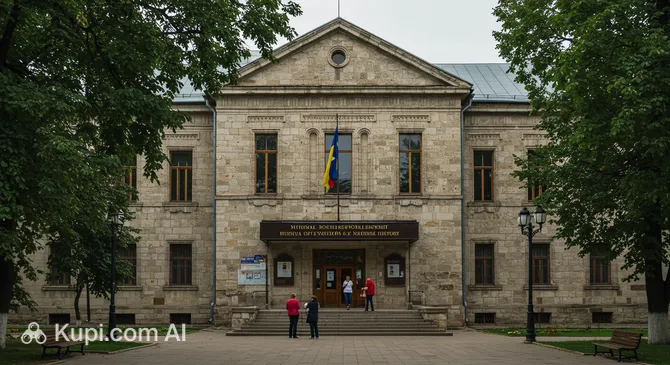
National Museum of Ethnography and Natural History. Illustration.
Source: Kupi.com AI

Traveler photos:

The museum building itself attracts attention with its unusual pseudo-Moorish style, which stands out vividly against the traditional architecture of Chișinău. This architectural gem is the only one of its kind in the city, making a visit to the museum even more memorable.

The museum's permanent exhibition, aptly named "Nature. Man. Culture.", occupies an impressive area of over 2,000 square meters. It harmoniously combines two key directions that the museum has remained faithful to throughout its history: the deep study of nature and the unique culture of Bessarabia. Here you can trace how life developed on this land and get acquainted with the traditions and way of life of its people.

The area adjacent to the museum also deserves special attention, where its own Botanical Garden is located. It features the most common types of plants, trees, and shrubs found in Moldova. Furthermore, the museum's vivarium will delight visitors with a collection of exotic birds, reptiles, and fish, completing the overall picture of the region's natural diversity.

Contacts

To find the current contact details for the National Museum of Ethnography and Natural History, such as phone numbers or email addresses, as well as to check opening hours, it is recommended to visit the museum's official website or contact local tourist information centers in Chișinău. These resources usually provide the most up-to-date and complete information for visitors.

How to contactContact
AddressStrada Mihail Kogălniceanu 82, MD-2009, Chișinău, Moldova
Phone number+373 22 240 056
Websitewww.muzeu.md

What to Do

Immersion in the National Museum of Ethnography and Natural History begins with its crown jewel—the permanent exhibition "Nature. Man. Culture." Here, visitors embark on a fascinating journey through the rich cultural and natural heritage of Moldova. You will be able to examine in detail artifacts that tell of the traditions, daily life, and beliefs of the peoples who inhabited this land, as well as get acquainted with unique natural exhibits reflecting the flora and fauna of the region.

In addition to the main exhibition, the museum leads a vibrant life thanks to the Temporary Exhibition Hall. Here, you have the chance to see unique exhibitions brought from other museums in Moldova and abroad, or participate in educational seminars and workshops. The museum is also a center for preserving folk traditions: colorful folklore events, national and international competitions, and festivals are regularly held here, showcasing folk creativity in all its glory. Annual exhibitions of crafts by local artisans deserve special attention, allowing you to experience living art firsthand.

Exploring the museum doesn't end inside the building. Be sure to take a stroll through the museum's Botanical Garden, which features plants typical of the Moldovan land, creating an island of nature right in Chișinău. For fauna enthusiasts, the doors of the vivarium are open. There, you can observe exotic birds, reptiles, and fish, which will be an interesting addition to your visit and allow you to better understand the diversity of the living world.

Getting There

The National Museum of Ethnography and Natural History is conveniently located in Chișinău, making it easily accessible for visitors. There are several ways to reach the museum, depending on your preferences and starting point in the city.

One of the most common ways is by using public transport. Chișinău has a well-developed network of bus and trolleybus routes. You will need to find a route that passes near M. Kogălniceanu Street, where the museum is located. It is advisable to check the appropriate route numbers and the nearest stops in advance using online maps or local transport apps.

For those who prefer more comfort or are traveling with limited time, a taxi is a convenient option. A taxi ride from the center of Chișinău to the museum usually doesn't take much time and is a relatively inexpensive way to get around. You can use local taxi companies or popular mobile ride-hailing apps.

If you are within walking distance, a stroll to the museum can also be a pleasant part of your day, allowing you to better appreciate the architecture and atmosphere of Chișinău. Before your trip, it is always useful to check the museum's exact location on a map and plan your route in advance to ensure your visit is as comfortable as possible.

Nearest city: Chisinau

History & Facts

The history of the National Museum of Ethnography and Natural History dates back to 1889. Its creation was made possible through the initiative of Baron A. Stuart and the progressive members of the Chișinău intelligentsia. The idea for the museum was born after the first agricultural and industrial exhibition organized by the Bessarabian Zemstvo. Some of the exhibits from this event formed the basis of the new cultural institution's initial collection.

Initially, the museum, named the Museum of Agriculture, was located in one of the Zemstvo buildings on Leovskaya Street (today Shchusev Street). Its goals were quite practical: to introduce farmers to the best seed varieties, advanced construction plans, the latest agricultural machinery and tools, as well as effective pest control methods. This highlighted its important role in the development of the region's agricultural sector at the time.

Throughout its long history, the museum has changed its name several times, reflecting the expansion of its collections and fields of activity. It was known as the Museum of Zoology, Agriculture, and Folk Crafts of the Provincial Zemstvo, then the Chișinău National Museum of Natural History (since 1926), the Regional Museum of Bessarabia (since 1937), the Republican Museum of the MSSR (since 1940), the State Museum of History and Local Lore (since 1957), and the State Museum of Local Lore (since 1983). It received its current, well-known name—the National Museum of Ethnography and Natural History—in 1991.

The museum's current building, which has become one of the architectural landmarks of Chișinău, was built according to the design of architect V. Tsyganko. Construction was completed in 1905, and its grand opening took place in June 1906, marking a new milestone in the history of this significant cultural center of Moldova.

Time Needed

When planning a visit to the National Museum of Ethnography and Natural History in Chișinău, it's worth setting aside at least 2-3 hours to fully experience its rich collections. This time is usually enough to see the main exhibitions dedicated to the nature, culture, and history of Moldova without rushing and while delving into the details.

If you are particularly interested in ethnography or natural history, or want to explore the temporary exhibitions often held at the museum in detail, your stay may extend to half a day. You should also consider time for a walk through the adjacent Botanical Garden and a visit to the vivarium, especially if the weather is nice. For a quick look at the most iconic exhibits, 1-1.5 hours may be enough, but in that case, you likely won't have time to immerse yourself in all aspects of the museum.

Ultimately, the duration of your visit will depend on your personal pace and the depth of interest in the exhibits presented. The museum offers enough material for study to engage visitors for several hours, allowing everyone to form their own impression of the region's rich heritage.

Working Hours

To plan your visit to the National Museum of Ethnography and Natural History in Chișinău, it is recommended to check the current opening hours in advance. Typically, museums of this level operate year-round but may have changes in their schedule depending on the season or public holidays. You can find the most accurate information about opening and closing times, as well as possible days off, on the museum's official website or by contacting the museum directly by phone.

Regarding the need for advance ticket booking or tour registration, it is also best to clarify this beforehand. For individual visitors, advance registration is usually not required, but it may be necessary for groups or for attending special events. Checking this information on official resources will help you avoid inconvenience and make your visit as comfortable and informative as possible.

DayOpening hours
MondayClosed
Tuesday10:00 – 17:00
Wednesday10:00 – 17:00
Thursday10:00 – 17:00
Friday10:00 – 17:00
Saturday10:00 – 17:00
Sunday10:00 – 17:00

Nearby

Visiting the National Museum of Ethnography and Natural History in Chișinău is a wonderful opportunity to immerse yourself in the culture and nature of Moldova. However, to make your trip even richer and more complete, it's worth paying attention to the attractions located nearby. Exploring the surrounding area will allow you to better feel the city's atmosphere and discover new interesting places, complementing the impressions of the main excursion.

There are several notable sites near the museum that may interest you. A walk through this district of Chișinău can be a pleasant addition to your cultural itinerary, allowing you to see more and gain a deeper understanding of the capital of Moldova.

NameDistance
Cascade Stairs0.3 km
Valea Morilor Park0.5 km
National Museum of History of Moldova0.6 km
Marlène0.7 km
Stephen the Great Central Park0.7 km
Stephen the Great Monument0.8 km
National Museum of Fine Arts of Moldova0.8 km

Have you reached the end of the page?

So the route has been studied inside and out