Support

Brades

About

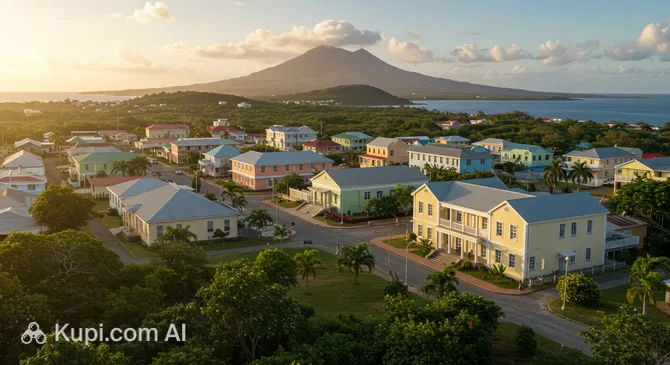
Brades serves as the vibrant, albeit small, administrative center of Montserrat. As the de facto capital located in the safe northern zone of the island, this town has become the heartbeat of local life and government operations. Despite its modest size, Brades offers a unique window into the resilience and warmth of the island's community, functioning as the primary hub for commerce and daily activities.

Situated in the Saint Peter Parish, the town is characterized by its lush, green surroundings and a relaxed Caribbean atmosphere. With a population of just under 400 residents, it retains a cozy, village-like charm where everyone knows their neighbors. The transformation of this quiet settlement into the island's center of gravity is a fascinating tale; exploring the history of Brades reveals how it rose to prominence following the volcanic events that reshaped the island's geography.

Brades. Source: Kupi.Binoculars

Visitors to Brades are perfectly positioned to explore some of the island's most appealing features. The town is just a stone's throw away from Little Bay, which is being developed as a new town center and offers a picturesque waterfront with restaurants and bars. Nearby Carr's Bay provides another scenic spot for relaxation and enjoying the coastal views. The area also serves as an excellent starting point for hiking tours into the northern hills, where the "Emerald Isle" truly lives up to its name.

Whether you are stopping by for practical reasons or using it as a base to discover the rest of the island, Brades welcomes travelers with open arms. It is a place where functionality meets island hospitality, making it an essential stop on any journey through this captivating Caribbean nation.

Weather Overview

Brades enjoys a consistently warm tropical climate throughout the year, making it an inviting destination for travelers seeking sun and comfort. The temperatures are remarkably stable, generally staying between a pleasant 24°C and a warm 29°C regardless of the season. To help you pack the right gear for your trip, you can consult the detailed guide to the weather in Brades before your departure.

The heat peaks slightly in August and September, with average temperatures hovering around 27.7°C, while February is typically the coolest month, averaging about 25.1°C. Rainfall is a frequent occurrence, particularly from July to October, when travelers might encounter up to 20 wet days per month. In contrast, the period from March to May offers slightly drier conditions, with the number of rainy days dropping to around 11 or 12 per month.

Interesting Facts

Beyond the main attractions, Brades holds many fascinating secrets that highlight its unique position in the Caribbean. This unassuming town is not just an administrative center but a symbol of adaptation and resilience, offering a rare glimpse into a community that rebuilt itself against the odds.

  • A Capital by Necessity: While Brades currently serves as the capital of Montserrat, it holds this title only on a de facto basis. The official, or de jure, capital remains Plymouth, which was abandoned due to volcanic activity. This creates a unique geographical anomaly where the legal capital is a ghost town, while the functioning government operates entirely from Brades.

  • One of the World's Smallest Capitals: With a population of fewer than 400 residents, Brades is distinctively small for a seat of government. It stands as one of the tiniest functioning capitals on the globe, fostering an environment where government business is conducted with a village-like intimacy.

  • A Transitional Hub: The town was never intended to be the permanent administrative center. It was rapidly developed as a temporary solution to house essential services following the evacuation of the island's southern zone. It currently acts as a bridge until the new, purpose-built capital at Little Bay is fully completed.

  • Local Nomenclature: Visitors might hear locals refer to the area as "Brades Estate." This name harkens back to the island's history of estate divisions, reminding travelers that this now-bustling government hub was once a quiet agricultural area before history intervened.

How to Get There

Reaching this unique Caribbean destination requires a bit of planning, as there are no direct long-haul flights landing immediately in the town. Most travelers arrive via neighboring islands, turning the journey into a scenic island-hopping experience. To help you plan your logistics efficiently, you can read more about how to get to Brades and the available transport connections.

The primary gateway for international travelers is V.C. Bird International Airport (IATA: ANU), located in St. John's on the island of Antigua. It is situated approximately 58.7 km from Brades. Since this airport is on a different island, you cannot take a taxi or bus directly to Brades. Instead, this hub serves as the main transfer point where visitors catch a short connecting flight or a ferry to Montserrat. The airport handles a significant volume of passengers annually and offers connections to major cities in North America and Europe.

Another option for regional travelers is Pointe-à-Pitre International Airport (IATA: PTP), located in Pointe-à-Pitre, Guadeloupe. This airport is about 92.9 km away from Brades. It is a large facility serving over two million passengers per year, making it a key hub for the French Caribbean. Like the route from Antigua, arriving here requires arranging a subsequent transfer by sea or air to reach Montserrat.

For clarity, here is a summary of the main airports in the region that serve as transit points:

Airport Name City Passenger Traffic Km from City
Pointe-à-Pitre International Airport Pointe-à-Pitre Large 92.9
V.C. Bird International Airport St. John's Medium 58.7
Robert L. Bradshaw International Airport Basseterre Medium 79.0
Newcastle Airport Charlestown Small 61.1
F D Roosevelt Airport Oranjestad Small 113.1

Main Attractions

While Brades itself serves primarily as the administrative and commercial hub of Montserrat, its strategic location in the north places it within minutes of the island's most compelling sights. Visitors staying in or visiting Brades are perfectly positioned to explore the blend of history, culture, and nature that defines the "Emerald Isle."

Just a short distance from the town center lies Little Bay, the area currently being developed as the island’s new capital. It is a focal point for visitors, featuring a picturesque waterfront and the National Museum of Montserrat. This museum is a cultural treasure trove, offering fascinating exhibits that range from pre-Columbian artifacts to displays about the island's musical heritage and the volcanic eruptions that reshaped its history. It provides an essential context for understanding the resilience and rich traditions of the local community.

For those interested in history and coastal views, Carr's Bay is a must-visit location situated nearby. This area is home to the Carr's Bay Gun Battery, a historic fortification that dates back to the 17th century. Visitors can explore the ruins and see the old cannons that still point out to sea, serving as a silent reminder of the island's colonial past. The bay itself offers a tranquil beach setting, making it an excellent spot for a relaxing afternoon after exploring the ruins.

Although technically located a short drive away in the Salem area, the Montserrat Volcano Observatory (MVO) is the island's premier attraction and is easily accessible from Brades. It offers tourists a safe and educational vantage point to view the Soufrière Hills Volcano. The observatory features an interpretation center with interactive displays and a documentary that explains the science behind the volcanic activity. The viewing deck provides a dramatic panorama of the volcano and the Belham Valley, allowing visitors to witness the raw power of nature from a secure distance.

Nature enthusiasts will appreciate Brades' proximity to the Centre Hills, a lush forest reserve that serves as the green heart of the island. This area is crisscrossed with hiking trails that range from easy walks to challenging treks. It is the best place to spot the national bird, the Montserrat Oriole, and to immerse oneself in the island's rich biodiversity. The trails offer a refreshing escape into nature, showcasing the vibrant flora that stands in stark contrast to the volcanic landscapes in the south.

Local Cuisine

The culinary scene in Brades offers a delightful immersion into authentic Caribbean flavors, characterized by fresh ingredients, aromatic spices, and hearty, home-cooked meals. As the island's commercial hub, the town is dotted with small, unpretentious eateries and "cook shops" where the focus is on flavor and community rather than formality. Visitors will find that dining here is a relaxed affair, often providing a chance to chat with locals while enjoying some of the region's most distinctive comfort foods.

The undisputed star of the local menu is Goat Water, Montserrat's national dish. Despite its name, this is not a thin broth but a rich, savory stew made from goat meat, breadfruit, vegetables, and a secret blend of spices that typically includes cloves and thyme. It is traditionally served piping hot with crusty bread rolls or rice. While it can be found throughout the week, "Goat Water Fridays" is a beloved local institution where workers and visitors alike flock to their favorite spots to enjoy a bowl for lunch.

Seafood lovers will appreciate the fresh catches brought in daily from the nearby waters. Saltfish and Ducana is another must-try combination that perfectly balances savory and sweet notes. Ducana is a dumpling made from grated sweet potato, coconut, and spices, boiled in a banana leaf, which pairs firmly with the salted cod and sautéed vegetables. For a lighter option, you can often find grilled mahi-mahi or lobster, particularly in the restaurants that overlook the coast near the town's edge.

When it comes to beverages, the adventurous traveler might be tempted to try Bush Rum. This is a potent local spirit infused with various indigenous herbs and barks, each recipe unique to its maker. It is often consumed as a shot and is known for its strength. For a refreshing non-alcoholic alternative, the island produces excellent homemade ginger beer and seasonal fruit juices made from soursop, guava, or mango, which are perfect for cooling down in the tropical heat.

The food culture in Brades is centered around casual, friendly establishments rather than high-end dining. You are likely to find the best food at roadside snackettes and family-run restaurants where the menu changes daily based on what is fresh. Places like The People's Place are iconic for their authentic local dishes, offering a welcoming atmosphere that makes every meal feel like a gathering of friends.

Travel Tips

Visiting Brades offers a unique opportunity to experience the daily rhythm of Montserrat's resilient community, but its small size and specific location require a bit of practical know-how. These tips are designed to help you navigate the de facto capital smoothly, ensuring you can focus on the island's charm rather than logistical hiccups.

  1. Clothing and Gear: Pack lightweight, breathable fabrics like cotton or linen to handle the tropical warmth comfortably. Since rain showers can be sudden and frequent, especially in the afternoons, carrying a compact umbrella or a light rain jacket is essential. While the vibe is casual, swimwear should be strictly reserved for the beach; when walking around town or visiting government offices, "smart casual" is the norm and is expected as a sign of respect. If you plan to explore the nearby hiking trails, bring sturdy hiking boots, as the terrain can be uneven and muddy.
  2. Transportation: While Brades itself is small enough to navigate on foot, exploring the surrounding areas is best done by renting a car. Public transport consists of privately owned minibuses that are affordable but run on irregular schedules and mostly during the day. Taxis are available but do not use meters, so it is crucial to agree on the fare before starting your journey. There are no ride-hailing apps like Uber here, so keeping a local taxi driver's number handy is a smart move.
  3. Finances: The official currency is the Eastern Caribbean Dollar (XCD), but US dollars are widely accepted at a fixed exchange rate. Brades is the financial hub of the island, housing the main bank branches and ATMs where you can withdraw local currency. While larger establishments and hotels accept credit cards, smaller shops, "cook shops," and market vendors usually prefer cash. It is advisable to carry smaller denominations for daily purchases. Tipping around 10-15% is standard practice in restaurants if a service charge hasn't already been added.
  4. Health and Safety: Brades is located in the designated "Safe Zone" of the island, far from the active volcanic danger areas, making it a very secure place to stay. There is a pharmacy in town for basic needs, and the island's main healthcare facility is just a short drive away. The most important safety rule is to strictly obey all signage regarding the Volcanic Exclusion Zone; never attempt to enter restricted areas in the south without an official guide and police permission.
  5. Communication: English is the official language and is spoken by everyone, though you will often hear locals chatting in a lively Montserrat Creole dialect. You can easily purchase a local SIM card from the telecom provider offices located in Brades to avoid roaming charges. Wi-Fi is generally good in hotels and guesthouses, but having mobile data is useful for maps when exploring.
  6. Local Etiquette: The community in Brades is tight-knit and polite, so greeting people is a non-negotiable social norm. A simple "Good morning," "Good afternoon," or "Good night" to passersby, shopkeepers, and drivers is expected and will go a long way in earning you a warm reception. Interactions are unhurried; be patient and ready for a friendly chat rather than a quick transaction.
  7. Photography and Privacy: Be mindful when taking pictures in and around the town. It is polite to always ask for permission before photographing local residents, as people appreciate having their privacy respected. Additionally, avoid taking photos of police checkpoints or security operations at the boundaries of the Volcanic Exclusion Zone without prior consent, as these are sensitive official areas.
  8. Business Hours: Be mindful that Brades operates on a traditional schedule. Many shops and government offices close promptly at 4:00 PM or 5:00 PM, and some businesses may close for a lunch break or have half-days on Wednesdays or Saturdays. Sunday is a quiet day with most places closed, so plan your shopping and dining needs in advance.

By keeping these practicalities in mind, you will find it easy to settle into the relaxed pace of life in Brades. The town's welcoming atmosphere and functional convenience make it the perfect stress-free base for your Montserrat adventure.

Entertainment & Nightlife

Entertainment in Brades is far removed from the neon-lit chaos of major metropolitan cities. Instead, the nightlife here is defined by the Caribbean concept of "liming"—the art of hanging out, sharing drinks, and enjoying good conversation with friends. The town does not have large nightclubs or sprawling entertainment districts; rather, the evening scene revolves around cozy roadside bars, rum shops, and open-air eateries where the atmosphere is warm, welcoming, and decidedly casual.

While Brades has its own local watering holes, the heart of the area's nightlife beats strongest just a few minutes away in the Little Bay area. This developing waterfront strip serves as the primary entertainment hub for residents of Brades and the northern zone. On weekends, particularly Friday nights, the area comes alive with the sound of soca and reggae music spilling onto the street. The crowd is a friendly mix of locals, expatriates, and tourists, all mingling in a relaxed environment where shorts and sandals are the standard dress code.

For those looking to experience the local vibe, Moose's Place in Little Bay is a legendary spot that often features loud music and a lively dance floor on busy nights. It is a staple for anyone wanting to experience an authentic island party. Another popular venue is Summer Breeze, which offers a slightly more laid-back setting perfect for sipping cocktails while enjoying the cool night air near the water. These establishments typically stay open late, especially towards the end of the week, serving as the social anchors for the community.

Practicality is key when planning a night out here. Most venues do not have strict opening hours, often staying open as long as there are customers, but the peak action usually occurs between 9:00 PM and midnight. Prices are generally affordable, with local beers and spirits costing significantly less than in more tourist-heavy Caribbean destinations. Cash is king in these smaller establishments, so it is advisable to visit an ATM in Brades before heading out, as credit cards may not be accepted everywhere.

Getting around at night requires a bit of foresight. There is no Uber or regular night bus service, and flagging down a taxi on the street after dark can be difficult. The best strategy is to arrange a pickup time with a taxi driver beforehand or ask the bartender to call one for you. In terms of safety, Brades and its surroundings are considered very safe for travelers. Violent crime is rare, and walking between nearby venues in Little Bay is common, though it is always smart to stick to lit areas and avoid walking alone on unlit back roads due to uneven terrain.

During the daylight hours, entertainment shifts from social drinking to cultural and natural exploration. You won't find multiplex cinemas or amusement parks in Brades. Instead, daytime leisure is centered around the National Museum of Montserrat in Little Bay or attending local cricket matches and festivals. The town offers a slow-paced, authentic island experience where the entertainment is created by the people and the vibrant culture rather than commercial attractions.

Parks & Museums

While Brades functions primarily as the administrative hub of the island, its location offers immediate access to the lush landscapes and cultural heritage that define Montserrat. The town is nestled within the "Safe Zone," serving as a convenient gateway for exploring the verdant northern hills and the carefully preserved natural sanctuaries that have earned the country its "Emerald Isle" nickname.

A standout location for nature lovers is the Montserrat National Trust Botanic Garden, located just a short drive south in Salem. Unlike the wilder forest reserves, this space is a beautifully curated sanctuary designed to showcase the island's botanical diversity in an accessible setting. Visitors can stroll through serene pathways lined with indigenous plants, including a dedicated section for medicinal herbs traditionally used by locals. The garden also features an orchid house and areas focused on the conservation of rare species, offering a peaceful environment for learning about the island's unique flora and the efforts to protect it.

For a mix of nature and local folklore, a visit to Runaway Ghaut is essential. Situated along the roadside north of Brades, this scenic ravine is shaded by dense tropical vegetation and giant ferns, creating a cool, refreshing microclimate. It is most famous for its natural spring water and a legendary local proverb: "If you drink from this water, you will surely return to Montserrat." It is a popular, accessible stop where travelers can taste the fresh spring water and appreciate the island's mystical connection to its landscape.

Beyond these unique spots, Brades serves as a central point for visiting the island's major institutions. The Centre Hills provide a dramatic green backdrop to the town, offering extensive hiking trails for those seeking a more rugged outdoor adventure. Meanwhile, history and science enthusiasts are well-placed to visit the nearby National Museum of Montserrat in Little Bay for cultural exhibits, or the Montserrat Volcano Observatory in Salem, which provides scientific insights into the volcanic activity that has shaped the modern life of the island.

Getting Around

Public transport in Brades is straightforward and informal, reflecting the relaxed pace of life in this small administrative hub. There is no complex network of subways, trams, or large municipal buses. Instead, the primary mode of shared transportation consists of privately owned minibuses. These vans ply the main road that runs through the town, connecting it with nearby villages and the ferry terminal. They do not have designated stops in the traditional sense; rather, they operate on a "flag-and-ride" basis, picking up and dropping off passengers wherever it is safe to pull over.

The payment system is exclusively cash-based, and simplicity is the rule. There are no travel cards, mobile apps, or pre-paid passes. Fares are fixed based on the distance traveled and are very affordable. You simply pay the driver directly, usually upon reaching your destination. While the official currency is the Eastern Caribbean Dollar (XCD), US dollars are widely accepted. It is highly recommended to carry small bills or coins, as drivers may not always have enough change for large denominations.

For tourists wishing to use the minibus service, the process is easy but requires a bit of patience. To catch a bus, simply stand by the side of the main road and wave when you see a van approaching; these vehicles often have license plates starting with 'H' to distinguish them from private cars. Service is most frequent during business hours, roughly from 7:00 AM to 5:00 PM on weekdays. Be aware that operations wind down significantly in the evenings and are extremely limited on Sundays and public holidays, so you should not rely on them for late-night travel.

Given the limitations of the bus schedule, many visitors find that renting a car is the most practical alternative for getting around Brades and exploring the surrounding areas. This offers the freedom to travel at your own pace and reach trailheads or beaches that public transport does not serve. If you choose to drive, remember that traffic moves on the left side of the road, and you will need to obtain a temporary local driving permit from the police station or the car rental agency.

Taxis are another reliable option, especially for airport transfers or evening outings when buses are not running. Taxis are not metered, so it is standard practice to agree on the fare with the driver before starting your journey. While there are no ride-sharing apps like Uber available, local taxi drivers are friendly and professional, and it is common to get a driver's phone number to arrange future pick-ups during your stay. For short distances within the town center itself, walking is often the most pleasant and efficient way to get around.

Accommodation

Accommodation in Brades reflects the town's intimate and functional character, offering a distinct departure from the sprawling all-inclusive resorts found elsewhere in the Caribbean. The lodging landscape here is defined by small-scale, locally owned establishments rather than international hotel chains. Visitors can expect a selection of cozy guesthouses, bed and breakfasts, and private rental apartments. These options provide a home-away-from-home atmosphere, often managed by friendly hosts who offer a personal introduction to island life.

In terms of location, staying directly in Brades offers the utmost convenience. Accommodation within the town center places you within walking distance of supermarkets, banks, and the primary bus route, making it an excellent choice for business travelers or those without a rental car. Alternatively, many tourists prefer the scenic hillsides of the surrounding Saint Peter Parish. Properties located just a few minutes' drive from the center often feature spacious verandas, private pools, and stunning views of the Caribbean Sea, combining accessibility with tranquility.

When planning your stay, it is important to note that booking methods can be somewhat traditional. While a few properties appear on major global travel websites, many of the best guesthouses and apartments rely on direct communication. It is often more effective to contact hosts via email or telephone to secure a reservation. A crucial tip for travelers is to book well in advance if visiting during March for the St. Patrick's Festival or during the Christmas holidays, as these are peak periods when the limited inventory fills up rapidly.

The price range for accommodation in and around Brades is generally moderate. Budget-conscious travelers can find simple, clean rooms in guesthouses, while those seeking more comfort can rent fully equipped villas that fall into the mid-to-high price bracket. Luxury here is defined by privacy and space rather than white-glove service. Regarding payment, while larger establishments usually accept credit cards, smaller rentals may prefer cash in US Dollars or Eastern Caribbean Dollars. It is always advisable to confirm payment options with your host before arrival.

Nearby Cities

Because Brades is located in the compact "Safe Zone" of Montserrat, the concept of nearby cities translates to neighboring villages and settlements that are often just a few minutes' drive away. The northern part of the island functions almost as a single dispersed community, allowing travelers to easily hop between different areas to experience the distinct character of each neighborhood without long travel times.

Little Bay is perhaps the most significant neighbor, situated immediately to the north. As the island's developing capital and main port of entry, it is a hub of activity and the focal point for future growth. Visitors flock here for the picturesque waterfront, the cluster of restaurants and bars, and the cultural insights offered by the local museum. It provides a lively contrast to the administrative focus of Brades and is the primary destination for evening entertainment.

Heading south, you will find Salem, which is the most populous village on the island. It has a relaxed, residential vibe and is widely known for hosting the vibrant festivities during the annual St. Patrick's Festival. Salem is also the gateway to the Montserrat Volcano Observatory, where visitors can learn about the science behind the island's volcanic activity. Its location makes it a strategic point for viewing the Soufrière Hills Volcano from a safe distance while enjoying the lush, green surroundings.

To the far north lies St. John's, a quieter settlement that showcases the peaceful side of island life. It serves as an essential residential area and offers scenic drives with elevated views of the ocean. Due to the island's small size, traveling between Brades, Little Bay, Salem, and St. John's is effortless, typically taking less than 15 to 20 minutes by car. This proximity allows tourists to enjoy a diverse range of experiences—from history and nightlife to nature and relaxation—within a very short radius.

Shopping & Souvenirs

Shopping

Shopping in Brades offers a relaxed and functional experience that reflects the town's role as the practical heart of Montserrat. Unlike the bustling commercial hubs of larger Caribbean islands, you will not find duty-free luxury promenades or high-end designer boutiques here. Instead, the retail scene is intimate and community-focused, catering primarily to the daily needs of residents while offering visitors a chance to discover unique, locally made treasures. The atmosphere is unhurried, allowing for friendly interactions with shopkeepers who are often happy to share the stories behind their products.

While Brades serves as the island's administrative center, the grocery landscape is somewhat dispersed. Within the town itself, you will find smaller, convenient retail spots such as Ashok's Supermarket and the various stores located at the BBC Complex, which offer essential items and basic supplies. For a more extensive grocery haul, visitors typically make a short drive to the neighboring villages. The larger supermarkets, such as Ram's in Salem and Victor's in Davy Hill, are located just a few minutes away and stock a surprising range of imported goods and fresh produce.

Travelers looking for large-scale shopping malls will find that such complexes do not exist in Brades. The retail infrastructure is composed of standalone shops and small commercial plazas rather than sprawling centers. These smaller complexes often house a mix of offices and stores, providing a one-stop location for basic services. The charm lies in the small-scale nature of these establishments, where the service is personal and the pace is easygoing.

While there is no massive central market in Brades itself, the spirit of the Caribbean market is alive in the form of roadside stalls and small vendors scattered throughout the area. On weekends and busy mornings, you can find local farmers selling fresh produce directly from their stands. These are the best places to purchase seasonal tropical fruits like mangoes, papayas, and the island's famous breadfruit. For a more formal market experience, visitors often make the trip to the market stalls in the nearby Little Bay development, where fresh fish and vegetables are regularly available.

For those seeking souvenirs to take home, Brades and its surroundings offer distinctively Montserratian items. The most iconic gifts are those connected to the island's volcanic identity, such as soaps and beauty products made with volcanic ash or sand. Another must-buy is the local hot sauce, renowned for its fiery kick and flavor, often made from scotch bonnet peppers grown in the island's rich soil. You can also find jars of homemade guava jelly, local honey, and "bush tea" blends. Local artisans also create jewelry and pottery that reflect the island's resilience and culture.

Business hours in Brades generally follow a traditional schedule. Most shops open around 8:00 AM or 9:00 AM and close by 4:00 PM or 5:00 PM on weekdays. It is common for smaller businesses to close early on Wednesdays and Saturdays, and almost everything is closed on Sundays, so it is wise to plan your shopping for the week in advance. While the larger supermarkets and businesses accept major credit cards, cash is the preferred method of payment for smaller shops and roadside vendors. The Eastern Caribbean Dollar (XCD) is the official currency, but US Dollars are widely accepted at a fixed exchange rate.

Regarding tax-free shopping, Montserrat does not operate a VAT refund scheme for tourists comparable to those in Europe. The prices you see on the shelf are typically what you pay. However, the cost of locally produced goods is often very reasonable, making it easy to support the local economy without breaking the bank.
Reached the end of the page?

That means the route is fully explored