Support

Kathmandu Durbar Square

About

Durbar Square is the historical and cultural heart of Nepal, located in the very center of the old city of Kathmandu. This is where the most important state and religious events have taken place for centuries, and today it remains one of the country's most popular tourist attractions. The square is a unique complex of ancient temples, palaces, and courtyards demonstrating the splendor of traditional Nepalese architecture.
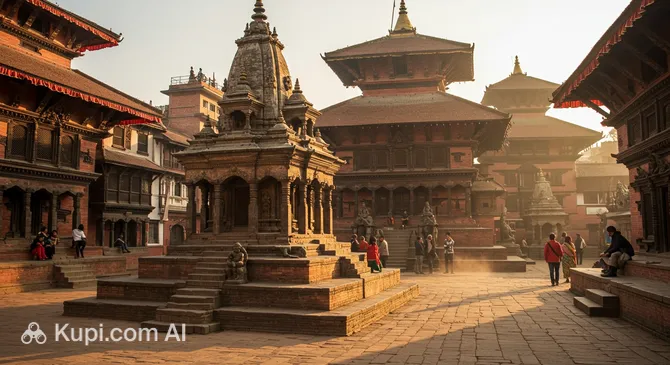
Kathmandu Durbar Square. Illustration.
Source: Kupi.com AI

Traveler photos:

Historically, Durbar Square served as the primary royal residence for the rulers of the Malla and Shah dynasties. It was here that the solemn coronation ceremonies of Nepalese monarchs were held, highlighting its exceptional significance in the nation's history. Every corner of the square is steeped in the spirit of the past, and its numerous buildings hold the memory of former greatness and major historical events.

Today, Kathmandu Durbar Square is a UNESCO World Heritage site. Visitors can spend hours exploring its territory, admiring the intricate wood carvings, stone sculptures, and majestic pagodas. It is not just an attraction, but the living heart of the city, where religious ceremonies and festivals are still held, allowing travelers to touch the unique culture of Nepal.

Contacts

Kathmandu Durbar Square is a vast open-air historical complex, so it does not have a single contact phone number or email address. All necessary information for tourists is available on-site. The square is easy to reach as it is located in the historic city center, within walking distance of the popular Thamel tourist district.

There is an entrance fee, and tickets can be purchased at designated booths located at the entrances to the square. The funds collected are used to maintain and restore this unique UNESCO World Heritage site. For additional information, such as the opening hours of museums within the complex, it is best to consult the official Kathmandu tourism portals or check details on-site.

How to contactContact
AddressKathmandu 44600, Nepal

What to Do

A visit to Durbar Square is a true immersion into history and architecture. You can spend hours walking here, exploring dozens of unique historical buildings, including ancient temples and palaces. Among the square's main treasures is the former royal palace Hanuman Dhoka, which consists of an entire complex of courtyards and buildings. No less interesting is the Kasthamandap temple—a legendary structure which, according to tradition, was built from the wood of a single tree. Each building is decorated with skillful carvings and holds a piece of centuries-old history.

To gain a deeper understanding of the cultural and historical significance of this site, it is worth hiring a guide. A professional storyteller will help you not just see the buildings, but also hear fascinating legends associated with the deities and kings who ruled in Kathmandu. This is a great opportunity to learn about the symbolism of architectural details that are easily missed during a self-guided tour, turning your walk into a meaningful journey through time.

Durbar Square is not just an open-air museum, but the living heart of the city. Colorful festivals, religious ceremonies, and traditional processions are regularly held here, allowing guests to witness the vibrant culture of Nepal. Of particular interest is the Kumari Ghar temple, home to the Living Goddess Kumari, who can be seen at her window during specific hours. Observing rituals or festivals adds a special atmosphere to the visit and leaves an unforgettable impression.

Getting There

Durbar Square is located in the historic heart of Kathmandu, making it very convenient to visit. If you are staying in the popular tourist district of Thamel, the square is an easy walk. The stroll will take no more than 15–20 minutes and will allow you to enjoy the atmosphere of the old city, its narrow streets, and colorful local life.

For those who prefer transportation, several options are available. City buses and microbuses run regularly to the square and are the most budget-friendly way to get around. Additionally, you can always take a taxi, which will quickly bring you to your destination. For those who love exploring the city on their own, renting a bicycle is an excellent solution.

To avoid getting lost in the labyrinth of streets, use the old Hanuman Dhoka royal palace as your main landmark. This famous structure is part of the Durbar complex and is well known to all locals, who will be happy to show you the way to the main square of the capital of Nepal.

Nearest city: Kathmandu

History & Facts

The history of Kathmandu Durbar Square dates back to ancient times, making it one of the most significant historical sites in Nepal. Although most of the surviving structures date from the 12th to the 18th centuries, the first buildings on this site were established as early as the 3rd century by the Licchavi dynasty. This highlights that the square was an important center long before Kathmandu attained capital status.

The most active development of the square occurred during the reigns of the Malla and Shah dynasties, who adorned it with new palaces, temples, and elegant courtyards. A key moment in history was the 18th century, when ruler Prithvi Narayan Shah unified the country and made Kathmandu the capital. It was then that the square finally established its status as the nation's primary political and cultural center, where all coronations of Nepalese monarchs took place.

Throughout its centuries-long history, the square has repeatedly suffered from devastating earthquakes, including the major 1934 earthquake, but it was carefully restored each time. In recognition of its exceptional cultural and historical value, Durbar Square was included in the UNESCO World Heritage list in 1979, forever securing its status as a global treasure.

Time Needed

To get a general overview of Kathmandu Durbar Square and see its main attractions, it is worth setting aside 2 to 4 hours. This time will be enough to leisurely stroll through the complex, admire the facades of ancient temples and palaces, and feel the unique atmosphere of this historical site.

If you plan a deeper immersion into history and culture, allow more time. Visiting the museums located within the former royal palace or taking a guided tour can easily take an additional couple of hours. A guide will help you notice important details and tell fascinating stories hidden behind the carved windows and stone sculptures.

Ultimately, it all depends on your pace and interests. Durbar Square is not a place to rush. Many travelers find pleasure in simply sitting on the steps of one of the temples and watching the world go by. Therefore, it is better to plan your visit with some extra time to fully enjoy this iconic Kathmandu landmark.

Working Hours

Kathmandu Durbar Square is open to visitors year-round, as it is a vast open-air complex. Access to the square itself is usually possible daily from early morning until late evening, allowing guests to enjoy its views at a convenient time. However, please note that the opening hours of individual temples and museums within the grounds may vary and change depending on the season or special ceremonies.

Advance booking for entry to the square itself is not required—tickets can be purchased at the entrance booths. Nevertheless, if you plan to visit the internal museums, such as the one in the Hanuman Dhoka Palace, or join an organized tour, it is recommended to check their schedules and possible booking requirements in advance. The most up-to-date information on opening times and visiting conditions is always best checked on official Kathmandu tourism portals or directly on-site.

Nearby

A visit to Durbar Square is just the beginning of your introduction to the rich culture and history of Kathmandu. The surroundings are filled with equally interesting places that allow you to dive deeper into the city's atmosphere. A walk through the nearby streets can lead to unexpected discoveries, from hidden courtyards and ancient temples to cozy cafes and souvenir shops.

Exploring the attractions located within walking distance will significantly enrich your experience. Near the square, you will find both iconic cultural sites and places where you can relax and enjoy local cuisine. This is a great opportunity to get a more complete picture of life in the capital of Nepal.

NameDistance
Dharahara0.6 km
Yala Cafe & Coffee Shop1 km
Sicily by Ts1.1 km
Children's Amusement Park1.2 km
Jasper Restaurant1.2 km
Museum of Nepali Art1.2 km
The Last Resort1.2 km

Have you reached the end of the page?

So the route has been studied inside and out