Support

Bhagawan Pau

About

Bhagawan Pau is an ancient historical site located in the heart of Kathmandu, the capital of Nepal. It is not just a pond, but a sacred site with deep religious significance for locals, especially followers of Hinduism. The name "pau" itself translates from Nepali as "pond" or "pool," emphasizing its central role.
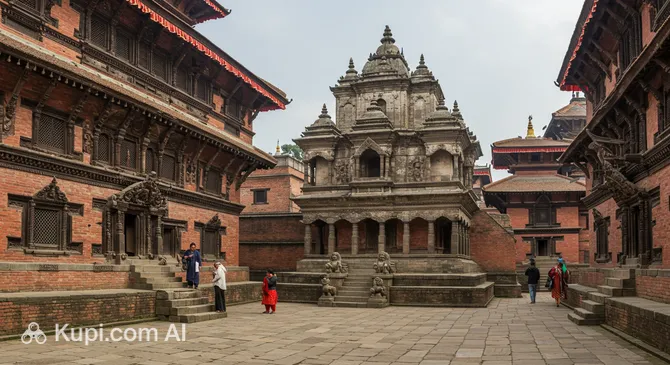
Bhagawan Pau. Illustration.
Source: Kupi.com AI

Traveler photos:

Surrounded by traditional Nepalese architecture, Bhagawan Pau is a tranquil corner where you can touch ancient traditions. Around the pond, you can see skillfully crafted stone sculptures of various deities, each telling its own story and adding a special atmosphere to the place.

As an integral part of the Kathmandu Valley's rich cultural heritage, Bhagawan Pau vividly reflects the region's deep religious beliefs. It is a place where ritual ablutions and prayers have been performed for centuries, making it an important center of spiritual life for many Nepalis.

Small temples and shrines dedicated to various Hindu deities complement the architectural ensemble around the sacred pond. A visit to Bhagawan Pau provides an opportunity not only to see a unique historical monument but also to feel the spirit of ancient Nepal.

Contacts

Bhagawan Pau is a public historical and religious site, so it does not have a dedicated administration or direct contact details. For up-to-date information on visiting, potential tours, or cultural events related to the site, it is recommended to contact the tourist information centers in Kathmandu or official Nepal tourism resources.

You can try to clarify details through the following contacts:

How to contactContact
AddressSwayambhu Cir Rd, Kathmandu 44600, Nepal

What to Do

A visit to Bhagawan Pau in Kathmandu offers a unique opportunity to experience the living traditions of Nepal. The main draw for travelers is the chance to observe locals performing puja (prayer ceremonies) and ritual ablutions. This allows for a deeper understanding of the significance of water in Hindu religious practices and immersion in the country's authentic culture.

Bhagawan Pau is also a real find for architecture lovers and photographers. Around the sacred pond, you can see exquisite examples of traditional Nepalese wood and stone carving, statues of various deities, and numerous religious symbols. Every element here carries its own meaning, creating a special, spiritualized atmosphere. By carefully studying the details, visitors can discover many interesting things about local beliefs and art.

In addition to the pond itself, it is worth taking the time to explore the nearby temples and shrines that are an integral part of this complex. To fully experience the spirit of this place and see how locals perform their daily rituals, it is recommended to come here early in the morning. At this time, the atmosphere of Bhagawan Pau is particularly peaceful and conducive to contemplation.

Getting There

Bhagawan Pau is conveniently located in the central part of Kathmandu, in the immediate vicinity of the popular tourist district of Thamel. This makes it easily accessible for most travelers staying in this part of the city. One of the most pleasant ways to reach the attraction is by walking. If you are in the Durbar Square area, the walk will take approximately 15-20 minutes. This route allows you to enjoy the authentic streets of Kathmandu and get a better feel for the city's atmosphere.

For those who prefer a faster and more comfortable way to get around, taxis or motor rickshaws are always available. They can be easily found anywhere in the city. A taxi ride from central Kathmandu to Bhagawan Pau will cost around 200-300 Nepalese rupees; however, it's worth remembering the local tradition of bargaining. To avoid this and get a more predictable price, you can use popular ride-hailing apps in Kathmandu like Pathao or Tootle.

Although Kathmandu has a public transport system including local buses and microbuses (tempos), it may not be very convenient for tourists unfamiliar with local routes and specifics. Stops are not always clearly marked, and transport information is mostly available only in Nepali. Therefore, if you value your time and comfort, walking or taking a taxi is recommended for visiting Bhagawan Pau.

Nearest city: Kathmandu

History & Facts

Bhagawan Pau in Kathmandu is more than just an ancient pond; it is a site with centuries of history deeply woven into the religious and cultural traditions of the Kathmandu Valley. It is believed to have been constructed several centuries ago and originally served as an important part of the city's water supply system. Over time, the site acquired a special sacred significance, becoming an integral part of the spiritual life of the capital of Nepal.

In Nepalese culture, water reservoirs known as "pau" traditionally played a dual role: they were not only vital sources of water but also centers for religious ceremonies and rituals. The name Bhagawan Pau itself speaks to its importance: "Bhagawan" in Sanskrit means "God" or "Lord." Local legends say the pond was consecrated and named after one of the manifestations of a supreme deity, highlighting its sacred status.

Over the centuries, Bhagawan Pau enjoyed the patronage of local rulers and wealthy families. They contributed to its preservation and improvement, leading to the appearance of graceful sculptures, small temple structures, and other architectural elements that enriched its appearance. Notably, Bhagawan Pau survived several earthquakes, including the devastating 2015 earthquake. Following this, extensive restoration work was carried out to preserve this important cultural heritage for future generations.

Time Needed

To fully experience Bhagawan Pau in Kathmandu, it is usually recommended to set aside about 1-2 hours. This amount of time is generally enough to explore the sacred pond itself, take a close look at the surrounding temples and architectural details, and observe local religious practices that are an integral part of this site.

During this time, you can take a leisurely stroll through the area, take memorable photos, and feel the special atmosphere of this historical and spiritual center. If you are a photography enthusiast and plan to capture every nuance and play of light, or if you want to immerse yourself deeper into a meditative state and observe the rituals, you can certainly spend more time here, enjoying the peace and tranquility of this unique corner of Nepal.

Working Hours

Bhagawan Pau, like many religious shrines in Nepal, is usually open for visits daily from early morning until late evening. The most active time to visit, when you can observe temple life, is from 6:00 AM to 7:00 PM. It is especially atmospheric here in the early morning, around 6:00 AM to 8:00 AM, when locals come for morning rituals, or in the evening, from 5:00 PM to 7:00 PM, during evening ceremonies. The attraction is open for visits year-round.

As a rule, no advance booking is required to visit such places, and admission is free. However, please note that special opening hours may be set during major Hindu holidays, and special ceremonies attracting large numbers of worshippers may take place. During such periods, it is recommended to check for current information on-site or with local guides to plan your visit in the best possible way.

Open 24 hours

Nearby

A visit to Bhagawan Pau is undoubtedly a highlight of your trip to Kathmandu. However, to make your experience even more complete and multifaceted, it is worth paying attention to nearby attractions. Exploring the surrounding area will allow you to dive deeper into the city's atmosphere, discover new interesting places, and better understand the culture of Nepal.

There are several noteworthy sites near Bhagawan Pau that can complement your itinerary. Below is a list of some of them, along with approximate distances.

NameDistance
Swayambhunath Stupa0.3 km
National Museum of Nepal1 km
Soaltee Kathmandu1.5 km
Carpe Diem Lounge & Bakery1.5 km
Kathmandu Grill Restaurant1.6 km
Museum of Nepali Art1.6 km
Sicily by Ts1.7 km

Have you reached the end of the page?

So the route has been studied inside and out