Support

Boudhanath Stupa

About

Boudhanath Stupa, also known as Boudha, is one of the most significant and revered Buddhist shrines in the world. Located in the eastern part of Kathmandu, the capital of Nepal, this stupa is not only a major pilgrimage center for Buddhists, especially of the Tibetan tradition, but also a UNESCO World Heritage site. This place attracts both believers and travelers from all over the world with its unique atmosphere and spiritual power.
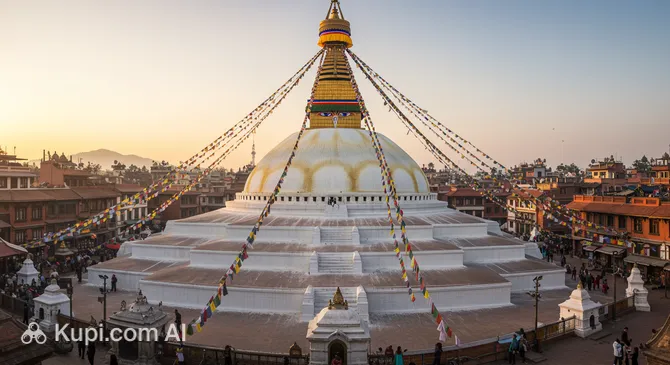
Boudhanath Stupa. Illustration.
Source: Kupi.com AI

Traveler photos:

The stupa's architecture is striking in its grandeur and symbolism. A massive white hemisphere, symbolizing a mandala and the element of water, is crowned by a gilded tower (harmika), from each of the four sides of which the all-seeing eyes of the Buddha look at you. These eyes, which have become the landmark's signature, watch over the world, radiating wisdom and compassion. The spire, consisting of 13 steps, represents the path to enlightenment.

A special atmosphere of peace and spirituality reigns around the stupa. Believers and tourists perform a kora—a ritual clockwise circumambulation, spinning prayer wheels and counting beads. This is a place where you can touch the living traditions of Buddhism, feel the energy of the ancient shrine, and enjoy the harmony of proportions and the richness of symbolism.

A visit to Boudhanath Stupa is not just about sightseeing, but a deep immersion into the spiritual culture of Nepal. Surrounded by numerous monasteries, shops with ritual items, and cozy rooftop cafes offering magnificent views, the stupa is an entire world living at its own special pace.

Contacts

Boudhanath Stupa is a large open-air religious complex, so it does not have a single contact center for tourists. It is best to check the current opening hours (usually from early morning until evening) and the entrance fee on-site. You can reach the stupa from the Thamel tourist district by taxi in about 20–30 minutes or by local bus. The address of the attraction is Boudhanath, Kathmandu 44600.

How to contactContact
AddressKathmandu 44600, Nepal

What to Do

A visit to the Boudhanath Stupa is an opportunity not just to see an ancient shrine, but to immerse yourself in a living spiritual tradition. The main activity for pilgrims and guests is performing "kora," a ritual clockwise circumambulation of the stupa. During this meditative walk, you can spin the numerous prayer wheels containing mantra scrolls, thereby, according to beliefs, purifying karma and setting the prayer in motion. This is a wonderful way to feel the peaceful energy of the place and observe the life of monks and believers from all over the world.

The area around the stupa is a world full of discoveries. There are many Tibetan monasteries of various schools and traditions here, and some of them can be entered. The square is surrounded by three- and four-story buildings where life is bustling: numerous souvenir shops and stores are in operation. There, you can find everything from traditional Tibetan jewelry, singing bowls, and incense to handmade crafts and ritual items. This is a great place to buy authentic souvenirs.

During major Buddhist holidays, Boudhanath becomes the center of spectacular ceremonies, when the stupa is decorated with thousands of butter lamps and colorful flags. Additionally, the square around the shrine is famous for its cafes and restaurants, many of which are located on rooftops. From here, you have a magnificent panoramic view of the stupa. Visitors can relax, enjoy a cup of masala tea or local cuisine, soaking in the unique atmosphere of this sacred place.

Getting There

Boudhanath Stupa is located in the eastern part of Kathmandu, about 7–8 kilometers from the central districts, making it easily accessible. The most convenient and popular way to reach this iconic site is by taxi. A trip from the Thamel tourist area or Tribhuvan International Airport will take from 20 to 30 minutes, depending on traffic conditions. This is a relatively fast and inexpensive option preferred by most tourists for its comfort and simplicity.

For those looking for more budget-friendly ways or wanting to dive deeper into local life, there are alternatives. You can use public transport—shuttle buses and minibuses run to the stupa from various parts of the city, such as Ratna Park. You can also take a rickshaw. If you are staying nearby and enjoy walking, the route from the Thamel district to Boudhanath takes about an hour and allows you to better experience the atmosphere of the capital of Nepal.

Nearest city: Kathmandu

History & Facts

The history of the Boudhanath Stupa is shrouded in mystery, and the exact date of its founding is still unknown. Most historians agree that the shrine was built after the 6th century, during a period when the Tibetan ruler Songtsen Gampo promoted the spread of Buddhism in the region. Several beautiful legends are associated with the stupa's origin. One of the most famous tells of a woman and her four sons who received permission from the king to build the shrine and were able to complete this grand project. This story highlights the folk origins and the deep faith invested in the founding of Boudhanath.

Another historical version links the construction of the stupa to the 5th century and the reign of Raja Mandeva of the Licchavi dynasty. According to this theory, the sanctuary was built during difficult times of a great drought, when people sought spiritual protection and hope for salvation from crop failure. Regardless of which version is true, it is evident that from the very beginning, the stupa was a place of immense spiritual power and attraction for believers.

Over the centuries, the stupa has been repeatedly restored and expanded, allowing it to preserve its grandeur to this day. Its role as a major spiritual center grew especially in the 20th century when thousands of Tibetan refugees arrived in Nepal. It was then that Boudhanath finally established its status as the heart of Tibetan Buddhism outside of Tibet, becoming home to many monasteries and communities. Today, it is not just an ancient monument but a living center of pilgrimage where past traditions continue to flourish in the heart of Kathmandu.

Time Needed

To fully experience the Boudhanath Stupa in Kathmandu, it is recommended to set aside approximately 2–3 hours. This is usually enough time to leisurely walk around the shrine's grounds, performing the traditional "kora" (ritual circumambulation), visit several of the surrounding monasteries, and take wonderful photos. Such a visit will allow you not only to see the architecture but also to truly feel the unique spiritual atmosphere of this place, which is the center of Tibetan Buddhism in Nepal.

Your time here may vary depending on personal interests. If you want to dive deeper into the culture, you can look into the numerous monasteries located around the perimeter of the square. Many travelers also linger in one of the rooftop cafes, which offer a magnificent panoramic view of the stupa. Such a break with a cup of tea can easily add another hour to your stay. While a quick look is possible in an hour, it is precisely 2–3 hours that allow for a full and memorable impression of Boudhanath, enjoying its peaceful energy without rushing.

Working Hours

Boudhanath Stupa in Kathmandu is open to visitors year-round, allowing you to experience this shrine at any time. As a rule, access to the complex is open daily from early morning until late evening. Approximate opening hours are from 6:00 AM to 8:00 PM, although they may change depending on the season, as well as during major religious holidays and festivals when the stupa becomes the center of vibrant ceremonies.

Pre-booking tickets for a visit to Boudhanath Stupa is usually not required—they can be purchased at the ticket office at the entrance. Nevertheless, it is always useful to check current information regarding opening hours and possible changes to the schedule on travel portals or with local guides immediately before your visit. This is particularly important if you plan to visit during Nepal's national holidays to ensure your visit is as comfortable as possible.

Open 24 hours

Nearby

Visiting Boudhanath Stupa is just the beginning of discovering the rich spiritual heritage of Kathmandu. The surroundings of the stupa are filled with other significant places that allow for a deeper immersion into the culture and history of Nepal. A walk through nearby temples and monasteries will enrich your experience and show the multifaceted religious life of the capital.

Exploring neighboring attractions won't take much time, as many of them are within walking distance or a short drive away. This is a great opportunity to create a more complete and vibrant itinerary through one of the city's most interesting districts.

NameDistance
Guhyeshwari Temple1.4 km
Pashupatinath Temple1.8 km
Kopan Monastery2.4 km
Maitidevi Temple3.3 km
Eyeplex Mall4.1 km
Singha Durbar4.6 km
Kathmandu Fun Park4.7 km

Have you reached the end of the page?

So the route has been studied inside and out