Support

Dharahara

About

Dharahara (Nepali: धरहरा), also known as Bhimsen Tower, is a famous historical watchtower rising in the heart of Kathmandu, the capital of Nepal. For many years, it was one of the city's most recognizable symbols and an important architectural landmark, attracting both locals and travelers from all over the world.
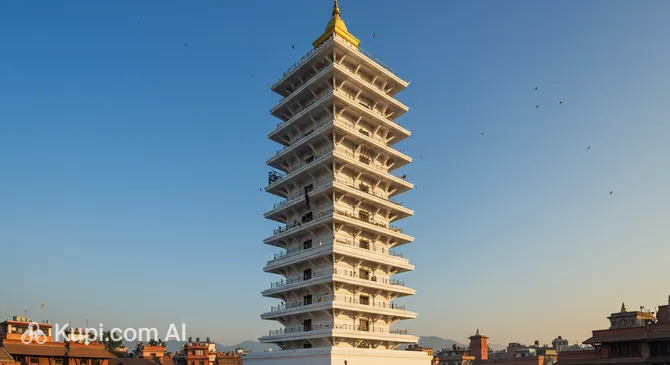
Dharahara. Illustration.
Source: Kupi.com AI

Traveler photos:

Originally, the Dharahara tower reached an impressive height of 61.88 meters, making it one of the tallest structures in Nepal at the time. Its slender silhouette was visible from afar, serving as a landmark and a point of pride for the city's residents.

Built in the first half of the 19th century, Dharahara served as a lookout and observation point. Breathtaking panoramic views of the sprawling Kathmandu below and the picturesque surroundings of the valley unfolded from its upper levels. Climbing the tower was a popular activity, allowing visitors to appreciate the beauty of the Nepalese capital from a bird's-eye view.

Contacts

To obtain up-to-date information about visiting the Dharahara Tower, including opening hours and any potential restrictions, it is recommended to consult the official tourism portals of Kathmandu or Nepal. You can also find helpful information on-site at the city's tourist information centers.

How to contactContact
AddressSundhara Rd, Kathmandu 44600, Nepal
Websitedharahara.gov.np

What to Do

The main activity when visiting Dharahara has traditionally been climbing to its summit. Inside the tower is a spiral staircase with over two hundred steps leading to the observation deck. After making the climb, visitors are rewarded with the chance to admire the surrounding views.

From the Dharahara observation deck, an impressive panoramic view of the historic center of Kathmandu opens up. On a clear day, you can also see the majestic mountain landscapes surrounding the Nepalese capital. This spot provides a unique opportunity to appreciate the city's scale and its setting within the valley.

Nearby is the Tundikhel area, known for its fountains and other historical sites. After exploring Dharahara, tourists can stroll through this district, visit numerous shops, or relax in one of the local cafes. The tower itself is also a popular spot for photo shoots, allowing you to capture yourself against the backdrop of this iconic structure and get to know the architectural heritage of Nepal.

Getting There

Getting to the Dharahara Tower in Kathmandu is quite simple, as it is located in the very heart of the city, in close proximity to key transportation hubs. This makes it easily accessible from any part of the capital of Nepal. One of the most convenient ways is by taxi, which will quickly take you to the base of the tower.

If you prefer public transport, many bus routes pass near Dharahara. It is especially easy to reach the tower from the popular tourist district of Thamel, which is just a few minutes' drive away. You can check the appropriate bus numbers with locals or at your hotel.

For those who enjoy walking and want to get a better feel for the city, Dharahara is also reachable on foot from many central squares and other attractions in Kathmandu. The area around the tower is well-developed, with signs to help you find your way. This is a great opportunity to combine sightseeing with a leisurely stroll through the streets of the Nepalese capital.

Nearest city: Kathmandu

History & Facts

Dharahara, also known as Bhimsen Tower, was an iconic structure in Kathmandu, the capital of Nepal. Its history began in 1832, when the tower was built by order of Queen Lalit Tripurasundari Thapa. The construction of Dharahara was dedicated to the memory of her husband, Prime Minister Bhimsen Thapa. Originally, this majestic structure had eleven stories and rose about 76 meters above the city, serving not only as an architectural ornament but also as a symbol of its time.

Throughout its existence, Dharahara played an important role in the life of the city. In addition to its aesthetic significance as a dominant feature of the urban landscape, the tower also performed practical functions. It was used as a watchtower, offering a view of the surroundings, as well as a signal tower. After a major earthquake in 1934, the tower was reconstructed, and its height was reduced to 61.88 meters, yet it remained an essential part of Kathmandu.

Dharahara underwent restoration several times and was carefully preserved as a national heritage site of Nepal. It was popular among tourists and locals alike, who climbed to its observation deck to enjoy panoramic views of the capital. Unfortunately, the tower's history took a tragic turn on April 25, 2015, when it was completely destroyed by a powerful earthquake, leaving a deep mark in the hearts of Nepalis and all those who had the chance to witness its greatness.

Time Needed

To visit the Dharahara Tower in Kathmandu and explore its surroundings, a relatively short amount of time is usually sufficient. Most tourists spend about 1–1.5 hours here. This is typically enough time to climb to the observation deck, enjoy panoramic views of the city, and head back down.

This time includes not only the climb and descent via the tower's staircase but also the time you will spend at the top admiring the views and taking photos. You can also take a short walk around the tower's grounds to view it from the outside and snap a few commemorative pictures. If you don't plan on an extensive photo shoot or a long, meditative gaze at the city from above, an hour and a half will be quite enough.

Of course, if you want to spend more time on the observation deck, study every corner in detail, or simply enjoy the moment at a slow pace, your visit may take a bit longer. However, for a standard introductory visit to Dharahara, the specified interval is quite adequate.

Working Hours

Following the devastating 2015 earthquake, the Dharahara Tower was rebuilt and reopened to visitors. Exact opening hours may vary, so it is highly recommended to check for current information before your visit to Kathmandu. The best way is to check the attraction's official website, if one exists, or visit local tourist information centers upon arrival. Typically, such iconic sites are open throughout the day, but the schedule may change depending on the season or special events.

Regarding the need for advance ticket booking for the rebuilt Dharahara, it is also worth checking this in advance, especially if you plan your trip during the peak tourist season. Some popular sites may offer online booking or have a limited number of tickets for specific times. While historical monuments generally aim to be accessible to guests year-round, it is always useful to double-check these details to ensure your visit to Dharahara goes smoothly and leaves only pleasant impressions.

10:00 – 17:00

Nearby

Visiting Dharahara is undoubtedly a highlight of any trip to Kathmandu. However, to make your experience even richer and more complete, it is worth exploring the attractions located nearby. Discovering the surrounding area will allow you to dive deeper into the city's atmosphere, find new interesting spots, and get a more comprehensive view of the cultural and historical heritage of the capital of Nepal.

There are several noteworthy sites near Dharahara that deserve your attention. Below is a list of some of them, including the distance, to help you plan your itinerary.

NameDistance
Kathmandu Durbar Square0.6 km
Children's Amusement Park0.7 km
Kathmandu Fun Park0.8 km
Singha Durbar1.2 km
Yala Cafe & Coffee Shop1.3 km
Jasper Restaurant1.5 km
Sicily by Ts1.5 km

Have you reached the end of the page?

So the route has been studied inside and out