Support

Coromandel

Attractions

About

Coromandel is a picturesque and cozy town, tucked away among the emerald hills of the namesake peninsula on the North Island. It stretches along the Pacific coast, offering travelers an ideal sanctuary from the hustle and bustle of city life. This is a place where New Zealand reveals its most relaxed and creative side, immersing guests in the wonderful atmosphere of the "edge of the world."

Coromandel. Illustration.
Source: Kupi.com AI

Even though the town is only a couple of hours' drive from busy Auckland, a completely different, leisurely pace of life prevails here. With a population of about 1,500 people, Coromandel retains the charm of a small coastal community where everyone knows each other. Narrow streets and historic architecture recall the region's past: the fascinating history of Coromandel is inextricably linked to the gold rush and timber milling eras, giving walks here a special nostalgic charm.

Today, the town attracts artists, craftspeople, and adventure seekers. It serves as the main starting point for exploring the peninsula's natural wonders: from mysterious trails through thick tropical forests to famous beaches where hot underground springs bubble up. In the town itself, it's worth taking time to visit local art galleries, enjoy a cup of coffee in cozy cafes, and take deep breaths of the fresh sea air.

Coromandel is worth visiting to slow down and experience true harmony with nature. It is an ideal destination for those seeking inspiration, who love long walks and dream of enjoying magnificent sunsets and silence away from the noise of major cities.
Weather Overview

Coromandel's climate is mild and temperate, making this region comfortable to visit at any time of year. Thanks to the influence of the ocean, there is no exhausting heat or severe frost here. The warmest period is the summer months — January and February, when the average temperature stays around 20°C, and the air warms up to 21.6°C during the day. This is the best time for beach holidays and exploring nature trails.

With the arrival of autumn and winter, it gets cooler, but temperatures rarely drop to extreme values. The coldest months are July and August, when average figures are around 12.5°C, and night minimums are within 11°C. Rainfall is distributed throughout the year; however, from April to August, rain falls more frequently — up to 14 rainy days per month, while in summer, the number drops to 9–10.

Expect a warm and comfortable summer with moderate humidity and mild winters that, despite frequent rain, maintain temperatures above freezing. Since conditions can change, it will be useful to check what the predicted weather in Coromandel is before your trip so you can choose the right clothing for your walks.

Average monthly temperature

Average monthly precipitation

Interesting Facts

Beyond its main attractions, Coromandel holds many fascinating secrets that reveal themselves only to the most curious travelers. This town wonderfully combines the spirit of adventure from past centuries with the peaceful beauty of nature.
  • Legacy of the "Gold Rush." In the 19th century, Coromandel was a magnet for thousands of prospectors dreaming of striking it rich. Local legends say that undiscovered treasures are still hidden in the vicinity, and traces of that era can be seen not only in museums but also in abandoned mines scattered across the hills.

  • Cinematic Fame. The famous Cathedral Cove, with its giant natural arch of white sandstone, served as a backdrop for the film "The Chronicles of Narnia." You can only reach this magical world on foot or by kayak, making a visit here a real little adventure.

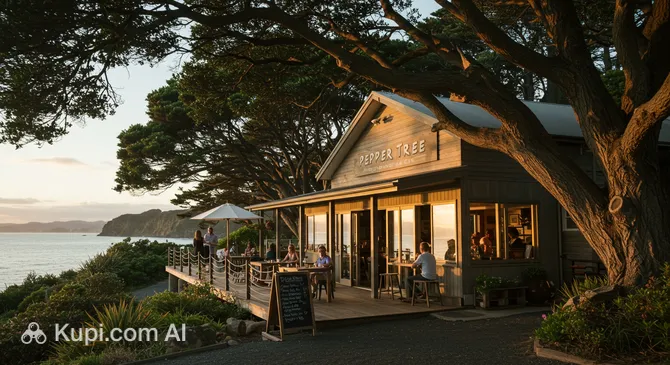
  • Living Architectural History. The town has managed to preserve its Victorian-era charm: many old buildings have been carefully restored and turned into guesthouses or dining locations. A striking example is the Pepper Tree Restaurant and Bar, which occupies a historic mansion and allows guests to experience the atmosphere of the past.

  • Stellar Sanctuary. Coromandel is famous for its incredibly dark skies, free from urban light pollution. This is one of the best places in the country for astro-tourism: locals proudly talk about their "starry" nights, and watching the sunrise on the ocean shore has become a kind tradition here.

Pepper Tree Restaurant and Bar. Illustration.
Source: Kupi.com AI

Traveler photos:

How to Get There

Coromandel is located on a secluded peninsula, and the journey here is already the start of an exciting trip along the scenic roads of New Zealand. Since there is no airport or train station in the town itself, most tourists arrive via the major transport hubs of neighboring regions by renting a car or using bus services. You can find all the ways to get to the town on a separate page of our guide.

The main gateway for travelers is Auckland Airport (IATA: AKL). This is the country's largest international airport, receiving flights from all over the world. It is located in the city of Auckland, approximately 69 km from Coromandel in a straight line across the gulf, but the land route follows the coast and is a significantly longer distance. A car or bus trip from the airport takes about 2.5–3 hours, but you can also use the popular ferry, which will get you to the town faster and more scenically.

An alternative option is arrival via regional hubs, such as Tauranga Airport (IATA: TRG) or Hamilton Airport (IATA: HLZ). Both airports are located in neighboring cities, at a distance of about 120 km from Coromandel. A taxi or rental car transfer from there will take approximately 2–2.5 hours. These airports are convenient for those already traveling within the country.

For clarity, here is summary information on the main airports through which you can reach the region:

AirportPassenger trafficDistance
Auckland Airport18.7 mln69 km
Tauranga City Airport550 000118 km
Hamilton International Airport371 000123 km
Whangarei Airport135 000150 km
Rotorua International Airport219 948166 km

There is no rail service to the town of Coromandel, so the main modes of transport remain road and water. The ferry from Auckland is very popular, taking you directly to Hannaford’s Wharf near the town center in 2 hours, allowing you to avoid traffic and enjoy the sea views of the Hauraki Gulf.

Main Attractions

Coromandel is a town where gold rush history is harmoniously intertwined with a creative atmosphere and natural beauty. Despite its modest size, there are several unique places here that make a visit truly memorable. From engineering marvels to historical buildings, here is a list of the main attractions to include in your itinerary.

The undisputed symbol of the town and one of the most popular attractions in the entire country is the Driving Creek Railway. This unique narrow-gauge railway was built by local potter and ecologist Barry Brickell. The train journey passes through a restored forest with native kauri and rimu trees, past whimsical pottery sculptures. The end point of the route is the Eyefull Tower, which offers a breathtaking panorama of the Hauraki Gulf and islands. This place is a must-visit for tourists of all ages.

Another interesting location that combines historical value and a cozy atmosphere is the Pepper Tree Restaurant and Bar. This establishment is notable not only for its cuisine but also for being housed in a carefully restored villa from the early 20th century. Of particular note are the large veranda and the garden where an ancient Pepper Tree grows, giving the place its name. Tourists come here to feel the spirit of the colonial era and relax in the shade of the century-old garden in the heart of the town.

Pepper Tree Restaurant and Bar. Illustration.
Source: Kupi.com AI

Traveler photos:

Fans of unusual entertainment and English humor should head to The Waterworks theme park, located just a few minutes' drive from the town. This space is called a "theme park of Kiwi ingenuity." It houses many whimsical water-powered mechanisms that you can and should touch, spin, and launch. It is an ideal place for a family holiday, where adults have as much fun as children exploring funny engineering solutions surrounded by nature.

To immerse yourself in the region's past, visit the Coromandel Gold Stamper Battery. Here you can see a fully working 19th-century gold mining plant in action. Guides demonstrate the process of crushing ore and extracting gold, telling exciting stories about the times when Coromandel was the center of the gold rush. This is a living museum that allows you to vividly imagine how the first settlers of these places lived and worked.

Local Cuisine

Local Cuisine:

Coromandel's gastronomic scene is a true paradise for seafood lovers. Thanks to its coastal location, the path of products from the ocean to the plate takes a minimum of time. The foundation of the local menu is the freshest seafood, which arrives at establishments directly from fishing boats and nearby farms. The main delicacy of the region is rightfully considered to be green-lipped mussels. These giants are prepared here in dozens of ways: baked with cheese and garlic, stewed in white wine, or served in piquant sauces with fresh herbs.

Besides mussels, you should definitely try the thick and fragrant Seafood Chowder. Every establishment has its own secret recipe for this creamy soup, but generous portions of fish and shellfish with hints of lemon remain constant. For a quick and filling snack, the classic of the New Zealand coast—fish and chips—is perfect. Freshly caught fish (most often snapper or tarakihi) in crispy batter with golden potatoes becomes especially delicious if eaten right on the ocean shore while enjoying the sunset.

As for drinks, Coromandel, like all of New Zealand, is famous for its coffee culture. It is customary to start the morning here with a cup of perfectly made "flat white." In the evening, locals prefer a glass of cool white wine, such as Sauvignon Blanc, which perfectly complements the taste of seafood, or a pint of craft beer from local breweries experimenting with local ingredients.

The dining culture in the town is characterized by relaxation and a lack of pretension. Farmer's markets are popular here, where you can buy homemade cheeses, manuka honey, jams, and seasonal fruits. Street food is also held in high regard: fresh oysters and grilled scallops are common at local festivals. If you want to spend an evening in a more refined yet cozy setting, pay attention to the Pepper Tree Restaurant and Bar. This place perfectly illustrates the town's gastronomic character: a combination of historical interiors, a relaxed atmosphere, and magnificent dishes made from local products.

Travel Tips

Welcome to Coromandel! To make your journey through this picturesque corner of New Zealand as comfortable and smooth as possible, we have prepared a list of important practical recommendations. These tips will help you feel confident, avoid typical tourist mistakes, and enjoy the relaxed atmosphere of the "edge of the world" without being distracted by everyday trifles.

  1. Clothing and equipment. The weather on the peninsula is changeable even in summer. Use the layering principle: a T-shirt, a fleece jacket, and a light windbreaker/raincoat are your best protection against sudden wind or rain. The sun in New Zealand is very aggressive due to the thin ozone layer, so high SPF (50+) sunscreen, sunglasses, and a hat are mandatory even in cloudy weather. For walks on forest trails, bring comfortable closed shoes, and don't forget an adapter for Type I power sockets (with three flat pins).
  2. Transport. In the town itself, with its population of 1,500, there is no public transport, but the center is so compact that it is pleasant to explore on foot. Apps like Uber practically don't work here. For exploring the surrounding beaches and bays, it is critically important to rent a car. If you don't drive, book seats in local tourist shuttles in advance, as their schedules are limited.
  3. Finances. The currency is the New Zealand dollar (NZD). Bank cards (Visa, Mastercard) are accepted almost everywhere, including small cafes (contactless PayWave is often available). However, for purchases at farmers' markets or in tiny craft shops, it's better to have cash on hand. There are ATMs on the main street, but there aren't many. Tipping is not mandatory, but rounding up the bill or 5–10% for excellent service is appreciated.
  4. Health and safety. Coromandel is a very safe place, but keep in mind that pharmacies here close early (usually at 5:00 PM) and are not open 24/7, so bring a supply of necessary medications with you. The emergency number for help is 111. On the beaches, watch out for sandflies — their bites are very itchy, so be sure to buy a special repellent at a local supermarket. Tap water is safe to drink; it's of excellent quality.
  5. Communication. The main language is English. Locals will appreciate it if you greet them with a Maori phrase: "Kia Ora" (Kia Ora — hello/be well). It's best to buy a SIM card (Spark, One NZ, or 2degrees) immediately upon arrival at a major airport, as the choice of plans in the town may be limited. Wi-Fi is available in most cafes, but mobile reception often disappears on forest roads and in remote bays — download offline maps in advance.
  6. Local etiquette. People here live at a relaxed pace ("island time"), so don't rush the staff in cafes and don't show impatience in lines. It is customary to greet shuttle drivers and shopkeepers and smile at passersby. The attitude toward nature is very reverent: follow the "pack in, pack out" rule — take all your trash with you if there are no bins nearby.
  7. What to avoid. Don't underestimate local roads: they are narrow, winding, and often follow mountain passes. Do not exceed the speed limit, even if signs allow you to go faster — a 50 km trip can take more than an hour. Also, strictly avoid "freedom camping" in places where it is not explicitly allowed — fines for this in New Zealand are very high.
  8. Important nuance. Always check the tide times (tides). This is critically important for visiting many beaches and caves that may be inaccessible or dangerous at high tide. Also, remember that life in the town quietens down early: after 8:00 PM, finding an open restaurant (except for a couple of pubs) or an open shop will be problematic, so plan your dinner in advance.

Coromandel is a place where the soul rests and nature recharges you with energy. By following these simple but important tips, you can avoid minor troubles and fully immerse yourself in the unique atmosphere of this creative and hospitable town. May your journey be filled with bright discoveries and warm encounters!

Entertainment & Nightlife

The nightlife in the town of Coromandel fully reflects its relaxed and friendly character. Here you won't find noisy nightclubs with neon signs or large-scale discos until dawn. Instead, the town offers the cozy atmosphere of traditional pubs, bars with live music, and restaurants where evenings are spent in leisurely conversation in the company of locals and travelers. This is a place where New Zealand reveals its most hospitable side.

The main evening activity is concentrated along the main street — Kapanga Road. This is where the key establishments are located where you can relax after a day spent in nature. The atmosphere in these places is very democratic and laid-back: there is practically no dress code, and even in the evening, a casual style is quite appropriate. The crowd is a colorful mix of farmers, artists, fishermen, and tourists from all over the world.

One of the most popular spots for evening leisure is the Pepper Tree Restaurant and Bar. This establishment has a unique historical atmosphere and a magnificent garden where, in warm weather, you can enjoy a glass of local wine or craft beer under the open sky. Local musicians often play here, creating a pleasant backdrop for dinner. It is also worth visiting the historic Star and Garter hotel—the town's oldest pub, which is the true heart of social life. It's always lively here, they broadcast rugby, and serve hearty meals.

For those planning an evening out, it's important to remember a few practical points:

  • Opening hours: Life in the town quietens down quite early. Kitchens in restaurants and pubs often close by 8:00 PM–9:00 PM, although bars may stay open until midnight, especially on Friday and Saturday.
  • Prices: The cost of drinks and food is moderate. A pint of beer or a glass of wine will cost on average 10–15 NZD.
  • Safety: Coromandel is an exceptionally safe place. Night walks here carry no threats; however, streets are not brightly lit everywhere, so a phone flashlight might come in handy.
  • Transport: Public transport does not run at night. Since the town is compact, most central accommodation can be reached on foot. If you are staying further out, arrange a local taxi or transfer in advance.

As for daytime entertainment, the town offers a rich cultural program. Coromandel is famous for its creative community, so during the day, it's worth visiting numerous craft workshops and art galleries. Gastronomic tours with seafood tastings, museum visits, and walks through the picturesque parks surrounding the town are also popular.

Parks & Museums

Coromandel is famous not only for its "golden" past but also for the wonderful harmony between green spaces and rich cultural heritage. The town and its surroundings offer tourists a unique opportunity to alternate walks through protected forests with immersion in history and local art, making every day rich and varied.

One of the most picturesque natural areas in the immediate vicinity of the town is the Kauri Block Walk. This walking track leads to the top of a historic fortified Maori settlement (Pa), which offers breathtaking panoramic views of the harbor, the town, and the islands of the Hauraki Gulf. The walk passes through a regenerating forest where thousands of young kauri trees have been planted, symbolizing the rebirth of the region's nature. This is an ideal place to watch the sunset and take panoramic photos.

For a more relaxed holiday in nature, Long Bay, located just a few minutes' drive from the center, is perfect. This is a cozy cove with a beach, surrounded by spreading ancient pohutukawa trees that provide natural shade. From here, a short trail begins to the secluded Tucks Bay — a quiet corner that seems cut off from civilization and is great for picnics, swimming in calm water, and leisurely walks along the shore.

The cultural heart of the town beats in the Coromandel School of Mines & Historical Museum. The museum building itself is an important architectural monument that has preserved the atmosphere of the late 19th century. Inside is a rich collection of old photographs, geological samples, and prospectors' tools. The exhibition fascinatingly tells the story of the gold rush that once turned this quiet corner into a bustling industrial center, and explains the geological features of the peninsula.

You cannot talk about Coromandel's culture without mentioning the Driving Creek creative space. While many know this place for its railway, it also functions as a unique pottery museum and open-air nature conservation center. Founder Barry Brickell created a special environment here where whimsical ceramic sculptures and art objects are integrated directly into the landscape of the restored forest. A visit to this place allows you to understand the spirit of modern Coromandel — creative, eco-friendly, and a little eccentric.

If you want to touch true antiquity, we suggest heading a bit further from the town to the famous The 309 Road, to a grove of mature kauri trees (Kauri Grove). This is one of the few easily accessible places on the peninsula where you can see majestic giant trees that survived the era of mass deforestation and feel the powerful energy of New Zealand's primordial nature.

Getting Around

Coromandel is a very small town, so you won't find the typical metropolitan public transport systems like subways, trams, or an extensive urban bus network here. The town center is so compact that it is easy and pleasant to explore on foot in a short time, enjoying the local colonial architecture and peaceful atmosphere.

The main way for tourists wishing to explore the surroundings and reach the famous beaches or trekking routes is through local tourist shuttles and minibuses. Companies like Coromandel Adventures organize regular trips to the peninsula's main attractions. These shuttles often replace public transport, connecting the town with remote bays that are difficult to reach without a car.

The fare payment system here is as simple as possible but requires planning. There are no unified travel cards or validators like in big cities. Tickets for shuttles and intercity buses (such as InterCity) are recommended to be booked online in advance or purchased at the local visitor information center (i-SITE). In some private shuttles, you can pay the driver in cash, but seat availability is not guaranteed without a prior booking.

An important part of transport logistics is the ferry service. Ferries arrive at Hannaford’s Wharf, located a few kilometers from the center. Usually, a special transfer bus meets the ferry's arrival to take passengers to town. This is a convenient and inexpensive option, with a schedule strictly tied to the ships' arrival times.

As an alternative to public transport, many travelers choose to rent a car. This is the most reliable way to move freely around the region without depending on infrequent bus schedules. Small taxi services also operate in the town, but their fleet is limited, and it is better to order a car by phone in advance. Familiar ride-sharing apps or taxi aggregators may not work here or may have very long wait times.

The main tip for tourists: head to the i-SITE information center on Kapanga Road. This is the town's main transport hub, where they will help you plan your route, confirm current shuttle schedules (which can change depending on the season and weather), and purchase tickets. Remember that transport services here quiet down quite early in the evening, so plan your return to town before dark.

Accommodation

The town of Coromandel, with its historical charm and small size, offers travelers accommodation that fits perfectly with the relaxed atmosphere of "old New Zealand." Here you won't find anonymous high-rise hotel complexes from international chains. Instead, this hospitable town focuses on coziness, a personal touch, and proximity to nature.

The housing stock mainly consists of small motels, family guesthouses (Bed & Breakfasts), as well as carefully restored historical cottages that allow you to feel the spirit of the colonial era. For those who prefer maximum unity with nature, picturesque campsites and Holiday Parks are available, offering both tent sites and comfortable cabins. The format of renting private apartments and holiday homes is also gaining popularity, which is especially convenient for families and large groups.

When choosing a place to stay, consider transport availability. The central part of the town (around the main Kapanga Road) is the most practical option for tourists without a car. Staying here puts you within walking distance of cafes, craft shops, and tourist shuttle stops. If you are traveling by car, look at options in nearby bays such as Long Bay or Wyuna Bay. Staying there guarantees peace and magnificent ocean views, but the drive to restaurants and shops will take 5–10 minutes.

Booking tip: Coromandel is an extremely popular summer holiday spot for New Zealanders themselves. During the peak season (from December to February, and also at Easter), demand for quality accommodation significantly exceeds supply. It is highly recommended to book your stay 2–3 months before the trip; otherwise, the choice may be limited to expensive or remote options.

The price range in the town varies from budget (hostels and campsites) to mid-range and high (boutique lodges and villas). You can book a room through major international online platforms, but many small family hotels and B&Bs have their own websites and welcome direct booking, sometimes offering more flexible terms.

Nearby Cities

For those looking to explore the surroundings, Coromandel serves as an excellent starting point for day trips to several interesting nearby locations. The proximity to major cities and natural attractions of the Waikato region allows for easy planning of short trips.

CityPopulationDistance
Whitianga6 39020 km
Pakatoa Island28 km
Thames7 29342 km
Ardmore55 km
Manukau375 60061 km

Among the listed cities, Auckland stands out — the largest metropolis in New Zealand. The trip there takes about an hour and allows you to plunge into the atmosphere of a big city with its numerous cafes, shops, museums, and picturesque waterfront. This is an ideal contrast to a quiet holiday in Coromandel. It's also worth noting Hamilton, known for its magnificent Hamilton Gardens, which are recognized as some of the best in the world. This destination will appeal to lovers of landscape design and peaceful walks in nature.

These nearby destinations provide a more complete picture of the region's diverse culture and landscapes, complementing your travel experience.

Shopping & Souvenirs

Shopping in Coromandel is a calm and inspiring activity that perfectly matches the creative spirit of the place. Here you won't find huge malls or boutiques of international luxury brands. Instead, the town, like all of New Zealand, offers travelers an immersion into a world of unique handmade items, art, and local products. Coromandel is famous for its high concentration of artists, potters, and craftspeople, so shopping here often turns into an introduction to local culture and creativity.

The heart of the town's commercial life is the main street — Kapanga Road. It is here, in charming colonial-era buildings, that most of the shops are concentrated. A walk down this street allows you to pop into cozy art galleries, gift shops, and boutiques featuring local designers. Everything is within walking distance, making shopping a relaxed and pleasant addition to a walk through the historical center.

Given the modest size of the town (population around 1,500), there are no large shopping centers in the usual sense. Commerce is represented exclusively by small private shops and family-run stores. If your goal is large-scale shopping at chain stores, it's better to plan this during a visit to Auckland or Hamilton. In Coromandel, the value of purchases lies in their exclusivity and heart, rather than in mass production.

Local markets and farm stalls deserve special attention. While there is no huge permanent market in the town itself, weekend fairs are held periodically where you can purchase the freshest seasonal fruits, homemade jams, cheeses, and handicrafts. This is a great way to find something truly authentic and chat with locals who proudly talk about their products.

When choosing souvenirs, be sure to look at local pottery. Thanks to the region's rich potting heritage, the art of working with clay has become the town's calling card. Other popular gifts include items made from New Zealand jade (pounamu), paua shell jewelry, high-quality knitwear made from merino wool and blends with possum fur. For gastronomic souvenirs, tourists often take away the famous manuka honey, local chocolate, and smoked seafood.

When planning your purchases, keep the opening hours in mind. Life in the province flows at a leisurely pace: most shops open at 9:00 AM–10:00 AM and close by 5:00 PM. On weekends, some shops may operate on reduced hours. Bank cards (Visa, Mastercard) are accepted almost everywhere, but having a little cash (NZD) will be useful for purchases at markets or very small kiosks.

Regarding the Tax Free system (GST refund), it is practically not applied in retail shops for direct purchases in small towns like Coromandel. A tax refund (15%) is possible if the shop organizes direct shipping of the goods abroad, or through special points at the international airport for purchases from large chains participating in the program. You should not expect to process Tax Free in local craft shops.

Reached the end of the page?

That means the route is fully explored