Support

Memorial'nyy Dom-Muzey K. E. Tsiolkovskogo

About

On the quiet outskirts of Kaluga lies a unique place where humanity's boldest dreams of conquering the stars were born — the K. E. Tsiolkovsky Memorial House-Museum. This historic building was home to the great Russian scientist and founder of theoretical astronautics for 29 years. Here in Russia, within these modest walls, the ideas that later formed the basis of rocket science and the study of the Universe took shape.
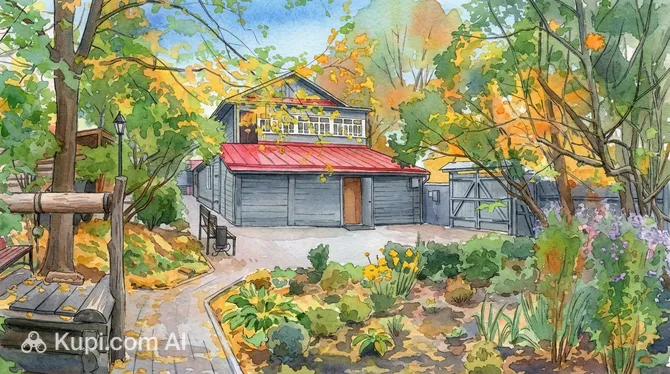
K. E. Tsiolkovsky Memorial House-Museum
K. E. Tsiolkovsky Memorial House-Museum. Иллюстрация. Источник: Kupi.com AI

The museum is a carefully restored early 20th-century estate. Everything here breathes authenticity, from the creaky floorboards to the Tsiolkovsky family's personal belongings. The exhibition includes original manuscripts, books, and instruments used by Konstantin Eduardovich. The building is recognized as a federal cultural heritage site and is a must-visit for anyone interested in science and history.

Besides the house itself, the surrounding grounds with outbuildings and a garden are also of interest. A striking sculpture of the scientist stands in the center of the courtyard, highlighting his significance to world science. This is not just a museum, but a "place of power" where you can see the simple conditions under which theories that changed the world were created.

Contacts

For the latest information on special events or to book group tours, you can use the museum's official communication channels.

How to contactContact
AddressUlitsa Tsiolkovskogo, 79, Kaluga, Kaluzhskaya oblast', Russia, 248000
Phone+7 484 274-61-80
Websitewww.gmik.ru

What to Do

The main reason to visit this museum is the opportunity to peek into the scientist's "inner sanctum": his study and workshop on the second floor. The interiors have been recreated with striking accuracy, allowing you to see the environment where Tsiolkovsky designed airships and calculated rocket trajectories. You can examine his authentic ear trumpets (the scientist was hard of hearing), handmade instruments, and his library.

Be sure to stroll through the restored garden and explore the outbuildings. The atmosphere of old Kaluga has been preserved here in almost its original form. The museum offers in-depth themed tours that will interest both adults and children: guides talk not only about dry figures and formulas but also about the daily life of the inventor's large family, his hobbies, and his philosophy.

Many visitors note the special energy of this place. Don't forget to look at the veranda, where Konstantin Eduardovich often worked during the warmer months. Visiting the house-museum is more than just seeing exhibits; it's a true immersion into the life of a genius who, living in a provincial town, managed to "reach" for the most distant planets.

Getting There

The memorial museum is located at 79 Tsiolkovskogo St, in a picturesque area of the city near the banks of the Oka River. If you are traveling from the center of Kaluga, the trip by public transport will take about 20–30 minutes. You can take buses or fixed-route taxis (e.g., No. 8, 19, 29) to the "Tsiolkovskogo Street" or "Tsiolkovsky House" stops.

For those who prefer walking, the route from the central part of the city takes about 40–50 minutes. Car owners can use the parking lot located next to the estate. If you are planning a trip from Moscow, it is most convenient to take an express train or bus to the Kaluga railway station and then transfer to local transport or a taxi.

Ближайший город: Kaluga

History & Facts

Konstantin Eduardovich Tsiolkovsky purchased this modest house in 1904. The scientist lived here for 29 years, until 1933, and it was within these walls that he wrote the fundamental works that laid the foundation for modern astronautics. In 1933, in honor of the inventor's 75th birthday, city authorities gave him a new residence, but the old house remained in history as his primary "scientific laboratory."

The museum opened its doors to visitors on September 19, 1936 — just one year after Tsiolkovsky's death. The scientist's family carefully preserved and handed over his authentic belongings and manuscripts to the state. During the Great Patriotic War, the building was damaged, but by March 1942, through the efforts of the scientist's daughter, Lyubov Konstantinovna, the exhibition was reopened.

A major milestone in the museum's history was 1957 — for the 100th anniversary of Tsiolkovsky's birth, Sergei Pavlovich Korolev himself helped update the exhibition. Ten years later, the house-museum became an important part of the State Museum of the History of Cosmonautics. There is a heartwarming tradition: after returning from space flights, cosmonauts often visit the museum, a practice started by the first man in space — Yuri Gagarin.

Time Needed

To leisurely explore the living quarters, peek into the scientist's workshop, and stroll through the adjoining garden, visitors usually need 1.5 to 2 hours. This is enough time to get acquainted with the main exhibition and feel the unique atmosphere of the place.

If you plan to book a tour that explores the details of Tsiolkovsky's biography and scientific discoveries in depth, we recommend allowing a bit more time. A visit to the museum often inspires long reflections, so there’s no need to rush when leaving this "cosmic" corner.

Working Hours

The museum welcomes guests throughout the week, except for Mondays. Please note that on weekends, the doors are open an hour longer, which is convenient for tourists visiting the city on Saturday and Sunday.

The opening hours are as follows:

  • Tuesday — Friday: 10:00 – 18:00
  • Saturday — Sunday: 10:00 – 19:00
  • Monday: Closed
Keep in mind that ticket offices stop selling tickets 30–60 minutes before the official closing time.

DayWorking hours
ПонедельникЗакрыто
Вторник10:00 – 18:00
Среда10:00 – 18:00
Четверг10:00 – 18:00
Пятница10:00 – 18:00
Суббота10:00 – 19:00
Воскресенье10:00 – 19:00

Nearby

Exploring the surroundings of the house-museum will allow you to delve deeper into the history and atmosphere of one of Russia's oldest cities. A walk along the Oka River and sightseeing architectural monuments will be a great addition to the scientific theme of the exhibition.

NameDistance
Tsiolkovsky Park0.5 km
Tsiolkovsky State Museum of the History of Cosmonautics0.7 km
Monument to Konstantin Tsiolkovsky1 km
Zolotaryov Estate Museum and Local History Complex1 km
Stone Bridge1.1 km
Kuznya Tavern1.1 km
Two Greeks1.2 km

Reached the end of the page?

That means the route is fully explored