Support

Puppy

About

At the entrance to the famous Guggenheim Museum in Bilbao, you are greeted not just by a sculpture, but by a real living wonder — "Puppy". It is one of the most photographed and recognizable landmarks not only in the city but in all of Spain. This enormous dog figure, created by American artist Jeff Koons, is completely covered in thousands of live flowers, transforming an ordinary urban space into a fairytale garden.
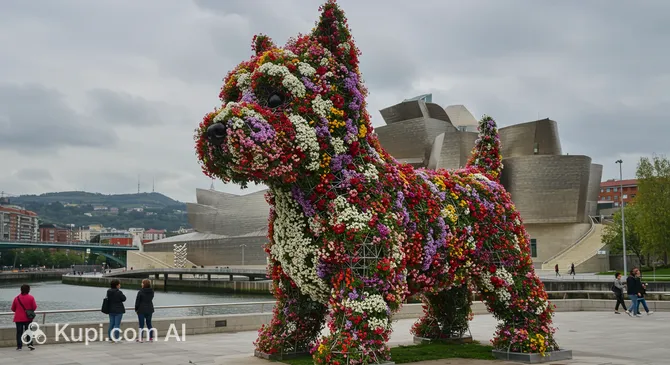
Puppy. Illustration.
Source: Kupi.com AI

Traveler photos:

The height of this giant terrier reaches 13 meters, and its "fur" consists of approximately 70,000 carefully selected plants. Depending on the season, "Puppy" changes its outfit: in spring and summer, it bursts with bright petunias, begonias, and marigolds, while in autumn and winter, it is decorated with more understated pansies and other cold-resistant flowers. This change of flora makes the sculpture dynamic and always new for visitors.

Originally, "Puppy" was a temporary installation, but it became so well-loved by the residents and guests of Bilbao that it was decided to make it a permanent part of the cityscape. Today, this floral sculpture is not just a work of art but a bright symbol of the city's revival and cultural flourishing that is definitely worth seeing with your own eyes.

Contacts

The "Puppy" sculpture is part of the Guggenheim Museum complex, so for information, you should contact the museum. This will help you clarify opening hours or other visiting details.

There is no separate website for the sculpture, so it is best to look for up-to-date information on the official website of the Guggenheim Museum in Bilbao.

How to contactContact
AddressMazarredo Zumarkalea, 66, Abando, 48009 Bilbao, Bizkaia, Spain
Websitewww.bilbaoturismo.net

What to Do

The main draw for visitors to the giant "Puppy" floral sculpture in Bilbao is the opportunity to take unforgettable photos. This is, without exaggeration, the most photographed landmark in the city. Posing in front of the huge dog, completely covered in live flowers, has become a lovely tradition for everyone visiting this Spanish city. Bright and positive, it serves as the perfect backdrop for photos at any time of year.

The uniqueness of "Puppy" lies in its constant transformation. The sculpture's floral "coat" is changed twice a year, with plants selected according to the season. Because of this, even if you have already seen this attraction, coming back at a different time of year will let you find it in a completely new look. Watching the gardeners painstakingly care for thousands of flowers is a fascinating sight in its own right, allowing you to appreciate the scale and complexity of this living work of art.

A walk to "Puppy" is not just a photo session, but part of a larger cultural experience. The sculpture is set right in front of the entrance to the famous Guggenheim Museum, so it is convenient to combine viewing it with a visit to one of Europe's premier modern art venues. The surrounding area itself is a wonderful place for a leisurely stroll, relaxing in the fresh air, and observing city life amidst avant-garde architecture.

Getting There

Finding the "Puppy" sculpture in Bilbao is very easy, as it is a local landmark that greets guests right at the main entrance of the famous Guggenheim Museum. Thanks to its prime location on the embankment, walking there from the city center is a real pleasure. A stroll from other popular tourist spots, such as the Museum of Fine Arts or the Zubizuri Bridge, will take no more than 10 minutes.

If you prefer to use public transport, getting to "Puppy" is effortless. The nearest metro station is Moyua, from which the sculpture is just a few minutes' walk away. Additionally, there is a tram stop in the immediate vicinity of the museum, and many city bus routes pass by, making this spot easily accessible from anywhere in the city.

For those traveling by car, there are several parking lots in the Guggenheim Museum area where you can leave your vehicle. However, it is worth noting that central Bilbao is very pedestrian-friendly, and a walk along the picturesque streets and the Nervión River promenade can be a pleasant part of your city exploration on the way to this amazing floral sculpture.

Nearest city: Bilbao

History & Facts

The "Puppy" sculpture is not just a decoration for the plaza in front of the Guggenheim Museum, but one of the most recognizable and beloved symbols of Bilbao. This giant floral terrier figure delights tourists and locals alike, having become an integral part of the city's cultural landscape. However, the history of its appearance here is quite interesting and is linked to a temporary exhibition that grew into a permanent installation.

Originally, "Puppy" was created by the famous American artist Jeff Koons in 1992 for an exhibition in Germany. Five years later, in 1997, the sculpture was moved to Spain and installed in front of the newly opened Guggenheim Museum. It was intended to be a temporary exhibit, but "Puppy" became so well-loved by the locals that it was decided to keep it permanently. Since then, it has become the unofficial mascot of Bilbao, symbolizing the city's revival and prosperity.

The main feature of the sculpture is its "fur," consisting of tens of thousands of live flowers. Twice a year, in spring and autumn, a team of gardeners completely refreshes the floral covering, choosing plants based on the season. Inside the 12-meter figure is a complex steel frame and an irrigation system that nourishes the flowers. Notably, Jeff Koons intentionally did not depict a specific dog breed. This collective image allows every viewer to see something of their own in "Puppy," making the artwork even closer and more relatable to the public.

Time Needed

To see the famous "Puppy" floral sculpture and take a few vibrant photos with it, you won't need much time at all. Typically, 15 to 30 minutes is quite enough for a leisurely viewing of this amazing work by Jeff Koons. It's an ideal stop for a short visit, allowing you to appreciate the scale and originality of the art object located at the entrance to the Guggenheim Museum.

However, keep in mind that "Puppy" is an integral part of the museum's architectural ensemble. Therefore, most travelers combine seeing the sculpture with a visit to the Guggenheim Museum in Bilbao itself. If you plan to go inside and explore the modern art exhibition, you should set aside several hours for the entire visit. This will allow you to fully enjoy both the exterior and the rich collection of one of Spain's most famous museums.

Working Hours

Since the "Puppy" sculpture is located outdoors right in front of the Guggenheim Museum entrance, it has no official opening hours. You can admire this unique floral work of art at any time of the day or night, completely free of charge. It is one of the most accessible and photographed attractions in Bilbao.

No tickets or advance booking are required to view the sculpture. "Puppy" is available to everyone all year round. It is worth noting that the appearance of the installation changes twice a year, in spring and autumn, when gardeners update its "fur" of live flowers, so every visit can offer a new experience.

Open 24 hours

Nearby

Visiting the famous "Puppy" floral sculpture in Bilbao is just the beginning of your acquaintance with this amazing area. The surroundings are full of cultural treasures, architectural masterpieces, and scenic parks located just a few steps away. A walk through this district will allow you to dive deeper into the city's atmosphere and discover even more interesting places.

To help you plan your route, we have compiled a list of nearby attractions. All of them are within walking distance, making their exploration convenient and enjoyable. From the world-famous museum to cozy parks and architectural icons, everyone will find something to their liking here.

NameDistance
Guggenheim Museum Bilbao0.1 km
Bilbao Fine Arts Museum0.3 km
Doña Casilda Iturrizar Park0.5 km
Federico Moyúa Square0.5 km
Amaren Restaurant0.6 km
Zubizuri Bridge0.6 km
Artxanda Funicular Lower Station0.7 km

Have you reached the end of the page?

So the route has been studied inside and out