Support

Santiago Cathedral of Bilbao

About

Santiago Cathedral (Catedral de Santiago) is a majestic Catholic church located in the heart of Bilbao's Old Town. As one of the city's oldest buildings, it serves not only as an important religious center but also as a true architectural treasure of Spain, reflecting its rich history.
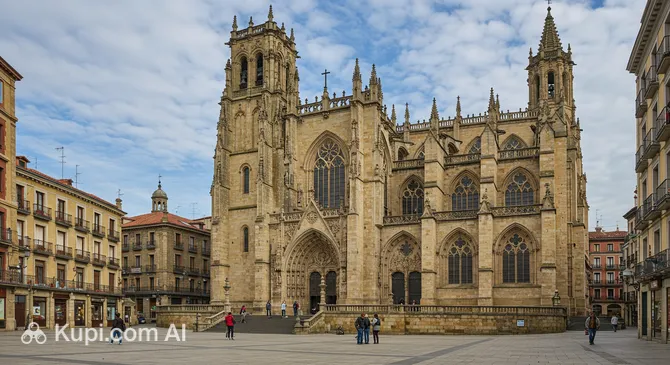
Santiago Cathedral of Bilbao. Illustration.
Source: Kupi.com AI

Traveler photos:

Art historians call this church a triumph of Gothic style, and its high vaults, pointed arches, and elegant stained glass windows fully confirm this. At the same time, you can notice later elements in its appearance dating back to the Renaissance, giving it a unique character. The impressive area of the cathedral, exceeding 1,100 square meters, and its honorary status as a minor basilica emphasize its special significance.

The cathedral plays a special role for pilgrims from all over the world. It is one of the key stops on the famous Way of Saint James (Camino de Santiago)—a route included in the UNESCO World Heritage list. For many travelers, visiting the cathedral becomes an important spiritual experience and an opportunity to touch a centuries-old tradition.

Visiting Santiago Cathedral is a wonderful opportunity not only to admire the impressive architecture but also to feel the calm and peaceful atmosphere of this sacred place, which has witnessed key events in Bilbao's life for centuries.

Contacts

To get up-to-date information on the opening hours of Santiago Cathedral, Mass schedules, and tourist visiting conditions, it is recommended to visit the cathedral's official website or check with the tourist information centers in Bilbao. Generally, all necessary information for visitors is also posted at the entrance.

How to contactContact
AddressDone Jakue Plazatxoa, 1, Ibaiondo, 48005 Bilbao, Bizkaia, Spain
Phone number+34 944 15 36 27
Websitecatedralbilbao.com

What to Do

Visiting Santiago Cathedral is a chance to touch the rich religious and architectural history of Bilbao. Once inside, you will immediately notice the unique blend of styles that has formed over centuries. The main part of the cathedral is built in the Gothic style, but a careful look reveals Renaissance elements and later Neo-Gothic details. Stroll through the cloister to fully appreciate the elegance of the arcades and feel the peaceful atmosphere of this place.

The main activity for a visitor is a leisurely inspection of the interior. Pay attention to the high altar, the richly decorated chapels, and the intricate stone carvings. Inside the church, you can see unique architectural solutions and religious art objects created in different eras. This is a place where every stone holds history, and the play of light through the stained glass windows creates a special mood for reflection.

The cathedral is of great importance not only as a tourist site but also as an important place of pilgrimage. It is part of the famous Camino de Santiago route, and for many believers, visiting it is a deeply spiritual experience. For travelers, it is a wonderful opportunity to learn more about the cultural traditions of Spain and the role the Apostle James plays in the country's history. Visiting the cathedral allows for a better understanding of the city's connection to one of the most famous pilgrimage routes in the world.

Getting There

Santiago Cathedral is located in the heart of Bilbao's Old Town, known as Casco Viejo. This historic part of the city is primarily a pedestrian zone, making a stroll to the cathedral particularly enjoyable. Regardless of your chosen mode of transport, be prepared to walk the final few hundred meters, enjoying the atmosphere of the narrow streets and ancient architecture.

Reaching the cathedral by public transport is very convenient. The nearest metro station is Casco Viejo, which is a major hub serving lines L1, L2, and L3. It’s just a few minutes' walk from the metro exit to the cathedral. You can also take the tram (Euskotren Tranbia): the Arriaga or Ribera stops are in the immediate vicinity. Additionally, many city bus routes (Bilbobus) stop near the Old Town, for example, at Arenal Bridge.

If you prefer comfort, you can take a taxi, which will drop you off as close as possible to the Casco Viejo pedestrian zone. This is a quick and convenient option, especially if you are traveling with luggage or small children. Driving a private car into the Old Town itself can be difficult due to narrow streets and restricted traffic. It is recommended to leave your car in one of the underground parking lots located around the perimeter of the Old Town and continue on foot.

Nearest city: Bilbao

History & Facts

The history of Santiago Cathedral in Bilbao is closely intertwined with the city's own history, dating back to an era preceding its official foundation. It is believed that the first chapel on this site was built as early as the 12th–13th centuries. It served as a refuge for pilgrims following the famous Way of Saint James. After a fire destroyed the original building in 1374, the long construction of the current cathedral began, lasting from the late 14th to the early 16th century, which explains the harmonious blend of Gothic and Renaissance features in its appearance.

The cathedral owes its dedication to the Apostle James, whose relics, according to tradition, rest in the city of Santiago de Compostela. The pilgrims' path to this great Christian shrine passed through a small fishing village, where Bilbao later grew. Local residents always warmly welcomed travelers, and a church was built in honor of their patron saint, becoming an important stop on this spiritual route. Thus, the cathedral is not just a building, but a living testament to the centuries-old tradition of pilgrimage in Spain.

For centuries, the Church of Saint James was the city's main parish church. However, in 1949, its status increased significantly—with the creation of the Diocese of Bilbao, it was officially proclaimed a cathedral. This event highlighted not only the religious but also the cultural significance of the church, establishing it as one of the city's key symbols and an important spiritual center of the Basque Country.

Time Needed

Most tourists will need between 1 and 2 hours to see the Santiago Cathedral in Bilbao. This is enough time to walk through the main nave without rushing, look into the side chapels, admire the Gothic architecture, and feel the historic atmosphere of this important point on the pilgrimage route of Saint James, located in the heart of the Old Town.

If you just want to get a general impression, a quick look at the facade, interior, and main altar will take about 45 minutes. For a more thoughtful visit, which includes exploring the details of the cloister (courtyard), studying the stained glass windows, and quietly immersing yourself in the atmosphere, it's better to set aside an hour and a half to two hours. The visit time may also depend on your interest in religious art and the schedule of church services, during which tourist access may be limited.

Working Hours

The opening hours of Santiago Cathedral in Bilbao may change depending on the season and the schedule of church services. Usually, the cathedral is open to visitors daily, but access for tourists may be limited during masses and other religious events. To avoid disappointment, it is strongly recommended to check the current schedule on the cathedral's official website or on Bilbao's tourism portals before your visit.

Generally, advance booking is not required for individual visits; however, advance registration may be necessary for guided tours or group visits. This will allow you to get the most out of your visit to this important architectural and spiritual center of the Basque Country. Checking the information in advance will help you plan your day and ensure you can get inside.

Nearby

Visiting Santiago Cathedral is an immersion into the heart of Bilbao's historic center, but exploring its surroundings can make your visit even more rich and memorable. The cathedral is located in the Old Town (Casco Viejo), which is itself a living landmark with a labyrinth of narrow streets, cozy squares, and authentic bars.

A walk through this area will allow you to discover other city gems just steps away. From bustling markets and unique museums to other ancient churches—every find will complement your understanding of the rich culture and history of this amazing Basque city. Below is a list of interesting places located nearby.

NameDistance
Archaeological Museum of Biscay0.2 km
Ribera Market0.2 km
Museum of Sacred Art of Bilbao0.5 km
Gran Vía Shopping Mall0.6 km
El Corte Inglés Bilbao0.6 km
Bilbao Arena0.6 km
Etxebarri Park0.7 km

Have you reached the end of the page?

So the route has been studied inside and out