Support

Castillo de Cuenca

About

Atop a steep cliff overlooking the Júcar and Huécar rivers, the history of an ancient city stands frozen in time. Cuenca Castle consists of the ruins of a medieval fortress that was once an impregnable Moorish stronghold. Today, it is an iconic landmark in the city of Cuenca, attracting travelers with its rugged beauty and breathtaking panoramas.
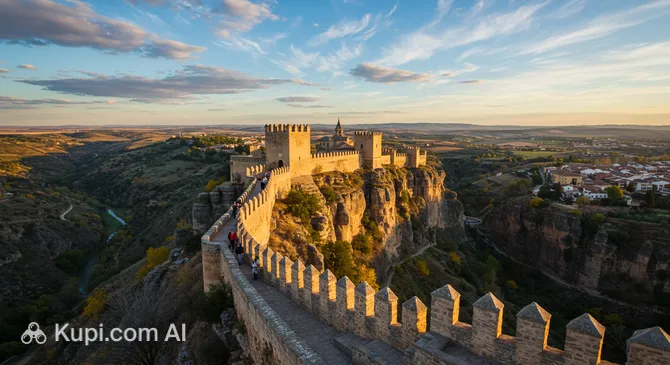
Cuenca Castle
Cuenca Castle. Иллюстрация. Источник: Kupi.com AI

This site is more than just a collection of stones; it is the heart of an ancient settlement recognized as a UNESCO World Heritage site in Spain. Fragments of powerful fortifications remain here, bearing witness to both Moorish rule and the triumphant entry of King Alfonso VIII's Christian troops in the 12th century. Its strategic position at an altitude of 956 meters makes the castle an ideal vantage point for viewing the surrounding gorges.

A special atmosphere is lent to this architectural ensemble by its proximity to the famous "hanging houses" (Casas Colgadas), which seem to hover over the abyss. A visit to the castle allows you to feel the scale of medieval engineering genius and see how organically the ancient buildings are integrated into the dramatic natural landscape of Castile-La Mancha.

Contacts

For those planning a visit to this historical monument, here is the current contact information and coordinates.

How to contactContact
AddressC. Trabuco, 4, 16001 Cuenca, Spain

What to Do

The main reason to climb up to the castle is the incredible viewpoints. From the height of the fortress walls, a panoramic view opens up over the Júcar River gorge and the San Pablo Monastery, located on the opposite side of the abyss. This is the perfect spot for those seeking inspiration or wishing to take striking photos against the backdrop of sheer cliffs.

Be sure to walk to the Mangana Tower, a surviving symbol of Moorish defense. After exploring the ruins of the fortifications, it is worth heading down to the famous hanging houses. Inside one of them is the Museum of Abstract Art, where you can appreciate the contrast between medieval interiors and avant-garde works by 20th-century artists.

The best way to conclude your walk is at the central square, Plaza Mayor. Here, you can admire the facade of Spain's first Gothic cathedral, relax in a cozy cafe, and feel the leisurely pace of life in the old town. If you are lucky enough to be here during cultural festivals or concerts at the Church of San Miguel, your visit will be even more memorable.

Getting There

Getting to this unique place from Madrid is quite simple. The fastest way is to take the AVE high-speed train, which will take you to the Cuenca-Fernando Zóbel station in just 1 hour. From the station to the historic city center, it is about a 5-kilometer ride by taxi or local bus.

If you prefer to travel by car, the drive via the A-3 highway takes about two hours. It is best to leave your car in one of the parking lots at the foot of the hill, as the old part of the city is characterized by steep climbs and narrow streets. Additionally, ALSA buses run regularly from the capital, with travel times ranging from 2 to 2.5 hours.

Since Cuenca Castle is located on a hilltop in a pedestrian zone, the final stage of the journey to C. Trabuco, 4 is best covered on foot. This allows you to fully enjoy the views, but be sure to wear comfortable shoes, as the local terrain requires some endurance.

Ближайший город: Cuenca

History & Facts

The history of this site dates back to ancient times when a Celtic settlement arose on the rocky outcrop between the Júcar and Huécar rivers. Later, a Roman garrison was established here, but the true heyday of the fortifications began in the 8th century. The Moors, upon arriving on the Iberian Peninsula, recognized the strategic position of the cliffs and built a powerful fortress named Kuvenka.

A turning point came in 1177 during the Reconquista in Spain. After a long siege, the Castilian King Alfonso VIII captured the city, transforming it into an important Christian stronghold and the seat of a diocese. Thanks to the wealth of local merchant guilds dealing in wool and carpets, the city saw active construction of cathedrals and palaces, many of which have been preserved to this day.

The Mangana Tower, which was once part of the Arab defensive walls, deserves special attention. Over the centuries, it has been rebuilt several times, serving as both a lookout point and a city bell tower, absorbing features of the Mudejar style. Today, the castle and its surrounding quarters stand as a living monument to medieval architecture.

In 1996, UNESCO recognized the uniqueness of this ensemble, including the Old Town on the World Heritage list. This confirmed the fortress's status as one of the most outstanding examples of a fortified medieval city, harmoniously integrated into a rugged natural landscape.

Time Needed

To leisurely explore Cuenca Castle, walk along the surviving wall fragments, and take panoramic photos from the viewpoints, you will typically need between 2 and 4 hours. This is enough time to reach the Mangana Tower and enjoy the views of the deep canyons.

If you plan to combine your visit to the ruins with a trip to the Museum of Abstract Art in the "hanging houses" or a tour of the Gothic cathedral on the main square, it is worth dedicating a full day to your walk. The city truly invites long explorations, with every turn of a narrow street revealing a new picturesque perspective.

Working Hours

Since Cuenca Castle and its main viewpoints are open-air historical ruins and part of the city's architecture, they are accessible 24 hours a day, seven days a week. This allows tourists to enjoy the city views both in the light of the rising sun and under evening illumination.

Please note that museums located in the immediate vicinity (such as those in the hanging houses) operate on their own schedules, usually closing by 7:00 PM. However, the castle walls themselves and access to the Mangana Tower are free to visit at any time that suits you.

Круглосуточно

Nearby

Exploring the surroundings of the fortress walls will allow you to dive deeper into the medieval atmosphere and see the main symbols of the region. Just steps from the castle, routes begin that lead to dizzying cliffs and unique architectural monuments.

NameDistance
Antonio Pérez Foundation Museum0.1 km
Cuenca Cathedral0.4 km
San Pablo Bridge0.4 km
Hanging Houses of Cuenca0.5 km
Taberna Jovi0.5 km
La Edad de Oro Pub0.5 km
Museum of Spanish Abstract Art0.5 km

Reached the end of the page?

That means the route is fully explored