Support

Refugio Antiaéreo

About

Hidden beneath the pavement of the charming Plaza de Santiago lies a unique historical site — the Air Raid Shelter (Refugio Antiaéreo de Santiago). This is not just an underground structure, but an important historical monument located in the city of Jaén. It is part of an extensive network of 35 shelters built in Spain during the late 1930s to protect residents from aerial attacks.
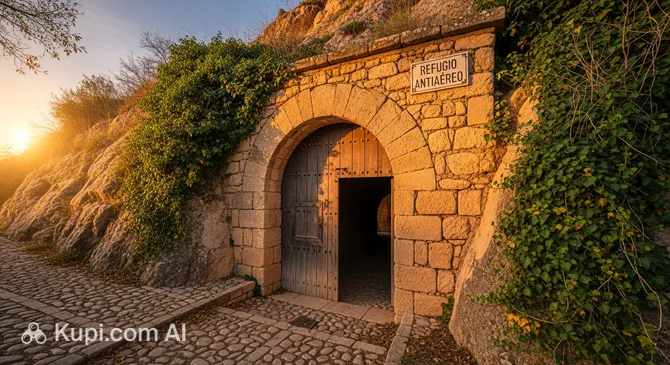
Air Raid Shelter
Air Raid Shelter. Иллюстрация. Источник: Kupi.com AI

Today, the site functions as a modern museum and educational center. Following a thorough restoration in 2011, the shelter has preserved its authentic appearance: visitors can see the original underground galleries, ventilation shafts, and stone benches along the walls. The site vividly demonstrates the engineering solutions of that era and allows you to touch a piece of the past hidden from the eyes of casual passersby.

The shelter's design is unique because the architect Antonio María Sánchez integrated it directly beneath the square, utilizing the ruins of an old church while keeping the urban space above untouched. With a rating of 4.3 based on hundreds of reviews, this site is considered one of the most atmospheric and educational attractions in the city.

Contacts

For up-to-date information regarding visits and guided tours, you can use the following contact details:

How to contactContact
AddressPl. Santiago, s/n, 23004 Jaén, Испания
Phone+34 953 19 04 55

What to Do

Descending underground, visitors enter a world of silence and cool air where time seems to stand still. Here, you can walk through long underground galleries, observing the original walls and vaults that once provided protection for hundreds of people. Pay attention to the preserved wooden benches and the cleverly designed ventilation systems — these details make it easy to imagine how the shelter functioned decades ago.

The exhibition is complemented by modern information panels detailing the daily lives of citizens and civil defense measures. Inside, a special atmosphere has been recreated to help understand the value of safety and peace. It is an excellent spot for history and architecture enthusiasts, as well as those seeking unique perspectives for photos in the atmospheric twilight of the tunnels.

A visit to the shelter is easily combined with a stroll through Plaza de Santiago itself. While tourists explore history underground, the everyday life of the Spanish city continues above. This blend of contrasts makes a visit particularly memorable. The site is perfect for families and educational tourism as part of a walking route through the city center.

Getting There

The attraction is located at Plaza de Santiago, s/n, in the heart of the historic city center. If you are already strolling through the central streets, the walk from the famous cathedral will take only 10–15 minutes at a leisurely pace. For precise navigation, you can use the coordinates POINT(-3.7929782 37.7680992).

For those who prefer public transport, buses heading to the center (operated by ALSA or local carriers) are suitable. After getting off the bus, it's just a short walk to Plaza de Santiago. If you are arriving by car, it is recommended to leave it at one of the nearby parking lots, as the square itself is a pedestrian zone.

Tourists arriving from other regions often use Malaga Airport. The journey from there to the city by train or bus takes about 1.5–2 hours. Upon arrival at the station, you can take a taxi or enjoy a walk through the city, taking in its architecture.

Ближайший город: Jaén

History & Facts

The history of this site is inextricably linked to the events of the late 1930s. Construction of the Refugio Antiaéreo de Santiago began in 1938. The decision to create a network of protective structures was made after the city faced serious aerial threats in the spring of 1937, making civilian safety a top priority.

The shelter project was designed by municipal architect Antonio María Sánchez. The structural solution proved quite unusual: the Plaza de Santiago was completely excavated to create the underground galleries. The ruins of an old church of the same name were used in construction, yet engineers managed to preserve the square's surface for the city's daily life.

This shelter was part of a large-scale civil defense system that included 35 similar sites, as well as sirens, observation posts, and blackout regulations. Following a major restoration completed in 2011, the site was opened to the public, becoming an important museum center that serves as a reminder of the resilience and engineering ingenuity of the last century.

Time Needed

A detailed visit to the Air Raid Shelter usually takes about 30 to 45 minutes. This is plenty of time to leisurely walk through the underground corridors, view the preserved interior elements, and read the information stands.

If you are visiting the museum as part of an organized tour group with a guide or prefer to delve into every historical detail, you should plan for about one hour. The site is quite compact, making it easy to include in a walking tour of the old town.

Working Hours

Currently, the exact opening hours for the site have not been officially published. The attraction is open to tourists following its restoration; however, visiting hours may change depending on the season or special events.

It is recommended to check the information on the city's official tourism website or confirm the current schedule by phone before planning your visit to ensure you can get inside.

Nearby

Exploring the area around Plaza de Santiago allows for a deeper dive into the region's rich history. Combining underground tours with visits to above-ground architectural monuments will make your visit as fulfilling and interesting as possible.

NameDistance
San Lorenzo Arch0.2 km
Arab Baths and Villardompardo Palace0.3 km
Izakaya Ajhito0.3 km
Jaén Cathedral0.4 km
Church of La Magdalena0.5 km
Castle of Santa Catalina0.6 km
Bagá Restaurant0.6 km

Reached the end of the page?

That means the route is fully explored