Support

Archaeological Museum of Asturias

About

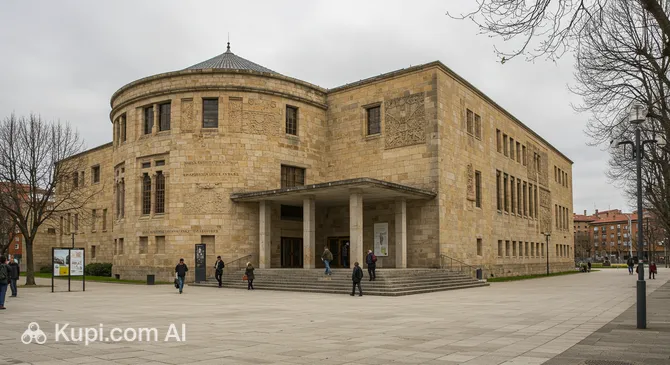
Located in the very heart of the historical center that graces Oviedo, the Archaeological Museum of Asturias is a place where thousands of years of history from the northern region of Spain come to life. The museum is housed in the magnificent building of the former Monastery of San Vicente, whose ancient walls are an architectural monument and cultural heritage site in their own right.
\n
Archaeological Museum of Asturias
Archaeological Museum of Asturias. Иллюстрация. Источник: Kupi.com AI
\n

The museum's exhibition offers a fascinating journey through time: from the rugged Paleolithic era to the elegant Middle Ages. Here, you can see rare tools used by prehistoric humans, exquisite Roman mosaics from Vega del Ciego, and unique Pre-Romanesque altars recognized by UNESCO as part of the world's heritage. Each hall reveals new facets of how the distinctive Asturian culture was formed.

\n

Visitors are particularly drawn to the inner courtyard — a Plateresque-style cloister that fills the space with light and tranquility. The museum is considered one of Asturias' leading scientific and cultural centers, combining the rigor of archaeological research with an accessible modern presentation for tourists from around the world.

Contacts

To clarify current information about temporary exhibitions or to book group tours, you can use the official communication channels. Museum staff are ready to answer your questions by phone or through the contact form on the website.

Below are the main contact details for planning your visit:

How to contactContact
AddressC. San Vicente, 3, y 5, 33003 Oviedo, Asturias, Spain
Phone+34 985 20 89 77
Websitewww.museoarqueologicodeasturias.com

What to Do

Visiting the museum is, above all, an opportunity to literally touch the past. You can examine Roman mosaics and epigraphic monuments in detail, which tell the story of the region's life during imperial times. Don't miss the chance to see Pre-Romanesque relics up close, transferred here from the famous churches of Naranco and Lillo: their carved details and architectural forms allow you to understand the origins of the unique Asturian Kingdom style.

While strolling through the halls, be sure to pay attention to the ethnographic collection. It includes everyday items used by the ancient inhabitants of these lands for centuries. For art lovers, a true discovery will be the 12th-century sarcophagus, striking in the delicacy of its medieval craftsmanship. The atmosphere of the ancient monastery, with its quiet inner courtyard, encourages a thoughtful study of the exhibits.

The museum regularly hosts temporary exhibitions that supplement the main collection with new finds and thematic research. For a deeper immersion into the context, it is recommended to use an audio guide or join one of the guided tours. This place is perfect for both family visits and solo travelers seeking to unravel the mysteries of ancient Asturias.

Getting There

Traveling to the museum is easy, as it is located in the very heart of the historical center of Oviedo. If you prefer walking, the journey from the main railway station or the central bus station takes only 10–15 minutes. The route passes through picturesque pedestrian streets leading to the Cathedral.

For those using public transport, bus lines A1, A2, and C1 are the most convenient. You should get off at the "San Vicente" or "Catedral" stop, from which the museum entrance is just a few steps away. If you are arriving from Asturias Airport (OVD), you can take a direct bus or train to the city center and then transfer to local transport or walk.

Drivers should keep in mind that the museum is located in a pedestrian zone. It is recommended to leave your car in one of the underground parking lots in the center, for example, at Plaza de la Constitución. You can also always use the city taxi services, which will bring you as close as possible to the historical quarters.

Ближайший город: Oviedo

History & Facts

The history of this site is rooted in deep antiquity, long before the museum walls even existed. Oviedo began its life right here, on Ovetao Hill, where in the 8th century, the monks Máximo and Fromestano founded the San Vicente monastery. Over time, the monastery became the spiritual and political core of the region, and King Alfonso II eventually turned the city into the capital of the Asturian Kingdom.

The museum itself was officially opened in 1952, occupying the premises of that same ancient monastery. Its walls hold memories of changing eras: from the harsh lives of prehistoric hunters to the splendor of the medieval nobility. A special place in the exhibition is occupied by authentic 9th-century Pre-Romanesque altars, transferred here from the famous churches of San Miguel de Lillo and Santa María del Naranco, making the museum a guardian of the unique Asturian style.

One of the most valuable exhibits is the magnificent sarcophagus of Doña Gontrodo Petri, dating back to the 12th century. It serves as vivid evidence of the high skill level of medieval stone-cutters. Today, the museum continues its important mission, bringing together artifacts found during archaeological excavations throughout the province and telling the story of how ancient settlements transformed into a powerful Christian kingdom.

Time Needed

To explore the museum's rich collection and enjoy the architecture of the former monastery without rushing, 1.5 to 2.5 hours are usually required. This time is quite sufficient for viewing the key halls dedicated to the prehistoric period, the Roman era, and the Middle Ages.

If you are a passionate archaeology lover or plan to study the ancient mosaics and unique Pre-Romanesque artifacts in detail, your visit may take longer. Don't forget to set aside extra time for resting in the atmospheric monastery cloister, which is an outstanding object for contemplation in its own right.

Working Hours

Please note that the museum's schedule depends on the day of the week. The site is traditionally closed to visitors on Mondays and Tuesdays. On weekdays (Wednesday to Friday), the museum is open without a break throughout the day, which is convenient for those who prefer daytime visits.

Current schedule:

  • Wednesday — Friday: 09:30 – 20:00
  • Saturday: 09:30 – 14:00 and 17:00 – 20:00 (afternoon break)
  • Sunday: 09:30 – 15:00
  • Monday and Tuesday: Closed
DayWorking hours
ПонедельникЗакрыто
ВторникЗакрыто
Среда9:30 – 20:00
Четверг9:30 – 20:00
Пятница9:30 – 20:00
Суббота9:30 – 14:00, 5:00 – 20:00
Воскресенье9:30 – 15:00

Nearby

The Archaeological Museum is located in an area with an incredible concentration of historical and cultural monuments. A stroll through the surroundings after visiting the exhibition will allow you to feel the atmosphere of the old town more deeply and see the legacy of different eras at every step.

Most key attractions are within walking distance, making tourist route planning very convenient. Below is a list of interesting places located nearby:

NameDistance
Cathedral Square0.1 km
Oviedo Old Town0.2 km
Museum of Fine Arts of Asturias0.2 km
La Salvaje0.2 km
Umbrella Square0.2 km
La Regenta Statue0.2 km
El Gato Negro Cider House0.3 km

Reached the end of the page?

That means the route is fully explored