Support

The Cascade

About

The Cascade is not just a staircase, but a majestic architectural and monumental complex, one of the most recognizable and impressive landmarks of Yerevan, the capital of Armenia. This grand structure, a cascading system of five open terraces, elegantly links the central Kentron district with the Kanaker-Zeytun district, acting as a bridge between different parts of the city.
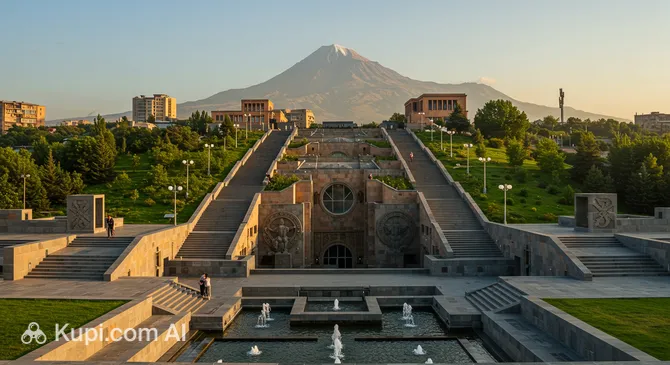
The Cascade. Illustration.
Source: Kupi.com AI

Traveler photos:

The monumentality of the Cascade is staggering: 572 steps lead up, the total length of the stairs from the base to the top is 302 meters, and to the very highest platform, it is 450 meters. The width of this architectural wonder reaches 50 meters, and the overall incline is 15 degrees. Although part of the complex remains unfinished, its scale and design impress every visitor.

What makes the Cascade so special? It is a unique combination of bold architecture, art, and nature. The complex represents an amazing landscape where green terraces and park areas harmoniously coexist with a cascade of waterfalls and fountains. Inside the Cascade, there are also galleries and exhibition halls, turning it not only into an observation deck with magnificent views of the city and Mount Ararat but also into an important cultural center. It is truly an iconic place that attracts both city residents and tourists from all over the world.

Contacts

Since the Cascade is a grand architectural complex and a favorite place for walks, finding a single contact phone number or email for it can be difficult, as it is largely an open public space. Reaching the Cascade is very simple: it is one of the main landmarks in central Yerevan and is clearly visible from many points in the city. To obtain the most up-to-date information on the opening hours of the Cafesjian Center for the Arts, which is located inside the complex, or about planned events, we recommend visiting the official Yerevan tourism portals or contacting tourist information centers directly in the city.

How to contactContact
Address10 Tamanyan St, Yerevan 0009, Armenia
Phone number+855 97 326 2197

What to Do

The main reason visitors flock to the Cascade is, undoubtedly, the opportunity to climb its monumental staircase and enjoy the breathtaking panoramic views of Yerevan from the upper terraces. Many residents and guests of the capital of Armenia make this climb to see the city in all its beauty, spread out at the foot of the complex. This is a great opportunity to take impressive photos and simply admire the Armenian capital from above.

For those who prefer a less tiring ascent or wish to explore the interior space, the complex provides escalators. The journey up the escalator becomes an exciting activity in itself, as you can see unusual works of contemporary art along the way. These exhibits are part of the collection of the Cafesjian Center for the Arts, located directly within the Cascade, making the ascent not only physically comfortable but also culturally enriching.

Among the striking art objects that can be seen during the climb or while walking through the halls is, for example, the famous "Bocca" sofa—the seat and back of which are shaped like scarlet female lips. This 1972 creation by the Italian design studio "Studio 65" is a creative homage to Salvador Dalí's surrealist sculpture "Mae West Lips Sofa." Viewing this and other sculptures turns a visit to the Cascade from a simple climb for a view into a real cultural immersion, combining architectural grandeur, artistic discoveries, and unforgettable cityscapes.

Getting There

The Cascade is located in the very heart of Yerevan, making it easily accessible for tourists. Thanks to its central location and impressive size, the complex is clearly visible from many parts of the city, serving as an excellent landmark. You can reach it in various ways, depending on your preferences and point of departure in the capital of Armenia.

One of the most convenient ways to reach the Cascade is by public transport. Yerevan has a metro system, and the closest station to the complex is "Yeritasardakan" (Youth). From there, you can walk to the foot of the Cascade in about 10-15 minutes, enjoying the city views along the way. You can also reach the complex by numerous buses and minibuses running through the city center; look for routes going to the Tamanyan Street or Mesrop Mashtots Avenue area.

For those who prefer maximum comfort and time-saving, a taxi is the optimal choice. A taxi ride from anywhere in central Yerevan to the Cascade will take little time and is reasonably priced. This is especially convenient if you are traveling in a small group or with children. Most drivers know this popular spot well, so simply saying "Cascade" is enough.

If you are staying in the central part of Yerevan and enjoy exploring the city on foot, the walk to the Cascade will be a pleasure. The complex is located on Tamanyan Street, and the path to it—for example, from the Opera House or Republic Square—is very picturesque and allows you to better feel the atmosphere of the Armenian capital. This takes about 15-25 minutes at a leisurely pace.

Nearest city: Yerevan

History & Facts

The idea for the Cascade, this grand symbol of Yerevan, belongs to the outstanding Armenian architect Alexander Tamanyan. He conceived this ambitious project back in the 1920s. According to his vision, the Cascade was not just to connect different levels of the city, but to become a majestic ensemble of steps rising up the slopes of the Kanaker Hills, decorated with observation decks and picturesque artificial waterfalls. It was a bold dream intended to transform the appearance of the Armenian capital.

Despite such an early concept, the actual realization of the idea began much later. Construction of the complex started in the 1970s (according to some sources, in the early 1980s) and was partially completed by 1980. A whole galaxy of talented architects worked on this large-scale project, including Jim Torosyan, Aslan Mkhitaryan, and Sargis Gurzadyan, as well as other prominent architects of Soviet Armenia. It is noteworthy that even before the main work began, in 1974, a monument to its visionary—Alexander Tamanyan—was solemnly opened at the foot of the future Cascade, and it still greets visitors today.

Although a significant part of the Cascade was completed, its upper section remains unfinished to this day. This means that it is not yet possible to climb the stairs to the very top observation deck by the "Revived Armenia" obelisk. However, the history of this unique structure continues: a project to complete the construction has already been developed, and there are plans to start its implementation in the foreseeable future. This gives hope that one day Tamanyan's grand vision will be fully realized, and the Cascade will appear in all its glory.

Time Needed

You should set aside at least 1-2 hours to get to know the Cascade. This time will be enough to leisurely climb its famous steps, admiring the unfolding views of Yerevan and, if you're lucky with the weather, Mount Ararat. You will also have time to appreciate the scale of the structure itself, stroll along the lower terraces, and take some memorable photos. If you choose to use the escalators, the ascent will be faster, but the charm of the gradual climb and changing perspectives may be somewhat different.

If you plan a deeper immersion, for example, visiting the exhibition halls of the Cafesjian Center for the Arts located inside the Cascade and carefully examining the numerous art objects both outside and inside the complex, then feel free to budget 2-3 hours or even more. Each terrace of the Cascade offers something interesting, whether it's sculptures, fountains, or just cozy corners to relax. Exploring the indoor exhibitions can take a significant amount of time, especially if you are a lover of contemporary art.

Ultimately, the time spent at the Cascade is very individual. Some will limit themselves to a quick climb for the panorama, while others will want to spend half a day here, enjoying the art, the atmosphere, and perhaps a cup of coffee at one of the cafes overlooking the city. In any case, this place deserves to be visited without rushing to fully experience its uniqueness and versatility.

Working Hours

The Cascade in Yerevan is an extensive architectural complex where access to the outdoor stairs and terraces is usually open 24/7 all year round, allowing you to enjoy the city views at any convenient time. This makes it a popular spot for walks both day and night. No special reservation is required for walking on the stairs of the Cascade themselves.

However, it is important to remember that the Cafesjian Center for the Arts, which includes exhibition halls and galleries, is located inside the Cascade complex. This center has its own opening hours, which may vary depending on the day of the week and the season. To get the most accurate and up-to-date information on the opening hours of the Cafesjian Center for the Arts, as well as possible temporary exhibitions and the need for pre-booking tickets for them, it is highly recommended to visit the center's official website or check for information at tourist information centers in Yerevan.

Open 24 hours

Nearby

After you have enjoyed the grandeur of the Cascade and the panoramic views of Yerevan, do not rush to leave the area. Exploring the surroundings will allow you to dive deeper into the atmosphere of the Armenian capital and discover other interesting places located within walking distance. A stroll through the nearby streets can offer unexpected discoveries and enrich your impressions of your trip to Armenia.

There is a high concentration of cultural sites, cozy cafes, and iconic spots around the Cascade, each reflecting the character of Yerevan in its own way. Below you will find a list of some nearby attractions, along with the approximate distance to them.

NameDistance
Wine Republic0.1 km
Cafesjian Center for the Arts0.1 km
France Square0.3 km
Armenian National Opera and Ballet Theatre0.4 km
Matenadaran0.5 km
Freedom Square0.5 km
In Vino0.6 km

Have you reached the end of the page?

So the route has been studied inside and out