Support

Tsitsernakaberd Armenian Genocide Memorial Complex

About

The Tsitsernakaberd Memorial Complex, whose name translates poetically from Armenian as "Swallow's Fortress," is one of the most significant and poignant monuments in Yerevan, the capital of Armenia. This majestic memorial is dedicated to the memory of the victims of the 1915 Armenian Genocide and is located on the hill of the same name, offering panoramic views of the city. Visiting this site is an opportunity to connect with an important chapter in the history of the Armenian people.
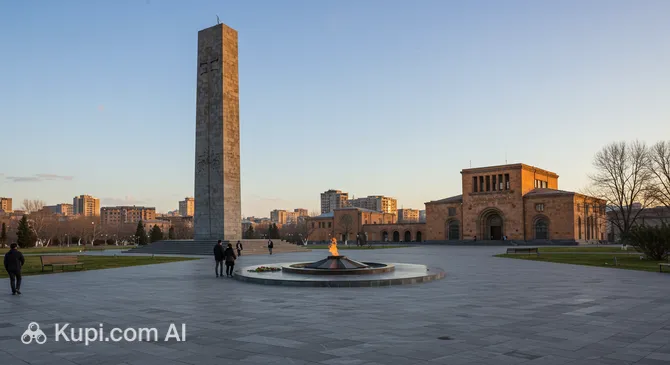
Tsitsernakaberd Armenian Genocide Memorial Complex. Illustration.
Source: Kupi.com AI

Traveler photos:

The architectural ensemble of Tsitsernakaberd, covering an area of 4,500 square meters, consists of three main elements, each carrying deep symbolic meaning. These are the Wall of Memory, where the names of settlements affected during the tragic events are carved; the central sanctuary with the Eternal Flame, surrounded by twelve inward-leaning basalt slabs symbolizing mourning figures; and the nearby 44-meter "Rebirth of Armenia" obelisk, split into two parts, symbolizing the division of the Armenian people as well as their unity and will to live.

The strict and monumental outlines of the structure blend harmoniously into the surrounding landscape, emphasizing its solemnity and mournful beauty. Since its completion in 1967, Tsitsernakaberd has become an integral part of Yerevan's architectural identity and a vital place of pilgrimage for Armenians from around the world, as well as for all who honor the memory of past tragedies and value peace.

The Armenian Genocide Museum-Institute is also located on the complex grounds, featuring an exhibition that details the events of those years through documents, photographs, and personal items. Visiting Tsitsernakaberd is not just a sightseeing trip, but a profound emotional experience that allows for a deeper understanding of Armenia's history and soul.

Contacts

To find out current information about the operation of the Tsitsernakaberd Memorial Complex to the victims of the Armenian Genocide, including opening hours, event programs, and visiting conditions, we recommend referring to official data. The most complete information is available on the website of the Armenian Genocide Museum-Institute.

How to contactContact
Address8, 8 Tsitsernakaberd Hwy, Yerevan 0028, Armenia
Phone number+374 10 391412
Websitewww.genocide-museum.am

What to Do

Visiting the Tsitsernakaberd Memorial Complex in Yerevan is, above all, an opportunity to pay tribute to the memory of the victims of the tragic events in the history of the Armenian people. The central elements of the complex that visitors interact with are the sanctuary with the Eternal Flame, where you can lay flowers, and the Wall of Memory. This is a place for quiet reflection and deep immersion into history.

The Armenian Genocide Museum-Institute, opened in 1995, is also located on the site. It functions as a research center under the National Academy of Sciences of the Republic of Armenia. Visitors can explore an extensive exhibition including historical documents, photographs, and various materials detailing the events of the early 20th century. The museum's exhibition allows for a deeper understanding of the scale of the tragedy and its consequences for the Armenian people.

Walking through the complex and visiting the museum provides an opportunity not only to learn more about history but also to reflect on such important concepts as the value of peace, justice, and the need to preserve historical memory for future generations. The atmosphere of Tsitsernakaberd encourages quiet contemplation and empathy.

Getting There

The Tsitsernakaberd Memorial Complex, a landmark site in Yerevan, is located on the hill of the same name, offering views over the city. You can reach this important monument in several ways, depending on your preferences and starting point.

One common option is public transport. Although the Yerevan metro does not have a station right at the foot of Tsitsernakaberd hill, you can take the metro to the nearest stations, such as "Barekamutyun" or "Marshal Baghramyan." From there, you can reach the memorial by taxi, which takes very little time, or if you prefer walking and are ready for an uphill climb, you can go on foot. Various city buses and minibuses also head towards the Karen Demirchyan Sports and Concert Complex, located near Tsitsernakaberd. It is recommended to check the current route numbers passing near the memorial in advance.

The most comfortable and fastest way to get to the Tsitsernakaberd Memorial Complex, especially if you are traveling with children, the elderly, or simply value convenience, is by taxi. A taxi ride from the center of Yerevan or any other part of the city won't take much time and will allow you to get as close as possible to the entrance of the complex. Taxi services are well-developed in Yerevan, and a car can easily be ordered via mobile apps or by phone.

Nearest city: Yerevan

History & Facts

The Tsitsernakaberd Memorial Complex to the victims of the Armenian Genocide in Yerevan is one of the most significant and moving monuments in Armenia. The idea for its creation was first publicly voiced in 1965, marking the 50th anniversary of the tragic events of the early 20th century. It was initiated by Yakov Zarobyan, the First Secretary of the Communist Party of Armenia, who in 1964 sent a memorandum to the central authorities proposing the construction of a monument dedicated to the memory of the Armenians who perished during World War I.

Notably, the construction of the memorial complex was sanctioned by the Soviet authorities. This decision was quite unusual for the time, as expressions of national ideology were generally discouraged in the Soviet Union. According to Amatuni Virabyan, the director of the National Archives of Armenia, one possible motivation for the authorities might have been the desire to strengthen influence over the Armenian diaspora (Spyurk) and use it within Soviet propaganda. Thus, the permission to build became a kind of compromise.

The memorial complex was built in 1967 and has since become a sacred place for Armenians worldwide, symbolizing eternal memory and sorrow. Tsitsernakaberd hill was chosen for its construction, which translates to "Swallow's Fortress." This picturesque location, rising above the Hrazdan River gorge, was perfectly suited for a monument intended to be seen from afar and serve as a perpetual reminder of the tragedy.

Time Needed

To visit the Tsitsernakaberd Memorial Complex to the victims of the Armenian Genocide in Yerevan, it is recommended to set aside approximately 2-3 hours. This will allow you to explore the main parts of the complex without rushing, including the memorial itself on Tsitsernakaberd hill and the Armenian Genocide Museum-Institute located nearby.

The majority of the time is usually spent at the Museum-Institute. Depending on your interest in the exhibition, which includes historical documents, photographs, personal stories, and artifacts, exploring the museum may take from 1.5 to 2.5 hours. If you plan to study the materials in detail and read all the descriptions, allow more time.

Viewing the outdoor memorial itself — the Wall of Sorrow, the Eternal Flame, and the 44-meter stele symbolizing the rebirth of the Armenian people — usually takes about 30-60 minutes. This time also includes the opportunity to walk peacefully around the grounds, soak in the atmosphere of the place, and pay your respects. Therefore, for a thoughtful and complete visit, you should aim for the specified time range.

Working Hours

The Tsitsernakaberd Memorial Complex to the victims of the Armenian Genocide in Yerevan is a landmark site, and it is important to clarify visiting details in advance. The outdoor memorial itself is generally accessible throughout the day and year-round, allowing guests to pay their respects at a time convenient for them. However, the Armenian Genocide Museum-Institute, located on the complex grounds, operates on a set schedule. Since museum opening hours can vary, especially depending on the season or special events, it is recommended to check the current information on the official website of the Armenian Genocide Museum-Institute or contact the administration by phone before your visit.

Usually, prior ticket booking is not required for individual visits to the memorial and museum. Nevertheless, for groups or if you wish to have a guided tour, advance booking may be necessary. Given the importance and popularity of this site, it is always best to check all details in advance on official resources to ensure your visit goes smoothly and you can give this significant monument the attention it deserves.

DayOpening hours
MondayClosed
Tuesday10:00 – 17:00
Wednesday10:00 – 17:00
Thursday10:00 – 17:00
Friday10:00 – 17:00
Saturday10:00 – 17:00
Sunday10:00 – 17:00

Nearby

Visiting the Tsitsernakaberd Memorial Complex to the victims of the Armenian Genocide in Yerevan is undoubtedly a significant and moving experience. However, to make your journey to the capital of Armenia even more fulfilling, we recommend exploring other interesting places nearby.

Getting to know the surroundings of Tsitsernakaberd will allow you to discover more of Yerevan, see it from different angles, and find new cultural sites or pleasant spots to relax. Below is a list of some attractions located near the memorial, with the distance to them indicated.

NameDistance
Dalma Garden Mall0.7 km
Sergei Parajanov Museum1.1 km
ARARAT Museum1.2 km
Yerevan Ferris Wheel1.3 km
Blue Mosque1.5 km
Lover's Park1.5 km
In Vino1.6 km

Have you reached the end of the page?

So the route has been studied inside and out