Support

National Botanical Garden of Georgia

About

The National Botanical Garden of Georgia is a true green oasis sprawling in the historic heart of Tbilisi, the capital of Georgia. The garden is nestled at the foot of the Sololaki Ridge in the picturesque Legvtakhevi gorge, through which the Tsavkisistskali River flows. Interestingly, until 1845, this magnificent site was known as the "Royal Garden," testifying to its rich history and significance.
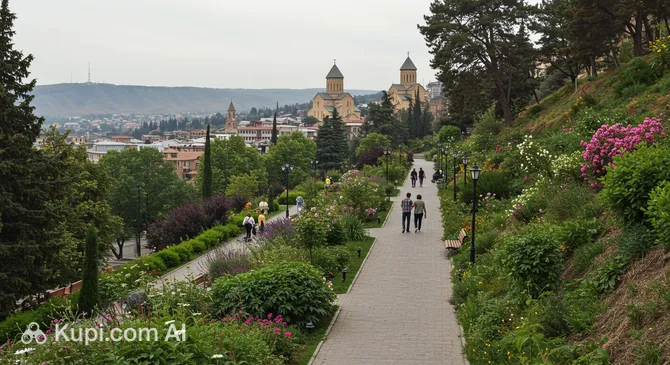
National Botanical Garden of Georgia. Illustration.
Source: Kupi.com AI

Traveler photos:

Occupying an impressive area of 161 hectares, the Botanical Garden is a significant natural site right in the city center. It is an ideal place for those who want to take a break from the urban hustle and enjoy the diversity of flora. The Tsavkisistskali River flowing through the garden adds special charm and creates a peaceful atmosphere.

One of the highlights of the garden is the three bridges crossing the river. The elegant arched bridge built in 1914 deserves special attention. It is located near the famous Legvtakhevi waterfall, creating an incredibly photogenic and romantic spot. A walk through the garden will offer not only an encounter with rare plants but also an opportunity to touch history and enjoy beautiful views.

Contacts

To obtain the most up-to-date information regarding the operation of the National Botanical Garden of Georgia, including visiting hours, ticket prices, and scheduled events, it is recommended to consult official sources. The primary contact resource is the garden's official website.

How to contactContact
AddressBotanikuri St, T'bilisi, Georgia
Phone number+995 32 272 43 06
Websitenbgg.ge

What to Do

Visitors to the National Botanical Garden of Georgia can immerse themselves in the wonderful world of flora by exploring its vast plant collection, which has been carefully curated over many decades. A walk through the garden is an opportunity to see a variety of plants presented on several scenic terraces, as well as to look into the greenhouse, where interesting tree species are gathered. This is not just a pleasant pastime, but also an introduction to scientific work on preserving plant diversity.

In addition to discovering unique plants, the garden offers magnificent panoramic views. From here, breathtaking perspectives open up, including the famous Legvtakhevi waterfall and the elegant arched bridge over the river, which serve as beautiful backdrops for photographs and moments of serenity. Although the garden grounds may have housed other entertainment venues in the past, today the National Botanical Garden of Georgia is primarily an important scientific and conservation site, an ideal place for peaceful relaxation and connection with nature in the heart of Tbilisi.

Getting There

Reaching the National Botanical Garden of Georgia is quite simple, as it is conveniently located in the heart of historic Tbilisi. The garden lies to the south of the Sololaki Ridge, in the picturesque Legvtakhevi river valley. Thanks to this central location, the journey there can be a pleasant stroll through the colorful streets of the Old Town.

The main landmark for visitors is Botanical Street. This street leads directly to the main entrance of the garden. The exact address for your GPS or taxi is 1 Botanical Street. Interestingly, this street has a rich history: it once led to the Ganja Gate, while today it serves as the main route for everyone wishing to immerse themselves in the world of flora and enjoy the tranquility of this green sanctuary.

Since the National Botanical Garden of Georgia is located in the central part of Tbilisi, it can be reached in various ways. You can use public transport to the nearest stops in the Old Town area and then take a short walk. Alternatively, a taxi is always an option to quickly bring you from any point in the capital directly to the entrance on Botanical Street.

Nearest city: Tbilisi

History & Facts

The history of the National Botanical Garden of Georgia dates back centuries, at least to 1625. Long before gaining official status, the gardens at this site had already attracted the attention of researchers and travelers. For instance, the famous French traveler Jean Chardin mentioned them in 1671, and his compatriot, the botanist Joseph Pitton de Tournefort, described them in 1701. Notably, these gardens were even marked on a map of Tbilisi compiled by Prince Vakhushti Bagrationi in 1735, highlighting their long-standing renown.

After Georgia joined the Russian Empire, the territory of this future gem belonged to the treasury and was known as the "Tiflis Crown Garden." At times, it was even leased out. However, the turning point in the garden's history occurred on May 1, 1845. It was then, by decree of the Viceroy of the Caucasus, Count Mikhail Vorontsov, that the garden received the official status of "Botanical Garden." This event marked the birth of the first botanical garden in the entire Transcaucasus, laying the foundation for its future scientific and cultural significance.

Despite such a promising start, the garden went through a difficult period after 1856, temporarily turning into an entertainment venue with grill houses, which distanced it from its original purpose. Fortunately, this phase was short-lived. By 1869, the garden was once again used for its intended purpose—the cultivation and study of useful plants. The revival and development of the garden during this period are closely linked to the name of Karl Heinrich Scharrer, who is rightfully considered its founding father, having laid the groundwork for its rich collection and scientific activities.

Time Needed

When planning a visit to the National Botanical Garden of Georgia, it is worth setting aside at least 2-3 hours for exploration. This will be enough time to leisurely stroll through the main alleys, enjoy the views, and take beautiful photos. The garden covers a significant area, and to get a general sense of its beauty and diversity, some time is required.

If you wish to study the plant collections in more detail, visit the greenhouse, find all the picturesque spots including the waterfall and bridges, or simply relax in the shade of the trees, you could easily spend half a day in the garden. The time spent here depends largely on your pace and interest in botany. For nature lovers and those who enjoy quiet walks, this place can be a source of inspiration for many hours.

Given the garden's size (161 hectares) and the presence of various themed zones and viewpoints, it is recommended to allow at least a few hours for your visit. This will enable you to enjoy the unique atmosphere of this green oasis in the heart of Tbilisi without rushing.

Working Hours

The National Botanical Garden of Georgia is typically open to visitors year-round; however, exact opening hours may vary depending on the season. For example, the garden may stay open longer in the summer and close earlier in the winter. As specific operating hours and potential schedule changes are not always available in general sources, it is highly recommended to check the current information on the garden's official website or by contacting local tourist information centers before your visit.

Regarding the need for advance ticket booking or registration, it is also best to clarify this beforehand, especially if you plan to visit during the peak tourist season or on weekends. Some special tours or events may require pre-registration. Checking the official website will help you plan your visit in the best possible way and avoid any potential inconvenience.

9:00 – 18:30

Nearby

Visiting the National Botanical Garden of Georgia is a wonderful adventure in itself, but exploring its surroundings can significantly enrich your experience. Tbilisi is a city with a rich history and culture, and many of its iconic landmarks are in the immediate vicinity of the garden, making it easy to combine several visits in one day.

A stroll through the nearby attractions will allow you to dive deeper into the atmosphere of the Old Town, see the architectural contrasts, and feel the unique flavor of the capital of Georgia. This is an excellent opportunity to expand your itinerary and make your trip even more fulfilling and memorable.

NameDistance
Usakhelouri Restaurant0.2 km
See3600.3 km
Khinkali Pub0.3 km
Bridge of Peace0.7 km
Freedom Square0.9 km
The Clock Tower1 km
Galleria Tbilisi1.1 km

Have you reached the end of the page?

So the route has been studied inside and out