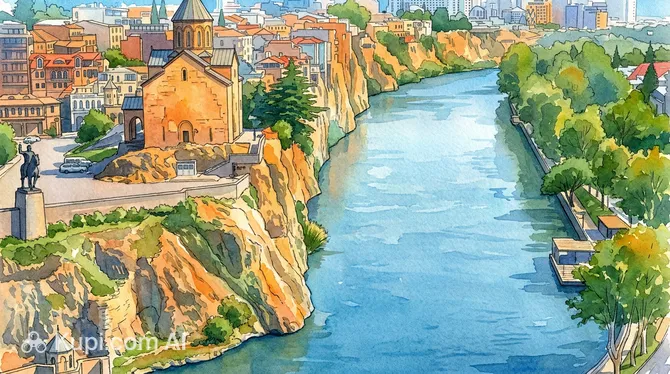
Welcome to Tbilisi, the vibrant and soulful capital of Georgia. This city is a stunning blend of ancient traditions and modern energy, where dramatic cliffs meet eclectic architecture. Known for its warm hospitality and spirited atmosphere, Tbilisi serves as the cultural, industrial, and social heartbeat of the country, inviting travelers to get lost in its charming labyrinth of streets.
Geographically, the city is uniquely situated along the banks of the Kura River (Mtkvari), surrounded by mountains on three sides. This location creates a picturesque setting with a diverse landscape that ranges from the riverside lowlands to the elevated neighborhoods on the hills. With a population of over 1.1 million people, it is a bustling metropolis that still manages to retain a cozy, community-focused feel.
Tbilisi. Illustration.
Source: Kupi.com AI
The history of Tbilisi is deeply etched into every cobblestone of the Old Town. Legend has it that the city was founded in the 5th century by King Vakhtang Gorgasali, who was impressed by the area's hot springs. Today, visitors can still experience these famous thermal waters in the Abanotubani district, characterized by its distinctive brick domes. Above the city stands the ancient Narikala Fortress, offering panoramic views that are especially breathtaking at sunset.
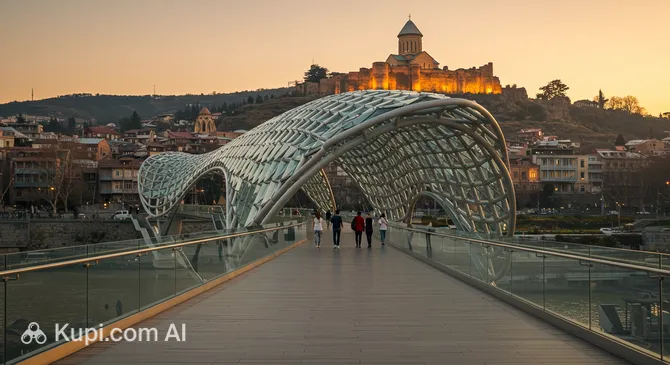
Beyond its historical core, the city surprises with contemporary landmarks like the glass Bridge of Peace, symbolizing the connection between the past and the future. Whether you are exploring the wooden balconies of traditional houses or enjoying the thriving café culture, Tbilisi promises an unforgettable journey. It is a destination that truly captures the imagination, making it a must-visit spot for anyone traveling to the Caucasus.
Weather Overview
The weather in Tbilisi is generally distinct across the four seasons, offering travelers a mix of hot summers and cold winters. The climate is moderately humid, with significant variations in temperature and rainfall frequency throughout the year, making it important to pack accordingly based on your travel dates.
Winter is the coldest time to visit, particularly in January when the average temperature drops to 1.0°C and minimums can reach -3.1°C. As the city transitions into spring, temperatures rise steadily, reaching an average of 14.7°C in May. However, spring is also characterized by frequent rainfall, with March recording up to 16 wet days, so carrying an umbrella is advisable during this period.
Summer brings the warmest weather, with July and August seeing average temperatures around 23°C and daily highs peaking near 29°C. These months are drier compared to spring, with only about 6 to 7 wet days per month. Autumn offers a pleasant start with an average of 18.3°C in September, but the air cools down rapidly by November, dropping to an average of 6.0°C. Expect warm summers with occasional rain and cold, dry winters.
Average monthly temperature
Average monthly precipitation
Interesting Facts
Beyond the well-trodden paths of the Old Town, Tbilisi holds many fascinating secrets that reveal its quirky character and deep historical roots. Here are a few unique features that make the Georgian capital truly special:
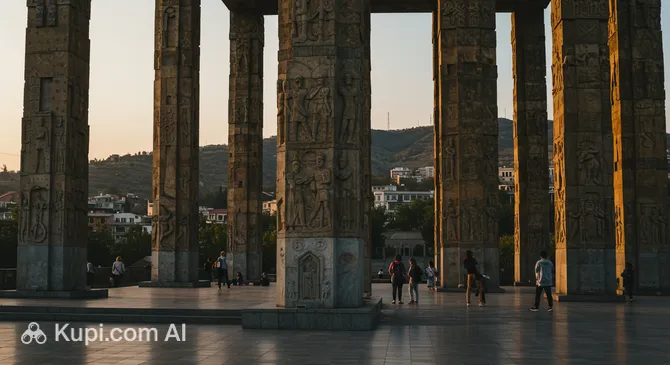
Often referred to as the "Georgian Stonehenge," the massive monument known as the Chronicles of Georgia stands proudly on a hill near the city's outskirts. This colossal structure consists of giant pillars depicting the history of Georgian kings, queens, and the life of Christ, yet it remains a hidden gem often overlooked by mainstream tourism.
The whimsical The Clock Tower, created by renowned puppeteer Rezo Gabriadze, looks like a fairytale structure on the verge of collapse. This deliberate architectural oddity features a small angel that emerges to ring a bell every hour, and a screen showing the circle of life: a boy and a girl meeting, marrying, and aging.
The iconic statue of Mother of Georgia (Kartlis Deda) carries a powerful symbolic message in her hands. She holds a bowl of wine in her left hand to welcome those who come as friends, and a sword in her right hand to ward off those who come as enemies, perfectly encapsulating the Georgian national character.
Despite being a landlocked city, locals have their own summer beach escape known as the Tbilisi Sea. This large artificial reservoir was created in the 1950s and serves as a popular recreational spot for swimming, sailing, and escaping the summer heat, complete with a yacht club and aquapark.
Chronicles of Georgia. Illustration.
Source: Kupi.com AI
Traveler photos:
How to Get There
Reaching the Georgian capital is becoming increasingly easy as it grows in popularity as a travel destination. Most international visitors choose to fly, but there are overland options as well for those exploring the wider Caucasus region. For a detailed breakdown of all transport methods and routes, you can read more about how to get to Tbilisi.
The most direct way to arrive is via Tbilisi International Airport (TBS), which serves as the country's main aviation hub. Located just 13 km from the city center, it welcomes a large number of international flights. The journey from the terminal to downtown Tbilisi is quick and convenient, typically taking about 40 minutes by taxi or bus.
Alternatively, some travelers may fly into Zvartnots International Airport (EVN), located in the city of Yerevan. While this airport is approximately 174 km away from Tbilisi, it is a large regional hub that can be a viable entry point for those planning a multi-country trip. The transfer by road from Yerevan to Tbilisi generally takes around 4 hours and 40 minutes.
For clarity, here is a summary of the main airports:
If you are considering arriving by train from neighboring regions, there are several stations located in nearby cities that serve as transit points. One of the closest options is Akstafa Railway Station in the city of Aghstafa, situated about 83.5 km from Tbilisi. From there, a taxi or bus ride to the Georgian capital takes approximately 2 hours and 25 minutes. Another possibility is arriving at Vladikavkaz Railway Station in Vladikavkaz, which is roughly 150 km away. The travel time from this station to Tbilisi is around 4 hours.
Below is a list of railway stations in the vicinity:
Station
Passenger traffic
Distance
Akstafa Railway Station
250 000
84 km
Vladikavkaz Railway Station
750 000
150 km
Beslan Railway Station
—
167 km
Nazran Station
82 000
171 km
Darg-Kok Railway Station
—
180 km
Main Attractions
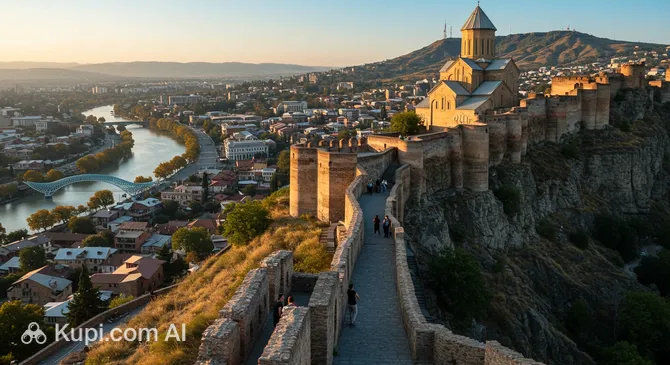
Dominating the skyline of the Old Town, Narikala Fortress is an ancient symbol of the city's defense and resilience. Dating back to the 4th century, this Persian citadel offers some of the most spectacular panoramic views over the Mtkvari River and the colorful rooftops below. Visitors can reach the fortress by a scenic cable car ride from Rike Park or by a steep hike up the cobblestone streets, making it a perfect spot to watch the sunset.
Narikala Fortress. Illustration.
Source: Kupi.com AI
Traveler photos:
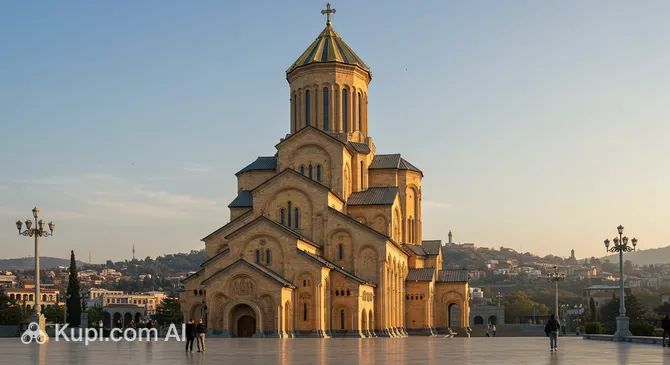
Visible from almost any point in the city, the Holy Trinity Cathedral of Tbilisi, commonly known as Sameba, is a masterpiece of modern Georgian architecture. As one of the largest Orthodox cathedrals in the world, its golden dome shines brightly against the backdrop of the mountains. The complex includes a spacious courtyard, a bell tower, and beautifully manicured gardens, offering a peaceful retreat and a sense of spiritual grandeur.
Holy Trinity Cathedral of Tbilisi. Illustration.
Source: Kupi.com AI
Traveler photos:
For a mix of leisure and entertainment, Mtatsminda Park sits atop Mount Mtatsminda, the highest point in the city. Accessible via a historic funicular railway, this landscaped park features amusement rides, a giant Ferris wheel, and charming cafes. It is a favorite destination for families and couples alike, providing fresh mountain air and an unrivaled vantage point to see the entire city illuminated at night.
Connecting the historic districts with the modern era, the Bridge of Peace is a striking bow-shaped pedestrian bridge made of glass and steel. Spanning the Kura River, it is especially captivating in the evening when thousands of LED lights illuminate the structure in a rhythmic pattern. The bridge leads directly into Rike Park, making it a convenient and photogenic thoroughfare for exploring both sides of the riverbank.
Bridge of Peace. Illustration.
Source: Kupi.com AI
Traveler photos:
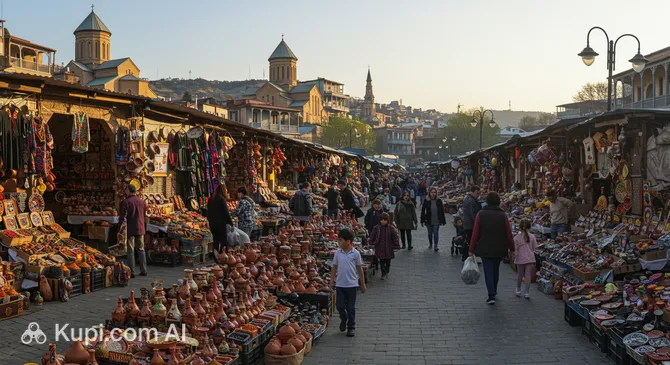
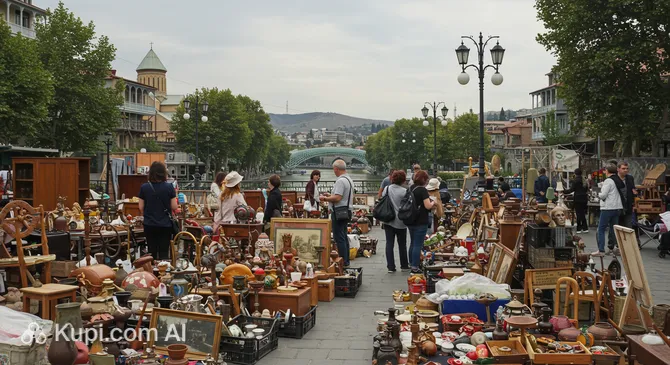
For those who love hunting for unique treasures, the Dry Bridge Market is an open-air flea market that feels like a living museum. Here, vendors display an eclectic array of items ranging from Soviet-era memorabilia and vintage cameras to handmade jewelry and traditional Georgian artwork. It is an excellent place to find one-of-a-kind souvenirs and interact with locals who often have fascinating stories behind the objects they sell.
Local Cuisine
The culinary scene in Tbilisi is a flavorful journey that mirrors the city's warm and spirited character. Georgian cuisine is renowned for its hearty use of meat, dough, and fresh vegetables, all elevated by a unique blend of spices like coriander, blue fenugreek, and marigold. Walnut paste is a cornerstone ingredient, appearing in everything from appetizers to soups, creating a rich and savory profile that defines the local palate.
No visit to the capital is complete without trying Khinkali, the iconic twisted dumplings typically filled with spiced meat and broth. Eating them is a ritual in itself: you hold the dumpling by its doughy "handle" (which is usually discarded), bite a small hole to drink the hot juice, and then devour the rest. For those looking to dive into this tradition, places like Khinkali Pub offer a relaxed atmosphere to enjoy these treats alongside locals. Another non-negotiable staple is Khachapuri, a cheese-filled bread that comes in various regional styles, with the boat-shaped Adjaruli version topped with butter and a raw egg being a favorite indulgence.
Beverages are just as central to the culture as the food. Georgia is often cited as the birthplace of wine, with a history stretching back 8,000 years. The traditional amber wine, fermented in clay vessels called qvevri buried underground, offers a distinct, tannic taste that pairs perfectly with the heavy cuisine. To explore this heritage, travelers can visit Wine Factory No. 1, a historic venue that celebrates the country's viticulture. For non-alcoholic options, the bright green tarragon lemonade is a refreshing and beloved local classic.
Deserter Market. Illustration.
Source: Kupi.com AI
Traveler photos:
For a raw and authentic taste of Tbilisi's ingredients, a trip to the Deserter Market is essential. This bustling bazaar is a sensory overload of colorful spices, piles of salty Georgian cheese, and strings of Churchkhela—a candle-shaped candy made from grape must and nuts. It is the perfect place to mingle with vendors, taste fresh produce, and see the building blocks of the city's delicious dishes.
When it comes to dining out, the options range from trendy modern cafes to traditional establishments that host the famous Georgian supra (feast). Restaurants like the Georgian House provide a comprehensive experience, often accompanied by polyphonic singing and folk dancing. Whether you are grabbing a quick bite of street food or settling in for a long dinner with toasts of Chacha (grape vodka), eating in Tbilisi is always a communal and celebratory affair.
Travel Tips
Visiting Tbilisi is an exciting adventure, but like any ancient city with a modern twist, it has its own set of unwritten rules and quirks. To help you navigate the winding streets and local customs with ease, here are some practical tips to ensure your trip is as smooth as it is memorable.
Clothing and Gear
The city's terrain is full of hills and cobblestones, so comfortable walking shoes are an absolute must. In terms of attire, layers are key; summers can be scorching while winters are crisp. If you plan to visit religious sites like the Holy Trinity Cathedral, strict dress codes apply: women are typically required to cover their heads and wear skirts (wraps are often provided at entrances), and men should wear long trousers.
Transportation
The most efficient way to get around is the Tbilisi Metro and the bus network, both of which use the rechargeable "MetroMoney" card or standard contactless bank cards. For door-to-door travel, ride-hailing apps like Bolt or Yandex Go are reliable and significantly cheaper than hailing a taxi on the street. Avoid driving yourself if possible, as local traffic can be chaotic and parking in the center is scarce.
Finances
The official currency is the Georgian Lari (GEL). While credit cards are widely accepted in restaurants, hotels, and supermarkets, you will definitely need cash for small bakeries, the Dry Bridge Market, and public toilets. ATMs are plentiful throughout the city. Tipping is becoming standard; many restaurants add a 10-15% service charge to the bill, but leaving a little extra for good service is appreciated.
Health and Safety
Tbilisi is generally a very safe city for tourists. Pharmacies (such as Aversi, PSP, and GPC) are located on almost every corner, and many operate 24/7. The biggest safety concern is often road traffic; drivers can be aggressive, and cars do not always stop for pedestrians at crosswalks, so always look twice and make eye contact with drivers before crossing.
Communication
The official language is Georgian, which has its own unique script. English is widely spoken by the younger generation and in the tourism sector, while older locals may be more fluent in Russian. It is helpful to learn a few basics like "Gamarjoba" (Hello) and "Madloba" (Thank you). Local SIM cards from providers like Magti or Silknet are cheap, easy to set up, and offer excellent 4G coverage.
Local Etiquette
Georgians are famous for their hospitality, and a guest is often considered "a gift from God." If you are invited to a local's home or a supra (feast), be prepared for long, eloquent toasts. It is customary to wait for the toastmaster (tamada) to finish speaking before drinking your wine. In public, greeting with a handshake or a kiss on the cheek is common among friends.
What to Avoid
Avoid entering churches in shorts, short skirts, or tank tops, as this is considered disrespectful. Also, try not to rely on street taxis without a meter; if you must take one, negotiate the price firmly before getting in to avoid being overcharged.
Additional Tip
Keep a stash of 10 and 20 tetri coins in your pocket. Many elevators in older residential buildings (and even some Airbnbs) are coin-operated. You often need to insert a coin to make the lift go up, though coming down is usually free!
Armed with these tips, you are ready to dive into the soulful rhythm of Tbilisi. Embrace the hospitality, respect the traditions, and enjoy the chaotic charm of this magnificent city!
Entertainment & Nightlife
Entertainment and Nightlife:
As the sun sets behind the mountains, Tbilisi transforms into a pulsating hub of energy that rivals many European capitals. The city's nightlife scene has gained international acclaim, particularly for its world-class techno clubs, but there is far more to the evening entertainment than just pounding beats. From sophisticated wine bars tucked away in 19th-century cellars to lively pubs and rooftop terraces offering sweeping views of the illuminated city, there is something for every nocturnal adventurer.
For those seeking a lively atmosphere with a high concentration of venues, the Shardeni Street area in the Old Town is a popular starting point. While it is quite tourist-oriented, it offers a dense row of hookah lounges, open-air cafes, and clubs where the music spills out onto the cobblestones. For a more local and bohemian vibe, head to the streets around the Fabrika complex or explore Akhvlediani Street (often called "Perovskaya"), which is lined with pubs and bars perfect for bar-hopping.
If you appreciate live music in an intimate setting, the 1984 Jazz Club is a fantastic choice. It offers a cozy atmosphere where you can enjoy high-quality jazz performances accompanied by fine Georgian wines. For a more elevated experience—quite literally—you might visit Terrace Bar Dali. Located near the historic fortress, it provides a stunning vantage point to sip cocktails while gazing at the twinkling lights of the city below. Later in the night, those looking to dance can check out See360, a venue known for its vibrant party atmosphere.
1984 Jazz Club. Illustration.
Source: Kupi.com AI
Traveler photos:
When planning a night out, keep in mind that Tbilisi starts late. Most bars do not get busy until after 9:00 PM, and the serious clubbing scene often doesn't kick off until well after midnight. Dress codes vary significantly; while casual attire is fine for most bars and pubs, the top-tier techno clubs often enforce strict "face control," favoring black, understated, and alternative fashion. Prices are generally affordable compared to Western Europe, with a beer costing around 5-8 GEL and cocktails ranging from 15-25 GEL.
Safety is rarely an issue for night owls in Tbilisi. The central districts are well-lit and populated even in the early hours. However, as with any major city, it is wise to stay aware of your surroundings. Public transport stops running around midnight (though the metro sometimes extends hours on holidays), so the best way to get home is by using ride-hailing apps. This ensures you get a fair price and a tracked journey, avoiding the need to haggle with street taxi drivers.
While the nights are electric, daytime entertainment in Tbilisi is equally enriching. The city's main artery, Rustaveli Avenue, is the cultural spine of the capital, hosting the majestic Opera and Ballet Theatre and the Rustaveli Theatre. For museum enthusiasts, the Art Palace of Georgia – Museum of Cultural History offers a deep dive into the nation's artistic heritage, housed in a beautiful Gothic-style palace. Whether you are exploring cultural treasures by day or dancing until dawn, Tbilisi guarantees an unforgettable experience.
Parks & Museums
Beyond its bustling avenues and historic streets, the capital offers a refreshing array of green sanctuaries and cultural institutions that showcase the nation's artistic soul. Whether you are looking to escape into nature without leaving the city limits or dive deep into the rich tapestry of Georgian heritage, the city's parks and museums provide a perfect counterbalance to its urban energy.
Tucked away behind the Sololaki Ridge, the National Botanical Garden of Georgia is a stunning natural retreat that feels worlds away from the city center, despite being just a short walk from the Old Town. Spanning over 160 hectares, this lush valley features a spectacular 40-meter waterfall, bamboo groves, and thousands of plant species from the Caucasus and around the world. It is an ideal spot for a peaceful hike, offering scenic bridges and quiet trails that wind through the dramatic landscape.
National Botanical Garden of Georgia. Illustration.
Source: Kupi.com AI
Traveler photos:
For a more urban green space, Mziuri Park offers a delightful respite in the Vake district. Originally conceived as a "City of the Sun" for children, this park has been revitalized into a modern recreational area with amphitheaters, skate parks, and whimsical statues of characters from Georgian literature. It serves as a popular gathering place for locals, hosting open-air movie screenings and festivals, making it a vibrant hub of community life.
Culture enthusiasts will find a treasure trove at the Art Palace of Georgia – Museum of Cultural History. Housed in a magnificent Gothic-style palace that was once the residence of a German prince, the museum itself is an architectural gem. Inside, it holds a vast collection of theatre costumes, sketches, manuscripts, and memorabilia that trace the history of Georgian cinema, theater, and choreography, offering a unique glimpse into the country's creative legacy.
In stark contrast to the traditional museums, the Tbilisi Digital Space represents the modern face of the city's art scene. This immersive venue focuses on digital art and visual storytelling, using cutting-edge technology to create interactive exhibits. It is a fascinating destination for those interested in how contemporary Georgian artists are blending technology with visual expression to create new narratives.
For an authentic local escape, head to Lisi Beach located on the shores of Lisi Lake, just a short drive from the city center. While the "beach" is a rocky lakeside area, the surrounding park is a favorite weekend spot for Tbilisians who come to cycle, jog, or simply enjoy a picnic with expansive views of the city below.
Getting Around
Navigating Tbilisi is an adventure in itself, offering a mix of efficient modern systems and unique local experiences. The city boasts a comprehensive public transport network that includes a subway system, buses, and minibuses (marshrutkas), making it easy and affordable to reach almost any neighborhood. For tourists, the combination of the metro for speed and cable cars for scenic views provides the best way to explore the diverse terrain of the city.
The Tbilisi Metro is the backbone of the city's transit, consisting of two lines that connect the suburbs to the center. The stations are often deep underground, reflecting their Soviet-era construction, and trains run frequently from approximately 6:00 AM to midnight. It is the fastest way to avoid traffic jams during rush hours. Complementing the metro is a fleet of modern blue and green buses, which are air-conditioned and comfortable. For narrower streets and areas not served by larger vehicles, the iconic marshrutkas (minibuses) fill the gaps, though they can be a bit more chaotic to navigate for first-time visitors.
Paying for transport is incredibly convenient for travelers. The system is integrated, meaning you can use the same payment method for the metro, buses, and cable cars (excluding the Mtatsminda Funicular). The most popular option is the MetroMoney card, a rechargeable smart card available for purchase at any metro station for a small deposit. Alternatively, you can simply tap your contactless Visa or Mastercard or use Apple Pay/Google Pay directly on the turnstiles and bus card readers. A single journey costs typically 1 GEL, and this fare allows for free transfers between the metro and buses within a 90-minute window.
One of the city's most distinctive features is its network of cable cars and funiculars, which serve as both practical transport and tourist attractions. The aerial tramway connecting Rike Park to Narikala Fortress offers breathtaking views of the Old Town and is the easiest way to reach the citadel. Meanwhile, the historic Mtatsminda Funicular is a separate system requiring its own specific card (available at the station); it whisks passengers up a steep incline to the amusement park and restaurant complex overlooking the city.
If you prefer a more direct route, taxis are plentiful and very inexpensive compared to European standards. However, it is highly recommended to use ride-hailing apps like Bolt or Yandex Go rather than hailing a cab on the street. These apps ensure a fixed price and overcome any language barriers with drivers. While the city center is walkable, keep in mind that Tbilisi is built on hills, so be prepared for some steep climbs if you choose to explore on foot.
Accommodation
Accommodation in Tbilisi caters to every type of traveler, blending traditional Georgian hospitality with modern comfort. The city offers a diverse range of options, from international luxury chains and stylish boutique hotels to budget-friendly hostels and family-run guesthouses. Over the past decade, the rental market has also boomed, with many visitors opting for renovated apartments in historic buildings to get a taste of local life.
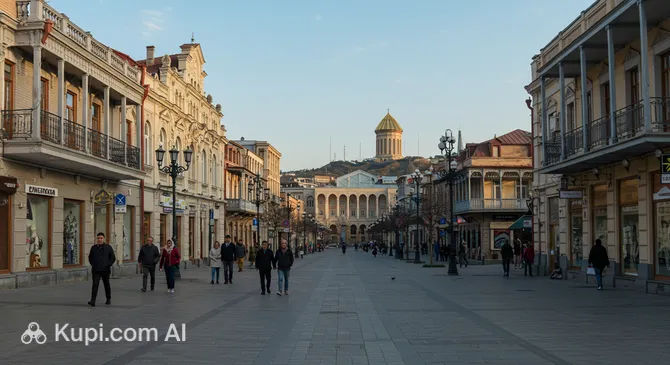
For those visiting for the first time, the most popular area to stay is undoubtedly the Old Town (Dzveli Tbilisi). Staying here puts you within walking distance of the sulfur baths, the fortress, and the winding cobblestone streets. Alternatively, the area around Rustaveli Avenue is an excellent choice for those who prefer a more central and cosmopolitan vibe. This main thoroughfare is well-connected by public transport and lined with museums, theaters, and shops.
Rustaveli Avenue. Illustration.
Source: Kupi.com AI
Traveler photos:
Travelers seeking a quieter, more upscale experience might prefer the Vake district. Although it is not served by the metro, it is known for its leafy parks, trendy cafes, and high-end restaurants. On the other side of the river, the Marjanishvili and Chugureti neighborhoods offer a hip, bohemian atmosphere. These areas are famous for their beautifully restored 19th-century architecture and the pedestrianized Aghmashenebeli Avenue, which is packed with dining spots.
A unique aspect of staying in Georgia is the prevalence of guesthouses, especially in the older districts. These are often family-operated and offer a warm, personal touch, sometimes including a homemade breakfast that rivals any restaurant. For budget travelers, there is a high concentration of modern, clean, and social hostels, particularly near Freedom Square and the Fabrika complex.
Regarding prices, accommodation in Tbilisi is generally very affordable compared to Western European capitals. A bed in a good hostel can cost as little as 20-40 GEL, while mid-range boutique hotels typically range from 150 to 300 GEL per night. It is advisable to book in advance, especially if you plan to visit during the peak summer months or the autumn harvest season (September-October), as the best options fill up quickly. Online booking platforms are widely used and reliable, making it easy to secure your stay before arrival.
Nearby Cities
For those looking to explore the surroundings, Tbilisi serves as an excellent base for day trips to several interesting nearby locations:
Located just a short drive from the capital, Mtskheta is often the first stop for travelers. As the ancient capital and the spiritual heart of the country, it boasts UNESCO World Heritage sites such as the hilltop Jvari Monastery and the magnificent Svetitskhoveli Cathedral. Its cobblestone streets and historical significance make it a perfect destination for a quick but enriching visit.
Another fascinating option is Gori, situated approximately an hour away. This city is primarily known as the birthplace of Joseph Stalin and houses a large museum dedicated to his life. Just outside the city lies Uplistsikhe, an ancient cave town carved into the rock face, offering visitors a chance to walk through dwellings and temples that date back to the Early Iron Age.
City
Population
Distance
Mtskheta
7 940
18 km
Rustavi
128 680
24 km
Marneuli
20 211
25 km
Bolnisi
8 967
34 km
Gardabani
15 100
36 km
These nearby destinations offer a glimpse into the diverse culture and landscapes of the region.
Shopping & Souvenirs
Shopping in Tbilisi offers a delightful contrast between the old and the new, ranging from sleek modern centers to chaotic, colorful bazaars. The city has rapidly developed into a regional fashion hub, boasting a mix of international high-street brands and talented local designers. Whether you are looking for authentic handicrafts, Soviet-era vintage items, or contemporary fashion, the Georgian capital provides a diverse retail experience that caters to every taste and budget.
For a traditional high-street experience, look no further than Rustaveli Avenue. As the city's main thoroughfare, it is lined with a variety of souvenir shops, bookstores, and clothing boutiques. Walking down this tree-lined avenue allows you to combine sightseeing with window shopping, as many stores are housed in beautiful 19th-century buildings. Another key area is Pekini Avenue in the Saburtalo district, which is densely packed with footwear shops, electronics stores, and popular mass-market fashion brands.
If you prefer the convenience of large shopping centers, the city has several impressive options. Located right in the heart of the city at Freedom Square, Galleria Tbilisi is a favorite for tourists due to its unbeatable location. It features six levels of retail, dining, and entertainment, including a cinema and a theater. For a more extensive spree, City Mall in the Saburtalo neighborhood is one of the largest complexes in the country, offering a vast selection of global brands, a huge hypermarket, and numerous leisure activities.
Galleria Tbilisi. Illustration.
Source: Kupi.com AI
Traveler photos:
Markets are an essential part of the local culture and offer the most atmospheric shopping experiences. The famous Dry Bridge Market is a must-visit for anyone interested in antiques, vintage jewelry, and unique memorabilia. It is an open-air museum of sorts where you can find everything from old maps and vinyl records to silverware. For a more polished market experience, visit the renovated Orbeliani Square, which hosts a modern bazaar filled with food stalls, flower vendors, and local artisan products.
Dry Bridge Market. Illustration.
Source: Kupi.com AI
Traveler photos:
When it comes to souvenirs, travelers are spoiled for choice. Georgian wine is the most popular gift, and specialized wine shops will often let you taste before you buy. Another unique item is Minankari, traditional cloisonné enamel jewelry that is colorful and intricate. For edible treats, pick up some Churchkhela (walnut and grape juice candy) or authentic Georgian spices like Svaneti salt. Locally designed socks featuring Khinkali or Khachapuri prints have also become a trendy and fun keepsake.
Most shops in malls and on major streets are open daily from 10:00 AM to 10:00 PM. Markets typically start earlier, around 9:00 AM, and wind down by 5:00 PM or 6:00 PM. Payment methods are very tourist-friendly; credit and debit cards are accepted almost everywhere, including small convenience stores. However, if you are visiting flea markets like the Dry Bridge or buying fresh produce from street vendors, carrying cash (GEL) is necessary.
Tourists visiting Georgia can also take advantage of the Tax-Free system. If you spend a certain amount (typically over 200 GEL) in a single receipt at participating stores, you can claim a VAT refund upon departure at the airport. Look for the "Tax Free" signage in shop windows and ask for a special refund form at the checkout to present to customs officers when you leave the country.