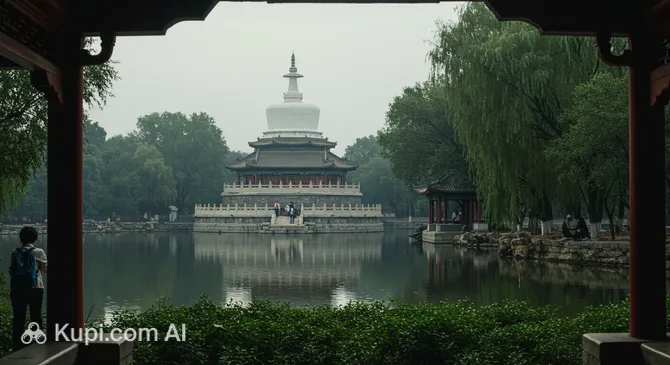
Beihai Park is one of the oldest and most significant imperial gardens in China, located in the heart of Beijing. This grand ensemble, covering an area of 68 hectares, is a classic example of Oriental landscaping with more than a thousand years of history.
Beihai Park. Illustration.
Source: Kupi.com AI
Traveller photos:
The attraction's name translates to "Northern Sea," highlighting the central role of the vast lake, around which elegant palaces, Buddhist temples, and pavilions are clustered. Beihai Park is famous for its exceptional preservation and wealth of cultural relics, making it a must-visit destination in the capital.
This site was chosen by China's rulers for their residences even before the famous Forbidden City was established. Today, the park is a harmonious blend of natural beauty and majestic architecture, where every corner is filled with an atmosphere of ancient imperial grandeur.
Contacts
When planning a stroll through the imperial Beihai Park in Beijing, we recommend checking the latest reference information in advance. This will help you better plan your route and avoid ticket office queues during high season, especially on weekends.
For your convenience, we have compiled the main contact details and coordinates of the park administration below, which may be useful during your visit to this part of China.
The main symbol of Beihai Park is the majestic White Dagoba, rising from the top of Jade Flower Island. Its observation deck offers a breathtaking panorama of central Beijing. You can reach the island via traditional bridges or by ferry, which adds a special charm to your walk.
While exploring the north shore of the lake, be sure to visit the Five Dragon Pavilions and the unique Nine-Dragon Wall. This wall is a true masterpiece of decorative art, adorned with images of mythical creatures symbolizing imperial power. It is also worth visiting the Round City, which houses a unique Buddha statue made of monolithic jade and decorated with precious stones.
Nature lovers will enjoy the winding paths and ancient trees, some of which are over 750 years old. Beihai Park offers many quiet corners and Buddhist temples, perfect for peaceful contemplation and capturing beautiful photos against the backdrop of China's ancient architecture.
Getting There
Beihai Park is conveniently located in the very center of Beijing, northwest of the famous Forbidden City. Its official address is 1 Wen Jin Jie, Xi Cheng Qu. The park is situated near Jingshan Hill, making it part of a single historic route through the city center.
The easiest way to get here is by the capital's metro: the nearest station is Lingjing Hutong (Line 6), which is in close proximity to the entrance. You can also use numerous public transport routes or a taxi, giving the driver the park's name in Chinese: 北海公园 (Běi Hǎi Gōngyuán).
Nearest city: Beijing
History & Facts
The history of Beihai Park spans over a thousand years, beginning in the 10th century during the Liao Dynasty. However, the key stage in the site's development is associated with the name of the Mongol Khan Kublai, founder of the Yuan Dynasty. It was in his palace on the park's grounds that the famous traveler Marco Polo stayed, leaving behind enthusiastic descriptions of the imperial gardens' beauty.
Most of the modern buildings and pavilions gracing the Beijing landscape were built or reconstructed during the Qing Dynasty. Emperor Qianlong paid special attention to the landscaping of the area. It was by his will that many architectural masterpieces preserved to this day appeared here. The famous White Dagoba, which became the park's visual centerpiece, was built in 1651 to commemorate the visit of the Dalai Lama.
Throughout its long history, the park has experienced both periods of prosperity and serious destruction during the events of 1900. After a large-scale restoration in 1949, Beihai Park in China regained its former glory. Officially opened to the public in 1925, today it stands as a priceless monument of garden art that preserves the spirit of the imperial past.
Time Needed
To leisurely explore the main attractions of Beihai Park, including the climb up Jade Flower Island to the White Dagoba, visitors to Beijing are recommended to set aside at least 2–3 hours. This time is quite sufficient for a pleasant walk through the main areas and viewing the primary pavilions.
If you plan to study each Buddhist temple in detail, explore the Round City, and take a boat trip on the lake, it is better to allocate about 4–5 hours for the visit. Beihai Park in China is a place where you should not rush, as its atmosphere encourages peaceful contemplation and relaxation from the city's bustle.
Working Hours
Beihai Park is traditionally open to visitors daily. According to the data provided, the park begins operation at 6:30 AM. However, given the specifics of how major park complexes in Beijing operate, it's worth noting that the evening closing time may change depending on the season.
We strongly recommend checking the current schedule directly before your visit, as operating hours may be adjusted during national holidays or special events in China. This will help you plan your visit to this historical location as effectively as possible.
6:30 – 9:00
Nearby
A visit to Beihai Park can easily be combined with exploring other iconic sites in Beijing, as it is located in an area with a very high concentration of cultural monuments. Just a few minutes' walk away is Jingshan Park, which offers the best panoramic view of the imperial palaces.
In the immediate vicinity, you will also find the legendary Forbidden City and the elegant Prince Gong's Mansion. Exploring these surroundings will allow you to delve deeper into the history of China and see different facets of the great empire's architectural heritage within a single day.