Support

National Museum of China

About

The National Museum of China, located in the heart of Beijing, is rightfully considered one of the world's greatest repositories of human civilization. This colossal building on the eastern side of Tiananmen Square is the largest museum in the world by total area, covering an impressive 192,000 square meters. Formed in 2003 by the merger of the museums of Chinese History and the Chinese Revolution, it has become the preeminent symbol of the cultural heritage of China.
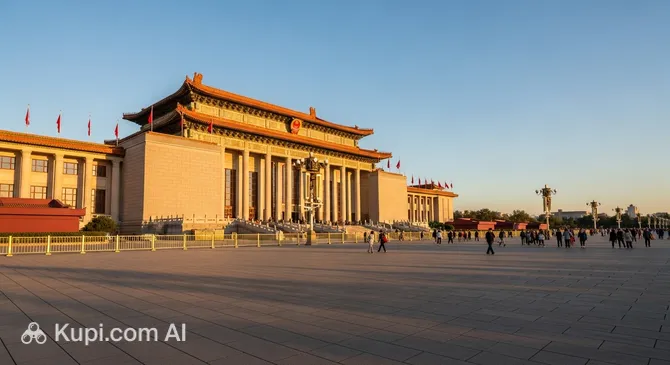
National Museum of China. Illustration.
Source: Kupi.com AI

Traveler photos:

Inside the museum, guests are taken on an incredible journey through five millennia. The collection features more than one million valuable exhibits—ranging from prehistoric finds, such as the remains of Yuanmou Man, to imperial treasures made of bronze, porcelain, and jade. The architecture of the complex harmoniously combines the monumentality of 1950s socialist classicism with modern interiors created after a large-scale reconstruction in 2011.

The uniqueness of this site lies in its ability to showcase the country's history in all its diversity. Here, you can see not only ancient artifacts but also symbols of a new era, including China's first Olympic gold medal. Major exhibitions like "Ancient China" and "The Road of Rejuvenation" offer visitors a deep and systematic immersion into the formation and development of one of the planet's oldest cultures.

Contacts

To ensure your visit to the National Museum of China is as smooth as possible, we highly recommend checking the current schedule and visiting rules on the institution's official website in advance.

As the museum is one of the most visited cultural sites in Beijing, information regarding temporary exhibitions or changes to opening hours during public holidays can be crucial for planning your trip.

How to contactContact
Address16 Dong Chang An Jie, 前门 Dong Cheng Qu, Китай, 100051
Phone+86 10 6511 6400
Websitewww.chnmuseum.cn

What to Do

Within the walls of the National Museum of China, visitors can literally touch eternity as they move from hall to hall. The main draw for tourists is the permanent exhibition "Ancient China," which showcases unique bronze works, exquisite ceramics, and ancient coins. Take your time to admire the famous ritual vessels and rare jewelry that belonged to ruling dynasties for centuries.

For fans of modern history, the "The Road of Rejuvenation" exhibition halls are a must-visit. The display details the country's journey from the mid-19th century to the present through thousands of photographs, personal belongings of historical figures, and landmark documents. The hall containing Olympic relics, featuring the country's first-ever gold medal from the 1984 Games, is particularly popular.

In addition to the main collections, the museum frequently hosts temporary international exhibitions on loan from the Louvre or the British Museum. Interactive zones are available for families with children, while art lovers will find inspiration in the galleries dedicated to traditional Chinese painting and calligraphy. Don't forget to take a break in the spacious halls, the architectural scale of which is an experience in its own right.

Getting There

The National Museum of China is located in the very heart of the Chinese capital at 16 Dong Chang An Jie, Dong Cheng Qu, right on the eastern edge of the famous Tiananmen Square. Thanks to its central location, reaching the museum from any part of the city is easy.

The most convenient way is to use the Beijing Subway. You can take Line 1 to Tiananmen East station (the exit is right next to the museum entrance) or take Line 2 or Line 8 to Qianmen station, which is less than a 10-minute walk away.

If you prefer a taxi or ridesharing services (such as Didi), simply provide the museum's name in Chinese or English. Many bus routes also pass by Tiananmen Square (e.g., Nos. 1, 2, 10, 120, and others). Keep in mind that parking in this area is very limited, making public transport the preferred choice.

For those already exploring the city center, the walk from the southern gate of the Forbidden City to the museum takes about 15 minutes. Be sure to wear comfortable shoes, as the museum grounds and surrounding areas involve a lot of walking.

Nearest city: Beijing

History & Facts

The history of the National Museum of China began in 1912 with the establishment of the Preparatory Office of the National Museum of History. It achieved its current status as a cultural giant through the merger of two iconic institutions—the Museum of Chinese History and the Museum of the Chinese Revolution—which was officially completed in 2003.

The building itself is an architectural monument; constructed in 1959, it was one of the "Ten Great Buildings" erected for the 10th anniversary of the PRC. In 2007, a massive renovation began, transforming it into one of the world's most technologically advanced museum complexes while preserving its recognizable historic facades and massive columns.

The museum's collection has been built over more than a century, incorporating priceless archaeological finds and works of art. It houses artifacts spanning a colossal period from deep antiquity to the present day, making it the primary guardian of the cultural code of China.

Time Needed

The National Museum of China is staggering in scale, so it is worth setting aside a significant portion of your day. To see the main treasures, such as the "Ancient China" and "The Road of Rejuvenation" exhibitions without rushing, most tourists need 4 to 6 hours.

If you are a dedicated history or art enthusiast planning to explore the temporary exhibitions as well, you should plan for a full eight-hour visit. For those with limited time, 2–3 hours will be enough to see the primary masterpieces and appreciate the building's grand architecture.

Working Hours

When planning your visit to the National Museum of China, remember that it is open to the public from Tuesday to Sunday. Usually, the museum doors are open from 09:00 to 16:30. Please note that the ticket offices stop operating and entry is restricted approximately one hour before closing.

It is important to remember that Monday is a closing day. During national holidays, the schedule may change, so we recommend checking for up-to-date information immediately before your trip to ensure your introduction to Beijing's history goes smoothly.

DayWorking hours
MondayЗакрыто
Tuesday09:00–16:30
Wednesday09:00–16:30
Thursday09:00–16:30
Friday09:00–16:30
Saturday09:00–16:30
Sunday09:00–16:30

Nearby

A visit to the National Museum of China pairs perfectly with a stroll through Beijing's other historic landmarks. Just steps away is the legendary Tiananmen Square, whose scale is sure to impress any traveler. This is the heart of the city, where major state symbols are concentrated.

Slightly further north lie the gates to the majestic Forbidden City, the former imperial residence. For those interested in shopping and local food, the famous Wangfujing Pedestrian Street is within walking distance. Exploring these surroundings allows you to see the most iconic symbols of Chinese history and modern life in a single day.

NameDistance
Tiananmen Square0.3 km
Tiananmen Square0.5 km
Li Qun Roast Duck Restaurant0.9 km
Meridian Gate1 km
Wangfujing Pedestrian Street1.1 km
The Palace Museum1.3 km
Forbidden City1.4 km

Reached the end of the page?

That means the route is fully explored