Support

Yuanmingyuan Park

About

The legendary Yuanmingyuan, often referred to as the Old Summer Palace, is a vast historical garden and palace complex in Beijing. Once known as the “Garden of Gardens,” it was rightfully considered the pinnacle of Chinese landscape art. Spanning over 350 hectares in China, it served as the primary imperial residence for the Qing Dynasty for a century and a half.
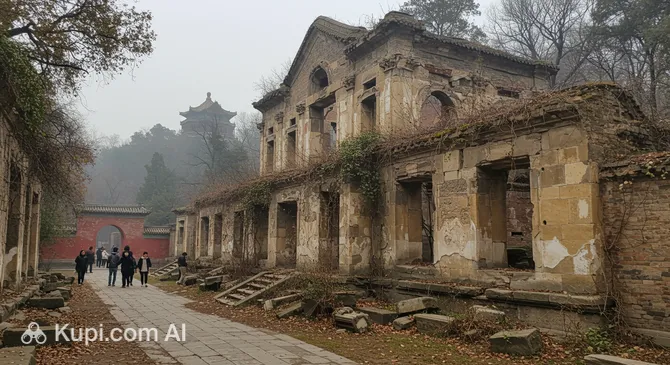
Old Summer Palace. Illustration.
Source: Kupi.com AI

Traveler photos:

Today, Yuanmingyuan is a picturesque landscape park where majestic ruins stand alongside tranquil lakes and canals. This site is unique as it was the first place in imperial Chinese history where European Baroque-style buildings were constructed. Although most of the wooden pavilions were lost, the surviving stone fragments allow one to imagine the former grandeur of this “Versailles of the East.”

The complex is divided into three main gardens: Yuanmingyuan (Garden of Perfect Brightness) itself, Changchunyuan (Garden of Eternal Spring), and Qichunyuan (Garden of Elegant Spring). It is not just a tourist attraction, but an important cultural symbol, a place for historical reflection, and an outstanding example of how human art can transform nature by creating man-made mountains and waterways.

Contacts

For planning your visit to Yuanmingyuan, you can use the following contact information. Please note that there is an entrance fee (approximately 10 RMB), and a separate ticket may be required to view the ruins of the Western-style palaces.

How to contactContact
Address275X+67P圆明园 Haidian District, China, 100084
Phone+86 10 6262 8501
Websitewww.yuanmingyuanpark.cn

What to Do

The most profound impression from visiting Yuanmingyuan comes from contemplating the ruins of Dashuifa (the Great Fountain). These impressive Baroque stone arches and columns are the park's most recognizable symbols. Visitors can closely examine the intricate marble carvings and imagine how the complex hydraulic systems, designed by European masters for the Chinese Emperor, once operated here.

Beyond exploring the ruins, it is well worth walking through the labyrinths and over the bridges of the Wanhuazhen garden. Many scenic spots have been restored in the park where you can relax by the water while admiring the lotuses that bloom here during the summer. For those interested in history, there is a small museum on-site that displays a model of the park in its original state, helping visitors grasp the scale of the lost architectural masterpiece.

The park is also an ideal place for historical meditation and leisurely strolls. The enormous territory allows you to find secluded spots away from the main tourist paths to enjoy the quiet by the artificial lakes or watch locals practicing water calligraphy on stones or outdoor gymnastics.

Getting There

Yuanmingyuan is conveniently located in the Haidian District, approximately 8 kilometers northwest of the Forbidden City. If you have already visited the modern Summer Palace, the Old Summer Palace is just 5 kilometers away, making it easy to combine these two landmarks in a single itinerary.

The easiest way to get there is by using the Beijing Subway. You will need Line 4, getting off at Yuanmingyuan Park station (Exit B leads directly to the park's south entrance). You can also take a taxi by providing the address: 28 Tsinghua West Road. The trip from the city center takes about 30–40 minutes, depending on traffic conditions.

Nearest city: Beijing

History & Facts

The history of Yuanmingyuan began between 1707 and 1709 when the Kangxi Emperor gifted this site to his son, the future Yongzheng Emperor. Over the following 150 years, the complex was continuously expanded and refined, becoming the primary residence for the Qing Dynasty rulers. Emperors spent most of the year here, handling state affairs and relaxing amidst the masterfully designed landscapes.

A unique feature of the park was the "Western-style palaces" (Xiyanglou), built in the mid-18th century during the reign of the Qianlong Emperor. European Jesuits, including Giuseppe Castiglione, worked on their designs. It was a bold fusion of European Baroque and traditional Chinese aesthetics, unparalleled in the world. Because of this splendor, Europeans referred to Yuanmingyuan as the “Versailles of the East.”

A tragic chapter in the park's history occurred in 1860 during the Second Opium War, when the complex was looted and burned by Anglo-French forces. A vast number of priceless artifacts were taken to Europe. Today, the park's ruins are preserved as a historical monument and a symbol of national heritage, serving as a reminder of past glory and the dramatic shifts in the country's history.

Time Needed

To thoroughly explore Yuanmingyuan, it is recommended to set aside at least 2–3 hours. The complex territory is vast (about 350 hectares), and while many buildings are in ruins, walking through the gardens and along the lake shores takes significant time.

If you plan to visit all three gardens—Yuanmingyuan, Changchunyuan, and Qichunyuan—as well as study the Western mansion ruins and the museum exhibits in detail, your visit could last half a day. Keep in mind that the distances between sites within the park are quite large, so comfortable shoes are a must for your trip.

Working Hours

Opening hours for Yuanmingyuan vary by season to allow visitors to make the most of the daylight. From April to October, the park is open from 06:00 to 21:00. During the winter period, from November to March, the hours are shortened: from 06:30 to 19:30.

Please keep in mind that ticket offices usually stop selling tickets 1–2 hours before the official closing time. According to traveler reviews, the best time to visit is spring (April-May) when everything is in bloom, or the "golden autumn" (September-October) with its soft light and vibrant foliage colors.

7:00 – 17:00

Nearby

The Haidian District, where Yuanmingyuan is located, serves as the educational and cultural hub of Beijing. A visit to this historical site can be complemented by a walk to other significant landmarks in the immediate vicinity.

Nearby, you will find both imperial gardens and modern sports arenas built for the Olympic Games. Below are some of the most interesting places to include in your route:

NameDistance
Summer Palace2.1 km
Beijing National Aquatics Center8 km
Chinese Ethnic Culture Park (North Gate)8.5 km
Beijing National Stadium8.5 km
Prince Gong Mansion11 km
Imperial College (Guozijian)11.9 km
Beihai Park12 km

Reached the end of the page?

That means the route is fully explored