Support

Temple of Heaven

About

The Temple of Heaven is a magnificent temple and monastery complex located in the heart of Beijing, the capital of China. Built in 1420 during the Ming Dynasty, it serves as a brilliant example of medieval Chinese architecture. For centuries, this sacred site was the center for solemn imperial rituals dedicated to worshiping the heavens and praying for the prosperity of the state.
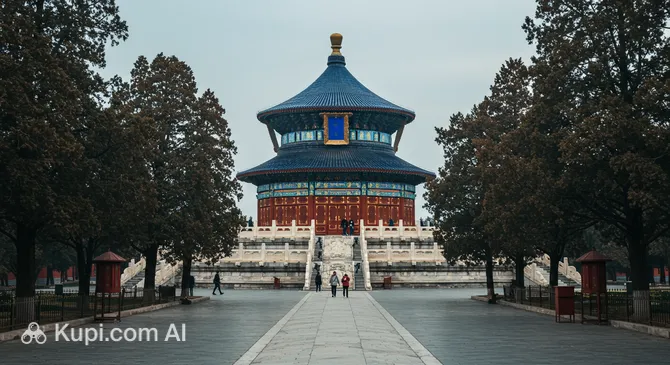
Temple of Heaven. Illustration.
Source: Kupi.com AI

Traveler photos:

The complex's unique layout is deeply symbolic, reflecting ancient beliefs about the connection between heaven and earth. Architectural forms that combine circles and squares embody cosmic harmony as understood by ancient Chinese philosophers. Due to its cultural and historical significance, the site is rightfully included on the UNESCO World Heritage list.

Today, this massive ensemble of sacrificial buildings is considered the largest of its kind. It draws travelers from around the world not only for its scale but also for its special atmosphere of tranquility, offering a glimpse into the centuries-old traditions of the Middle Kingdom.

Contacts

When planning a visit to the Temple of Heaven, we recommend checking for the latest information in advance to ensure your stroll is as comfortable as possible. While the basic operational details of the complex remain stable, it is worth visiting the official website or calling the contact number to confirm the current schedule before you head out.

Up-to-date details will help you learn about any temporary restrictions or special events that may be taking place within the park. Below, you will find all the necessary contact details and the exact address of this landmark in Beijing.

How to contactContact
Address1 Tian Tan Dong Lu, Dong Cheng Qu, China, 100061
Phone+86 10 6702 8866
Websitewww.tiantanpark.com

What to Do

Strolling through the grounds of the Temple of Heaven is a true immersion into the aesthetics of ancient China. The main highlight is traditionally the Hall of Prayer for Good Harvests (Qinian Dian), located in the northern part of the complex. This magnificent circular building with a triple-tiered blue roof—symbolizing the vault of heaven—is striking for being constructed without the use of a single nail.

Be sure to visit the Circular Mound Altar and the Imperial Vault of Heaven. Each of these structures is filled with deep meaning: the circular outlines of the buildings represent heaven, while the square bases of the platforms represent earth. Exploring the architectural details, you can see how masterfully ancient builders used a system of mortise and tenon joints to create structures that have stood for centuries.

In addition to sightseeing, the park is a great place to observe the lives of modern Beijing residents, who often gather here for gymnastics, calligraphy, or traditional games. It is an excellent spot for a thoughtful photoshoot, where historical monumentality blends harmoniously with the city's living culture.

Getting There

Getting to the Temple of Heaven, located in the Dongcheng District southeast of central Beijing, is quite simple. The fastest and most convenient way is to use the subway. The Tiantandongmen station (Line 5) is closest to the east entrance, while the complex can be reached from Qianmen station (Lines 2 and 4) in about 10–15 minutes on foot.

Additionally, numerous bus routes pass through the area, including No. 6, No. 34, and No. 35, with stops located in the immediate vicinity of the park entrances. If you prefer a taxi or a ride-hailing service like Didi, simply use the address: 1 Tian Tan Dong Lu. A trip from the city center usually takes 20 to 40 minutes depending on traffic, making the site easily accessible for any traveler in China.

Nearest city: Beijing

History & Facts

The history of the Temple of Heaven began in 1406 by decree of the Yongle Emperor of the Ming Dynasty. Construction of this grand complex was completed in 1420, alongside the Forbidden City, when Beijing officially became the new capital of China. Originally, it was called the Temple of Heaven and Earth, as it was intended for the simultaneous worship of both elements.

For over a century and a half, the most important state rituals were held here. On the day of the winter solstice, emperors performed solemn sacrifices, praying to Heaven for blessings and a bountiful harvest for the entire country. However, in 1530, under the ruler Jiajing, it was decided to separate the cults, and the complex received its current name, focusing exclusively on heavenly worship.

The ensemble's appearance underwent significant changes in the 18th century during the Qing Dynasty. In 1749, the Qianlong Emperor ordered the expansion of the Altar of Heaven and replaced the three-colored tiles on the main building with blue glazed tiles. This color was intended to symbolize the purity and infinity of the heavens, emphasizing the sacred status of the site. Thanks to the respectful attention of monarchs across different eras, the complex has reached us today in excellent condition.

Time Needed

For a thoughtful introduction to the Temple of Heaven and its primary architectural masterpieces, it is best to set aside 2-3 hours. This is sufficient time to walk leisurely from one gate to another, view the main halls, and take memorable photos of the iconic structures.

If you plan to study the information boards in detail, wander through the more remote corners of the park, and observe the local residents, you should allow 3-4 hours. For those with limited time, an hour and a half might suffice for an express tour of the central buildings, though it will be harder to fully appreciate the unique atmosphere of the site in that case.

Working Hours

The doors of the Temple of Heaven in Beijing are open to visitors daily. The complex operates on a standard schedule from 6:00 AM to 8:00 PM, allowing tourists to choose the most convenient time for their visit—from early morning when the park is just waking up, to the pre-sunset hours.

This schedule is consistent throughout the week, including weekends and holidays. We recommend planning your visit for the first half of the day; this helps avoid peak tour group crowds and ensures the softest natural lighting, perfect for photographing the ancient architecture.

6:00 – 20:00

Nearby

The location of the Temple of Heaven makes it easy to combine your visit with other interesting spots in Beijing. Within walking distance is the famous Hongqiao Market, where you can immerse yourself in the atmosphere of Chinese commerce and pick up souvenirs. For families with children, a local amusement park located on the outskirts of the temple grounds is a great addition to the trip.

Just a couple of kilometers away lie the legendary Tiananmen Square and the majestic National Museum of China. Exploring these surroundings will help you form a more complete picture of the cultural and historical wealth of the Chinese capital, turning a standard excursion into a rich journey through the key milestones of the country's history.

NameDistance
Children's Paradise at Temple of Heaven Park0.7 km
Hongqiao Market1.3 km
Li Qun Roast Duck Restaurant1.8 km
National Museum of China2.6 km
Tiananmen Square2.7 km
Tiananmen Square3 km
Wangfujing Pedestrian Street3.2 km

Reached the end of the page?

That means the route is fully explored