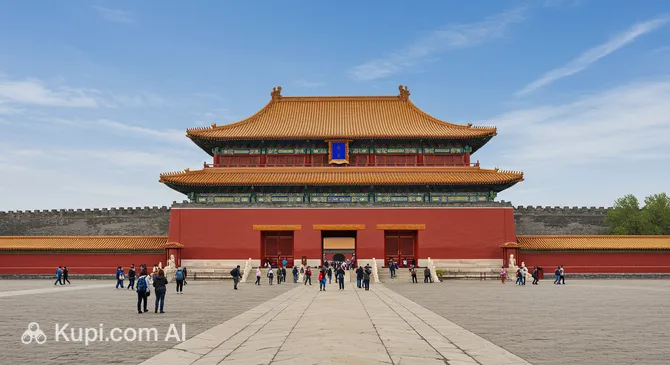
The Palace Museum, globally renowned as the Forbidden City, is a colossal architectural ensemble located in the heart of Beijing. For nearly five centuries, this majestic complex served as the primary residence for 24 emperors of the Ming and Qing dynasties, acting as the political and ceremonial center of China. Today, it is one of the most visited museums in the world and a UNESCO World Heritage site.
Traveller photos:
Spanning approximately 72 hectares, the Forbidden City is the world's largest preserved palace complex. It was designed to be a terrestrial reflection of the celestial palace, a concept emphasized by its strict symmetry and north-south orientation. The architecture is a masterpiece of traditional Chinese craftsmanship: golden tiled roofs, vibrant red walls, and exquisite wood carvings create a unique aesthetic that has become a symbol of imperial grandeur.
Within its walls, which are surrounded by a deep moat, lie more than 9,000 rooms housing priceless collections of imperial treasures. Visitors can view unique jade artifacts, porcelain, calligraphy, and paintings that were accumulated behind closed doors for centuries. It is not merely a museum but a living testament to the rich history of the Middle Kingdom.