Support

Chinese Ethnic Culture Park (North Gate)

About

The Chinese Ethnic Culture Park is a large-scale open-air ethnographic museum located in the heart of the Chaoyang District in Beijing. Spanning an area of about 50 hectares, this unique complex invites travelers on a fascinating tour across all of China without leaving the capital. It brings together architectural treasures and traditions of all 56 officially recognized ethnic groups in the country.

Authentic ethnic settlements, majestic temples, and elegant pavilions have been recreated in the park, each reflecting the specific lifestyle and beliefs of different peoples. Walking through the grounds, you can see how the appearance of dwellings changes from the harsh northern regions to the tropical south. This place serves not only as a backdrop for beautiful photos but also as an important educational center preserving the rich heritage of the Celestial Empire.
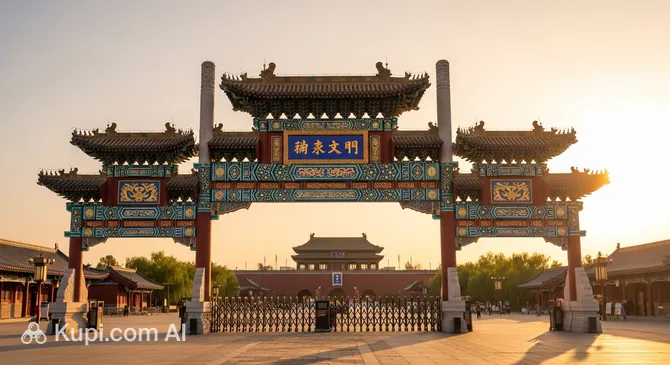
Chinese Ethnic Culture Park (North Gate). Illustration.
Source: Kupi.com AI

Traveler photos:

Visitors appreciate the park for the opportunity to see rare relics, costumes, and artworks in their natural architectural setting. The high rating and popularity of this destination are due to the harmonious blend of an educational program and picturesque landscapes, making it an ideal spot for family vacations and a deep dive into the country's multifaceted culture.

Contacts

To ensure your visit to the Chinese Ethnic Culture Park (North Gate) goes as smoothly as possible, we recommend checking for the latest information before you go. While basic details usually remain the same, schedules for special events or temporary exhibitions may vary.

Be sure to check for recent updates to plan your time in Beijing effectively and ensure you don't miss any interesting ethnic festivals or performances.

How to contactContact
Address1 Min Zu Yuan Lu, Chao Yang Qu, Bei Jing Shi, Китай, 100017
Phone+86 10 6206 3646

What to Do

The main activity in the park is, without a doubt, an architectural journey. You can see and compare the homes of different ethnic groups: from rugged Mongolian yurts to the elegant wooden towers of the Dong people. Each structure is a separate museum housing household items, national costumes, and tools that tell the story of daily life in distant provinces.

Cultural performances create a special atmosphere. The park's venues often feature performers in vibrant traditional clothing, performing traditional dances, songs, and rituals. If you are lucky, you can attend a workshop and try your hand at the ancient arts of embroidery, wood carving, or pottery making under the guidance of experienced masters.

Photography enthusiasts will find endless creative opportunities here: the combination of exotic architecture and well-kept gardens provides a perfect backdrop for shots. During the summer, the park becomes a venue for ethnic festivals where you can witness festive rituals and feel the true spirit of a traditional Chinese celebration.

Getting There

The Chinese Ethnic Culture Park is conveniently located in the Chaoyang District at 1 Min Zu Yuan Lu. The easiest way for travelers to get here is by metro: the nearest stations are Olympic Green or Olympic Park (Lines 8 and 15). From the metro exit, the walk to the North Gate takes about 10–15 minutes, allowing you to see some of the city's modern architectural landmarks along the way.

If you prefer the comfort of a taxi or use the Didi app, a trip from central Beijing (for example, from the Forbidden City area) will take 20 to 30 minutes, depending on traffic. City buses No. 83, 653, and 939 also run in this direction, with stops located in the immediate vicinity of the park.

For precise navigation, it is recommended to use Baidu Maps or Google Maps. Entering through the North Gate is considered the most convenient for those arriving from central districts or planning to combine a park visit with a tour of the Olympic Park facilities.

Nearest city: Beijing

History & Facts

The creation of the Chinese Ethnic Culture Park in Beijing was an ambitious project designed to showcase the incredible diversity and unity of China's 56 ethnic groups. Construction began in 1992. The park was intended not just as a recreation area, but as an important cultural site, prepared in part to welcome guests for major international events, including the historic 2008 Olympics.

Particular attention was paid to authenticity during the design process. Leading experts in ethnography, architects, and cultural heritage specialists were involved in creating the exhibits. Thanks to their efforts, it was possible to recreate exact copies of ethnic settlements using traditional materials and construction methods characteristic of different parts of the country.

Today, the park is recognized as an important milestone in the development of open-air museums. It has transformed into a living platform for studying and presenting traditions, where cultural exchange happens not through dry facts in textbooks, but through the visual and tactile perception of architecture and daily life. Since its founding, the site has constantly evolved, adding new relics and artworks to its collections.

Time Needed

To see the Chinese Ethnic Culture Park without rushing and to learn about the lifestyles of most represented ethnic groups, we recommend setting aside at least 3–4 hours for your visit. The park's territory is vast, and each ethnic complex deserves detailed exploration.

If you plan to attend cultural performances, take part in traditional craft workshops, or study the exhibits in the pavilions in detail, you should increase your visit time to 5–6 hours. This will allow you to fully immerse yourself in the atmosphere and enjoy the park's landscaping at a relaxed pace.

Working Hours

The Chinese Ethnic Culture Park welcomes guests daily, operating on a standard schedule from 9:00 AM to 5:00 PM. Please note that ticket offices usually stop selling tickets 30 minutes before closing, so it is best to arrive early to have enough time to see at least part of the exhibition.

During the peak tourist season, which lasts from April to October, opening hours may be extended until 6:00 PM. However, it is recommended to check the current schedule on-site or by phone before your trip, as working hours may change due to public holidays or special government events.

Nearby

A visit to the ethnographic complex can be perfectly combined with other iconic landmarks, as it is located in one of Beijing's most dynamic districts. Right nearby is the famous Olympic Park, where futuristic modern forms contrast with the traditional motifs found in the ethnic park.

Within walking distance are impressive sites such as the Beijing National Aquatics Center, known as the "Water Cube," and the grand Beijing National Stadium ("Bird's Nest"). Exploring these surroundings allows you to trace the country's journey from the ancient roots of its people to the achievements of a ultra-modern global power in a single day.

NameDistance
Beijing National Aquatics Center1.1 km
Beijing National Stadium1.2 km
Imperial College (Guozijian)4.4 km
Yonghe Temple (Lama Temple)4.5 km
Prince Gong Mansion5.3 km
Jingshan Park6.4 km
Beihai Park6.4 km

Reached the end of the page?

That means the route is fully explored