Support

National Stadium

About

The famous Beijing National Stadium, better known to the world by its poetic nickname, the "Bird's Nest," is a triumph of modern engineering and architectural boldness. Located in Beijing, this colossal landmark was built for the 2008 Summer Olympics and has since become one of China's most recognizable sights.
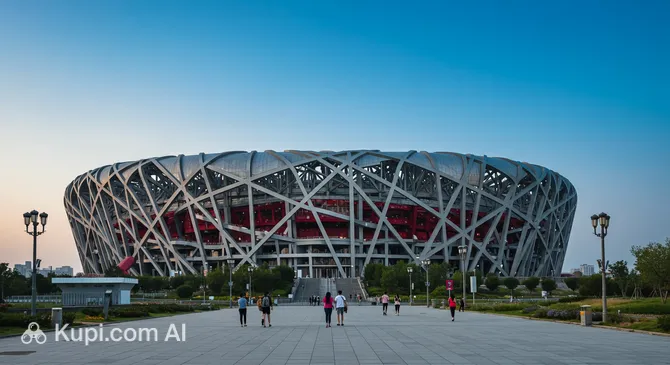
Beijing National Stadium. Illustration.
Source: Kupi.com AI

Traveler photos:

The stadium's exterior, inspired by the texture of Chinese ceramics, is an intricate web of steel beams that hide the structure's supports, creating the effect of a giant nest. It is the world's largest steel structure, standing 69 meters high, with an interior capable of holding up to 91,000 spectators. The project, a collaboration between Swiss and Chinese masters, symbolizes harmony between nature and technology.

Beyond its primary role as a sports venue, the stadium is a significant cultural landmark. Inside, visitors will find more than just stands; there are opulent interiors like the Golden Hall, and the structure itself is built to last for centuries—designed to withstand earthquakes up to magnitude 8. This site embodies the spirit of Olympic victories and the creative potential of modern China.

Contacts

To plan your visit to the Beijing National Stadium, we recommend checking for the latest updates in advance, as the schedule can change depending on sports competitions or major concerts. Since the official website is not always available in foreign languages, it is helpful to check information on major travel portals or the official Olympic Park channels on Chinese social media.

How to contactContact
Address1 Guo Jia Ti Yu Chang Nan Lu, Chao Yang Qu, China, 100101
Phone+86 10 8437 3008

What to Do

The best way to begin exploring the "Bird's Nest" is with a walk around its exterior: the interlaced steel beams create an incredible play of light and shadow, making the stadium a photographer's paradise. The building looks especially striking in the evening when bright artistic lighting turns on, highlighting every detail of this architectural masterpiece.

Inside the stadium, specific tour zones are open to tourists. It is worth heading to the fifth floor in the eastern section, which offers breathtaking panoramic views of the field and the entire Olympic Park. In the western zone, you can see interesting exhibits dedicated to the triumphant 2008 Olympics, including elements from the opening ceremony and equipment used by athletes.

In addition to the architecture, the stadium frequently hosts world-class football matches and performances by top-tier stars. If your visit coincides with one of these events, you can experience the unique acoustics of the space. You can finish your visit with a stroll through the adjacent park, where you can rent bicycles or visit one of the modern shopping centers built for the convenience of Beijing's many guests.

Getting There

The Beijing National Stadium is located in the heart of the Olympic Park in the Chaoyang District. The fastest and most budget-friendly way for a tourist to get here is via the city's extensive metro network. Lines 8 or 15 are your best options; get off at "Olympic Park" or "Olympic Sports Center" stations—from the exits, the stadium is a 5–10 minute walk along well-maintained paths.

If you prefer the comfort of a taxi or use the Didi app (the Chinese equivalent of Uber), a trip from central Beijing, such as from the Forbidden City, will take about 20–30 minutes depending on traffic and cost approximately 30–50 yuan. City buses No. 83, 135, and 599 also run toward the stadium.

For those already in the northern part of the city, a walk through the Olympic Park is a pleasure in itself. The stadium is within walking distance of other iconic park landmarks, allowing for a great walking route without needing additional transportation.

Nearest city: Beijing

History & Facts

The history of this ambitious project began in 2003 when the Swiss architectural firm Herzog & de Meuron won an international competition. Construction, which required incredible engineering solutions, began in December of that year. Approximately 45,000 tons of steel were used to create the famous "lattice," and the total length of the steel beams reached an impressive 36 kilometers. The architects aimed to create a structure that looked natural and organic, like a creation of nature.

The stadium's crowning achievement was the 2008 Summer Olympics. It was here that the world watched the grand opening and closing ceremonies and witnessed track and field world records. Later, the stadium confirmed its status as a unique global venue by hosting the opening and closing ceremonies of the 2022 Winter Olympics, becoming the first stadium in history to host both games.

Beyond sporting achievements, the site received high acclaim in the world of architecture, winning the prestigious Lubetkin Prize. Today, the "Bird's Nest" is more than just an arena; it is a protected monument of modern engineering, symbolizing China's technological leap and cultural openness in the 21st century.

Time Needed

To fully appreciate the scale and detail of the Beijing National Stadium, it is recommended to set aside about 2–3 hours for your visit. This is enough time for a leisurely walk around the building to find the best photo angles, as well as a tour inside the "bowl" and a visit to the observation decks.

If a sporting event, concert, or large-scale show is scheduled on the day of your visit, plan for half a day, accounting for time to pass through security and the opportunity to walk around the Olympic Park before or after the event. Organized tours of the interior halls and halls of fame usually last about one hour.

Working Hours

Sightseeing tours of the stadium are generally held daily from 09:00 to 17:30. Please note that ticket offices stop selling tickets and the last entry is one hour before closing, at 16:30. Organized guided walks start every 30 minutes in the morning.

Note that on days of football matches, concerts, or official rehearsals, access for regular visitors may be limited or completely closed. It is recommended to check the current schedule before your trip, especially if you plan to visit the stadium's interior zones and museum exhibits.

Nearby

Beijing's Olympic Park is a place where modern architecture meets spacious recreational areas. Exploring the stadium's surroundings will allow you to see the contrast between futuristic structures and traditional Chinese landscape design, greatly enriching your travel experience.

Just a few hundred meters away is the famous Beijing National Aquatics Center, known as the "Water Cube," whose membrane structure contrasts strikingly with the steel "nest." Also nearby is the China Ethnic Culture Park, where you can learn about the life and traditions of the country's many ethnic groups, providing a perfect counterpoint to the ultra-modern Olympic architecture.

NameDistance
Beijing National Aquatics Center0.5 km
Chinese Ethnic Culture Park (North Gate)1.2 km
Imperial College (Guozijian)5.3 km
Yonghe Temple (Lama Temple)5.3 km
Prince Gong Mansion6.4 km
Jingshan Park7.5 km
Beihai Park7.5 km

Reached the end of the page?

That means the route is fully explored