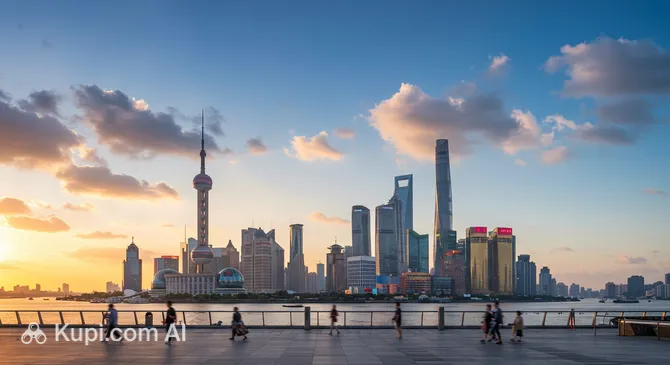
Imagine a futuristic landscape from a science fiction movie: a forest of shimmering skyscrapers piercing the clouds and neon lights reflecting in the waters of the Huangpu River. This is Pudong — the modern face of China and a symbol of its incredible economic leap. Just a few decades ago, rice fields turned green here; today, it is the financial heart of Asia, attracting millions of travelers with its energy and architectural grandeur.
Geographically, the district occupies the eastern bank of the river, opposite the historical center of Shanghai. With a population of over 5.6 million, this area has long outgrown the status of just a business center, becoming a metropolis in its own right. The rich modern history of Pudong began in the 1990s when the government decided to transform a rural suburb into a world-class technological and financial cluster.
Pudong. Illustration.
Source: Kupi.com AI
Tourists are primarily drawn here by the famous skyline. It is home to architectural giants such as the Shanghai Tower, the Oriental Pearl TV Tower, and the Lujiazui business district. Visiting this area is a unique chance to see the future with your own eyes and feel the rhythm of one of the most dynamic spots on the planet. We invite you to Pudong to personally experience the scale of Chinese modernization.
Weather Overview
The climate in this part of the coast is classified as humid subtropical, which means distinct seasonal changes. Summers here are usually hot and very humid, with temperatures often exceeding 30°C and a chance of heavy tropical downpours. Winters are cool and damp, although severe frosts are rare — the average January temperature hovers around 5-6°C. Be sure to account for the high humidity, which makes the cold feel sharper and the heat more oppressive.
If you want to catch the most comfortable conditions for walking among the skyscrapers, it is better to plan your visit for spring (April-May) or autumn (October-November). During these periods, the temperature is pleasantly moderate and there is less precipitation. To stay updated on current changes, we recommend checking the Pudong climate before your trip, as weather can be changeable due to its proximity to the ocean.
The influence of urban development should also be considered: dense rows of high-rise buildings create a "wind corridor" effect, while in windless hot weather, the business quarters can feel stuffy. Nevertheless, the abundance of modern shopping centers with powerful air conditioning systems allows tourists to feel comfortable at any time of year, moving from one futuristic tower to another.
Average monthly temperature
Average monthly precipitation
Interesting Facts
In just three decades, Pudong has transformed from ordinary rice fields into one of the world's largest financial centers, which is considered one of the fastest rates of urbanization in history.
It is home to the Shanghai Tower, which stands 632 meters tall, making it the tallest building in China and the second tallest in the world after the Burj Khalifa.
The district features the world's only commercial magnetic levitation train — the Maglev, capable of reaching speeds up to 430 km/h, delivering passengers from the airport to the city in a matter of minutes.
The area of the district is about 1,210 square kilometers, which is comparable to the size of some small nations or major European capitals.
The Oriental Pearl TV tower located here features 11 steel spheres of different diameters, which, according to the architects, symbolize "pearls falling onto a jade plate."
How to Get There
Getting to this futuristic district is easy, as it is a major transport hub for East Asia. The main gateway is Shanghai Pudong International Airport (PVG), which receives flights from all over the world. To plan your journey as efficiently as possible, it is worth studying more about how to get to the city in advance, given the scale of the metropolis and the variety of available transport modes.
From the airport to the center of the district, the famous Maglev magnetic levitation train line leads the way. This is the fastest way to reach the city: the trip to Longyang Road station takes less than 8 minutes. The airport is also connected to the business center by a metro line (Line 2), which runs through the entire district and connects it to the historical center on the other side of the river.
Railway connections are also excellent. Although the main stations are in the western part of Shanghai, you can reach the business districts on the east bank in 30–40 minutes by metro or taxi. Within the district itself, movement is organized via wide highways and an extensive public transport network.
The hallmark of this district is undoubtedly its futuristic skyline, crowned by the famous Oriental Pearl TV Tower. This structure, with its distinctive spheres, has become a symbol of the city, and its glass-floored observation decks offer an unforgettable sensation of flying over the metropolis. No less impressive is the Shanghai Tower — the world's second-tallest building, which houses the highest observation deck, offering a panoramic view of all of Shanghai.
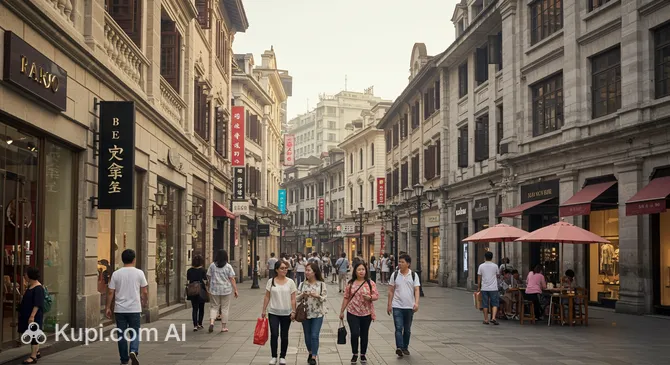
For those who prefer walking, a must-visit is the famous Nanjing Road pedestrian street. Although its main part is on the west bank, the influence of this retail giant is felt here as well, guiding flows of tourists toward the waterfronts. In the Lujiazui business district, it is also worth paying attention to the Jin Mao Tower and the "bottle opener" — the Shanghai World Financial Center, whose architecture amazes even seasoned travelers.
Nanjing Road Pedestrian Street. Illustration.
Source: Kupi.com AI
Traveler photos:
If you are looking for a more relaxing holiday, head to Century Park — a massive green oasis where modern architecture harmoniously blends with landscape design. Pudong is especially beautiful in the evening: when the illumination turns on, a walk along the Huangpu River turns into a real light show, demonstrating the power and brilliance of modern China.
Local Cuisine
The district's gastronomic scene reflects its status as an international metropolis. Here you can find both authentic Shanghainese delicacies and exquisite world cuisine. Local cuisine is famous for its xiaolongbao (soup dumplings) and shengjianbao (pan-fried pork buns). In Pudong, these dishes are served in everything from simple street stalls to high-end restaurants overlooking the river.
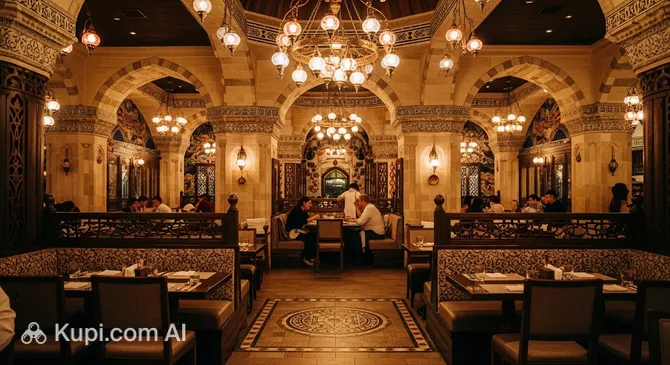
For those who want variety, the doors of world-renowned establishments are open. You can stop by Efes Restaurant to enjoy familiar flavors in the heart of the business district, or visit Lost Heaven Bar, where panoramic views complement the culinary experience. The district's shopping malls house massive food courts where you can try everything from fresh seafood to traditional handmade noodles.
Efes Restaurant. Illustration.
Source: Kupi.com AI
Traveler photos:
Special attention should be paid to the tea culture. Local tea houses will offer you the finest varieties of Chinese tea, while modern coffee shops, of which there are hundreds, serve world-class beverages. The food culture here is dynamic: office workers prefer quick, high-quality lunches in malls, and in the evening, life moves to elegant restaurants and bars on the tops of skyscrapers.
Travel Tips
When planning a trip to this futuristic district, use our tips to make your journey as comfortable and interesting as possible.
Clothing and Essentials: Depending on the season, bring light clothing made of natural fabrics for summer or a warm jacket for a damp winter. Be sure to wear comfortable shoes, as the distances here are vast. Don't forget a universal power adapter (type A/C/I).
Transport: The metro is your best friend. Download a metro map app and use a transport card for payment. For the trip from the airport, choose the Maglev — it's a unique experience.
Finance: The main currency is the Yuan (CNY). Visa and Mastercard are accepted in hotels and major shopping centers, but for daily expenses, be sure to set up Alipay or WeChat Pay linked to your card.
Health and Safety: The district is very safe, even at night. Pharmacies are easy to find in shopping malls. Drink only bottled water and use sunscreen in the summer.
Communication: Download an offline translator and maps (e.g., Baidu or Amap). Hotel staff speak English, but basic phrases in Chinese or an address card with characters will be very helpful.
Local Etiquette: Be polite and do not shout in public places. When handing over business cards or money, use both hands — this is a sign of respect.
What to Avoid: Do not agree to "tea ceremony" offers from random passers-by on the street — this is often a popular tourist scam. Also, avoid taking taxis without the meter turned on.
Planning: Keep in mind that Pudong is very large. Do not try to cover it entirely on foot — plan your route between specific metro stations.
By following these simple recommendations, you will be able to fully immerse yourself in the atmosphere of "China's tomorrow" and get only positive emotions from your trip!
Entertainment & Nightlife
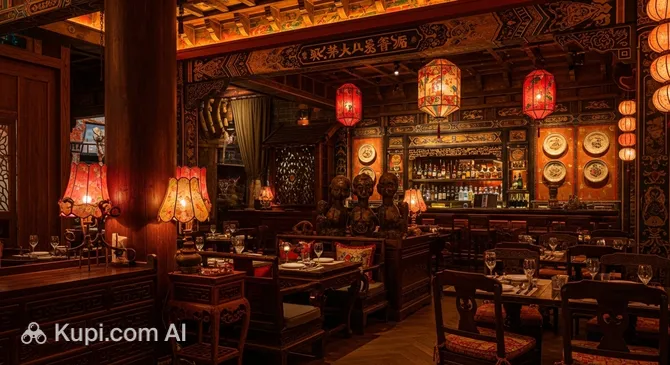
The entertainment life in this district focuses on aesthetics and comfort. Unlike the noisy club districts of the old city, Pudong offers a more refined format of relaxation. It is home to the best panoramic rooftop bars, such as Lost Heaven Bar, where you can enjoy signature cocktails while looking out over the neon-lit metropolis. These are ideal spots for those who appreciate style and breathtaking views.
Lost Heaven Bar. Illustration.
Source: Kupi.com AI
Traveler photos:
For family vacations and daytime fun, the district offers massive shopping complexes with modern cinemas, interactive museums, and theme parks. In the evening, it is worth strolling along the waterfront to see the light show on the building facades or visiting a high-status restaurant, such as Efes Restaurant, to spend time in a cozy atmosphere after a busy day of sightseeing.
Fans of active shopping and vivid impressions will enjoy Nanjing Road pedestrian street, which, though located nearby, sets the tone for the entire retail and entertainment rhythm of the region. At night, the district remains safe and well-lit, making it pleasant for late walks between the glowing towers of the business center.
Parks & Museums
Despite the abundance of concrete and glass, the district has wonderful places for outdoor relaxation. The main "green heart" is Century Park — the largest park within the city limits. Here you can go boating on the lake, rent a bike, or simply walk through picturesque gardens designed in various styles from Chinese to English. This is a popular spot for family picnics and morning jogs.
The cultural component of the district is represented by modern exhibition spaces and museums. The Shanghai Science and Technology Museum, located on the edge of the park, is a massive interactive complex that will be interesting for both children and adults. For art lovers, the doors of modern galleries in the waterfront area are open, often hosting exhibitions by international artists.
Although historical artifacts are more often sought on the other side of the river, the pedestrian zone and shopping passages of Pudong often host temporary exhibitions dedicated to the architecture and technologies of the future. A walk between these sites allows you to see how harmoniously nature, art, and high technology can coexist in a modern metropolis.
Getting Around
The district's transport system is the embodiment of efficiency and modern technology. The backbone is the Shanghai Metro, which connects all key points of the district with the historical center and the airport. Metro lines are clean, intuitive, and air-conditioned. Taking the metro is the fastest way to avoid city traffic jams, especially during rush hours when movement across bridges and through tunnels under the river can be difficult.
A unique feature is the Maglev train, connecting the airport to the city's transport network. For traveling short distances within blocks, it is convenient to use buses or numerous taxis. You can hail a car via popular apps (such as DiDi), and payment is made either in cash or via mobile wallets. Bike rentals are also popular, especially in areas around parks and waterfronts.
For fare payment, it is most convenient for tourists to purchase a Shanghai Public Transportation Card or use QR codes in the Alipay and WeChat apps. Single-journey metro tickets can be bought at machines at every station (interface available in English). Transport operates approximately from 5:30 to 23:00, allowing for comfortable movement around the city throughout the day.
Accommodation
The district's accommodation is focused on modern comfort and premium service. It is dominated by luxury five-star hotels from international chains, located on the upper floors of skyscrapers. Staying in such a place guarantees not only top-class service but also breathtaking views of the river and the glowing city. The main concentration of such hotels is in the Lujiazui quarter.
For business travelers and exhibition participants, business hotels near the exhibition center and Century Park are an excellent option. Here you can find both modern apartments for long-term stays and mid-range chain hotels. In this part of the city, you won't find ancient guest houses, but you will find an abundance of high-tech housing with futuristic designs.
If you are planning a transit stop, it is worth considering hotels directly at the airport or along the metro line leading to it. It is recommended to book accommodation in advance, especially during major international forums and exhibitions, when the demand for quality rooms in Pudong rises sharply. Booking is available through most international and local online platforms.
Nearby Cities
Thanks to its location, Pudong is an ideal starting point for exploring the eastern region of China. Just across the river is the historical Huangpu district, where you can walk along the famous Bund and feel the atmosphere of Shanghai's colonial past. This is the easiest and most essential destination for a short outing.
If you want to see a more traditional China, it is worth heading a bit further. For example, to old Shanghai with its Yu Garden, or to the port district of Wusong, where the Huangpu River meets the mighty Yangtze. These places allow you to see the contrast between the ultra-modern towers of the business center and the daily life of a port city.
The region around the metropolis is threaded with a network of high-speed trains, making it easy to plan trips to neighboring garden cities or water villages. Exploring the surroundings beyond the glass towers will help you fully experience the multifaceted depth of culture in this part of the country.
Shopping & Souvenirs
Shopping in this part of the metropolis is primarily a journey through giant, ultra-modern shopping centers where almost all global luxury and mass-market brands are represented. The Lujiazui district is famous for its malls, such as IFC Mall and Super Brand Mall. Here, the shopping process turns into leisure: air-conditioned halls, world-class food courts, and cinemas create the most comfortable conditions.
For those looking for more practical purchases or interesting gadgets, A.P. Plaza, located under the Science and Technology Museum metro station, is an excellent choice. This place is known for its huge selection of clothing, accessories, and electronics, where bargaining is appropriate and even welcomed. And if you want to combine shopping with a more traditional-style walk, you can head to the famous Nanjing Road pedestrian street located nearby.
Common souvenirs from this area include models of the famous skyscrapers, high-quality Chinese tea, the latest electronics, or silk accessories. Most shops operate from 10:00 to 22:00. Mobile payment systems Alipay and WeChat Pay are accepted everywhere, and major shopping centers accept international bank cards. Foreign tourists can take advantage of the Tax Free system at certified sales points, making major purchases even more profitable.