Support

La Via Domitia

About

Via Domitia is a unique monument of antiquity and a living testament to the power of the Roman Empire. Located in the heart of Narbonne, this archaeological site is a carefully preserved fragment of the first Roman road built in what is now France. The highway once connected Italy to Spain, serving as a vital artery for trade and the movement of legions.
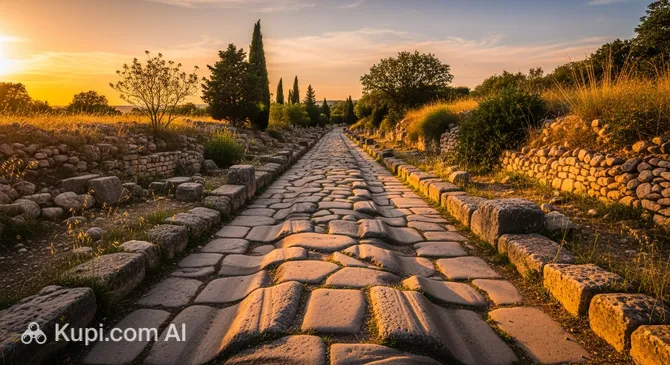
Via Domitia
Via Domitia. Иллюстрация. Источник: Kupi.com AI

Today, this historical artifact appears as a sunken area paved with massive limestone slabs. Right in the middle of the modern city square, Place de l'Hôtel de Ville, visitors can literally step back in time. It is not just a museum exhibit behind glass, but an open space that allows you to touch stones that were laid over two thousand years ago.

What makes Via Domitia particularly significant is its status as a key crossroads of the ancient world: it was here that it intersected with the Via Aquitania. This spot serves as a reminder of the times when the city was a major Roman colony. Today, this road fragment is the heart of Narbonne's architectural ensemble, blending ancient heritage with the grandeur of the neighboring medieval palace and cathedral.

Contacts

For those planning a visit to this unique ancient monument, it is helpful to know its exact location. Since the site is outdoors in the very heart of the city, there is no separate office or phone line directly at the stones; however, the Town Hall (Mairie) serves as a prominent landmark.

Below are the current address details for navigating the city:

How to contactContact
Address13-16 Pl. de l'Hôtel de Ville, 11100 Narbonne, Франция

What to Do

The main thing to do at Via Domitia is to descend the steps to the level of the ancient Roman pavement. Once down there, you can closely examine the deep ruts worn into the stone by the wheels of heavy chariots and merchant wagons over centuries of use. It is a rare opportunity to stand on the very path where Roman warriors once marched and goods from every corner of the empire were transported.

The site is very popular with families: young travelers love running across the massive slabs, imagining themselves as heroes of ancient legends. The interactive nature of the site allows you to literally touch history, making the visit both educational and engaging. Don't forget to take a few photos against the backdrop of the massive stones and the magnificent Town Hall facade—the contrast between antiquity and the Middle Ages here is truly striking.

After exploring the ruins, be sure to stroll across Place de l'Hôtel de Ville itself. The Archbishop's Palace and the entrance to the cathedral are right nearby. You can finish your walk at the picturesque UNESCO-listed Canal de la Robine, which is just a few minutes' walk away. This combination allows you to see all of Narbonne's main treasures in one go while enjoying the atmosphere of a southern French town.

Getting There

The ancient Roman road Via Domitia is located in the heart of the historic center, on Place de l'Hôtel de Ville. It is very easy to find: it is a pedestrian area directly in front of the Town Hall. If you are already walking through the old town, simply head toward the cathedral spires or the central town hall.

For those arriving by train, the walk from the Gare de Narbonne railway station takes only 10–15 minutes. Follow Avenue Général de Gaulle, which leads you directly to the square. Narbonne is well-connected by rail to Paris, Marseille, and Barcelona thanks to high-speed TGV trains.

If you are traveling by car, the most convenient route is via the A9 highway, which, ironically, follows much of the ancient road's original path. It is best to leave your car in one of the parking lots outside the narrow streets of the center and continue on foot or by taxi to fully enjoy the atmosphere of this historic site.

Ближайший город: Narbonne

History & Facts

The legendary Via Domitia was built between 120 and 118 BC by order of the consul Gnaeus Domitius Ahenobarbus. It was the very first Roman road constructed in Gaul. Its strategic importance cannot be overstated: it provided a land link between Rome and the empire's Spanish provinces, allowing legions and merchants to move quickly across vast territories.

In Narbonne, which was then known as Colonia Narbo Martius, the road intersected with another major highway—Via Aquitania, leading to the Atlantic Ocean. Thanks to this intersection, the city became a vital trade and logistics hub. It was over these stones that Italian wines first began to be imported into Gaul in large quantities, while local goods were sent in the opposite direction, laying the foundation for the region's future prosperity.

Interestingly, for centuries, almost nothing was known about this specific section of the road in the city center. The fragment we see today was accidentally discovered only in 1997 during the renovation of the square. Archaeologists carefully restored the stonework, preserving the original curbs and traces of ancient life that had been hidden under layers of earth for over two thousand years.

The road was an engineering masterpiece of its time: it crossed the Alps via the Col de Montgenèvre, passed through Nîmes, and stretched along the Mediterranean coast all the way to the Pyrenees. The stones that tourists can walk on today remember the footsteps of Roman soldiers, the rumble of heavy wagons, and the voices of merchants who built one of the greatest empires in history.

Time Needed

For a quick look at the road fragment itself and some commemorative photos, you will need very little time—about 30–60 minutes. This is quite enough to descend to the stones, examine the chariot ruts, and read the information boards.

However, we recommend setting aside at least 2 hours for this location, as Via Domitia is surrounded by other stunning sites. By combining your visit to the road with a tour of the neighboring Cathedral of Saint Just and Saint Pasteur or a stroll along the Canal de la Robine, you will gain a much more complete and profound impression of Narbonne's historic center.

Working Hours

Since Via Domitia is an open archaeological site on a public square, it is accessible 24 hours a day. You can visit the monument at any time that suits you, whether it's early morning or late evening, when the stones are beautifully illuminated by city lights.

However, if you plan to visit the nearby museums or the Town Hall, we recommend checking their opening hours in advance on their official websites. The road itself is always open to curious travelers completely free of charge.

Круглосуточно

Nearby

Exploring the ancient heritage in the center of Narbonne is just the beginning of your journey. The square is surrounded by numerous architectural monuments from different eras that harmoniously complement each other, creating the unique character of this French region.

A walk through the surrounding area will allow you to see not only Roman ruins but also majestic medieval cathedrals, elegant fountains, and quiet monastic courtyards. Most of the iconic landmarks are within a few minutes' walk of Via Domitia.

NameDistance
Archbishops' Palace and Museum (Palais Vieux)0 km
Narbonne Cathedral0.1 km
Roman Horreum Museum0.2 km
Chez Lulu0.3 km
Chez Bebelle0.3 km
Karaoke Le Live0.5 km
Charles Trenet's Birthplace0.6 km

Reached the end of the page?

That means the route is fully explored