Support

Holstentor Museum

About

The Holstentor Museum (Holstentor) is not just a museum, but a calling card and one of the most recognizable symbols of Lübeck. It is housed in the famous Holstein Gate, which is an outstanding example of North European Brick Gothic and part of a UNESCO World Heritage site. These massive towers with conical roofs greet visitors at the entrance to the historic city center, immediately immersing them in the atmosphere of medieval Germany.
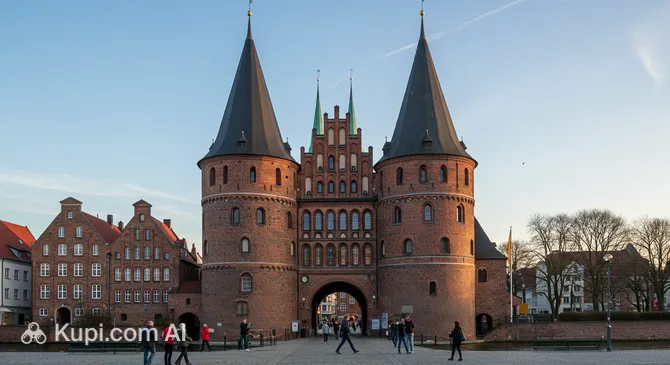
Holstentor Museum. Illustration.
Source: Kupi.com AI

Traveler photos:

Built in the 15th century, the Holstentor originally served as part of the city's powerful defensive fortifications, protecting the wealthy and influential Hanseatic city. The inscription on the gate "CONCORDIA DOMI FORIS PAX" ("Harmony at home, peace abroad") reflected Lübeck's motto and its pursuit of prosperity through trade rather than conflict. Today, it is a beautifully preserved architectural monument that impresses with its monumentality and historical aura.

Inside the gate is a museum dedicated to the history of the "Queen of the Hanse". The exhibition tells the story of Lübeck's golden age, its role in the Hanseatic League, and the development of shipping and trade. Visitors can see ship models, ancient weapons, trade tools, and everyday items that help vividly imagine how townspeople lived and worked many centuries ago. A visit to the Holstentor Museum is a fascinating journey into the past and a great way to start exploring the rich history of this unique city.

Contacts

To plan your visit to the Holstentor Museum and get the latest information on opening hours, exhibitions, and ticket prices, we recommend checking official sources. Below are the available contact details.

How to contactContact
AddressHolstentorplatz, 23552 Lübeck, Germany
Phone number+49 451 1224129
Websitemuseum-holstentor.de

What to Do

A visit to the Holstentor Museum is a true immersion into the glorious past of Lübeck, once the capital of the powerful Hanseatic League. Inside these famous Gothic gates, you will find a fascinating exhibition dedicated to the city's history and medieval trade. You can examine unique artifacts in detail: ancient documents, intricately crafted models of Hanseatic ships, period weapons, as well as everyday items and coins that tell the story of the prosperity and daily life of one of Northern Germany's key trading centers.

The Holstentor itself is the main exhibit of the museum. Its massive brick walls, round towers, and narrow embrasures leave a lasting impression and serve as a beautiful backdrop for photos. Be sure to take the opportunity to climb to the upper levels of the gate. From there, you can enjoy a picturesque view of the old town roofs, allowing you to see Lübeck from a unique perspective. For a deeper understanding of the history, themed tours and interactive activities are often held here, which will be of interest to both adults and children.

Getting There

Getting to the Holstentor Museum in Lübeck is very simple thanks to its central location. The gate is located in the western part of the Old Town, bordering modern districts, making it easily accessible for tourists. If you are arriving in the city by train, the museum is just a 5-10 minute walk from the central railway station (Lübeck Hauptbahnhof). The walk is about 500 meters and is a great way to start exploring the historic city center.

For those who prefer public transport, there are several bus stops located near the Holstentor. Many city routes pass through this hub, connecting it to different parts of Lübeck. This is a convenient way to reach the attraction if you are staying in a more distant area or want to save your energy for walking through the museums and streets of the Old Town. Just find a bus heading towards Holstentorplatz, and you'll be at your destination.

If you are traveling by car, there are several public parking lots in the vicinity of the museum. However, please note that parking spaces in the historic center of Lübeck are limited, and finding a spot during the peak tourist season can be challenging. Alternatively, you can use a taxi, which will quickly and comfortably take you right to the famous gate, saving you the trouble of searching for parking.

Nearest city: Lübeck

History & Facts

The Holstentor Museum (Holstein Gate) is more than just a museum; it is a living symbol of Lübeck's rich history and its former might. Built in 1477, this massive dark-red brick gate was a central element of the city's powerful defense system. During the era of the Hanseatic League, when Lübeck was one of Europe's key trading centers, the Holstentor served not only for protection but also to showcase the power and prosperity of the free city.

Originally, the gate was part of a much more complex fortification system. It included four interconnected defensive structures surrounded by high earthen ramparts, water moats, and additional towers. Such a system made the city practically impregnable. The gate was named "Holstein" because it faced the road leading west from Lübeck to the historic region of Holstein, highlighting its strategic location on one of the main trade routes.

In the 19th century, when medieval fortresses lost their military significance, most of Lübeck's fortifications were demolished. However, thanks to the protests of the townspeople, it was decided in 1864 to preserve the Holstentor as an outstanding architectural monument. Since 1950, it has housed the city's historical museum, and in 1987, the entire gate complex was included in the UNESCO World Heritage list. Today, it is not only one of the most recognizable landmarks in Germany but also a magnificent example of Brick Gothic, preserving the spirit of the Hanseatic era.

Time Needed

When planning a visit to the Holstentor Museum, you can safely set aside 1 to 2 hours for the tour. This should be enough time to explore the main exhibition without rushing, which tells the story of Lübeck's history as a powerful center of the Hanseatic League. You will have time to visit all the halls, study the ship models, historical documents, and artifacts, and understand the role this gate played in the life of the medieval city.

In that time, you can also climb the towers to enjoy the views and take beautiful photos. The museum is quite compact, so even with a detailed study of the exhibits, a visit rarely takes more than two hours. It's worth noting that the Holstentor itself is a magnificent architectural monument, and many travelers spend extra time admiring it from the outside and taking photos in front of it.

Working Hours

The Holstentor Museum in Lübeck is usually open to visitors year-round, but its opening hours can vary significantly depending on the season. Generally, from April to December, the museum is open daily, while from January to March, it may be closed on certain days of the week, most often on Mondays. Additionally, the schedule may change on public holidays.

To avoid any misunderstanding and plan your visit precisely, it is highly recommended to check the current opening hours on the museum's official website or the city's tourism portal. There, you can also find information about ticket prices and whether advance booking is required, which can be helpful for saving time during the peak tourist season.

10:00 – 18:00

Nearby

A visit to the Holstentor Museum is a wonderful opportunity to see the symbol of Lübeck, but don't stop there. The city's historic center, a UNESCO World Heritage site, is so compact that exploring its surroundings on foot is a true pleasure. Every corner here breathes history, and just around the corner from the famous gate, equally interesting discoveries await.

A stroll through the nearby streets will allow you to dive deeper into the atmosphere of the Hanseatic city. You can see how modern life intertwines with medieval architecture, and find cozy cafes and unique shops. Below is a list of attractions located within walking distance of the museum that will help make your trip to Lübeck even more enriching.

NameDistance
Salt Warehouses Lübeck0 km
Holsten Gate Square0.1 km
Senator Hotel Lübeck0.2 km
Buddha Bowl0.3 km
Marzipan Museum0.4 km
Niederegger Marzipan Museum0.4 km
Lübeck Town Hall0.4 km

Have you reached the end of the page?

So the route has been studied inside and out