Support

Aqueduct of Kavala

About

High above the city streets rises the monumental Kavala Aqueduct, better known to locals as Kamares. This impressive three-level structure, 280 meters long, is the landmark of the city of Kavala. Built in the 16th century, it still captures the imagination with its scale and preservation, connecting historical districts with the modern part of the metropolis.
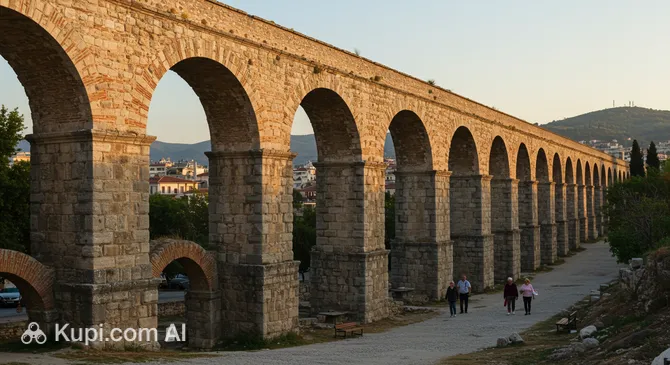
Kavala Aqueduct
Kavala Aqueduct. Иллюстрация. Источник: Kupi.com AI

This unique attraction, which all of Greece is proud of, was erected during the reign of Suleiman the Magnificent. The architecture of the aqueduct is a complex system of 60 arches of various sizes, reaching a height of 25 meters. Initially, it served as a vital water conduit, bringing water from the mountain peaks to the arid Panagia Peninsula.

Today, Kamares is not just a monument of engineering skill, but also a favorite place for walks. Its arches are harmoniously integrated into the urban fabric, with cars driving under them and people walking through, creating a unique sense of living history passing through the centuries.

Contacts

For more information about visiting this historical site, you can refer to the resources of the city's tourism center. Visitors highly appreciate the condition of the monument, noting its majestic appearance at any time of day.

How to contactContact
AddressEllinikis Dimokratias 8, Kavala 652 01, Greece
Websitewww.kavalagreece.gr

What to Do

The main thing to do at the aqueduct is to take a leisurely stroll along its base. The scale of the construction is best felt when you stand directly under the giant arches, examining the intricate stonework. The three-level structure allows you to appreciate the skill of past builders who managed to create such a durable object.

For photography enthusiasts, Kamares provides an endless number of spectacular angles. The aqueduct looks especially beautiful in the rays of the setting sun or under night illumination, when the light emphasizes every curve of its arches. It is the perfect place to capture the spirit of old Europe combined with the rhythm of a modern city.

The aqueduct's central location makes it a convenient starting point for further exploration of Kavala. After the tour, you can relax in one of the cozy cafes nearby or head towards the old town to continue your immersion in the region's history.

Getting There

The aqueduct is located in the very heart of the city at Ellinikis Dimokratias 8. Thanks to its central position and impressive size, it serves as an excellent landmark for tourists. If you are staying in the center, a walk to the structure will take very little time, as it is within walking distance of most popular tourist trails.

For those who prefer private transport, there are several municipal parking lots in the vicinity of Kavala from which you can continue on foot. If you are traveling from other regions of the country, the city is well-connected by a network of intercity buses and rail links. The nearest international airport is about 30 kilometers from the city, and from there you can easily reach the center by taxi or a regular bus.

Ближайший город: Kavala

History & Facts

The history of this grand structure is inextricably linked with the fate of Kavala itself. Although the foundation and some elements have Ancient Roman roots, the appearance we see today was formed in the 16th century. The reconstruction was carried out between 1530 and 1536 by order of Sultan Suleiman the Magnificent to strengthen the city's infrastructure.

There is evidence that a Byzantine barrier wall stood on this site in the early 14th century, which also functioned as a water conduit. The Ottomans did not just restore it; they created a masterpiece of engineering for that time. The aqueduct ensured the delivery of fresh water from the Lekani mountain springs directly to the heart of the fortress on the Panagia Peninsula.

Remarkably, this ancient structure remained functional for many centuries. It regularly supplied residents with drinking water until 1911. Today, Kamares is considered one of the most significant monuments reflecting the harmonious intertwining of Roman, Byzantine, and Ottoman architectural heritage.

Time Needed

To take a leisurely walk along the structure and admire its massive arches, 30 to 60 minutes is enough for most travelers. This time is quite sufficient for an introductory walk and a short rest in the shade of its walls.

If your goal is to take artistic photographs from different angles and carefully study the stonework of the different levels, it is worth setting aside about 1.5–2 hours. In the evening, when the decorative lighting comes on, you can linger longer here, enjoying the special atmosphere of the historical center.

Working Hours

One of the pleasant features of this attraction is its accessibility. The Kavala Aqueduct is open for viewing round the clock, 24 hours a day, seven days a week. You can come here at any time, whether it's early dawn or late at night.

The lack of a strict schedule allows tourists to freely plan their route. Kamares looks especially spectacular in the dark, when architectural lighting transforms it into a truly fairytale-like object.

Круглосуточно

Nearby

Visiting the aqueduct is just the beginning of exploring this region's rich past. Exploring the surrounding streets and monuments will help you feel the atmosphere of the ancient city more deeply and see how different eras succeeded one another.

NameDistance
Capsula0.2 km
Savvas Gyros0.2 km
Kavala Fortress0.3 km
1901 Old Town Cafe Wine Bar0.4 km
Kavala Tobacco Warehouse Shopping Complex0.5 km
House of Mehmet Ali0.7 km
Kavala Tobacco Museum0.7 km

Reached the end of the page?

That means the route is fully explored