Support

Aali Qapu Palace

About

Rising above the western side of the famous Naqsh-e Jahan Square, Ali Qapu Palace is one of the most striking masterpieces of Safavid-era Persian architecture. This majestic structure in the city of Isfahan served as the official residence of the Shahs and the ceremonial gateway to the palace complex. The name of the site translates to “High Gate,” which fully justifies its monumental appearance and historical significance, a source of pride for Iran.
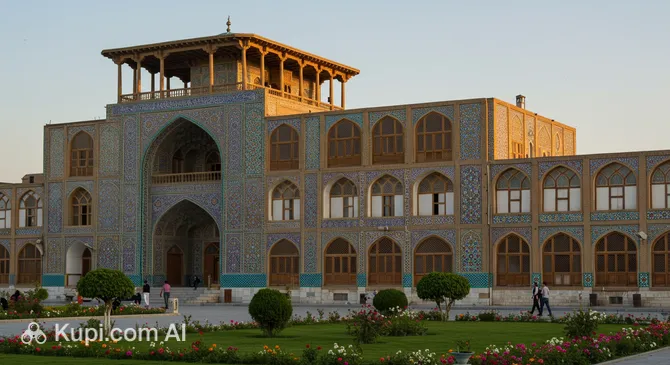
Ali Qapu Palace
Ali Qapu Palace. Иллюстрация. Источник: Kupi.com AI

The building possesses a fascinating structural feature: due to its complex layout, the number of floors appears different depending on which side you view it from. From the facade, it seems to have two, but in reality, the palace comprises six levels, reaching a height of 48 meters. In the past, it was used not only to receive foreign ambassadors and high-ranking guests but also to host lavish state ceremonies.

Today, Ali Qapu Palace is recognized as an outstanding historical monument and a magnet for tourists from all over the world. Its exquisite interiors, rich decoration, and unique engineering solutions make it a must-see on any itinerary when visiting the ancient capital of Persia.

Contacts

To plan your visit and check the details, it is helpful to have current contact information at hand. The palace is located in the historical center and is easy to find on any tourist map.

How to contactContact
AddressMM4G+RM6, Isfahan, Isfahan Province, Iran
Phone+98 31 3222 2173

What to Do

A visit to the palace promises to be one of the highlights of your walk through Isfahan. The main draw for guests is traditionally the luxurious terrace on the upper level, supported by 18 slender wooden columns. From this height, a panoramic view of the entire Imam Square opens up, allowing you to see the mosques and fountains from a completely new perspective.

Inside the building, it is worth taking the time to explore the halls decorated with exquisite miniatures and alabaster carvings. Visitors are particularly enchanted by the famous Music Hall on the sixth floor. Its walls and ceiling are adorned with deep carvings in the shape of vessels and musical instruments—this is not just decoration, but a sophisticated acoustic system that in ancient times created crystal-clear sound during court concerts.

Art and photography enthusiasts will find plenty to inspire them here: the play of light in the passageways, ancient ornaments, and painted ceilings create the atmosphere of an Oriental fairy tale. Don't forget to take a close look at the surviving fragments of wall paintings, which convey the spirit and aesthetics of the Safavid era.

Getting There

Thanks to its location in the heart of the city on the famous Naqsh-e Jahan Square, Ali Qapu Palace remains one of the most accessible attractions. If you are staying in the historical center, a pleasant walk will allow you to soak in the atmosphere of the old city on your way to the "High Gate."

For those who prefer comfort, a taxi is an excellent option, as they are relatively inexpensive in Isfahan. You can also use public transport: the nearest bus stops are within walking distance of the square. If you are using the metro, look for the Imam Hossein station, from which you can reach the palace in 15–20 minutes on foot or by a short taxi ride.

Many foreign tourists prefer to visit the palace as part of organized tours. Local guides often include Ali Qapu in the essential itinerary for Imam Square, providing transfer and guided accompaniment.

Ближайший город: Isfahan

History & Facts

The history of this majestic structure is inextricably linked to an era of great change. Construction of Ali Qapu Palace began at the very end of the 16th century, between 1595 and 1599, when Shah Abbas I made the strategic decision to move the Safavid capital from Qazvin to Isfahan. The building was envisioned as the ceremonial entrance to a vast complex of royal residences.

Over time, the palace was constantly transformed and expanded. Significant additions were made under the successors of Abbas I—Shah Safi and Shah Abbas II. It was during this period that the building took its final shape, including the famous pillared terrace. Interestingly, the palace served not only as a residence but also as a place where the Shah received ambassadors and watched polo matches and festivities held below in the square.

One of the unique architectural features of Ali Qapu is its openness. Unlike many European royal residences of that time, it was not surrounded by thick fortress walls. This emphasized the ruler's close connection with the public life of the city and made the palace an organic part of the Naqsh-e Jahan Square ensemble.

Time Needed

To leisurely explore all six levels of the palace and enjoy the interior details, most travelers need 1 to 2 hours. This is enough time to climb the spiral staircases, study the paintings in the halls, and spend time on the terrace.

If you plan to examine the unique carvings in the Music Hall in detail or want to take many photos of the square from above at different times of day, you should set aside a bit more time. Remember that climbing to the upper floors requires some physical effort, so it is best to move at a pace that is comfortable for you.

Working Hours

The doors of this historical monument are open to visitors daily, allowing guests of the city to choose a convenient time for their visit. The palace's operating hours are quite extensive:

Monday – Sunday: 9:00 AM – 8:30 PM.

Please note that the schedule may be slightly adjusted depending on religious holidays or seasonal changes. It is recommended to arrive an hour before closing to have time to see all the halls before access to the upper floors is restricted.

9:00 – 20:30

Nearby

Exploring the surroundings of Ali Qapu Palace will help you dive even deeper into the atmosphere of this amazing region. Located in the heart of historical Isfahan, you will find yourself surrounded by not only ancient monuments but also modern places for relaxation and entertainment.

Below are some interesting locations within a few kilometers of the palace that can add variety to your itinerary:

NameDistance
Naqsh-e Jahan Square0.1 km
Shah Mosque0.2 km
Sheikh Lotfollah Mosque0.2 km
Chehel Sotoun Palace0.5 km
Hasht Behesht Palace0.7 km
Isfahan Music Museum0.8 km
Imam Ali Square1.3 km

Reached the end of the page?

That means the route is fully explored