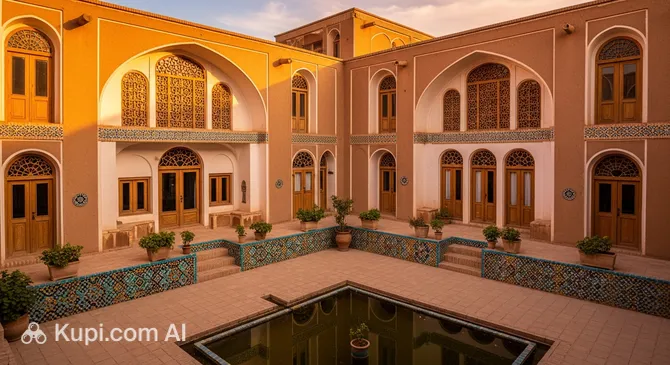
Imagine a place where the history of humanity's struggle against drought comes to life in the heart of the desert. The Water Museum in Yazd is a unique space housed in the magnificent Kolahduz Mansion, built in 1929. The museum is dedicated to the ingenious system of Persian qanats—underground channels that have sustained life in this harsh land for millennia.
Yazd Water Museum. Illustration.
Source: Kupi.com AI
Traveller photos:
The entire qanat system in the province is recognized as a UNESCO World Heritage Site. This is not merely an exhibition of old artifacts, but an outstanding example of a technological ensemble showing how ancient civilizations in Iran learned to coexist with nature. The museum building itself is impressive, featuring rich stucco work and traditional murals, standing as a monument to Iranian architecture in its own right.
Founded in 2000, the museum has become a key site for understanding why water in these parts is called "white gold." Here, the secrets of engineering that allowed clean groundwater to be delivered over vast distances without pumps or electricity are revealed.
Contacts
For more details before your visit, you can use the contact information provided below. While the museum does not have an official website, the staff are available to answer questions by phone.
Inside the museum's halls, visitors can see an impressive collection of historical tools used for centuries by qanat master builders. Exhibits include ancient picks, shovels, clay lamps, and windlasses used by workers to lift soil to the surface. Some artifacts are four thousand years old, allowing you to literally touch the origins of civilization.
The most exciting part of the tour is the descent beneath the museum building. Following a special staircase, you will enter cool underground tunnels where you can see active water channels firsthand. This offers a unique chance to feel the contrast between the scorching desert sun and the refreshing coolness hidden deep underground.
Additionally, the section on historical documents is well worth your attention. On display are water ownership lists and ancient agreements regulating distribution among residents. Interactive models and temporary exhibitions help visitors grasp the scale of this colossal labor that transformed Yazd into a blooming oasis.
Getting There
Finding the Water Museum in Yazd is quite simple, as it is located in the heart of the historic district. The attraction is housed in the Kolahduz Mansion in Iran, not far from Amir Chakhmaq Square. The exact geographical coordinates are: 31.8950235°N, 54.3684411°E.
The most convenient way to get here from anywhere in the city is by taxi or a private transfer, which can be arranged at your hotel's reception desk. Since the museum is situated in a lively area with many narrow streets, a walk from central hotels also makes for a pleasant addition to your excursion.
Nearest city: Yazd
History & Facts
The city of Yazd emerged in one of the most arid regions on the planet, where human survival depended entirely on access to water. To solve this problem, the ancient Persians created qanats—unique underground hydro-technical systems that served as both water conduits and irrigation networks. Some of these structures near Yazd are older than Roman aqueducts, dating back to the 3rd millennium BCE.
The scale of this engineering feat is impressive: approximately 50,000 qanats were built across Iran, nearly 37,000 of which are still in use today. A notable feature of the Yazd channels is their significant size—most tunnels are spacious enough for an adult to stand in. This technology was later adopted by cultures from Afghanistan to North Africa.
Constructing such systems was a collective effort requiring immense resources. Residents often pooled their funds, and each family's share of the water was determined by their contribution. This fostered a unique culture of water conservation, which remains a vital part of the region's historical heritage today.
Time Needed
For a complete experience at the Water Museum, most travelers need 1.5 to 2 hours. This provides enough time to carefully examine the tools in the mansion's halls and descend into the underground qanat galleries.
If you plan to study the historical water distribution documents in detail or want to take many photos of the building's traditional architecture, it is worth setting aside a bit more time for your visit.
Working Hours
The Water Museum is generally open to visitors daily from 09:00 to 18:00. Some sources indicate a split schedule: from 08:00 to 14:30 and from 15:30 to 19:00.
Since operating hours can change based on the season, holidays, or national events, we recommend checking the current information in advance by phone to ensure your visit is as comfortable as possible.
09:00–18:00
Nearby
Exploring central Yazd can be even more exciting if you complement your visit to the Water Museum with nearby locations. Within walking or driving distance, you’ll find family-friendly spots and modern facilities.
We use cookies and services to collect user information. This is essential for the functioning of the site and for marketing purposes. You can find out more in .
Other popular routes
Where travelers fly most — pick a route and check prices