Support

Naqsh-e Jahan Square

About

Imagine a space that contemporaries called the "Image of the World" — which is exactly how the name of the magnificent Naqsh-e Jahan Square translates. Located in the heart of Isfahan, this monumental landmark is one of the largest and most beautiful squares in the world, representing the pinnacle of Safavid-era Persian architecture.

Covering an impressive 9 hectares, this rectangular ensemble harmoniously unites the spiritual, political, and economic life of ancient Iran. Due to its exceptional historical value, the site is listed as a UNESCO World Heritage Site and remains the main symbol of the city to this day.
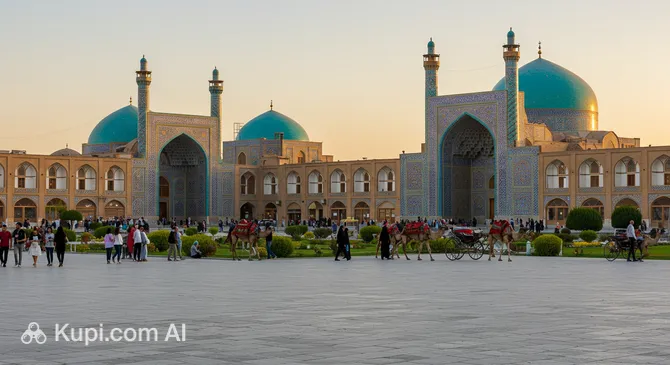
Naqsh-e Jahan Square
Naqsh-e Jahan Square. Иллюстрация. Источник: Kupi.com AI

In the center of the square lies a cozy park area with a large pool and fountains that create a pleasant coolness even on hot days. This is not just an open-air museum, but a living space where history meets modernity, and majestic mosques stand alongside bustling market stalls.

Contacts

To help you plan your route to one of the world's most beautiful squares, you can use the following contact details:

How to contactContact
Addressاستان اصفهان، اصفهان، میدان، Iran

What to Do

The main adventure here is a leisurely walk around the entire perimeter, where jewels of Eastern architecture unfold before you one by one. On the western side, Ali Qapu Palace awaits, offering the best view of the entire ensemble from its terraces. Opposite it shines the exquisite dome of the Sheikh Lotfollah Mosque, while the southern end is crowned by the majestic Imam Mosque, striking in its scale and filigree decoration.

For those seeking local flavor, it's definitely worth checking out the northern part, which houses the entrance to the Qeysarie Bazaar. This is not just a market, but a true labyrinth of history where you can find unique items from Iranian masters, handmade carpets, and fragrant spices. A stroll through the bazaar seamlessly transitions into an exploration of local craft and trade traditions that haven't changed for centuries.

In the evening, when the illumination comes on, the square turns into a perfect place to relax. Visitors can take a horse-drawn carriage ride over the cobblestones, watch the fountain display, or simply sit on the grass alongside locals enjoying cozy sunset picnics.

Getting There

Getting to this architectural heart of the city is easy, as it is located right in the center. The most comfortable and fastest way is to use a taxi. Local ride-hailing apps are active in the city, and you can also catch an official yellow taxi from anywhere in town.

If you prefer public transport, look for bus routes heading to stops near the historical center. You can also take the metro to nearby stations (for example, Imam Hossein Square), followed by a short walk or a quick taxi ride to arrive right at the entrance to the square.

Ближайший город: Isfahan

History & Facts

The history of this majestic space began at the end of the 16th century when Shah Abbas I the Great decided to move the capital of the Safavid Empire to Isfahan. The construction of the ensemble took place between 1598 and 1629, turning the city into one of the most prosperous cultural centers of the time.

The Sheikh Lotfollah Mosque, located on the eastern side, deserves special attention. Built in the early 17th century by the outstanding architect Mohammad Reza Isfahani, it was intended exclusively for the personal use of the Shah and his harem. That is why it has no minarets — they were simply unnecessary, as the call to prayer was meant only for a small circle of chosen people.

The southern part of the square is crowned by the monumental Imam Mosque (formerly the Shah Mosque). Its construction was the final chord of Abbas the Great's urban planning vision. Designed as the city's main Friday mosque, it captures the imagination with its acoustics and the mastery of its mosaics, symbolizing the spiritual grandeur and power of the dynasty.

Time Needed

To fully experience the scale and grandeur of this place, it is recommended to set aside at least half a day for your visit. The square is huge, and every building on its perimeter is a masterpiece in its own right, requiring thoughtful exploration.

About two hours might be spent just walking the perimeter and studying the facade details. Add to this the time for visiting both mosques, the palace, and, of course, the inevitable dive into the labyrinths of the bazaar, where time flies by while choosing souvenirs and tasting local sweets. If you want to see the square in both daylight and its striking evening lighting, it's best to arrive towards the middle of the day.

Working Hours

For the convenience of tourists and locals, Naqsh-e Jahan Square is open to the public 24 hours a day, daily. You can come here early in the morning to catch the sunrise in silence, or late in the evening to enjoy the beautiful illumination.

Please note that individual sites (mosques, the palace, and bazaar shops) have their own operating hours, which usually coincide with daylight hours and pause for prayer times, but the square space itself is always accessible.

Круглосуточно

Nearby

Exploring the surroundings of Naqsh-e Jahan Square will allow you to dive even deeper into the city's atmosphere and find interesting locations for family recreation. Many parks and entertainment areas are located near the historical center.

If you are traveling with children or simply want a change of scenery after visiting ancient mosques, consider these nearby attractions:

NameDistance
Ali Qapu Palace0.1 km
Sheikh Lotfollah Mosque0.1 km
Shah Mosque0.2 km
Chehel Sotoun Palace0.5 km
Hasht Behesht Palace0.8 km
Isfahan Music Museum0.9 km
Imam Ali Square1.2 km

Reached the end of the page?

That means the route is fully explored