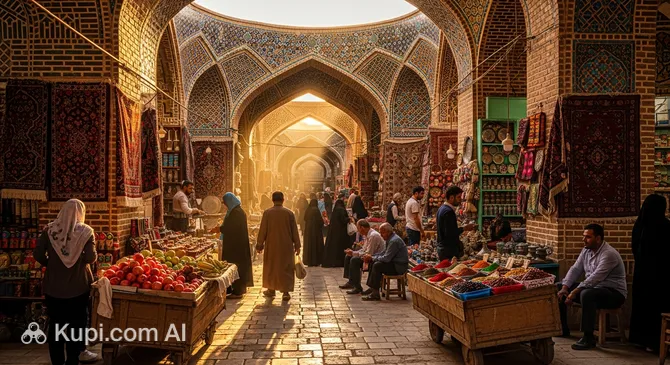
Stepping into the historic center of Yazd, it is impossible to pass by one of its most colorful spots — the ancient market known as Bazar-e Khan. It is not just a trading floor, but a living architectural monument located in the heart of the ancient country of Iran.
Here, you can witness famous Persian architecture firsthand, with its characteristic mud-brick vaults and narrow passages that have shielded merchants from the exhausting heat for centuries. The site is part of an extensive network of bazaars that highlight the city's status as one of the world's oldest settlements to have preserved its unique urban layout.
Khan Bazaar of Yazd. Illustration.
Source: Kupi.com AI
Traveler photos:
The main feature of the complex is the badgirs — wind towers that provide natural ventilation inside the covered spaces. A stroll through this market allows you to feel the authentic spirit of the East, where stalls with bright fabrics, carpets, and fragrant spices open up around every corner.
Contacts
Finding this popular spot in the city's historic district is quite easy, as it serves as a major landmark for locals. If you are planning a visit, we recommend saving the exact address for navigation.
Below is the essential information for locating the site on a map:
Immersing yourself in the labyrinth of trading rows is the best way to feel the rhythm of life in the old city. Here, visitors can purchase exquisite silk fabrics, handmade jewelry, and the famous Persian carpets, which are world-renowned for their quality. Don't forget to bargain with the local vendors — it is an essential part of the cultural ritual.
Foodies should definitely try traditional sweets like gaz (Persian nougat) or refresh themselves with a serving of bastani ice cream. A walk among the spice stalls offers an unforgettable aromatic experience, while craft workshops allow you to see the process of creating copperware and textiles right on the spot.
Aesthetics lovers are encouraged to notice the play of light under the high vaults and take a series of photos of the authentic interiors. The best way to end your visit is at one of the local tea houses, where you can watch the hustle and bustle of the bazaar from the side over a cup of strong tea, resting in the cool shade of ancient walls.
Getting There
Located in the very heart of the old quarter, this site is easily accessible for those exploring on foot. Most tourists reach it from the famous Jameh Mosque in just 10–15 minutes, wandering through the colorful narrow streets of the ancient city.
From the airport, which is about 15 kilometers away, the most convenient way to get there is by taxi — the trip takes about 20–30 minutes and is relatively inexpensive. You can also use city buses running from the station to the central square, from where it is just a short walk to the market entrance.
The Amir Chakhmaq Complex is the best landmark to use for navigation. Since parking in the historic center is very limited, tourists are advised to prefer public transport or walking routes.
Nearest city: Yazd
History & Facts
The roots of trading traditions in this region go back to ancient times when the settlement was a vital point at the intersection of caravan routes. The development of the market infrastructure went hand in hand with the perfection of the qanats (underground channels) and badgirs, technologies that originated back in the Achaemenid era.
The architectural ensemble reached its peak during the Safavid dynasty, when the city transformed into a significant economic hub. It was during this time that the bazaars became more than just places for exchanging goods; they became masterpieces of Persian architecture, combining functionality with the aesthetic beauty of mud-brick structures.
In the later Qajar era, the trading rows underwent a large-scale restoration while preserving their authentic appearance. Today, the site is included in the UNESCO World Heritage list as an outstanding example of the harmonious coexistence of man and the harsh nature of the desert region.
Time Needed
For a leisurely introduction to the architecture and a walk through the main trading rows, you will typically need about 1.5–2 hours. This is enough time to examine the decorative details, take atmospheric photos, and pick out a few memorable souvenirs.
If you plan a deep dive into the local culture — including long bargaining sessions, tasting sweets, and visiting neighboring markets like the Gold Bazaar — it is better to set aside half a day for this area. Combining your walk with a break in one of the old tea houses will make your visit truly memorable.
Working Hours
The doors of this bustling commercial space are open to guests daily from 07:00 to 18:00. Interestingly, the market continues to operate without breaks even on Fridays, which is traditionally a day off in the region.
As the operating hours of individual stalls may depend on their owners or religious holidays, travelers are advised to check current information on official websites or clarify details with guides immediately before visiting. The best time to visit is in the morning, when trade is just beginning and the heat has not yet reached its peak.
07:00–18:00
Nearby
Exploring the surroundings of the central market can significantly enrich your travel experience, revealing different sides of the city. Located near the historic quarters are both cultural sites and places for family recreation.
Below are some interesting locations situated nearby: