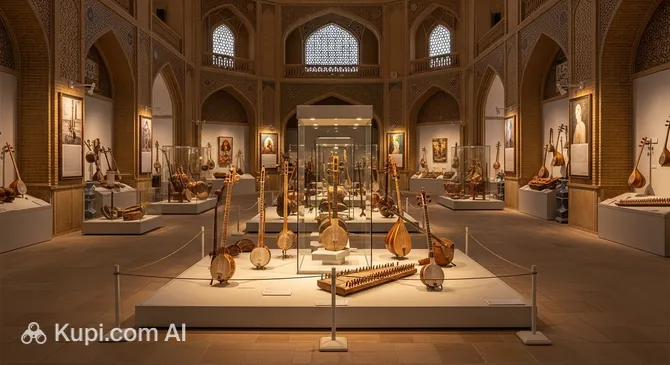
The Music Museum in Isfahan is more than just an exhibition space; it is a living monument to the rich cultural heritage that Iran is so proud of. Located in the historic Hasht Behesht complex, this private museum is considered one of the most inspiring places in the country. Its collection features over 300 traditional Persian instruments, some of which are more than 150 years old.
Isfahan Music Museum. Illustration.
Source: Kupi.com AI
Traveler photos:
The museum's exposition is divided into several themed zones: halls for national and regional instruments, a history hall, and even a working workshop. Here, you can see unique items such as the inlaid Zamani tar or the rare wooden tombak by Qazi Askar. Of particular value are the instruments decorated with fine paintings and Persian miniatures, turning each exhibit into a genuine work of art.
The Music Museum is recognized as one of the city's highest-rated attractions, offering tourists an interactive experience: many exhibits are accompanied by audio and video materials, allowing you to hear the enchanting sounds of ancient instruments. This is a unique place where musical history is closely intertwined with Persian poetry and philosophy.
Contacts
For details about visiting or organizing group tours, you can use the museum's contact information. Although the institution does not have an official website, its representatives are active on social media.
Visiting the museum is a complete multisensory experience. You can not only see rare instruments but also hear them, thanks to modern audio guides and video screens. In the National Instruments Hall, it is fascinating to compare the ancestors of modern violins and guitars with their Iranian "cousins," such as the kamancheh or tar. The regional section features curiosities like the Khorasan dotar, used in ancient ceremonies.
One of the most captivating parts of the visit is seeing the working workshop. Here, you can witness the birth of an instrument: from selecting the right wood to the complex assembly and tuning. Masters are often happy to share the secrets of their craft, turning the tour into an informative masterclass.
The highlight of a museum walk is often the live performances in a special acoustic hall. Professional musicians perform classical Persian compositions, allowing guests to fully immerse themselves in the atmosphere of the East. Additionally, there is a museum shop where you can purchase authentic instruments and souvenirs certified by local experts.
Getting There
The Music Museum is located in the heart of the historic district, in the famous Hasht Behesht complex on Chahar Bagh e Abbasi Street. Thanks to its central location, it is easily accessible on foot from Naqsh-e Jahan Square (Imam Square) — a walk of about 15–20 minutes through the city's picturesque streets.
If you prefer public transport, you can take the metro or buses to the Chahar Bagh stop. From the nearest metro station, the museum is just a few minutes' walk away. You can also use a local taxi (for example, via the Snapp app), which is a fast and affordable option from anywhere in the city center.
For those arriving from Isfahan International Airport, a taxi ride takes about 20–30 minutes (a distance of approximately 20 km). The museum is very conveniently located for tourists, as it is within walking distance of the main promenade areas and the famous bridges over the Zayandehrud River.
Nearest city: Isfahan
History & Facts
The story of this amazing place began relatively recently, driven by a deep passion for art. The Isfahan Music Museum was founded by a group of enthusiasts — musicians and musicologists who sought to preserve a disappearing heritage in the age of globalization. It officially opened in December 2005, created by the renowned Iranian masters Mehrdad Jeihouni and Shahriar Shokrani.
Over two decades, the creators have managed to build an impressive collection that started with just a few personal instruments. Today, it houses over 300 exhibits, many of which are rare examples of handiwork adorned with exquisite miniatures and turquoise. Each instrument in the collection has undergone meticulous restoration and carries its own unique story.
The museum quickly gained recognition not only in Iran but worldwide, winning prestigious tourism awards. Today, it is considered the city's second most important cultural site after its main architectural landmarks. This is a living space where the history of Persian music is not just kept under glass but continues to resonate for new generations of listeners.
Time Needed
To leisurely explore all the exhibitions, study the descriptions, and listen to the audio materials, most visitors need about 1.5–2 hours. This is enough time to walk through all the themed halls and take a look at the workshop.
If you plan to attend a live music performance, which is often held within the museum walls, or talk with the instrument makers, you should set aside a bit more time — about half a day. The museum encourages a thoughtful discovery of the culture, so a "rushed" visit is not recommended.
Working Hours
The museum's doors are open to visitors daily from 11:00 AM to 7:00 PM. This is very convenient, as the establishment operates without lunch breaks or days off, making it easy to include in any tour schedule.
Nevertheless, before visiting on holidays, it is recommended to check the current schedule via official social media or by phone, as operating hours may change slightly depending on the season or religious holidays.
11:00–19:00
Nearby
After immersing yourself in the world of Persian melodies, it's worth taking time to explore the surroundings. Central Isfahan offers many activities — from strolling through historic gardens to modern amusement parks that will help diversify your leisure time.
The proximity to key transport arteries allows you to quickly reach gaming zones and recreation spots located along the river or in the city's green areas.