Support

Imam Ali Square

About

Imagine one of the most majestic and grand squares in the world, which for centuries has remained the heart of an ancient city. Imam Ali Square (also widely known as Naqsh-e Jahan) in the city of Isfahan is not just an open space, but a true architectural masterpiece and a UNESCO World Heritage Site. When traveling through Iran, it is impossible to miss this magnificent ensemble, whose scale and harmony capture the imagination.
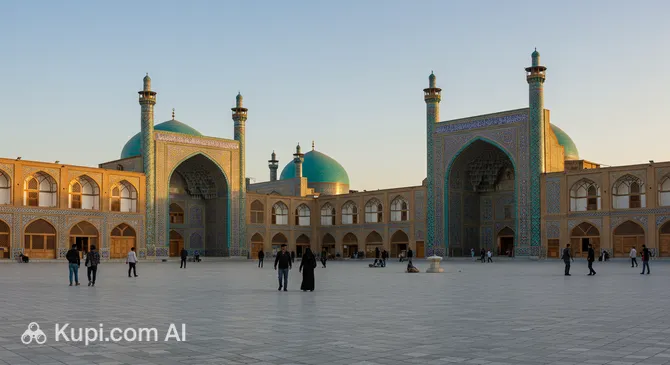
Imam Ali Square
Imam Ali Square. Иллюстрация. Источник: Kupi.com AI

The square boasts impressive dimensions—over 500 meters in length—and is surrounded by two-story covered galleries. Its name translates as "Image of the World," perfectly reflecting the ambitions of its creators from the Safavid dynasty. This place brings together spiritual life, state power, and the bustling trade of the East, serving as a landmark of the country and a living witness to Persia's former power.

Surrounded by magnificent buildings, each a benchmark of Islamic architecture, the square serves as the primary meeting point for both locals and visitors. Whether it's the glint of water in the central fountains or the delicate majolica on the mosque facades, every meter here is steeped in history and the aesthetics of the golden age of Isfahan's culture.

Contacts

For ease of route planning and city navigation, please use the following official location details:

How to contactContact
AddressIsfahan Province, Esfahan, میدان قیام میدان امام علی، خیابان مجلسی، MM8M+QJM, Iran

What to Do

Once in this historical center, you are swept into a whirlwind of impressions. First, explore the architectural landmarks framing the square. On the south side stands the majestic Imam Mosque with its sky-blue domes, while to the east, the elegant Sheikh Lotfollah Mosque catches the eye—lacking minarets but famous for its unique acoustics. Don't forget to visit the multi-story Ali Qapu Palace, whose terraces offer the best panoramic views of the entire ensemble.

For those who love shopping and authentic goods, be sure to pass through the Qeysarie Gate to the north, which leads into the labyrinths of the Grand Bazaar. Here, in the cool galleries, you can spend hours watching coppersmiths, carpet weavers, and artists painting "minakari" enamel, as well as purchase unique handmade souvenirs.

In the center of the square, amidst manicured lawns and fountains, it's pleasant to simply relax and watch the city bustle. This is an ideal spot for photoshoots, especially during the "golden hour" when the setting sun paints the building walls in warm ochre tones. In the evening, you can see local families setting up picnics, creating the unique atmosphere of a hospitable and vibrant city.

Getting There

Reaching this landmark in the city center is quite easy. The most comfortable and popular way to get around Isfahan is by taxi. You can use official yellow cabs or order a car via local mobile apps. The trip from most central districts will take no more than 10–15 minutes.

If you prefer public transport, look for bus routes heading to the Meydan Ghiyam stop or the Old Bazaar area. You can also use the metro, although the nearest stations are some distance away, likely requiring a short walk or a bus transfer. Walking to the square from major tourist quarters is also an option, allowing you to better soak in the atmosphere of the old city.

Ближайший город: Isfahan

History & Facts

The history of this site is inextricably linked to the zenith of the Safavid dynasty. The grand square, known today as Naqsh-e Jahan, was laid out between 1598 and 1629 by order of Shah Abbas the Great. After moving the capital to Isfahan, the ruler sought to create an architectural ensemble that would eclipse anything seen before and demonstrate the empire's might.

The technical and aesthetic realization of the project was overseen by Sheikh Baha’ ad-Din al-Amili, a prominent polymath of his time. He combined the talents of an architect, mathematician, and astronomer. Under his leadership, the square became the "Image of the World" (the translation of its historical name), serving as the state's economic and religious hub.

Interestingly, the modern-day Imam Ali Square (also called Atiq or Kohneh) has even deeper roots. Its foundation dates back to the 11th century, during the Seljuk period. Thus, this area served as the heart of the city for centuries before the Safavids created a new, even more grandiose center. Today, this space is a UNESCO World Heritage Site and is featured on the Iranian 20,000 rial banknote.

Time Needed

To fully appreciate the scale and magnificence of this site, plan for a visit of at least 3–4 hours. This is enough time to stroll leisurely around the perimeter, peak into the mosques, and take memorable photos. If you plan to study the palace interiors in detail, explore the Grand Bazaar, and relax by the fountains, it's better to set aside a full day.

Many travelers prefer to return twice: during the day to examine the architectural details and mosaics, and in the evening when the spectacular lighting comes on and the atmosphere becomes especially cozy and inviting. An evening visit might take another 1–2 hours of your time.

Working Hours

The square itself is accessible 24/7. This allows you to admire its beauty both in the rays of the morning sun and under spectacular night lighting.

However, keep in mind that individual sites (mosques, the palace, and bazaar shops) have their own schedules. Most attractions are open from 09:00 until dusk, and during Friday prayers, tourist access to the mosques may be restricted.

Круглосуточно

Nearby

Exploring the areas surrounding the square allows you to dive deeper into the city's atmosphere and find entertainment for every taste. After visiting historical monuments, you can head to modern parks and entertainment centers that perfectly complement your journey.

NameDistance
Jameh Mosque of Isfahan0.3 km
Naqsh-e Jahan Square1.2 km
Sheikh Lotfollah Mosque1.2 km
Ali Qapu Palace1.3 km
Shah Mosque1.4 km
Chehel Sotoun Palace1.6 km
Ali Qoli Aqa Historical Bathhouse1.6 km

Reached the end of the page?

That means the route is fully explored