Support

Zoroastrian Fire Temple of Yazd

About

In the heart of the desert city of Yazd lies one of the most sacred sites for followers of an ancient religion — Atash Behram. This Zoroastrian fire temple, also known as Atashkadeh-e Yazd, is a living symbol of spiritual heritage that has been carefully preserved in Iran for millennia. The temple's greatest treasure is the sacred fire known as "Atash Bahram," which means "Victorious Fire."
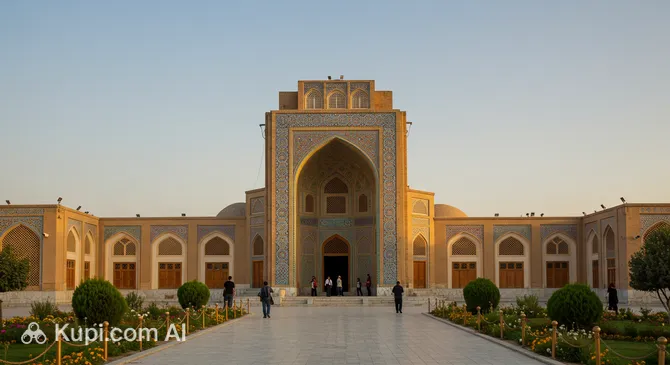
Yazd Atash Behram (Zoroastrian Fire Temple)
Yazd Atash Behram (Zoroastrian Fire Temple). Иллюстрация. Источник: Kupi.com AI

The architecture of the building, erected in 1934, harks back to the majestic Achaemenid style. Above the entrance, visitors are greeted by the Faravahar — the winged symbol of Zoroastrianism, representing good thoughts, good words, and good deeds. A quiet garden with cypress and fruit trees stretches before the snow-white facade, featuring a circular pool at its center. Here, water and fire serve as two sacred pillars of faith, creating an atmosphere of purity and serenity.

This is not just a historical monument, but an active spiritual center. The fire burning inside the temple in a massive bronze cauldron is considered one of the oldest in the world. For many travelers, visiting this site becomes a rare opportunity to touch the living tradition of Zoroastrianism, which has been preserved in virtually unchanged form since the days of the ancient Kings of Persia.

Contacts

For details regarding your visit or to organize group tours, you can use the following contact information:

How to contactContact
AddressYazd Province, Yazd, Kashani Rd, No. خیابان, V9JF+GGR, Iran
Phone+98 35 3628 8386

What to Do

The highlight of visiting the temple is the opportunity to see the sacred flame. The fire is kept in a special hall behind thick glass — this is done so that the breath of visitors does not defile its purity. You can observe how the priests (mobads) maintain the fire using only dry wood from hardwoods such as almond or apricot. The silence and soft light emanating from the flame create a unique meditative atmosphere.

Be sure to take time to examine the facade and the temple grounds. The Faravahar above the main entrance is a detailed image that is fascinating to study for its Zoroastrian symbolism. A walk around the circular pool in front of the building will allow you to take excellent photographs: the columns and the sky are beautifully reflected in the still water. The garden surrounding the temple is filled with the scents of pine and fruit trees, providing a cool retreat even on hot days.

Inside the temple, you can also find information plaques telling the history of the religion and the building itself. Visitors are advised to behave quietly and respectfully. If you are lucky, you may meet members of the local community who are sometimes willing to briefly explain the significance of the fire as a symbol of Ahura Mazda. This place is ideal for those seeking deep cultural immersion rather than just sightseeing.

Getting There

The sacred Fire Temple is located in the central part of the city on Kashani Rd, Yazd. Thanks to its convenient location, it is easily accessible for tourists staying in the old quarters or central hotels. If you are in the area of the Amir Chakhmaq historical complex, a taxi ride will take no more than 10–15 minutes.

For those who prefer public transport, city buses run regularly along Kashani Street, with stops located in the immediate vicinity of the temple entrance. However, the most convenient way to travel around the city remains a taxi, which is relatively inexpensive in Iran and saves you from having to navigate bus routes.

If you are arriving from Yazd Airport (AYZ), the trip to the temple is approximately 10–15 kilometers and takes about 20–30 minutes depending on traffic conditions. For travelers with rental cars, parking spaces are available near the attraction.

Ближайший город: Yazd

History & Facts

The history of the sacred flame housed in this temple is truly remarkable: it is believed that this fire has been burning continuously for over 1,500 years. Its journey began around 470 AD in the province of Pars. Over the centuries, to protect the holy flame from various threats, Zoroastrians moved it from place to place: first to Aqda, where it remained for about 700 years, then to Ardakan, and finally, in 1473, to Yazd.

The modern temple building was constructed in 1934. Funding for its construction was gathered by Zoroastrian communities not only in Iran but also in India. The architect Jamshid Amanat, who led the project, visited India several times to coordinate details with the Parsis. As a result, the building acquired unique features that combine ancient Persian Achaemenid style with the traditions of Indian Zoroastrian temples.

The Atash Behram in Yazd is one of only nine "Victorious Fire" temples of the highest rank in the world. The other eight sanctuaries are located in India, making this site one of a kind outside its borders. Since the 1960s, the temple has opened its doors to representatives of other faiths, and in 1999, it was officially included in Iran's list of national heritage sites.

Time Needed

For most tourists, 1 to 2 hours is sufficient to explore Atash Behram. This time is quite enough to take a leisurely walk through the picturesque garden, stand by the pool, and view the sacred flame in the main hall. The temple is small, so no long walks are required, and the atmosphere encourages quiet contemplation.

If you are interested in the details of Zoroastrianism, it is worth setting aside a bit more time to read the information stands and talk to the local staff. Morning hours or the time before sunset are considered the best for visiting, as the light beautifully emphasizes the architectural forms of the building and creates a special play of reflections on the surface of the pool.

Working Hours

The Zoroastrian Fire Temple in Yazd welcomes visitors daily. The operating schedule is stable throughout the week, making it easy to include in any travel itinerary:

Monday — Sunday: 08:00 – 21:00.

Please note that during religious holidays or special ceremonies, the schedule may change slightly; however, the doors are usually open to tourists throughout the specified time.

8:00 – 21:00

Nearby

Yazd is a city steeped in history, and a visit to the Fire Temple can easily be combined with exploring other unique locations. A stroll through the surrounding area will allow you to dive deeper into the atmosphere of this desert oasis and learn about the daily life of its residents.

Within a few kilometers of the temple, you will find cultural sites as well as places for family recreation. Below is a list of nearby attractions:

NameDistance
Markar Square0.6 km
Amir Chakhmaq Complex1.4 km
Yazd Water Museum1.6 km
Khan Bazaar of Yazd1.8 km
Jameh Mosque of Yazd2.3 km
Alexander's Prison2.7 km
Lariha House Museum2.8 km

Reached the end of the page?

That means the route is fully explored