Support

Capitolium o Tempio Capitolino

About

The Capitolium (or Capitoline Temple) is an impressive monument of ancient Roman architecture located in the heart of Brescia. Situated in the Lombardy region, this landmark, of which Italy is justly proud, consists of the beautifully preserved ruins of an ancient sanctuary dedicated to the Capitoline Triad — Jupiter, Juno, and Minerva.
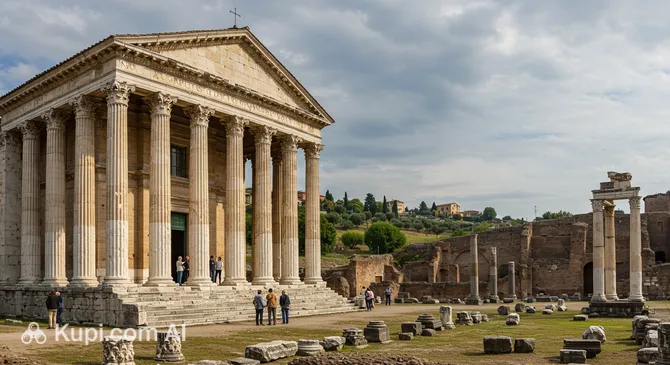
Capitoline Temple
Capitoline Temple. Иллюстрация. Источник: Kupi.com AI

The complex is part of a large archaeological park that also includes the remains of an ancient Roman theatre and the forum. This site allows visitors to literally touch the history of the ancient city of Brixia and experience the scale and former grandeur of the Roman Empire in the north of the Apennine Peninsula.

Today, the Capitolium is recognized as a UNESCO World Heritage site and is considered one of Northern Italy's most significant archaeological landmarks. Its uniqueness lies in the harmonious blend of authentic ancient fragments and careful reconstruction, which allows visitors to envision the temple in all its original glory.

Contacts

To clarify visit details or book tours, you can use the official contact information for the archaeological complex. All the necessary contact details are provided below.

How to contactContact
AddressVia dei Musei, 55, 25121 Brescia BS, Italy
Phone+39 030 817 4200
Websitewww.bresciamusei.com

What to Do

When visiting the Capitolium, you can take a fascinating walk through the archaeological park. The main focus should be on the preserved white marble columns and temple steps, which were erected back in the 1st century AD. This is a rare opportunity to see original details of the Roman order in their natural environment.

Be sure to look inside the three sacred chambers (cellae), where statues of the gods once stood. Here, you can discover fragments of ancient mosaics and altars, as well as the famous inscription of Emperor Vespasian on the pediment. For those who enjoy details, the rich collection of Roman inscriptions and funerary steles displayed throughout the complex will be of great interest.

Beyond the temple itself, don't miss the chance to explore the neighboring ruins of the ancient theatre. It is one of the largest structures of its kind in Northern Italy. Walking among its tiers allows you to imagine the scale of the festivals and performances held here thousands of years ago, offering a full picture of the social and cultural life of ancient Brixia.

Getting There

The Capitolium is located on Piazza del Foro, in the heart of the historical center. If you arrive by train, the walk from the central railway station takes about 15–20 minutes through the city's picturesque streets.

For those who prefer public transport, the city has an excellent bus network. The nearest stops are within walking distance of the archaeological zone. The site is also easily accessible by taxi from anywhere in the city or from the metro station.

If you are traveling by car, remember that the historical center is a pedestrian area or a ZTL (limited traffic zone). It is recommended to leave your vehicle in one of the paid parking lots nearby and enjoy a short walk to the ancient ruins.

Ближайший город: Brescia

History & Facts

The construction of the Capitolium dates back to 73 AD and is inextricably linked to the name of Emperor Vespasian. The erection of this monumental structure was a sign of gratitude to the citizens for their support in the struggle against Vitellius. The temple was built on the foundations of an even older republican sanctuary, highlighting the historical significance of the site.

In ancient times, the temple served as the main religious center of the city of Brixia. Here, the Capitoline Triad — Jupiter, Juno, and Minerva — was worshipped. The original inscription on the pediment, which has survived to this day, contains Vespasian's name and his honorary titles, making it an invaluable historical artifact.

Interestingly, the temple remained hidden from view for many centuries. Following a landslide during the Middle Ages, the ruins were buried under layers of earth. This allowed them to remain perfectly preserved until 1823, when large-scale excavations began, returning this masterpiece of Roman architecture to the world.

Time Needed

To fully explore the Capitolium and the surrounding archaeological zone, you will typically need between 1 and 2 hours. This is enough time to leisurely examine the preserved columns, read the information plaques, and take commemorative photos.

If you plan to visit not only the temple but also the ancient theatre and thoroughly study the collection of Roman inscriptions, you should set aside about half a day for your visit. This will allow you to fully immerse yourself in the atmosphere of antiquity without feeling rushed.

Working Hours

The Capitolium welcomes visitors from Tuesday to Sunday. The museum is open for visits from 10:00 AM to 6:00 PM, providing plenty of time to study the exhibits in detail during daylight hours.

Please note that Monday is a closing day. It is recommended to check the current schedule on the official museum website in advance, as opening hours may change slightly depending on holidays or special cultural events.

DayWorking hours
ПонедельникЗакрыто
Вторник10:00 – 18:00
Среда10:00 – 18:00
Четверг10:00 – 18:00
Пятница10:00 – 18:00
Суббота10:00 – 18:00
Воскресенье10:00 – 18:00

Nearby

Exploring the surroundings of the Capitolium can significantly enrich your trip. Just steps away from the ruins of the ancient sanctuary, you will find architectural monuments from various eras that tell the city's story from the Middle Ages to the present day.

A stroll through the historical core will reveal not only ancient heritage but also majestic cathedrals, fortresses, and cozy squares. Below is a list of interesting sites located nearby:

NameDistance
Brixia Roman Archaeological Park0.1 km
Brescia Castle0.3 km
Broletto Palace0.3 km
Santa Giulia Museum0.3 km
Amante0.3 km
Brescia Cathedral0.3 km
Piazza Paolo VI0.4 km

Reached the end of the page?

That means the route is fully explored